

2020 Art Market Predictions by Jason Bailey | Artnome January 27th, 2020

Osinachi - Elephant in the Room, 2019
We are in the middle of a generational culture war, and the entire art market is about to be turned upside down by an emerging class of collectors looking to reshape the art world in their own image.
As we enter a new decade, my 2020 art market predictions will make the case that the art market will be unrecognizable ten years from now (in 2030). I build this case on three core beliefs that I will outline and argue in this article:
Artist popularity is more important in driving the price of artworks than any qualities intrinsic to the art
Millennials/Gen-Zers are culturally antithetical to Boomers
Boomer wealth will change hands over the next two decades and Millenials/Gen-Zers will use it to invest in diversity in the arts
I've spent the last three months researching the literature on price prediction and valuation for the art market for an article I submitted to an academic journal. I won't re-write that article here, but I will share that I came away believing we are about to see a massive shift in which artists are propped up by the art market. Here's why:
Art Prices are Largely a Popularity Contest
In 2004, Domenico De Sole, former CEO of Gucci and current chairman of Sotheby's, paid $8.3M to the Knoedler & Co. gallery for a painting thought to be by Mark Rothko. The work was one of many painted by art forger Pei-Shen Qian and sold through the gallery to unsuspecting collectors. De Sole sued the Knoedler gallery in 2016 for $25M in damages. When asked if the knowledge that the painting was no longer by Mark Rothko changed its value, De Sole exclaimed, "I think so!" adding, "It's worthless."Nothing physically changed about the painting — it had the same appearance and the same craftsmanship and quality. Yet it went from being worth millions of dollars to worthless when discovered to be by Pei-Shen Qian instead of Mark Rothko. This extreme devaluation of works discovered to be forgeries happens all the time. Why? Because the popularity of an artist is more important than any qualities having to do with the artwork itself in establishing its price. Mark Rothko is more popular than Pei-Shen Qian, so his work is more expensive.We’d like to think an artist’s popularity and success is tied to their talent and skill. History shows that gender, skin color, and according to one recent study, where you were born and the level of access you have to a handful of prestigious institutions, are the most important factors in developing a successful career as an artist. Talent-wise, you might be the next Mark Rothko, but if you are not popular with the right group of people, you might as well be Pei-Shen Qian. This dependency on artist popularity means art prices are especially vulnerable to changes in values from one generation to the next. Millennials and Gen-Zers value systems are measurably at odds with Boomers and we should anticipate unprecedented market upheaval in the coming decades.
Millenials/Gen-Zers are Culturally Antithetical to Boomers
If 7-Up is the Uncola, it might be helpful to think of Millenials/Gen-Zers as the "Unboomer." They broadly define themselves in opposition to the ideals of the Boomer generation. They've even popularized the catch phrase "OK Boomer" to efficiently dismiss a generation whose values they see as closed-minded and incompatible with their own. Likewise, Boomers frequently refer to Millennials/Gen-Zers as the "Snowflake Generation" for believing that they are each unique and special, seeking too much attention, and being over-emotional and sensitive.
How big is the gap in values between generations, and where do they differ? Polls show children and grandchildren of Boomers are far more tolerant on critical issues like diversity and gender norms. They are also much more concerned about the climate crisis.
68% of Millennials prefer movies and TV shows with diverse casts vs. 32% of Boomers
70% of Millennials support gay and lesbian marriage vs. 39% of Boomers
56% of Millennials see a link between human activity and climate change vs. 45% of Boomers
How do these polls play out in real-life decision making? No generation is monolithic, but you can tell a lot about a group's values by who they elect as their leader and which artists benefit most from their patronage.
In 2016, more than half of the Boomers who voted in the United States voted for Donald Trump as their president. Trump's best-known mantras are "your fired" and "build a wall." Both are messages of exclusivity and subjugation designed to bully and humiliate those in less powerful positions. Trump's persona is a caricature of the 1980s playboy built on public displays of extravagance and wealth. His attitudes towards women inspired the largest single-day protest march in US history just one day after his inauguration. Trump's administration has not been friendly to LGBTQ rights. And finally, Trump is anti-science and does not agree with experts about climate change, calling it a Chinese hoax.
Obviously, Trump embodies some firmly held Boomer ideas about leadership, or else the majority of them wouldn't have elected him as their president. But is Trump an anomaly or a true reflection of Boomer values? Let's follow the money and look at which artists most benefited from Boomer patronage to see if there's a trend.
Jeff Koons and Damien Hirst have generally ranked near the top of the list for being the wealthiest living artists over the last several decades. Like Trump, both are white, male, and rich. They both made hundreds of millions of dollars by outsourcing the art-making process to craftspeople and then laid off most of those people in many cases with little cause or notice. Like Trump, both have built their personas around conspicuous consumption and ostentation.
Hirst, who has said money is important as love and death, is known for creating a diamond-encrusted skull that fetched $100M in a private sale in 2007. Koons’ stainless steel sculpture of a cheap inflatable rabbit sold for $91M last year, setting a new auction record for a living artist.
As with Trump, Koons and Hirst have mastered the art of using shock tactics to keep their names in the press and to stay visible and relevant. Koons by hiring adult film star Ilona Staller to have sex with him for a pornography shoot and then selling photo-realistic paintings and tacky sculptures of the sex acts as his art.
Hirst kept his name in the news by killing animals, cutting them in half, and floating them in large tanks of formaldehyde. In 2017, Artnet estimated nearly a million (913,450) animals had given their lives for Hirst's art.
In the notoriously illiquid art market, it often takes a generation before an artwork is resold. Will Millenials and Gen-Zers who grew up in the #metoo movement and losing sleep over climate change be interested in the artists that were propped up by Boomer wealth?
Millennials/Gen-Zers Will Shape the Art Market in Their Own Image

Data from the Pew Research Center
In the next 25 years an estimated forty-five million US households will pass down an unprecedented $68 trillion to their children and grandchildren, according to a report from Cerulli Associates.
With this wealth transfer will come a new generation of freshly minted collectors eager to build an art market in their image. As the most diverse generation in the history of the United States, we should anticipate a greater variety in the gender and race of the artists who will benefit at the highest levels from their patronage. We should also expect that this younger generation of collectors will be much more concerned about climate change and ecological instability. And lastly, Millenials/Gen-Zers are already far more likely than Boomers to buy online. 93% of high net worth Millennials had purchased art online vs. less than half of high net worth Boomers, according to a 2019 UBS report.
We are already seeing some progress for diversity in the art market. In the last six years, art by women increased in value by 72.9% vs. 8% for art by male artists as tracked by Sotheby's Mei Moses index. But as the stats below indicate, we are nowhere near parity.
Only 2% of auction sales between 2008 and 2018 were by women
Just 11% of all work acquired by US museums in the last decade was by women
Just 14% of museum exhibitions in US featured female artists
The art world's track record for supporting artists of color is equally poor. Again, the stats show we are nowhere near parity:
Just 2.3% of all acquisitions by museums were of art by African-American artists from 2008 - 2018
Just 1.2% of art in American museums is by African-Americans
Museums are racing to atone for past discretions, and many are literally de-accessioning paintings by well-known white male artists to fund the acquisition of works by women and artists of color. We should expect similar corrections to private collections and in the art market.
Which Artists Will Benefit Most From a Generation Eager to Highlight Diversity?

Jean Michel Basquiat - Untitled, 1982
The $63.7B-a-year art market is notoriously top heavy, with just 1% of artists accounting for 64% of sales value. And the vast majority of that 1% have two things in common: They are white and they are male. This should change in the next two decades.
Expect several female artists and artists of color to break into the highest echelon of the market, joining the likes of Van Gogh, Monet, Picasso, Rothko, Warhol, etc. We have already seen Jean Michel Basquiat break through the ceiling with his Untitled, selling for $110M in 2017. I believe artist Alma Woodsey Thomas also has a good shot at breaking into the 1% Club.
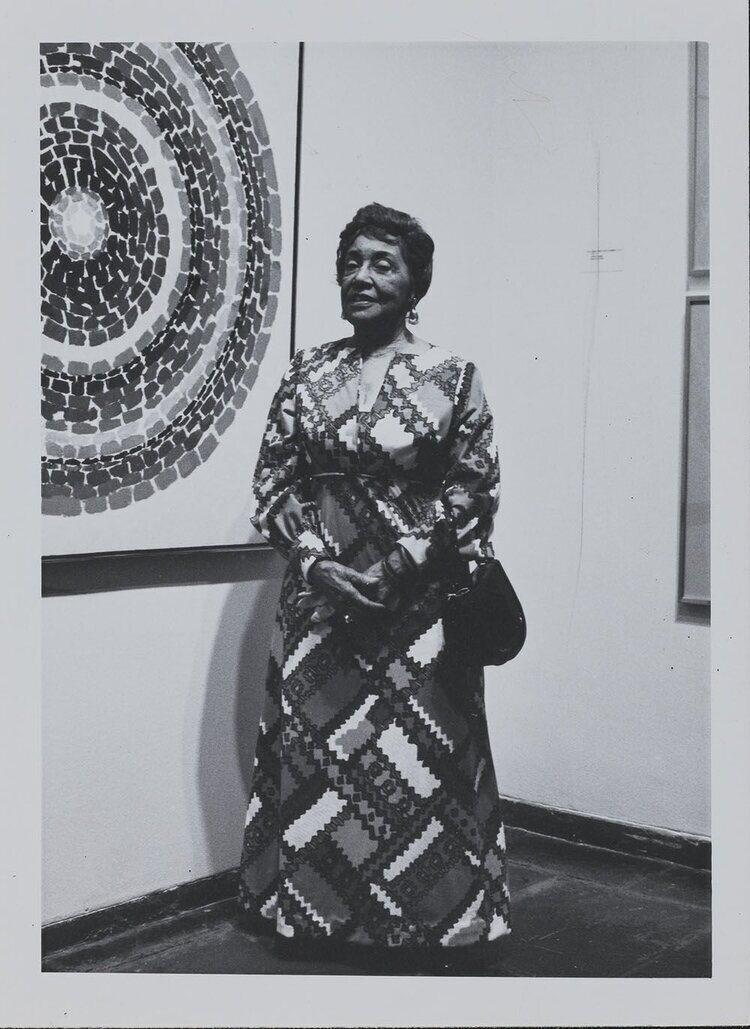
Alma Thomas at the opening for her show at the Whitney
Thomas is an incredibly strong painter. Find a museum showing her work and see for yourself how her paintings hold up against all the other ab-ex and color-field titans of the 20th century. From a talent perspective, Thomas is clearly one of the most important colorists of all time, but we know talent is only part of the story — and not even the largest part.

Alma Thomas, A Fantastic Sunset, 1970
Since we know the price of art often has more to do with popularity of the artist than the quality of the artwork, it is essential to look at Thomas' bona fides, which are nothing short of remarkable — especially given the all of the discrimination she faced.
First African- American women to graduate with an art degree
Earned a Master of Arts degree from Columbia University in 1934
First African- American woman to receive a solo exhibition at the Whitney Museum (1974)
Resounding reviews in The New York Times in an era of prejudice and bias
Selected by the Obamas for display in the dining room of the White House

Alma Thomas’ Ressurection hanging in the White House dining room.
Thomas' market is already a rocketship. In 2017, a new record was set for her work with the sale of Spring Flowers for $387,500. That record fell again in 2019 when A Fantastic Sunset sold for $2,655,000. The ceiling on her work effectively increased 580% in just two years, and there is still plenty of room to grow. We’ve known that Thomas is among our greatest painters for a very long time. We just needed to wait for a generation excited to embrace and celebrate artists of all colors and genders to come along before we could give her the proper recognition she deserves.
Not all the artists whose success was limited due to discrimination will break into the 1% Club. But we will see the fingerprints of Millennials/Gen-Zers correcting for centuries of bias across all levels, not just the top of the market. For example, important works by Agnes Denes and Vera Molnar, pioneers in environmental art and generative art, respectively, can still be collected for under $10K. I expect the market for both these category-defining artists to heat up quite a bit over the next ten to twenty years.
Denes, who currently has a retrospective at The Shed in NYC, is positioned to break out into the mainstream and establish her legacy as the leading figure in environmental and ecological art.
Denes is best known for her work Wheatfield—A Confrontation, which featured two acres of wheat planted and harvested by the artist on the Battery Park landfill in Manhattan during the Summer of 1982. Denes explains that Wheatfield "referred to mismanagement, waste, world hunger, and ecological concerns. It called attention to our misplaced priorities." Wheatfield, with its dual focus on the environment and economic inequality, fits perfectly into the post-Boomer zeitgeist.
Among Denes’ many significant accomplishments:
The grand scale and conceptual nature of Denes’ works does make them challenging to collect. However, she also created many “philosophical drawings” and prints, exploring isometric systems and complex map projections. These drawings can be found in the MoMA and other important collections and periodically come up at auction for very reasonable prices.
At the age of 96, Vera Molnar has now created cutting-edge art that explore algorithms with and without computers across eight decades. Molnar helped bridge the gap between computers, which were thought to be cold and antagonistic to human creativity, and traditional artistic practice. She once said that “ultimately the intuition of an artist is the ‘random walk’ of the computer.” Her work paved the way for a generation of influential generative artists and will continue to indefinitely into the future.
Even the art world, slow to embrace women and slower to embrace tech, is finally starting to take notice of Molnar’s work and achievements:

Vera Molnar - (Dés)Ordres, 1974
If I had tens of thousands of dollars to spend on art, all of it would be going to build a collection of important works by Vera Molnar. However, my meager art budget requires that I look for work that costs a few hundred dollars at most, not tens of millions or even tens of thousands. In many ways, I prefer this. I see collecting as an act that can be just as creative as making art or curating an exhibition. If I were spending tens or hundreds of thousands of dollars, I’d be thinking in terms of a financial investment instead of just looking for art I truly love by artists I want to support and see succeed.
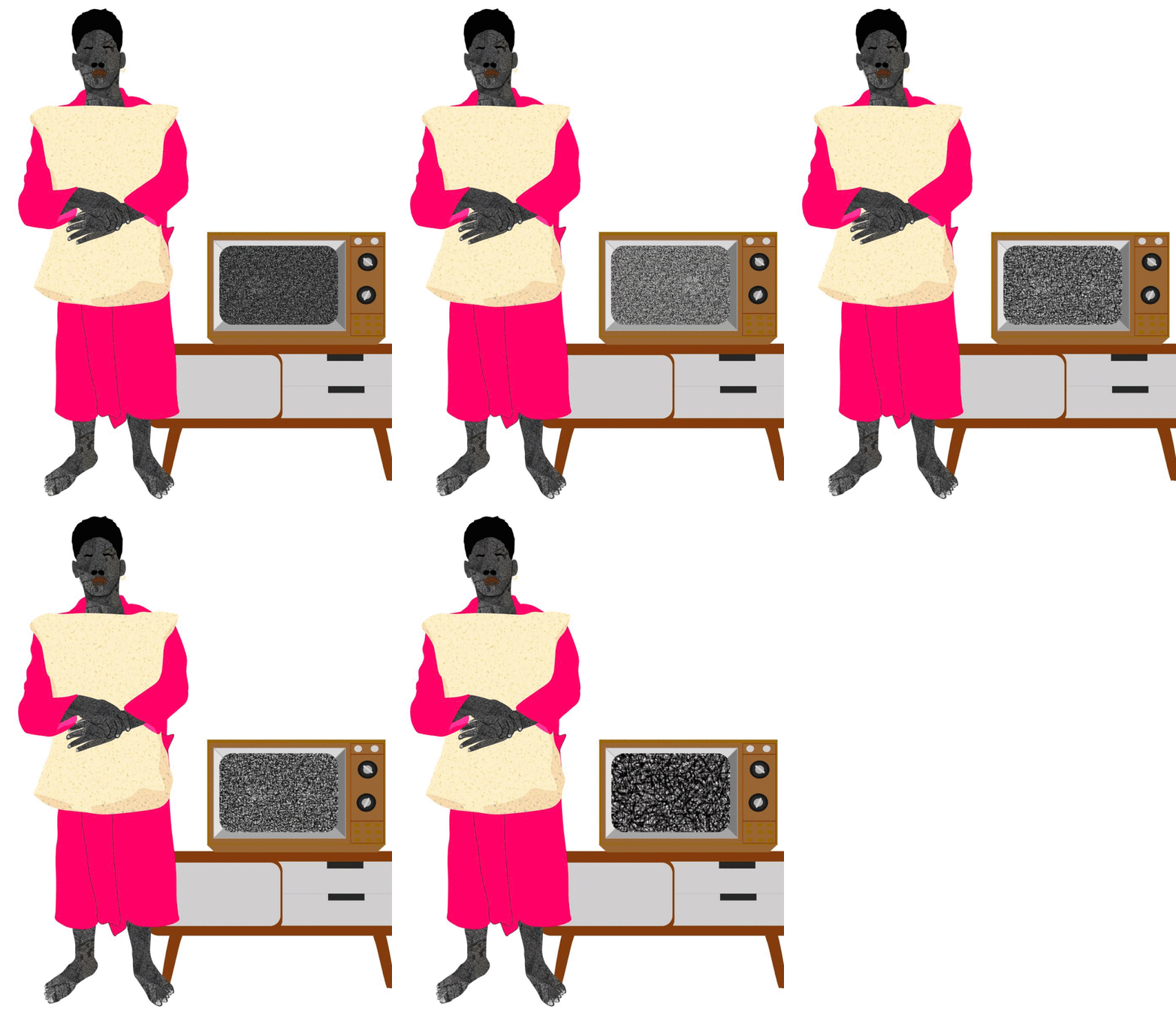
Osinachi - Can’t Sleep, 2019
Lately I have been buying as much work by artist Prince Jacon Osinachi Igwe as I can get my hands on. For me, Osinachi reflects the best of what the coming generation of artists have to offer.
Osinachi’s work stands out in part because he is self-taught and creates his work using Microsoft Word, a common word processing tool few would ever think to use for making art. His signature use of color and pattern create sophisticated compositions that are dynamic, but flat like a collage, unusual for artists working digitally. His work is bold, distinct, authentic, sincere, and addresses his generation’s desire for equality, diversity, and environmentalism in a way that is direct without being too on the nose.

Osinachi signing a print of Nduka's Wedding Day, 2019
Osinachi is an intellectual. His writing is as thoughtful and candid as his art. His 2015 story A Man and His Breasts is a sensitive portrayal of a boy growing up in Nigeria with gynecomastia. It gets to the same core elements present in his visual art — the pain and suffering all of us feel at times for simply living and being who we are in a world full of rules and systems designed to make us feel shame and fear. Or, as Osinachi describes it, “visible existence as protest.”
Osinachi lives and works in Nigeria, a country which has some of the most brutal anti-LGBTQ laws in the world. By law, members of the LGBTQ community can be whipped or face up to 14 years in jail for showing public affection to same-sex partners. The laws have become so strict that simply being accused of having a “gay” hairstyle or clothing can get you arrested.

Osinachi - Nduka's Wedding Day, 2019
In this environment, Osinachi bravely celebrates people from the LGBTQ community in his work, showing them as everyday people flourishing in their lives. This can be seen in his wonderful work Becoming Sochukwuma, inspired by a 2014 essay I Will Call Him Sochukwuma: Nigeria’s Anti-Gay Problem, written by Chimamanda Adichie in reaction to Nigeria's anti-gay law. It can also be seen in the celebratory Nduka's Wedding Day featuring a male bride on his wedding day holding a bouquet.

Prince Osinachi - Becoming Sochukwuma, 2019
Osinachi’s work covers many other topics challenging stereotypes around single motherhood, highlighting the need for diversity, and protecting the environment. And some of his work is just plain fun.

Osinachi - NWANYỊ AHỤ NA-AKWA AKWA, 2019
In a world where artists resort to making porn or sawing animals in half to get attention, Osinachi is bravely fighting for people to be able to live as they are. It’s a welcome use of art and its potential to positively impact society.
Measurable Predictions for 2030
OK, not going to let myself finish without making some bold and measurable art market predictions for you to hold me accountable for. Based on the extreme shift in values and the ensuing wealth transfer, I predict that by 2030:
Works by five non-white and or non-male artists will sell for more than $50M each
Women move from 2% of sales at auction to at least 10%
Women shift from 11% of all work acquired for permanent collections to at least 25%
Women will go from being featured in just 14% of exhibitions to 30%
Acquisitions of art by African-Americans by major US museums will go from 2.3% to 10%
Art in US museums will go from 2.5% by Latino Artists to 5%
In summary, art’s price is built around popularity. What was popular with the Boomers is mostly unpopular with Millenials and Gen-Zers. Specifically, these younger generations are more interested in diversity, more concerned with climate change, and more comfortable with technology. We should expect that artists propped up by Boomer wealth may have a hard time finding buyers in ten or twenty years — specifically, artists who sexualized or objectified women or treated animals or the environment poorly. By contrast, many talented female artists and artists of color will see their work increase in value -- not because of their gender or skin color, but because they have always been great and only needed a more open-minded generation to be fully recognized for their talents.

Dive in rich, speculative marine biodiversity! NEW WORKS BY SOFIA CRESPO EXCLUSIVELY available AT KATE VASS GALERIE
We’re glad to present new works by our dear artist Sofia Crespo; three works (3) were exclusively made and tokenized on the Ethereum blockchain and uploaded to IPFS for decentralised storage to be sold at Kate Vass Galerie Digital!
More information about the series you can find below, however we are very excited that Sofia has chosen KVG Digital and placed trust in us to tokenise her artworks and support the sales through our online store. We need more female artists in this world and we are happy to support this initiative! Enjoy the beautiful works!
About the work and the process:
“Every image is a magnitude of pixels, each a single square of colour, that form a recognizable whole: the image. If we examine them closely they degrade, lose coherence and quality. Using the photomosaic as a revitalised tool, the aim is to explore another way of thinking about the close (re)examination of the image: namely that each pixel can contain coherent, recognizable content when inspected closely: a vessel within a vessel. Simultaneously the photomosaic has the honest quality of abstracting the crisp original from which it is generated, it becomes clearly potent with detail despite its stylization. Coupled with the potentially infinite variation of the generative, a richness emerges.
The containing vessels use a convolutional neural network to create images of rich, speculative marine biodiversity. These are then populated, per pixel, with new vessels: these are the output of a GAN trained on undersea life (with a hint of terrestrial botany). These outputs contain within them a rich essence of the aquatic in potentially infinite variety, leading to a diverse, flourishing meditation upon underwater life.” Sofia Crespo

Sofia Crespo

Bitcoin turns 11!
On 3rd January 2009 the first Bitcoin block was mined by its creator Satoshi Nakamoto.
Through Block #0, Bitcoin - A Peer-to-Peer Electronic Cash System - was born!
In this so-called Genesis Block, Satoshi Nakamoto even embedded the text “The Times 03/Jan/2009 Chancellor on brink of second bailout for banks” as a clear comment referring to the instability of the financial sector.
We are lucky enough to have this amazing unique work from the series “Blockchain Aesthetics” by artist Rob Myers which renders the First Halvening!

Rob Myers
First Halvening (Bitcoin Block Header, 8 Bit Palette, Squares), 2018
Signed in pencil on front
Unique Giclee Print
101 x 101 cm
The work is available on our website HERE

"Inspire. Disrupt. Create. Evolve. Together." 2nd Disruption Disciples event #Zurich, 26th NOV 2019
"Inspire. Disrupt. Create. Evolve. Together."

ART MARKET DISRUPTION, PRESENTATION BY KATE VASS GALERIE AT DISRUPTION DISCIPLES ZURICH 26TH NOV 2019
Happy to speak about "Art Market Disruption" at the 2nd Disruption Disciples #zurich chapter event among 3 other amazing women, who will share what they are passionate about:#Finance, #Privacy and #Work. The event will take place at #Ginetta on 26th November at 18.00 where managing director Ilona Baier will kick-off and set the stage for another unforgettable #DisruptionDisciples event in 2019 for our community and welcoming the following Superwomen on stage: 1) The push model of finance and the attention economy (Efi Pylarinou , Global #FinTech Influencer) 2) Art Market Disruption (Kate Vasilieva, Founder Kate Vass Galerie) #arttech 3) Tightrope walk between privacy and social media (Nora Rümbeli, Head of Data Protection at a bank) 4) From surviving to thriving: How STEM mentoring can change your life (JANET T. PHAN, Founder of Thriving Elements). The presentations will be followed by a networking apéro to enjoy the evening and talk about the keynote topics as well as #innovation,#AI, #blockchain,#RegTech, #FinTech and much more. Register for the event here: https://willcome.to/disruptiondisciples
The event is free and everyone is welcome!


VIII St. Petersburg International Cultural Forum 14-16 November 2019

There are just a few days remaining until the start of the VIII St. Petersburg International Cultural Forum.The Forum has been deservedly recognized as a global cultural event that attracts thousands of experts in the sphere of culture all across the world every year: stars of theatre, opera and ballet, renowned directors and musicians, public figures, government officials and business people, members of the academe. Forum Organizers: The Government of the Russian Federation, the Ministry of Culture of the Russian Federation and the Government of Saint Petersburg.
The Forum is developing in three dimensions at the same time. A large-scale business programme will be of interest to specialists in different areas of culture. The Festival Program includes multiple cultural events for city residents and guests of Saint Petersburg. The Business Venue creates conditions for projects implementation and signing of agreements in the field of culture.
This Year program is impressive and I am glad to speak on behalf of Art & Tech Association Switzerland, bringing Kate Vass Galerie as a business case on new ways of collecting at the panel moderated by Ksenia Podoynitsyna (Founder of InArt) “ NEW APPROACH AND TOOLS FOR COLLECTING CONTEMPORARY ART “.

Check out more about forum here: https://culturalforum.ru
#collectart #collecting #artnews #contemporaryart #artandtechassociation

OPENING OF SOLO EXHIBITION BY ESPEN KLUGE ON 30.10.2019 @KATE VASS
ON 3OTH OCTOBER 2019 THE OPENING OF THE SOLO SHOW BY ESPEN KLUGE TOOK PLACE AT THE PREMISSES OF KATE VASS GALERIE IN ZURICH!
100 of unique portraits are exhibited in various forms both digital and physical. The artist Espen Kluge flew with his girlfriend Ida for the opening and we were very excited to meet both of them! Jason Bailey, curator of this wonderful show, and the discoverer of Espen’s work, has also arrived and was giving a great speech to the audience, explaining why generative art and Espen Kluge works are so important and inspiring. We had a great evening and nice flow of apero, network and admiration of art! i wish i had spent more time with Espen and Ida, as well as with Jason.. but our meetings are always short and limited to the very busy agenda of all! I am glad that Espen signed all the prints personally, as well as COAs which are available to view online https://www.katevassgalerie.com/print?category=Espen%20Kluge
i would like to mention as well that as a part of our commitment to emerging collectors for whom printing, framing, shipping can be cost prohibitive, we are also offering unique works by Kluge available to buy digital or via blockchain you can see the list here https://www.katevassgalerie.com/digital
more about our solutions to collect digital i will wrote in my next post! Meanwhile, please enjoy some pictures from the Vernissage!

Curator Jason Bailey & the artist Espen Kluge…probably listening to me giving the introduction speech :)
ON 3OTH OCTOBER 2019 THE OPENING OF THE SOLO SHOW BY ESPEN KLUGE TOOK PLACE AT THE PREMISSES OF KATE VASS GALERIE IN ZURICH!
100 of unique portraits are exhibited in various forms both digital and physical. The artist Espen Kluge flew with his girlfriend Ida for the opening and we were very excited to meet both of them! Jason Bailey, curator of this wonderful show, and the discoverer of Espen’s work, has also arrived and was giving a great speech to the audience, explaining why generative art and Espen Kluge works are so important and inspiring.

Kate Vass Galerie, Zurich 30/10/2019
We had a great evening and nice flow of apero, network and admiration of art! i wish i had spent more time with Espen and Ida, as well as with Jason.. but our meetings are always short and limited to the very busy agenda of all! I am glad that Espen signed all the prints personally, as well as COAs which are available to view online https://www.katevassgalerie.com/print?category=Espen%20Kluge

i would like to mention as well that as a part of our commitment to emerging collectors for whom printing, framing, shipping can be cost prohibitive, we are also offering unique works by Kluge available to buy digital or via blockchain you can see the list here https://www.katevassgalerie.com/digital
more about our solutions to collect digital i will wrote in my next post!

Kate Vasilieva & Alessia Realis, Kate Vass Galerie 30/10/2019
I would like to say special thank to my dear colleague Alessia Realis, without her contribution this show would not come true, its very important to work with people who you can trust and rely on. I am very happy to have such great people who I am honored to work with: Jason and Espen thank you for your collaboration!
Meanwhile, please enjoy some pictures from the Vernissage!


Kate Vass Galerie hosts its 2nd meet up session in collaboration with Multichain Asset Managers Association in Zurich.
Our next #Zurich #meetup at Kate Vass Galerie in collaboration with Multichain Asset Managers Association, this time with Neufund explaining the benefits of investing in tokenized equity. The members and attendees will be able to get in addition an exclusive pre-view of the opening-soon solo show by Espen Kluge "ALTERNATIVES", the artist and curator Jason Bailey will be present ! #tokenization #blockchain #assetmanagement #art Please register here: https://www.meetup.com/meetup-group-MxIAcYAu/events/265530355/


Kate Vass Galerie @ CADAF MIAMI 2019
Kate Vass Galerie Brings Masters of Generative Art to CADAF at Art Basel Miami

Jared Tarbell, Substrate.IPY, 2019
We are all living smack in the middle of a digital revolution that is changing our lives with a depth and speed never before witnessed in human history. So it should be no surprise that the most exciting and innovative artists working today have let go of their nostalgia for centuries-old tools like paintbrushes and chisels in favor of computer programming languages and sophisticated algorithms which better reflect the uniqueness of the times that we live in.
Many galleries and artists have been slow to adapt to this digital revolution and are just now scrambling to find an angle for using technology to make their traditional artwork feel more exciting and relevant. But technologies like AI (artificial intelligence) and ML (machine learning) are not “angles” or “trends” that can be poured on top of traditional analog art like some kind of rejuvenation sauce to make them more relevant. New technologies like AI and ML are highly sophisticated art-making tools in their own right. In the hands of generative art masters like Memo Akten, Helena Sarin, David Young, Sofia Crespo, and Tom White, AI is more than a buzzword. Like brushes, chisels, cameras, or any other art-making tool, AI and ML require mastery to produce artworks that transcend “everyday” experience and bring us closer to the sublime.
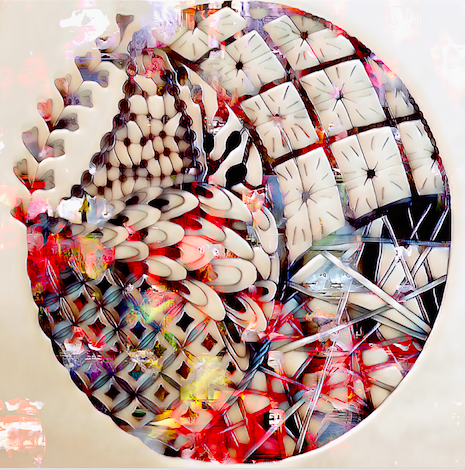
Helena Sarin, An Eternal Tangle of What Ifs, 2018
While AI and ML have been drawing the most attention in the last year, generative art as a genre has deep roots that trace all the way back to the beginning of computing. The best generative artists have always been those who are as brilliant in their skills with programming as artists like Picasso and Van Gogh were in their skill with brushes and paint. Generative artists like Manolo Gamboa Naon.
Manolo’s work feels like it is the result of the entire contents of twentieth-century art and design being put into a blender. Once chopped down into its most essential geometry, Manolo then lovingly pieces it back together with algorithms and code to produce art that is simultaneously futuristic and nostalgic. His work serves as a welcome (and needed) bridge into digital art and an antidote for those who see the genre as being too mechanical and discontinuous with the history of art.

Manolo Gamboa Naon, LLRR, 2018
We at Kate Vass Galerie are excited to bring the best work by the most respected generative artists from around the globe to CADAF this year for Art Basel Miami. We take generative art very seriously and see ourselves as missionaries helping to educate and bring attention to these important artists to make sure their work is discovered and properly appreciated during their lifetimes. It is our mission to offer only the best work by the most creative artists who are pushing the boundaries of the genre - artists like Espen Kluge, who currently has his first one person show in our Zürich gallery in Switzerland. Kluge’s ground-breaking generative portraits feel monumental and architectural, reminding us of the sculptures of the Russian Constructivists like Naum Gabo and Vladimer Tatlin. But in contrast to the somber character of the Constructivists, Kluge’s work explodes with a rainbow of color and emotion. Though the details of their expressions are abstracted into masses of colorful geometric threads, Kluge’s portraits display the full range of the human condition. This is especially remarkable when you consider that Kluge is working in the genre of generative art, often criticized for being cold, geometric, and esoteric. Kluge gives generative art a new direction with work that is warm, universally approachable, and equally accessible to both the heart and the mind.

Espen Kluge, makes great choices while angry, 2019
Like everything else in our lives, art is undergoing a massive digital transformation. Generative art best reflects that transformation, and the work on view with Kate Vass Galerie at CADAF in Art Basel Miami is your chance to see it all in one place. We hope to see you there!

John Watkinson & Matt Hall, Autoglyph #36, 2019

Kate Vass Galerie is excited to feature new series Tabula Rasa by David Young

AI and machine learning are playing an increasingly large role in our daily lives yet there is much about how they work that still remains a mystery. Do machines really “think” and if so how are we to understand their intelligence? To better understand and explore these mysteries artist David Young uses the absolute minimum training data on his machine learning models in hopes of isolating and illuminating the thoughts that are unique to machine intelligence.

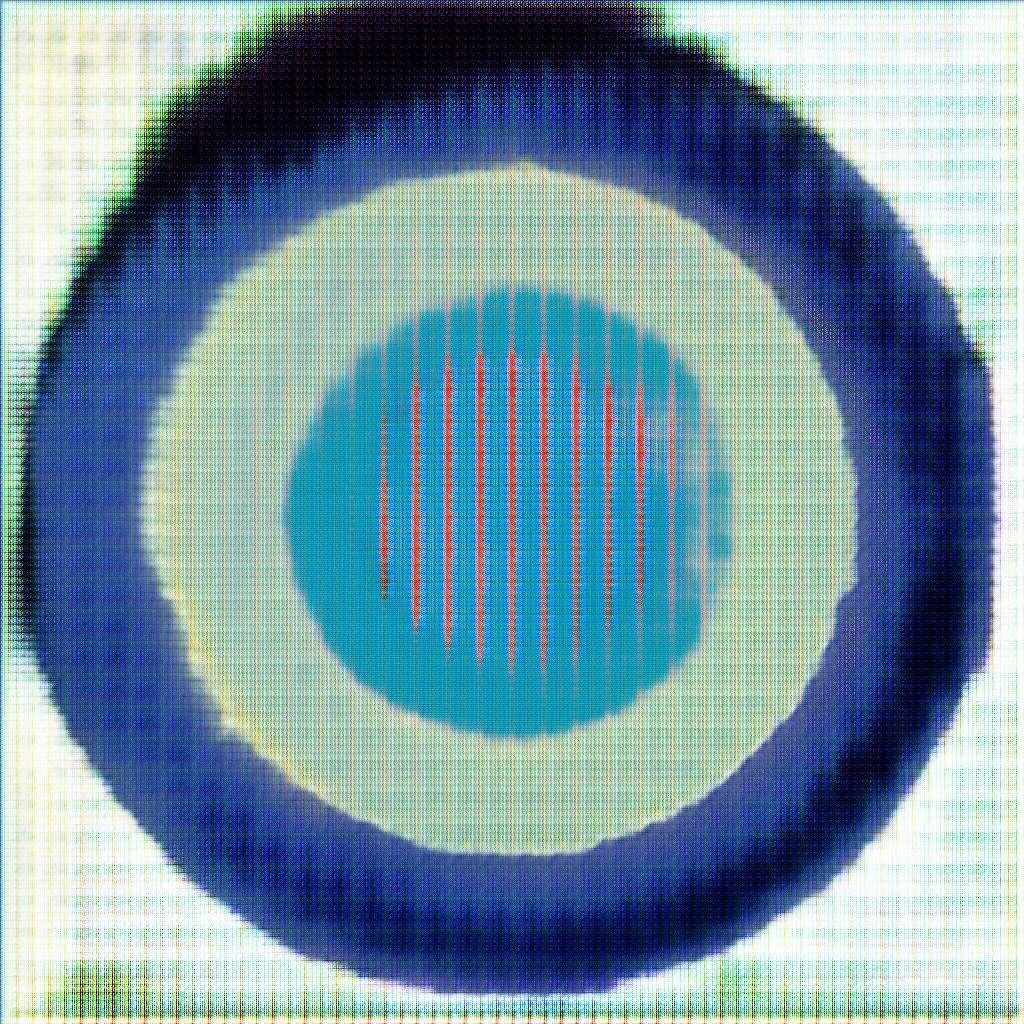
In addition to his compelling new artworks, Young has written a wonderful essay titled Tabula Rasa - Rethinking The Intelligence Of Machine Minds which asks “if machines have intelligence is it a rational intelligence or an emotional intelligence”? The essay is available at Artnome.com along with a foreword by curator and art historian Jason Bailey. In his foreword Bailey builds on Young’s line of thinking through a Jungian analysis in direct contrast to John Locke’s concept of the tabula rasa or “blank tablet.”
Rather than starting with a “blank slate,” Swiss psychiatrist Carl Jung believed that we are all born with a set of shared ideas, a “collective unconscious.” According to Jung, this collective unconscious is filled with archetypes and visual symbols that resonate universally within humans regardless of their individual experience, geography, or era.
When David Young shared a contact sheet of work from his latest machine learning model which was trained on minimal data, I was shocked at how similar the images were to twentieth-century abstract paintings.
This led me to wonder, could it be possible that machine learning models also have a collective unconscious? If so, could that collective unconscious include some of the same archetypes and symbols we have as humans? Is it possible that a machine learning model, when given little to no training material (as with David’s Tabla Rasa model), produces symbols that may come largely from its own collective unconscious rather than the sparse data it has been trained on?
Indeed, Young’s new work bares a striking resemblance to the masterworks of the abstract expressionists. As an example you can see young machine learning abstraction below in comparison with the abstract paintings of Agnes Martin.

A selection of paintings by minimalist abstract painter Agnes Martin

A selection of work from David Young’s Tabula Rasa
As part of our Kate Vass Galerie’s commitment to our digital collectors, we are making a series of five works by Young, specially chosen by senior curator Jason Bailey, available in our Kate Vass Digital store. These works are tokenized on the Ethereum blockchain, have been uploaded to IPFS for decentralized storage, and include a certificate of authentication from Kate Vass Galerie. Every digital work is unique ed.1/1.
Thinking about our traditional collectors who also appreciate the beauty of print and esthetics of colors and physical touch of the artist, we make those artworks also available in unique prints in various sizes. Please see the gallery.
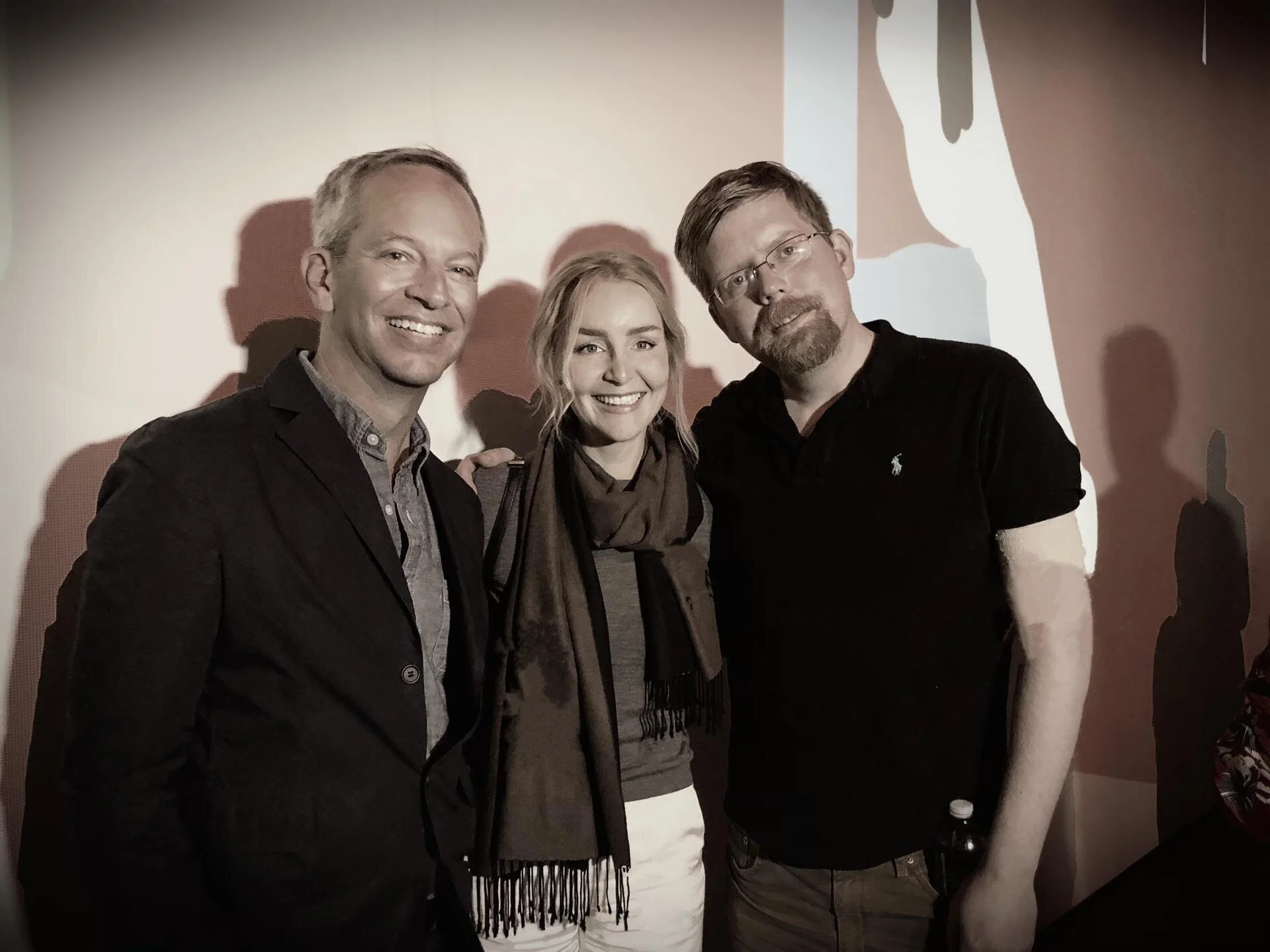
Left to right: David Young, Kate Vass, Jason Bailey (at CADAF NYC, Spring 2019)

Artist Espen Kluge Debuts Generative Portrait Series “Alternatives” at Kate Vass Digital
We are thrilled to announce that Kate Vass Galerie will be representing the work of Norwegian digital artist Espen Kluge. In his recent interview with Kluge, senior curator for Kate Vass Galerie Jason Bailey called Kluge “an artist’s artist” and compared his work to the Russian constructivist Naum Gabo with “a touch of mid-century modern of symmography.” As part of this interview, Bailey has carefully curated several works by Kluge to debut with the Kate Vass Galerie. These include the three portraits below available as archival single-edition prints exclusively from Kate Vass Galerie.
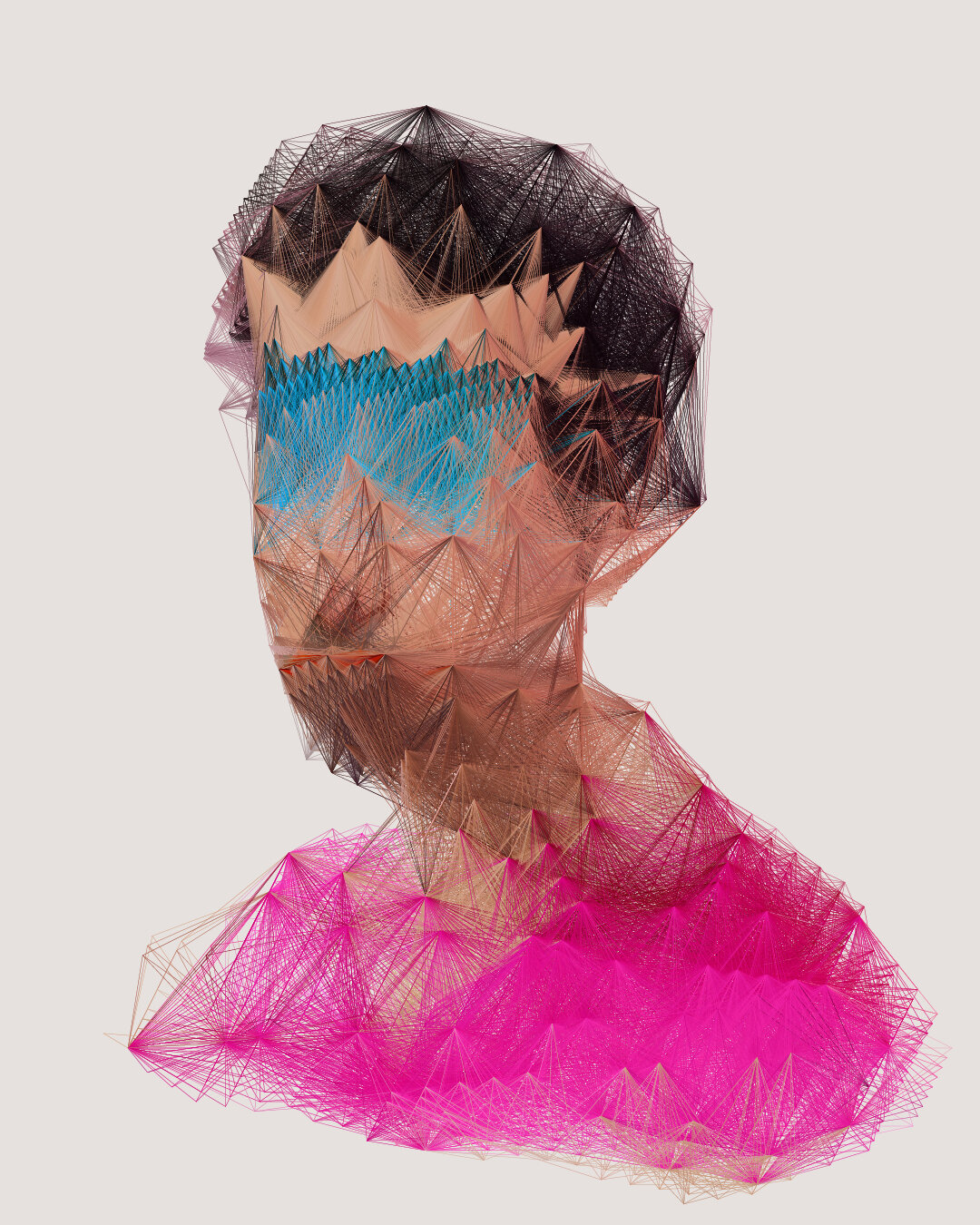
Espen Kluge, makes great choices while angry - 2019
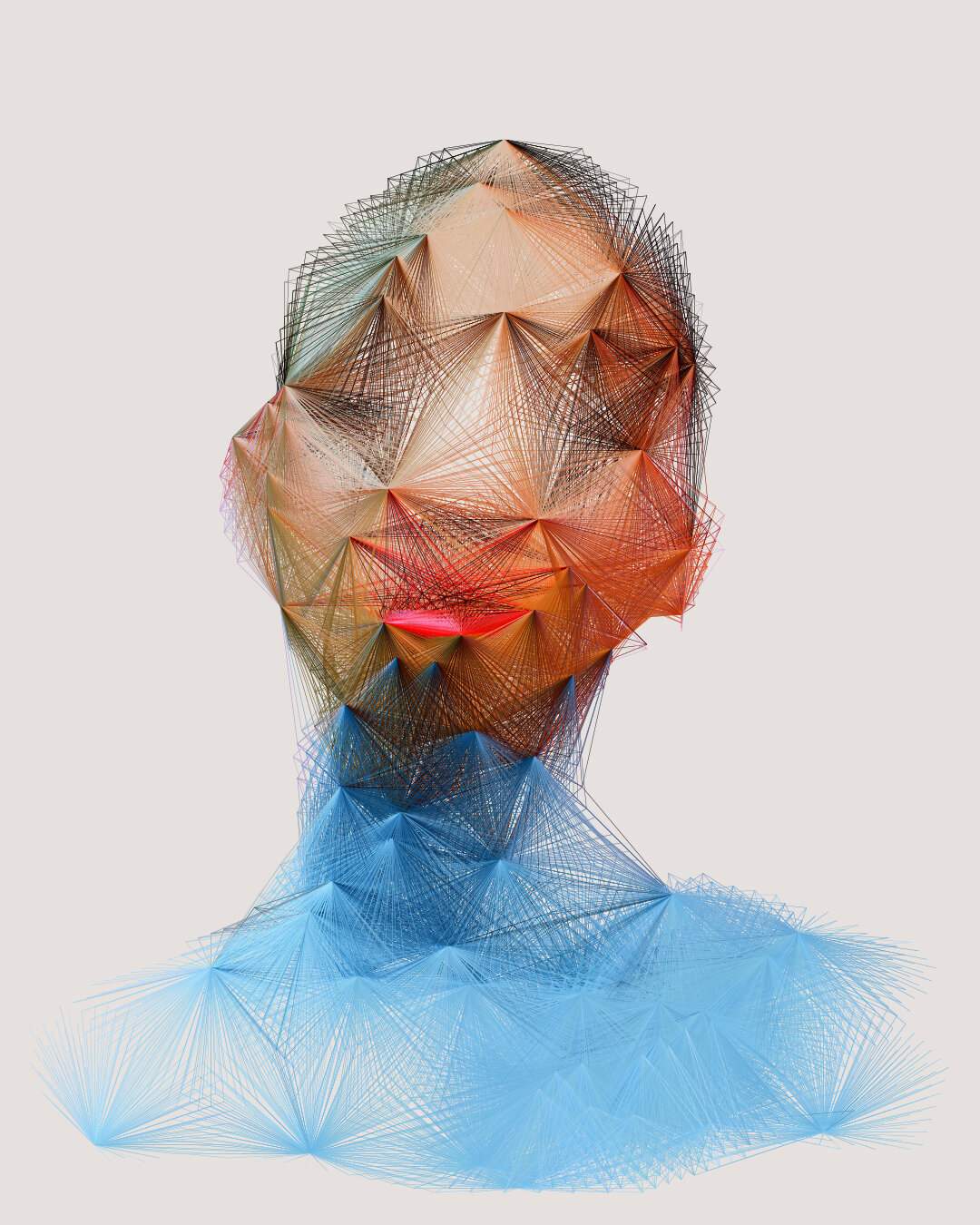
Espen Kluge, ash when he arrives, every time - 2019

Espen Kluge, superclear when I say it’s risky business - 2019
As part of our commitment to digital art and to emerging collectors for whom printing, framing, and shipping can be cost prohibitive, we are also making a series of five works by Kluge, specially curated by Jason Bailey, available in our new Kate Vass Digital store. These works are tokenized on the Ethereum blockchain, have been uploaded to IPFS for decentralized storage, and come with a certificate of authentication from Kate Vass Galerie.
The first of these works, cruise ships and police cars, will be auctioned this week with no reserve price to enable everyone to have an opportunity to participate.

Espen Kluge, they don't have this for humans - 2019

Espen Kluge, cruise ships and police cars -2019

Espen Kluge, any individual -2019

Espen Kluge, more extraverted than you - 2019

Espen Kluge, 100 atoms in my favor - 2019
All questions and inquiries about Espen Kluge and his work at the Kate Vass Galerie can be directed to ar@katevassgalerie.com

Kate Vass Galerie Partners With Artnome And Launches New Platform

The team at the Kate Vass Galerie is thrilled to announce a strategic partnership with Artnome and the launch of our new online sales platform. Collectors from around the world can now collect artwork by preeminent digital artists including Casey Reas, Mario Klingemann, and Cornelia Sollfrank as well as renowned photographers like Man Ray, Brett Weston, and Karl Lagerfeld directly from Kate Vass Galerie online.
With the new platform comes a new site design, created in collaboration with Artnome, which better highlights the work of the many talented artists we feature in our gallery. These are just the first steps in moving towards our ambitions of becoming the number one destination online for collectors of cutting edge digital art and photography.
Kate Vass Galerie and Artnome will continue to grow the gallery’s presence on and off line through the introduction of the latest technologies including virtual reality (VR) and a blockchain-based gallery to make collecting digital art accessible to the next generation of collectors.
As co-curator of our current show, Automat und Mensch, Artnome founder Jason Bailey brought a combination of art historical knowledge and technological vision that few others in the art world possess. Bailey will continue to advise Kate Vass Galerie on artists and provide curatorial assistance moving forward.

From Left: Robbie Barrat, Herbert W. Franke, Mario Klingemann, Kate Vass, Jason Bailey, Georg Bak
As an official partner, the Kate Vass Galerie will also become integrated into the highly popular Artnome website as the official gallery of Artnome. Bailey will help us with our mission to educate collectors and provide artists with additional exposure.
You can watch Bailey’s recent presentations at Christie’s Art + Tech Summit in NYC last month where he makes predictions for the art market and interviews AI artist Robbie Barrat below.
Machine Learning and Analytics: Predictions for the Art Market
An Interview with Robbie Barrat and Jason Bailey
Please join us in celebrating this new partnership! As always we welcome any questions or feedback and you can reach us through our contact page.