ISKRA VELITCHKOVA
Iskra Velitchkova (b.1988) is a Madrid-based artist whose practice investigates the evolving relationship between humans and machines. With a background in technology and artificial intelligence, where she worked as a visual thinker, she now channels that expertise into her artistic research. Her approach blends digital and physical techniques, resulting in generative works that straddle both the mechanical and the human. Bringing together her Balkan origins with the influence that Mediterranean culture has had on her over her history, she uses this context to build upon her work. Her work is based on mixed techniques: she explores new media combining digital formats and physical nature. She uses generative technology, artificial neural networks, and plastic arts, she plots on canvas and plays with clay.
She has exhibited internationally in cities such as London, Paris, Milan, New York, Miami, Singapore, Mexico City, and Berlin, collaborating with notable galleries like Kate Vass, Bright Moments, Feral File, and Unit London, as well as participating in renowned art fairs such as Art Basel. Her work has been auctioned twice at Sotheby’s New York and at Christie’s New York in collaboration with Gucci.
Analog
by Iskra Velitchkova
SOLD OUT
from Un-distance series
NFT minted on Foundation + unique plotter drawing
https://foundation.app/@pointline/un-distance/2
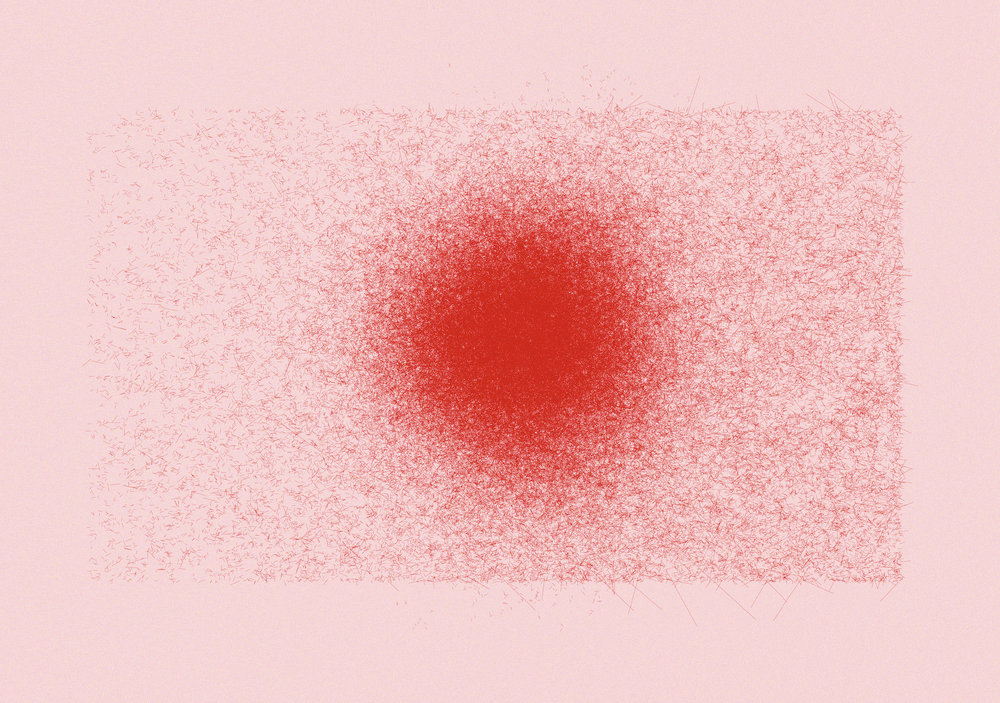
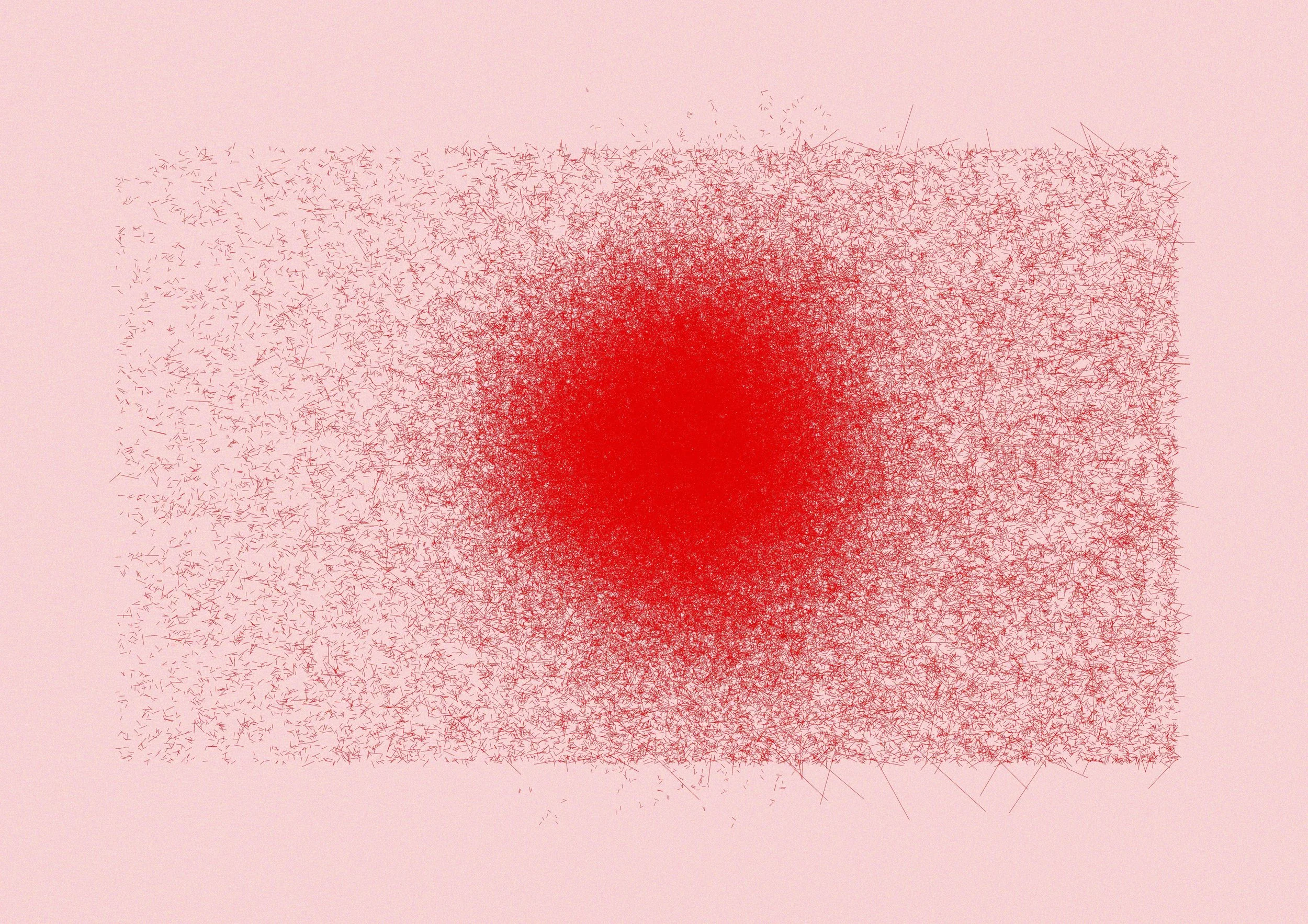
Unique NFT with layer 1+2 and a unique plotter drawing controlled by the artist: 2 layers displayed together. All on pink hand painted background.
Medium / Details:
Digital work:
Coded in processing; Size: 6365 × 4500px, PNG
Physical work:
Red archival ink + Staedtler Mars Matic 700, 0.1mm for the drawing;
Inca gold and coral high quality watercolor for the background;
Paper: ARCHES ultra white 300gr. 100% cotton, acid free
Size: 42x29,7cm
price: 3ETH
Un-distance is a generative exploration of the intersection of digital and physical. Technology today allows us to play in an unprecedented playground of graphic information where generative art opens the door to the most bizarre and complex geometry. Being subjected to the computational limits & the randomness of some processes brings impressive outcomes that begs the experimenter to question deeply the nature of the results. The artist will of course guide the algorithm, but it is inherent in the process the commitment with the machine to be surprised in the end.
A great approach to me in order to dive into a better understanding of how this magic happens is adding a physical component to the process. Translating the digital output to a physical plot forces the artist to face constraints that only can appear in real life. First of all, time matters. Spending a whole day creating a drawing allows us to see the process itself. Somehow the machine finds the time to explain how the system works. On the other hand, imperfections appear. Paper matters, pen matters, ink matters: it all together affects the result directly and makes this blend an enlightening tool to start a conversation with the machine.
SOLD OUT
by Iskra Velitchkova
SOLD OUT
NFT + PLOTTER DRAWING
by Iskra Velitchkova
2022
https://foundation.app/@pointline/un-distance/3
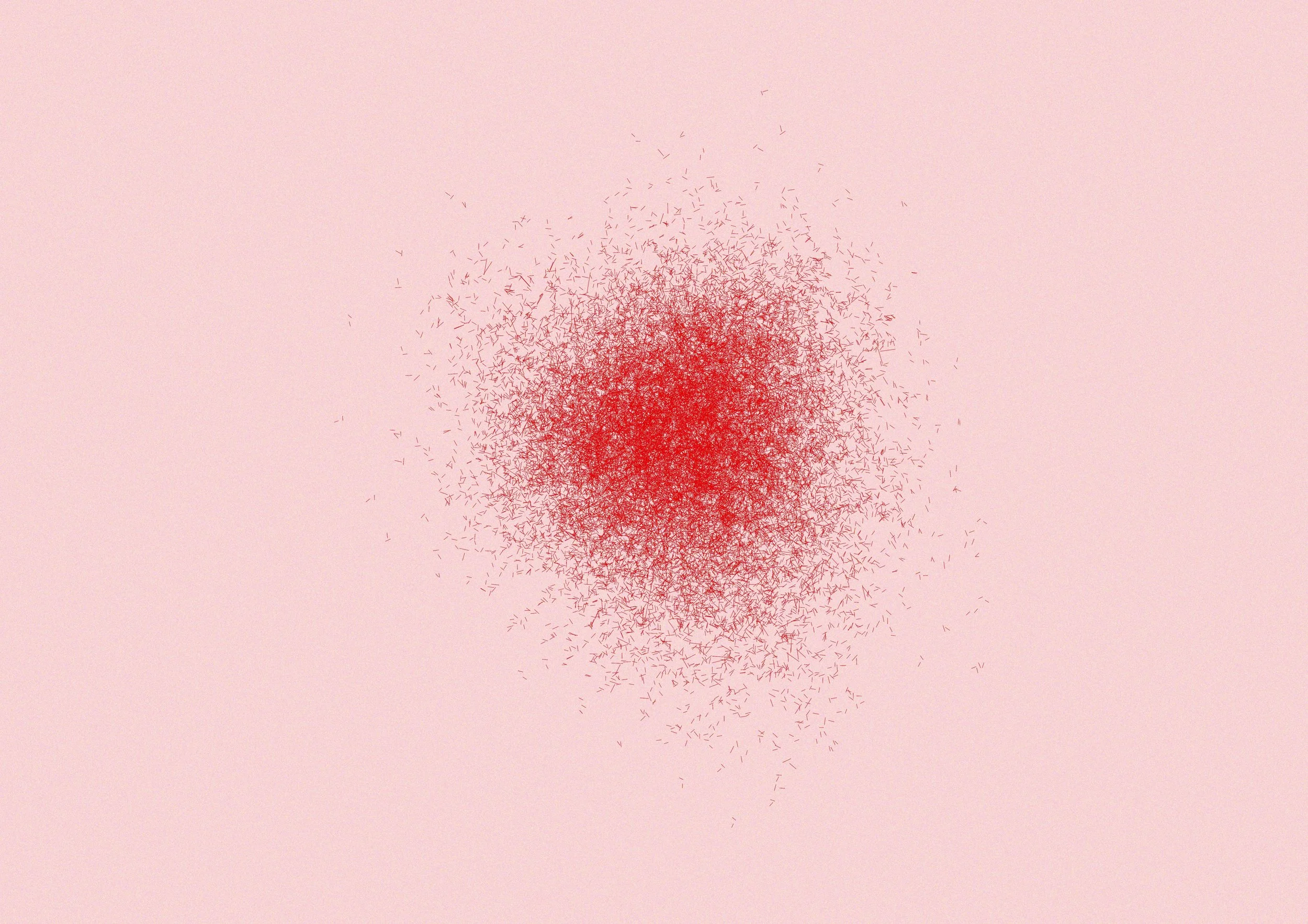
Unique NFT with layer 1+2+3 and a unique plotter drawing controlled by the artist: the 3 layers displayed together on pink hand painted background.
Medium / Details:
Digital work:
Coded in processing; Size: 6365 × 4500px, PNG
Physical work:
Red archival ink + Staedtler Mars Matic 700, 0.1mm for the drawing;
Inca gold and coral high quality watercolor for the background;
Paper: ARCHES ultra white 300gr. 100% cotton, acid free
Size: 42x29,7cm
Un-distance is a generative exploration of the intersection of digital and physical. Technology today allows us to play in an unprecedented playground of graphic information where generative art opens the door to the most bizarre and complex geometry. Being subjected to the computational limits & the randomness of some processes brings impressive outcomes that begs the experimenter to question deeply the nature of the results. The artist will of course guide the algorithm, but it is inherent in the process the commitment with the machine to be surprised in the end.
A great approach to me in order to dive into a better understanding of how this magic happens is adding a physical component to the process. Translating the digital output to a physical plot forces the artist to face constraints that only can appear in real life. First of all, time matters. Spending a whole day creating a drawing allows us to see the process itself. Somehow the machine finds the time to explain how the system works. On the other hand, imperfections appear. Paper matters, pen matters, ink matters: it all together affects the result directly and makes this blend an enlightening tool to start a conversation with the machine.
by Iskra Velitchkova
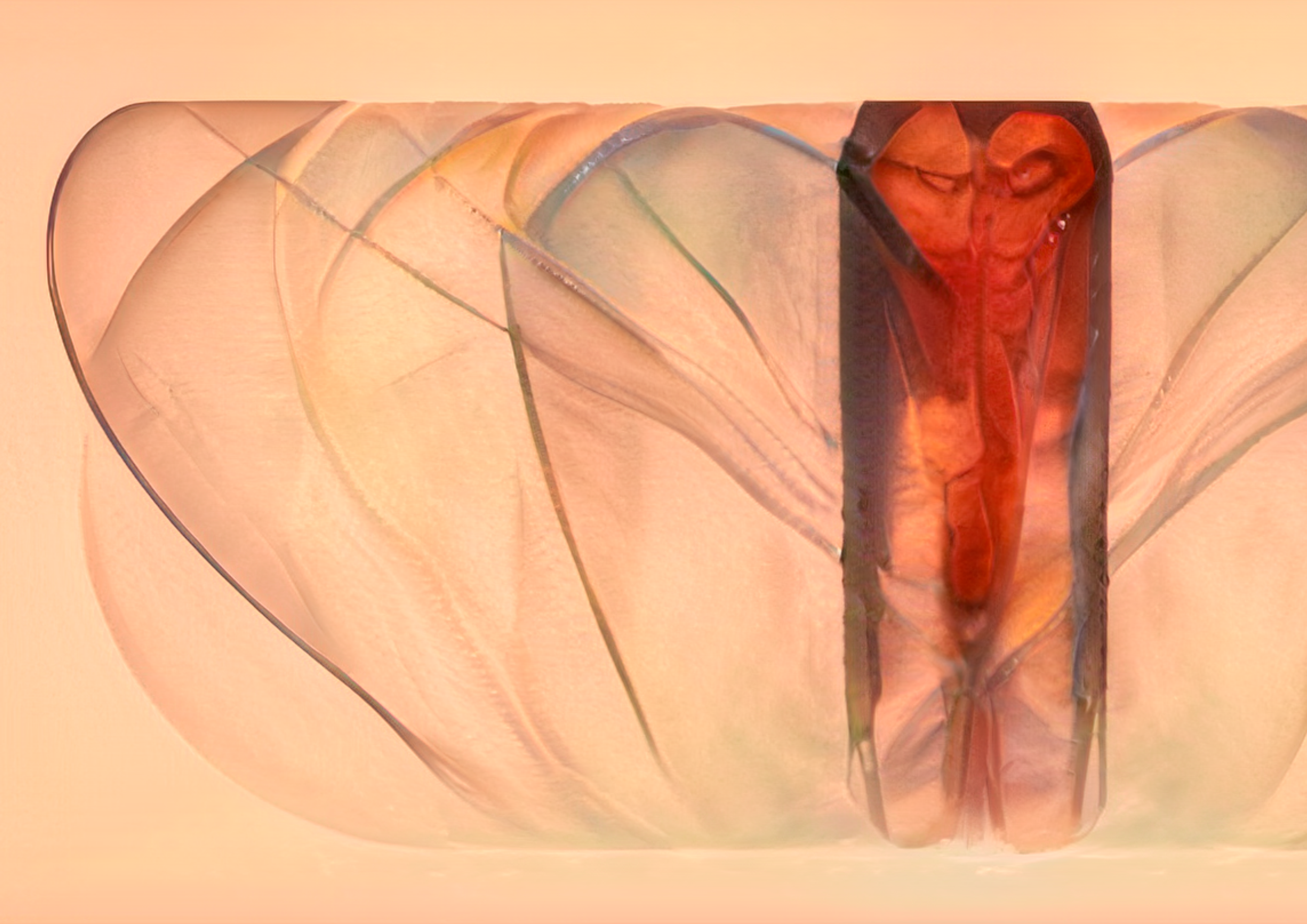
From the series: “The fallopian visitor. A disinformated work by Iskra Velitchkova”
NFT
Open Edition
Price: 0.09ETH (limited to 3 days offer)
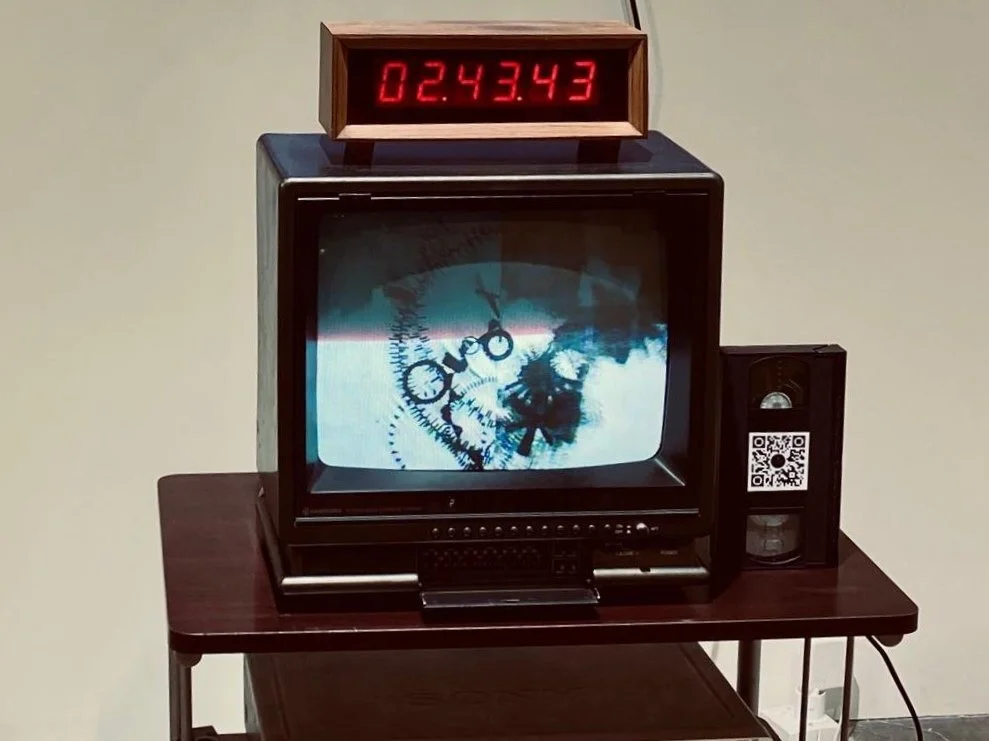
by Marcelo Soria-Rodríguez & Iskra Velitchkova
Unique VHS tape + Unique NFT (video work of the performance)
Price: 100 ETH
SOLD
Giclée Print
Image: 25 x 25 cm
Framed: 40 x 40 cm
Unique
Exhibited at "Art Salon Budapest - Interthinking" exhibition
Description:
In FIGURES, I pay homage to Victor Vasarely by reflecting on the geometric harmony and dynamic use of color that make his art enduring. By alternating red and blue circles, I aim to create a rhythmic grid that invites the viewer into an optical challenge. This interaction between shape and color becomes a dialogue between the artwork and the observer, a conversation I seek to capture in this piece.
The four images I created echo this dialogue, drawing inspiration from Vasarely's structured compositions and vivid color palettes. Each image explores the relationship between squares and circles, a hallmark of his work. The use of vibrant reds and deep blues is more than an aesthetic choice; it’s a nod to Vasarely’s ability to evoke emotion through contrast and repetition. Through this approach, I hope to carry his pioneering spirit into today's visual culture.
Figures 1 and 4, positioned diagonally, create an illusion of depth and movement through intricate line work that only reveals itself upon closer inspection. This careful detailing produces a sense of light emerging from seemingly nowhere, exploring the interplay of color, lines, and shapes.
In contrast, Figures 2 and 3 introduce a more contemporary twist. I believe it was Coco Chanel who said that fashion must represent the current era, and whoever represents it best, wins. I'm not quite sure what it means to win or lose when it comes to art, but I do think this statement applies to fashion and art in general. We are children of our time, and the only thing we can aspire to is to honor the legacy of the minds that changed our past and bring their look to the eyes of today.
If I were to define the way I see the world today, I would describe it as a vast calculator, constantly adding what propels us forward and subtracting what we no longer need. This process, for better or worse, is what shapes us. Like any evolving idea, the advancement of a shared culture is vital. The culture surrounding algorithmic art draws upon recent decades, where nostalgia converges with the raw power of computation to bring to light what was once hidden—like a giant magnifying glass. Engaging in this dialogue, I aim to connect with the reference work through pixels and the intricate patterns that emerge beneath deceptively simple forms, as seen in Figures 1 and 4.
-Iskra Vetlichkova
SOLD
Giclée Print
Image: 25 x 25 cm
Framed: 40 x 40 cm
Unique
Exhibited at "Art Salon Budapest - Interthinking" exhibition
Description:
In FIGURES, I pay homage to Victor Vasarely by reflecting on the geometric harmony and dynamic use of color that make his art enduring. By alternating red and blue circles, I aim to create a rhythmic grid that invites the viewer into an optical challenge. This interaction between shape and color becomes a dialogue between the artwork and the observer, a conversation I seek to capture in this piece.
The four images I created echo this dialogue, drawing inspiration from Vasarely's structured compositions and vivid color palettes. Each image explores the relationship between squares and circles, a hallmark of his work. The use of vibrant reds and deep blues is more than an aesthetic choice; it’s a nod to Vasarely’s ability to evoke emotion through contrast and repetition. Through this approach, I hope to carry his pioneering spirit into today's visual culture.
Figures 1 and 4, positioned diagonally, create an illusion of depth and movement through intricate line work that only reveals itself upon closer inspection. This careful detailing produces a sense of light emerging from seemingly nowhere, exploring the interplay of color, lines, and shapes.
In contrast, Figures 2 and 3 introduce a more contemporary twist. I believe it was Coco Chanel who said that fashion must represent the current era, and whoever represents it best, wins. I'm not quite sure what it means to win or lose when it comes to art, but I do think this statement applies to fashion and art in general. We are children of our time, and the only thing we can aspire to is to honor the legacy of the minds that changed our past and bring their look to the eyes of today.
If I were to define the way I see the world today, I would describe it as a vast calculator, constantly adding what propels us forward and subtracting what we no longer need. This process, for better or worse, is what shapes us. Like any evolving idea, the advancement of a shared culture is vital. The culture surrounding algorithmic art draws upon recent decades, where nostalgia converges with the raw power of computation to bring to light what was once hidden—like a giant magnifying glass. Engaging in this dialogue, I aim to connect with the reference work through pixels and the intricate patterns that emerge beneath deceptively simple forms, as seen in Figures 1 and 4.
-Iskra Vetlichkova
SOLD
Giclée Print
Image: 25 x 25 cm
Framed: 40 x 40 cm
Unique
Exhibited at "Art Salon Budapest - Interthinking" exhibition
Description:
In FIGURES, I pay homage to Victor Vasarely by reflecting on the geometric harmony and dynamic use of color that make his art enduring. By alternating red and blue circles, I aim to create a rhythmic grid that invites the viewer into an optical challenge. This interaction between shape and color becomes a dialogue between the artwork and the observer, a conversation I seek to capture in this piece.
The four images I created echo this dialogue, drawing inspiration from Vasarely's structured compositions and vivid color palettes. Each image explores the relationship between squares and circles, a hallmark of his work. The use of vibrant reds and deep blues is more than an aesthetic choice; it’s a nod to Vasarely’s ability to evoke emotion through contrast and repetition. Through this approach, I hope to carry his pioneering spirit into today's visual culture.
Figures 1 and 4, positioned diagonally, create an illusion of depth and movement through intricate line work that only reveals itself upon closer inspection. This careful detailing produces a sense of light emerging from seemingly nowhere, exploring the interplay of color, lines, and shapes.
In contrast, Figures 2 and 3 introduce a more contemporary twist. I believe it was Coco Chanel who said that fashion must represent the current era, and whoever represents it best, wins. I'm not quite sure what it means to win or lose when it comes to art, but I do think this statement applies to fashion and art in general. We are children of our time, and the only thing we can aspire to is to honor the legacy of the minds that changed our past and bring their look to the eyes of today.
If I were to define the way I see the world today, I would describe it as a vast calculator, constantly adding what propels us forward and subtracting what we no longer need. This process, for better or worse, is what shapes us. Like any evolving idea, the advancement of a shared culture is vital. The culture surrounding algorithmic art draws upon recent decades, where nostalgia converges with the raw power of computation to bring to light what was once hidden—like a giant magnifying glass. Engaging in this dialogue, I aim to connect with the reference work through pixels and the intricate patterns that emerge beneath deceptively simple forms, as seen in Figures 1 and 4.
-Iskra Vetlichkova
SOLD
Giclée Print
Image: 25 x 25 cm
Framed: 40 x 40 cm
Unique
Exhibited at "Art Salon Budapest - Interthinking" exhibition
Description:
In FIGURES, I pay homage to Victor Vasarely by reflecting on the geometric harmony and dynamic use of color that make his art enduring. By alternating red and blue circles, I aim to create a rhythmic grid that invites the viewer into an optical challenge. This interaction between shape and color becomes a dialogue between the artwork and the observer, a conversation I seek to capture in this piece.
The four images I created echo this dialogue, drawing inspiration from Vasarely's structured compositions and vivid color palettes. Each image explores the relationship between squares and circles, a hallmark of his work. The use of vibrant reds and deep blues is more than an aesthetic choice; it’s a nod to Vasarely’s ability to evoke emotion through contrast and repetition. Through this approach, I hope to carry his pioneering spirit into today's visual culture.
Figures 1 and 4, positioned diagonally, create an illusion of depth and movement through intricate line work that only reveals itself upon closer inspection. This careful detailing produces a sense of light emerging from seemingly nowhere, exploring the interplay of color, lines, and shapes.
In contrast, Figures 2 and 3 introduce a more contemporary twist. I believe it was Coco Chanel who said that fashion must represent the current era, and whoever represents it best, wins. I'm not quite sure what it means to win or lose when it comes to art, but I do think this statement applies to fashion and art in general. We are children of our time, and the only thing we can aspire to is to honor the legacy of the minds that changed our past and bring their look to the eyes of today.
If I were to define the way I see the world today, I would describe it as a vast calculator, constantly adding what propels us forward and subtracting what we no longer need. This process, for better or worse, is what shapes us. Like any evolving idea, the advancement of a shared culture is vital. The culture surrounding algorithmic art draws upon recent decades, where nostalgia converges with the raw power of computation to bring to light what was once hidden—like a giant magnifying glass. Engaging in this dialogue, I aim to connect with the reference work through pixels and the intricate patterns that emerge beneath deceptively simple forms, as seen in Figures 1 and 4.
-Iskra Vetlichkova
by Iskra Velitchkova
From the series: “The fallopian visitor. A disinformated work by Iskra Velitchkova”
Fine Art Print accompanied by an NFT
Unique, signed
Size: 59,4 x 42 cm
Framed
Price upon request (please contact info@katevassgalerie.com)
by Iskra Velitchkova
Series: "The fallopian visitor. A disinformated work by Iskra Velitchkova"
Painting on canvas
Unique, signed
Size: 59,4 x 42 cm
Framed
Price upon request (please contact info@katevassgalerie.com)
by Iskra Velitchkova
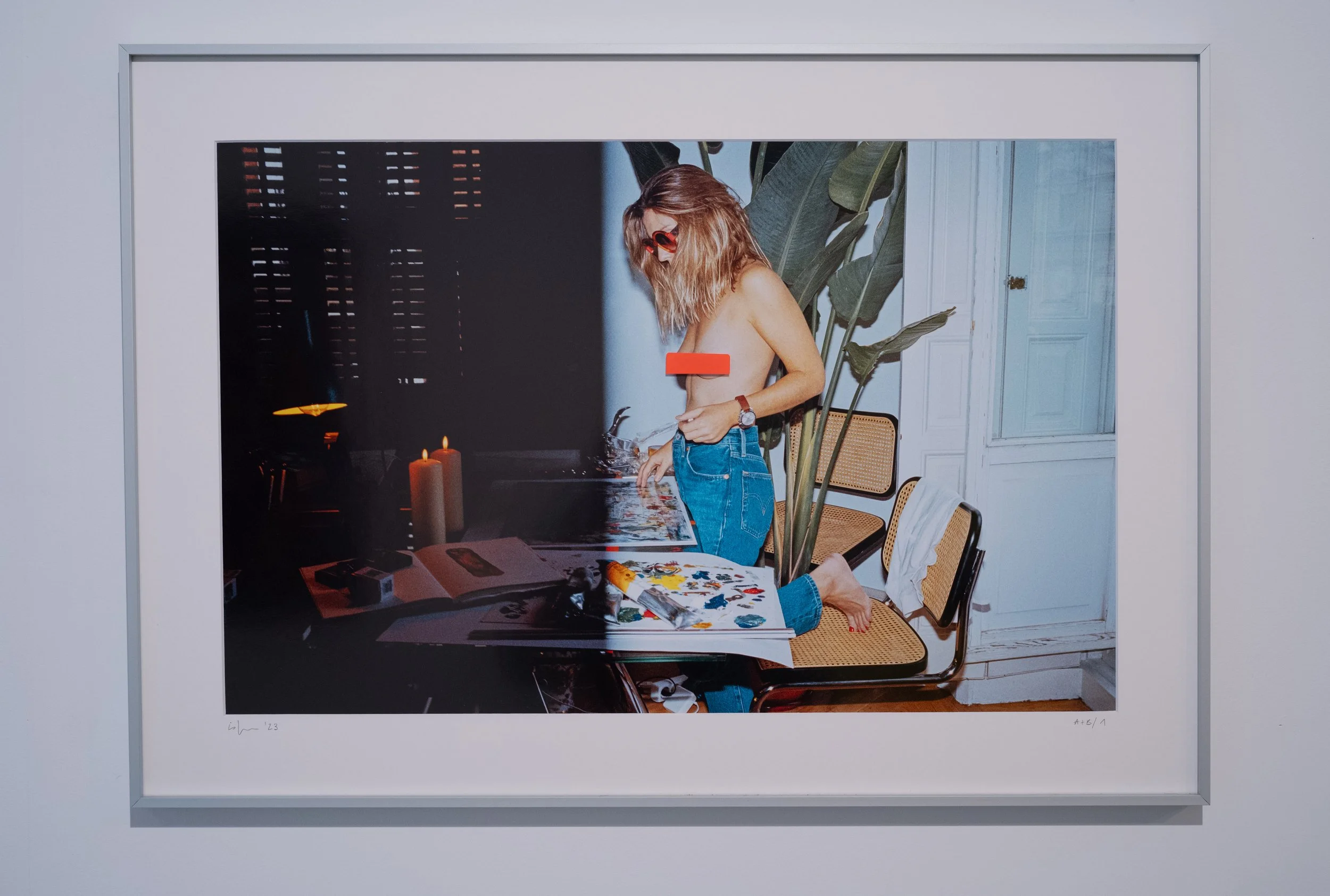
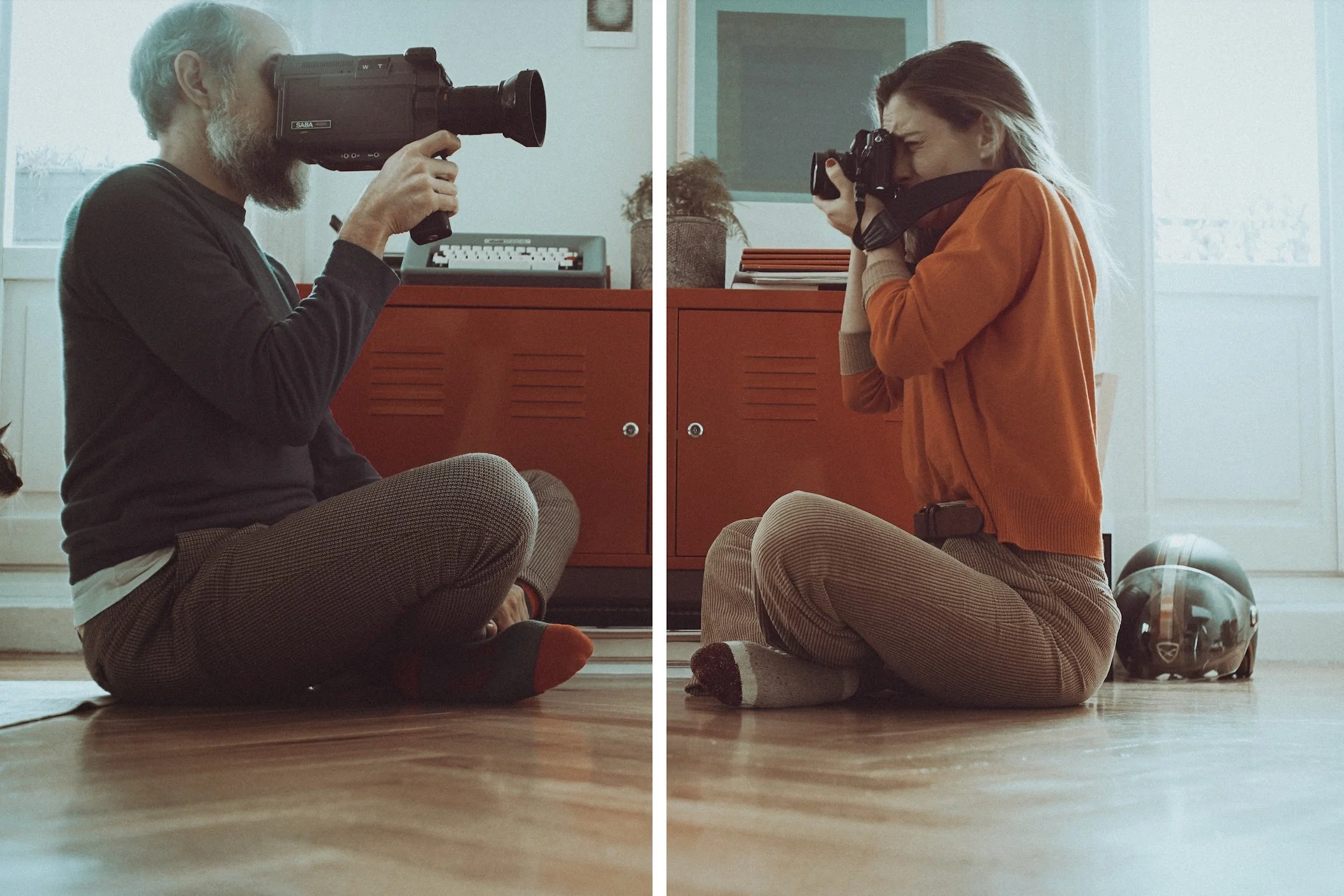
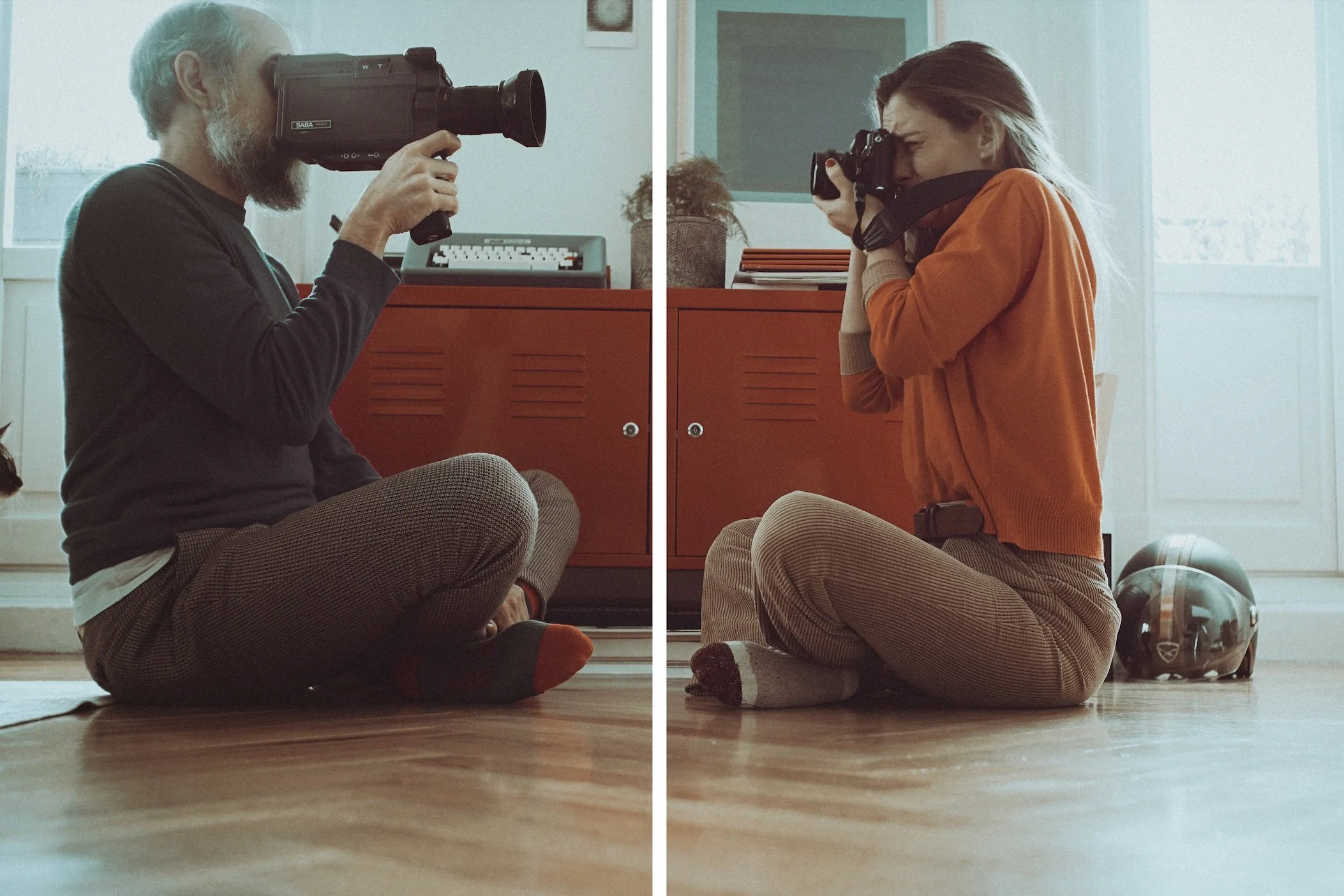
Photographies from the series: “The fallopian visitor. A disinformated work by Iskra Velitchkova”
Size: 57 x 36,5 cm
Edition of 5
Photography accompanied by a unique 1/1 NFT
Price upon request (please contact info@katevassgalerie.com)
Art On-Chain
-
PAL, 2023
-
YOU, 2022
-
YOU AND ME, 2021
-
Articles
-
PAL - A GENERATIVE SYSTEM
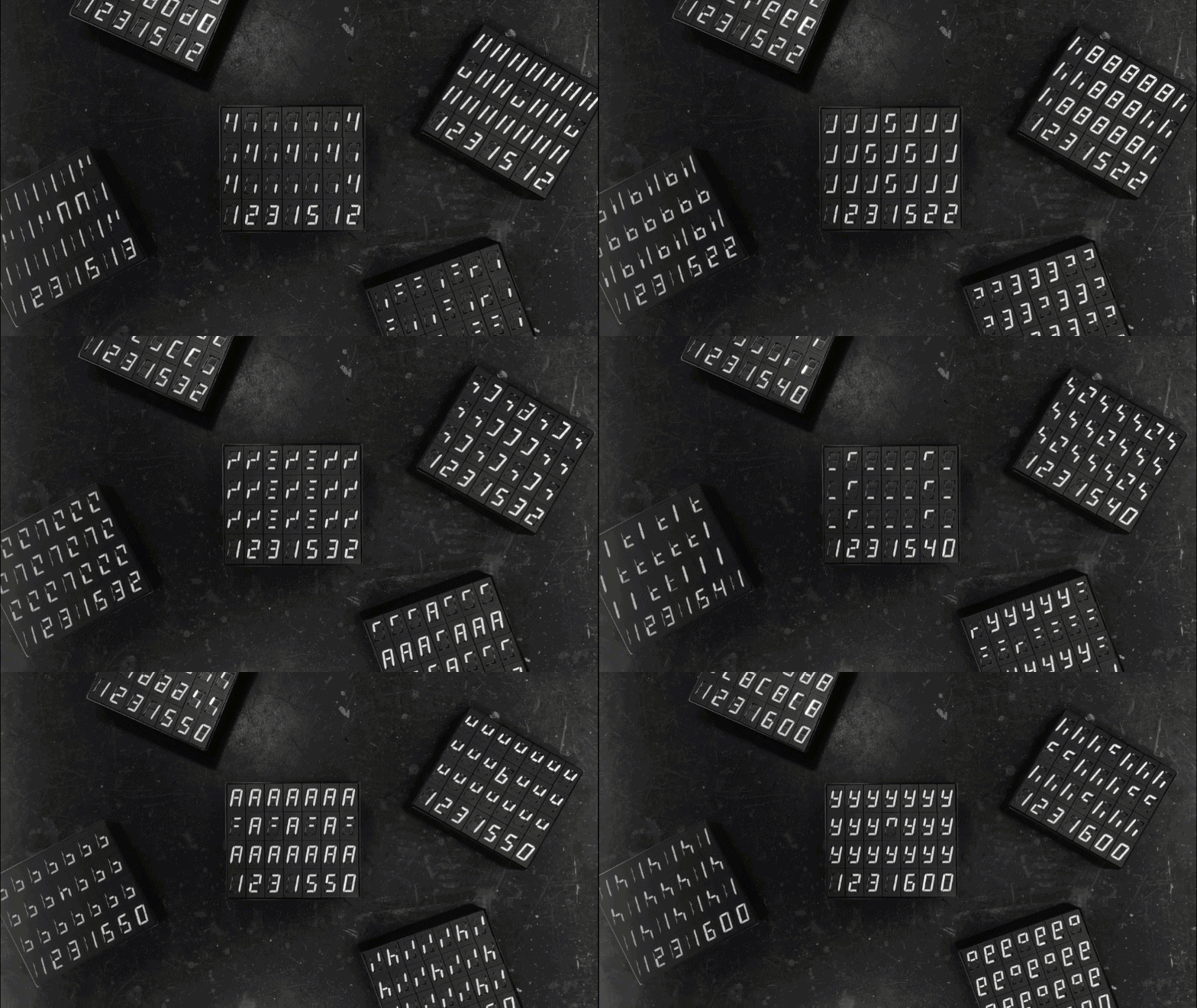
PAL, 2022 by Iskra Velitchkova and Marcelo Soria-Rodríguez is an inaugural collaborative performance that took 4 days as a live performance during ART SG in January 2023. The project was released as a drop of 100 unique works.
Exhibitions
-
INTERTHINKING, 2024-2025
The “Interthinking" exhibition, hosted at Budapest Art Factory, celebrates Hungarian cultural heritage and the influence of iconic Hungarian artists on the international contemporary generative art scene.
-
ART SALON: NODE TO NODE, 2023
In the heart of Paris, we presented Art Salon ‘Node to Node’, which brought together paintings, plotter drawings, post-photography, and site-specific installations by various artists.
-
PAL - A GENERATIVE SYSTEM, 2023
PAL, 2022 by Iskra Velitchkova and Marcelo Soria-Rodríguez is an inaugural collaborative performance that took 4 days as a live performance during ART SG 2023. The project was released as a drop of 100 unique works.
-
ART SINGAPORE, 2023
At the 2023 Art SG, we showcased the work of leading international new media artists, like Marcelo Soria-Rodríguez, Iskra Velitchkova, Kevin Abosch, and Sputniko!, highlighting the diversity of the genre.
-
PHYGITAL, 2022
PHYGITAL was a an exhibition, above all, an intent to explore important works by generative artists with various implementations, generated by the machine, bit by bit, infusing the pieces with more real-world complexity.
by Iskra Velitchkova
SOLD OUT
NFT + PLOTTER DRAWING
by Iskra Velitchkova
2022
https://foundation.app/@pointline/un-distance/4
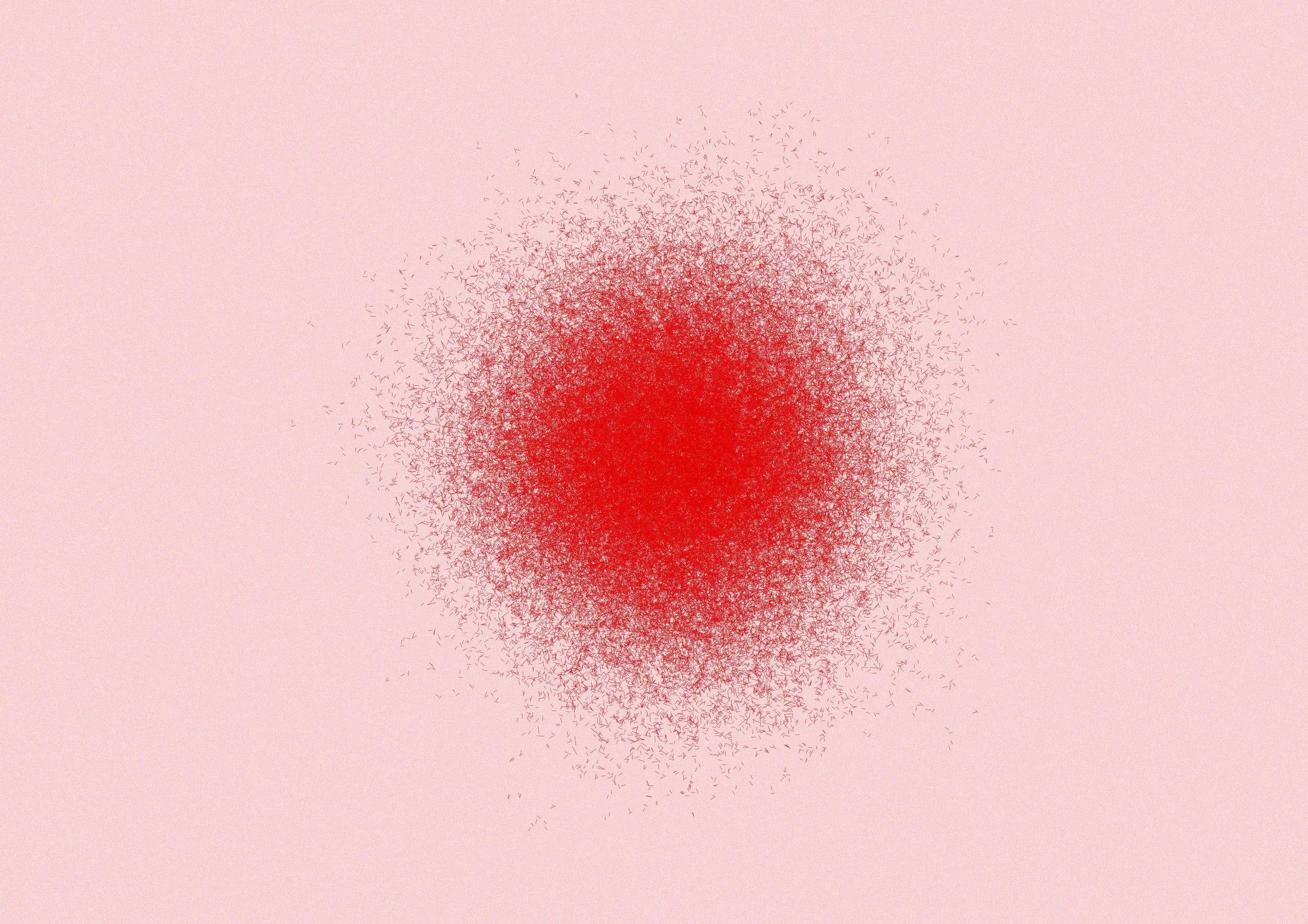
Unique NFT with layer 1 and a unique plotter drawing controlled by the artist: 3 layers each one of them is drawn in a separate transparent paper. The work gathers all layers displayed one over the other. All on pink hand painted background.
Medium / Details:
Digital work:
Coded in processing; Size: 6365 × 4500px, PNG
Physical work:
Red archival ink + Staedtler Mars Matic 700, 0.1mm for the drawing;
Inca gold and coral high quality watercolor for the background;
Paper: ARCHES ultra white 300gr. 100% cotton, acid free
Size: 42x29,7cm
Un-distance is a generative exploration of the intersection of digital and physical. Technology today allows us to play in an unprecedented playground of graphic information where generative art opens the door to the most bizarre and complex geometry. Being subjected to the computational limits & the randomness of some processes brings impressive outcomes that begs the experimenter to question deeply the nature of the results. The artist will of course guide the algorithm, but it is inherent in the process the commitment with the machine to be surprised in the end.
A great approach to me in order to dive into a better understanding of how this magic happens is adding a physical component to the process. Translating the digital output to a physical plot forces the artist to face constraints that only can appear in real life. First of all, time matters. Spending a whole day creating a drawing allows us to see the process itself. Somehow the machine finds the time to explain how the system works. On the other hand, imperfections appear. Paper matters, pen matters, ink matters: it all together affects the result directly and makes this blend an enlightening tool to start a conversation with the machine.