
Observer References Our Analysis in Its Art Basel Zero 10 Review
Observer’s review of Art Basel Miami Beach 2025 includes a thoughtful reflection on the newly launched Zero 10 digital section. We were pleased to see that the article references ideas from Kate Vass’s essay The Future Has No Walls, published on our blog. Her perspective on how digital art fits into and challenges traditional art-fair structures is included as part of the wider discussion around Zero 10.
Below you can read the full Observer article, “What Zero 10 Can Tell Us About the Art World’s Next Chapter.”
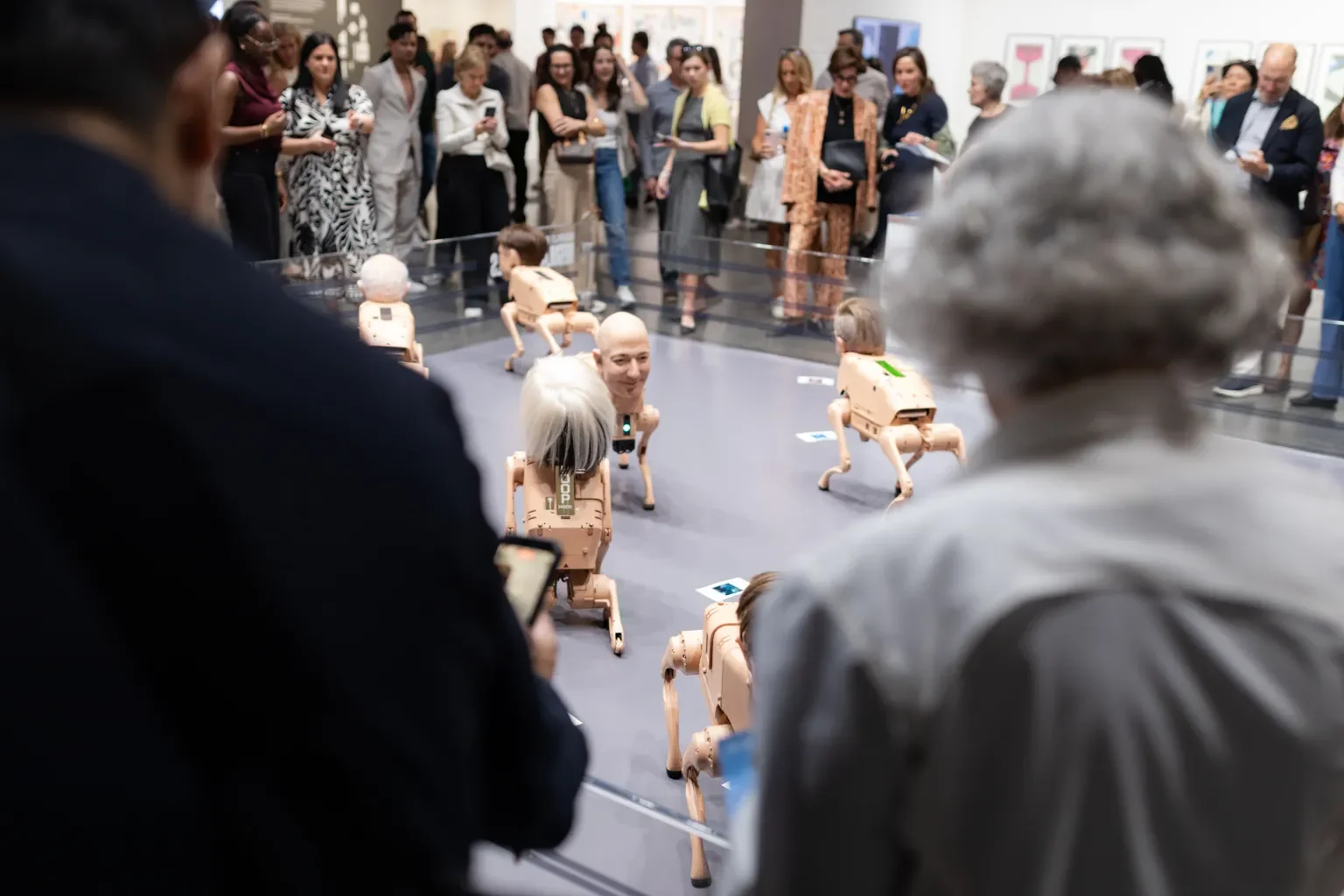
Beeple Studios’ Regular Animals were a viral attraction at Art Basel Miami Beach. Photo: Martina Hoyos. Source: observer.com
What Zero 10 Can Tell Us About the Art World’s Next Chapter
By Elisa Carollo, 12/11/25 2:52pm at observer.com
Art Basel’s debut digital section revealed how Web3 creators, new collectors and shifting infrastructures are reshaping the cultural and economic dynamics around art.
In a year when discussions about A.I. and the role of big tech giants have dominated the news, it feels almost inevitable that the most headline-grabbing artwork at Art Basel Miami Beach—after Catellan’s infamous banana and ATM gimmicks of recent editions—was a work of digital art (or rather, a digital-physical hybrid) by Mike Winkelmann (aka Beeple), the artist who also set the first major record for a purely digital work at a traditional auction with Everydays: The First 5000 Days selling at Christie’s for $69,346,250 in 2021.
Beeple’s record came at the absolute peak of the NFT boom, a moment when speculation, hype and a flood of new collectors drove prices to historic extremes. Yet as crypto values plunged and speculation-driven production saturated the space, the correction was swift and brutal. Enthusiasm curdled into skepticism, then into a cultural fatigue that often registered as outright NFT hate. This did not mean digital art was dead, as evidenced by the crowded VIP opening of Art Basel’s inaugural digital section, Zero 10, where digital connoisseurs mingled with curious traditional fairgoers.
Beeple stole the show with Regular Animals, a performance installation of humanoid robots with hyper-realistic heads of tech titans and art-historical icons—including Mark Zuckerberg, Elon Musk, Andy Warhol, Picasso and Beeple himself—roaming in a ring, capturing photos of visitors, “learning” in real time and excreting art prints and NFTs in their respective styles. Beneath its grotesque humor, the installation doubled as a critique of how technocrats now shape the collective imaginary and of the escalating tension between human creativity and machine intervention. Editions of each “Regular Animal” sold out immediately for $100,000 to longtime collectors, with an additional run of 1,024 prints and 256 NFTs generated from the robots’ snapshots, turning the audience into co-producers.
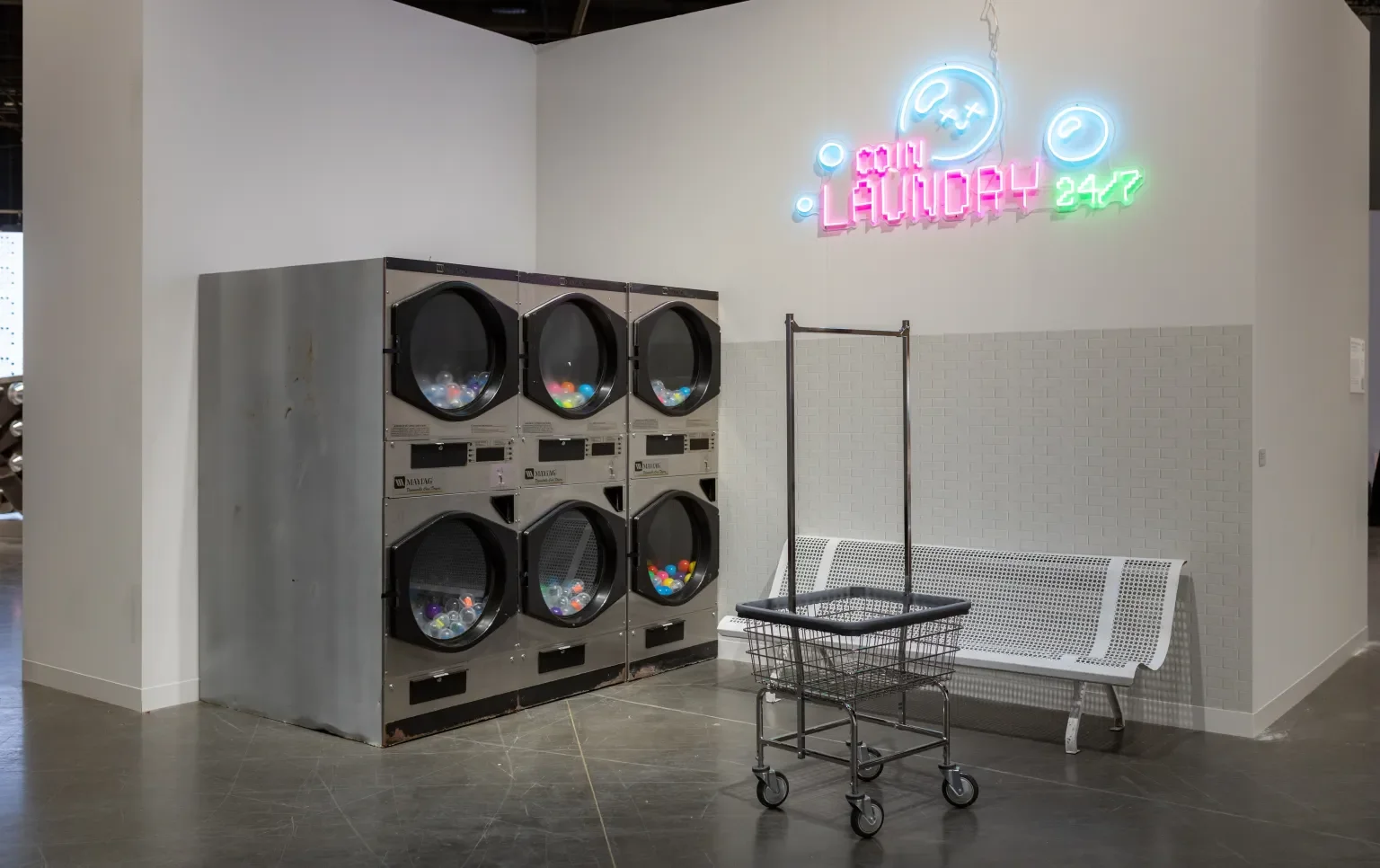
An installation by XCOPY presented by Nguyen Wahed in Zero 10. Photo: Martina Hoyos. Source: observer.com
In an ArtTactic interview, Beeple noted that Art Basel CEO Noah Horowitz visited his studio multiple times, convincing the fair that it needed to integrate digital art amid clear shifts in collecting habits. “Zero 10 reflects a strategic conviction: digital art is no longer at the margins—it is integral to how art and the market are evolving in real time,” Horowitz said in last month’s launch statement. Beeple welcomed the chance to show at Art Basel Miami Beach, seeing it as an opportunity to “let the outside world peek into this corner of the internet we inhabit,” acknowledging that digital art has long thrived within insider spaces and online echo chambers.
Importantly, Horowitz chose not to treat the section as a satellite or appendage but to integrate it into the fabric of the fair itself, with 10,000 square feet of floor space adjacent to the curated sections at one of the main entrances of the convention center. “I think it is a great continuation of what we’ve been pushing since digital art sort of started to be on more people’s map in 2021,” Beeple told Observer, but he also still thinks there is a lot of work to be done. “One of the things that makes it both exciting and challenging versus other media is that it is changing very rapidly. What is possible, the tools, etc.—these are moving at an insanely rapid pace relative to other mediums.”
Beyond the virality of Beeple’s installation, the twelve galleries and studios presenting in the inaugural edition of Zero 10—curated by digital-art strategist Eli Scheinman—demonstrated the range of evolving trajectories within digital art and how these practices are reshaping the way art is created, experienced and sold.
Underscoring the timeliness of the section was its very title: Zero 10, referencing “0,10,” the groundbreaking 1915 exhibition organized by Kazimir Malevich, the launching moment for Suprematism. That exhibition not only marked a decisive rupture with figuration and a move toward pure abstraction but, as many argue, opened a conceptual line of artistic evolution in which the idea increasingly became more significant than the mastery of execution that had long defined artistic value.
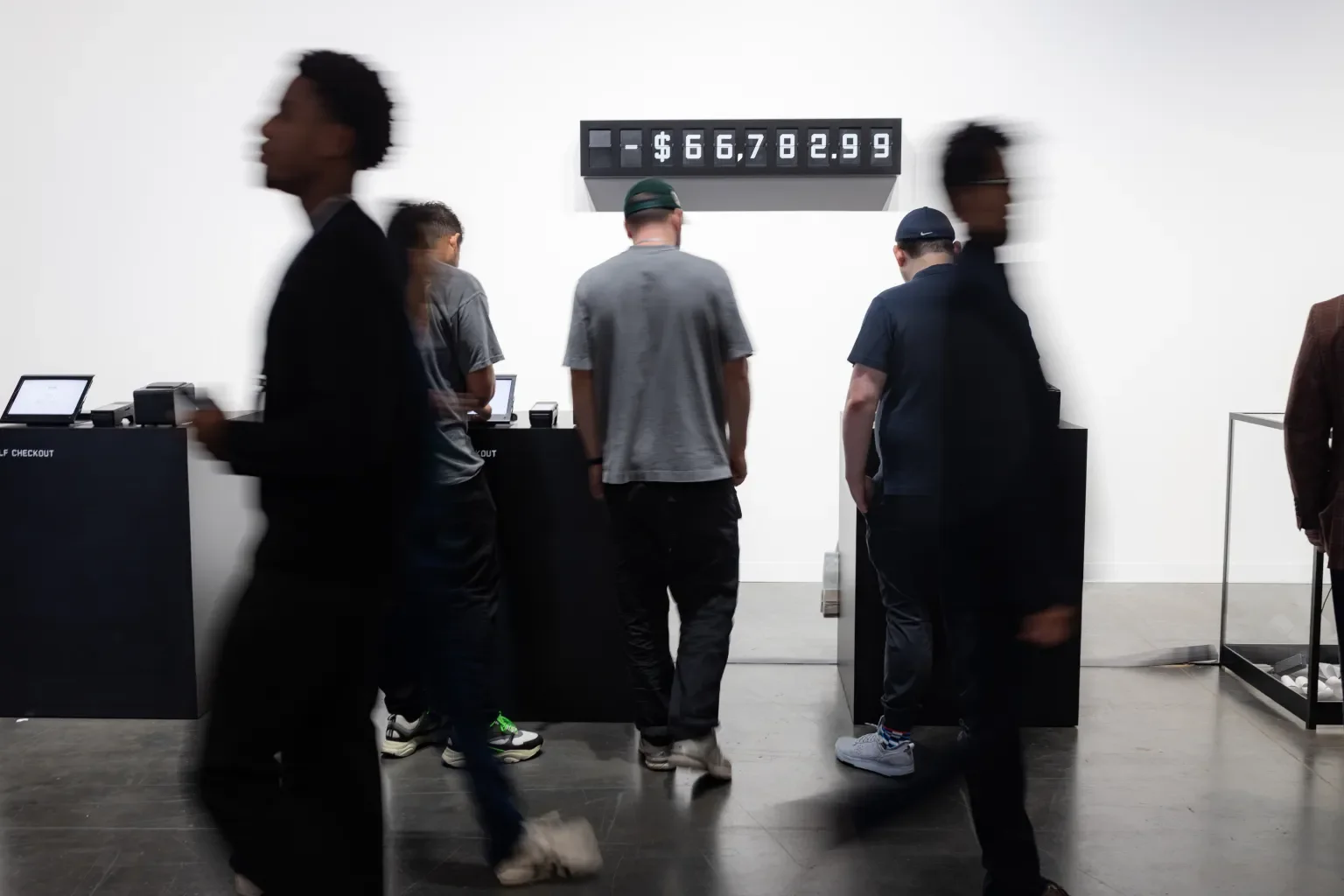
Jack Butcher’s Self Checkout in Zero 10. Photo: Martina Hoyos. Source: observer.com
Perhaps even more telling, Beeple was not the only one selling. The appetite for this work is real, and most exhibitors reported strong early sales that continued throughout the weekend, largely in the four- to six-digit range (in dollars, though this raises another important question we will return to). Many exhibitors told Observer they were genuinely amazed by the response from both traditional and digital buyers alike.
But while the Web3 community showed up in full force—circulating around the booths, buying, posting and supporting this moment of acknowledgment—the section did not arrive without criticism and skepticism, much of it voiced from within the community itself. A provocative article written by Web3 advisor Kate Vass on LinkedIn, for instance, suggested that if the original “0,10” stood for rupture, for burning down systems and starting from zero, this Zero 10 risks functioning instead as a marketing gesture at the world’s most established art fair. “Is this what passes for avant-garde now? A digital corner for ‘innovation,’ sanctioned by tradition and sold to the same collectors it once sought to disrupt?” she asks, pointing out the contradictions inherent to the initiative since Web3 was never meant to live inside walls; it was born in opposition to them. “Trying to fit Web3 art into the architecture of art fairs is like streaming the internet through a picture frame,” she writes, arguing that Art Basel did not lower its entry barriers to embrace a new ideology but to fill economic gaps left by galleries that closed or withdrew earlier this year.
This is certainly one of many points worth reflecting on after the inaugural edition of Zero 10. Here are a few key questions and takeaways.