
Digital Folklore
In conversation with #1 crush
“The more time I spent with the work, the more I found myself thinking about folklore, not as a reference point, but as a structural parallel. Folklore doesn’t explain itself. It spreads, attaches, and becomes part of how a community understands itself, often without anyone noticing it happening. These images do something similar. They circulate. They accumulate. By the time you’ve encountered them enough, the question of where they came from starts to matter less than the fact that they’re simply there, and have been for a while.” - Kate Vass
In this conversation, #1 crush reflects on digital mythology, systems of belief, image circulation, internet memory, and the evolving relationship between identity and online culture. Moving between psychology, symbolism, repetition, and atmosphere, the discussion explores how meaning accumulates through images over time and how digital works begin to operate as part of larger cultural systems beyond the artist alone.
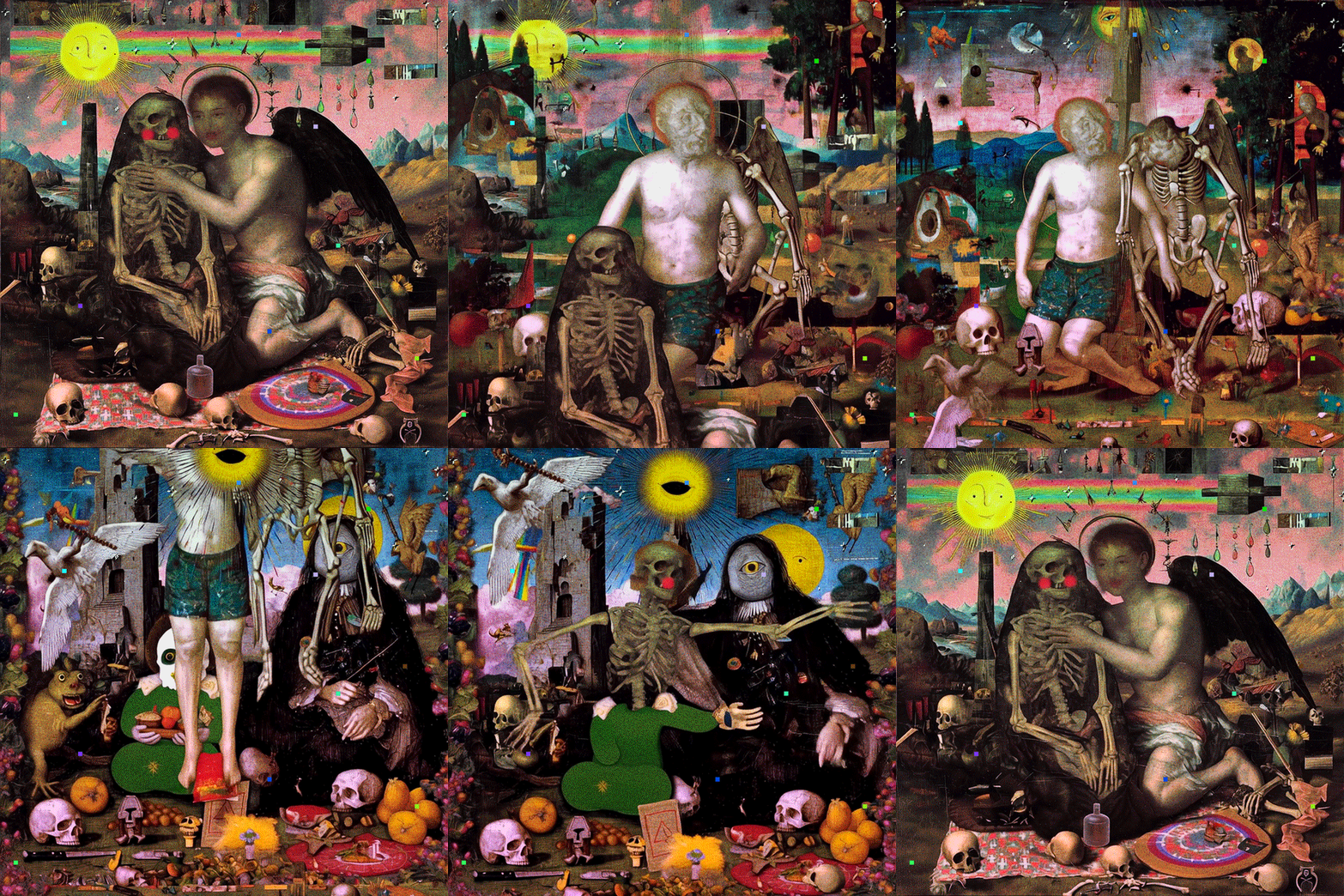
further, 2026.
KV: You’ve spoken about your work as constructing digital myths. Where does this mythological angle come from, is it rooted in a personal practice, or something that emerged through the work itself? Given your background in advertising, which isn’t a typical path into this territory, how did this develop?
#1 crush: It didn’t start as a declared interest in mythology, it surfaced through the process itself.
I’ve always been drawn to systems that shape emotion and belief, and advertising was one of the places I saw that clearly. You’re constructing narratives people internalize, repeat, and act on. In hindsight, that’s not so far from myth-making, just operating at a different speed and scale.
There’s also a personal thread. I’ve long been interested in early image-making: cave paintings, primitive symbols, that raw impulse to fix meaning into form. What fascinates me is how similar that feels to posting online today. The work bridges those timelines, prehistoric marks, symbols, and memes existing in one continuous loop, where meaning is constantly reassembled and the origin becomes secondary to the presence.
“Prehistoric marks, symbols, and memes existing in one continuous loop — where meaning is constantly reassembled and the origin becomes secondary to the presence.” - #1 crush
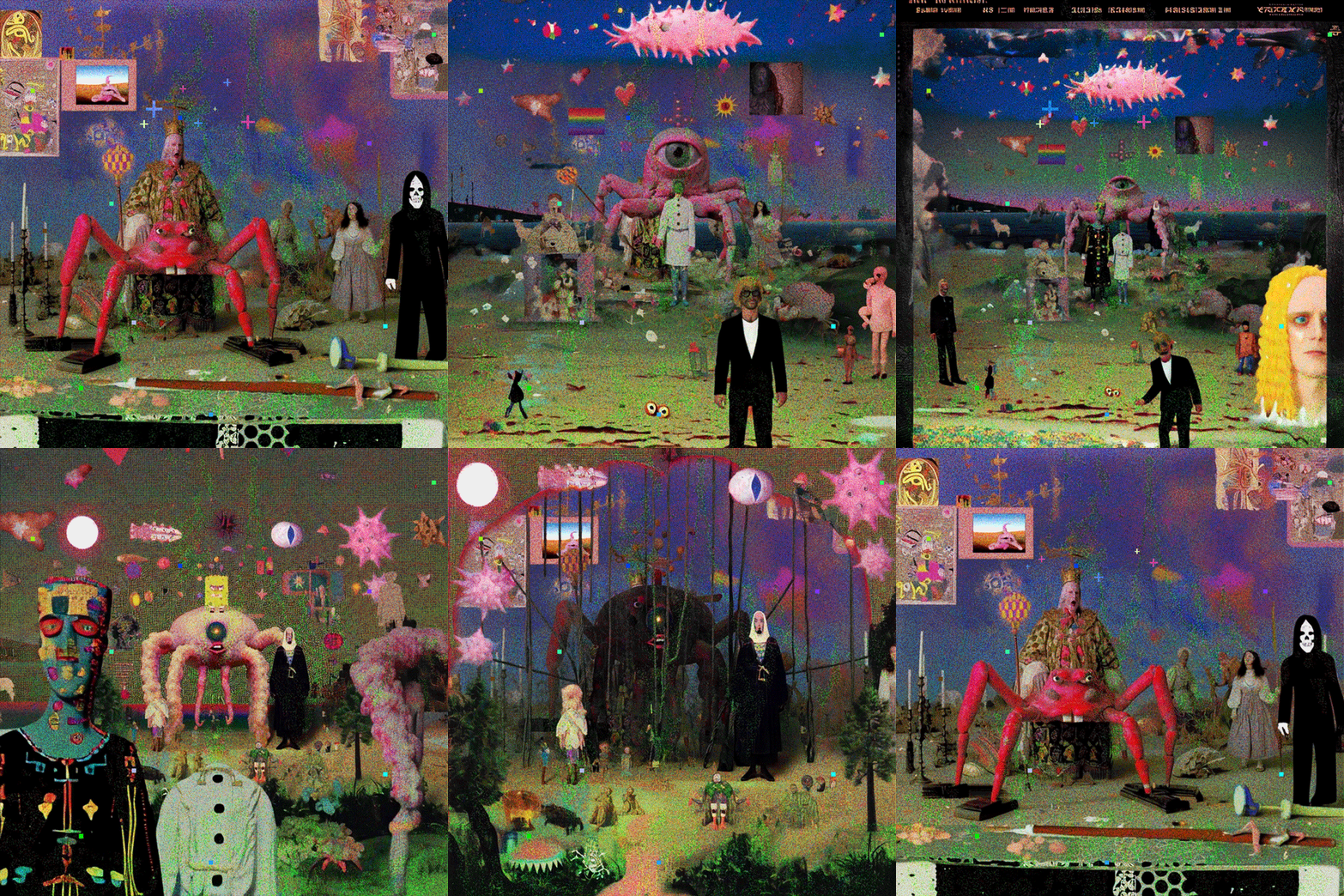
vesper, 2026.
KV: Some of your references feel distinctly Japanese in tone or atmosphere. Is there a conscious relationship to Japanese mythology or visual culture in your work?
#1 crush: It’s not a direct reference to Japanese mythology, but I’m definitely influenced by Japanese philosophy and aesthetics. I’m drawn to the beauty of simple things — to imperfection and decay, to forms that feel quiet but intentional.
I also connect deeply with the way some Japanese artists approach authorship: changing names and starting from scratch even after reaching a high level of recognition and skill. That idea of impermanence and reinvention feels very natural to me. And in a way, it aligns closely with web3, where identity can be fluid and constantly rewritten.
KV: You’ve spoken about constructing digital myths, but where do you think myth ends and system begins in your practice?
#1 crush: There’s no clean boundary. A system organises behaviour. Myth begins where control ends and feedback reshapes the system. Once people engage with the work, meaning accumulates on its own.
KV: If these works are myths, what kind of world do they belong to one imagined, or one we are already inside?
#1 crush: It feels like both. Something imagined, but only because we’re already inside it.
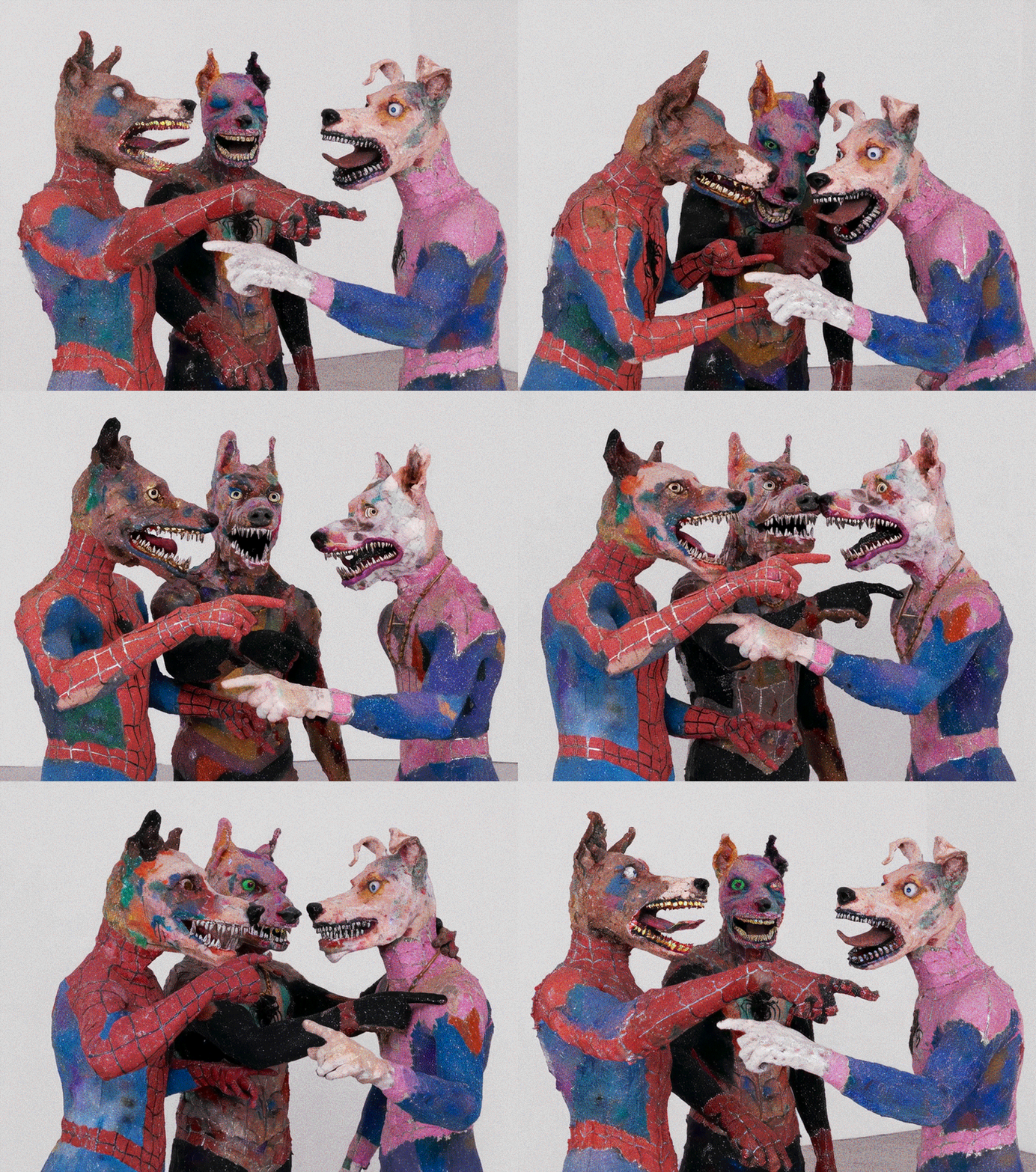
1 of 1 szn, 2025. Courtesy of XCOPY Collection.
KV: What makes an image believable today?
#1 crush: An image feels real if it fits the visual language we’ve internalised. Context matters more than content. Where it appears, how it spreads, who interacts with it all of that reinforces its credibility.
KV: Do you think repetition creates belief, even when the image itself is artificial?
#1 crush: Repetition builds familiarity. And familiarity reads as truth.
KV: Are your works meant to be understood, or to be felt over time?
#1 crush: Understanding might come later or not at all. The first layer is something you sit with. You feel it first.
awakening, 2025. Courtesy of BatSoupYum Collection.
KV: When you look at your own work, do you see a narrative forming or only fragments that resist coherence?
#1 crush: The fragments start to align. Patterns repeat, and something like a narrative appears. Not fixed more like a trace that keeps reshaping itself. A path. A way.
KV: Is the viewer meant to recognise something in the image, or to confront something unfamiliar?
#1 crush: Both, but not equally.
There’s usually something recognisable that pulls you in: a form, an emotion, a memory of something seen before. But it doesn’t fully resolve, and then it opens into something unseen.
You stay with it because something feels familiar. You remain because it isn’t.
“You stay with it because something feels familiar. You remain because it isn’t.” - #1 crush
threshold, 2026. Courtesy of Colborn Collection.
KV: Your works don’t exist in isolation, they circulate, repeat, accumulate. At what point does a body of work become a system?
#1 crush: When the works begin to speak to each other in your absence. Continuing even when you stop.
KV: Do you think you are building a system consciously, or does it emerge through the act of making?
#1 crush: It emerges through the act of making and through the people who move through it. The viewer isn’t separate from it; they complete it. And in that exchange, they reshape the maker too.
KV: Is there an internal logic that connects your works, even if it’s not immediately visible?
#1 crush: Yes, but it’s not a rational one. It follows something closer to the logic of a dream.
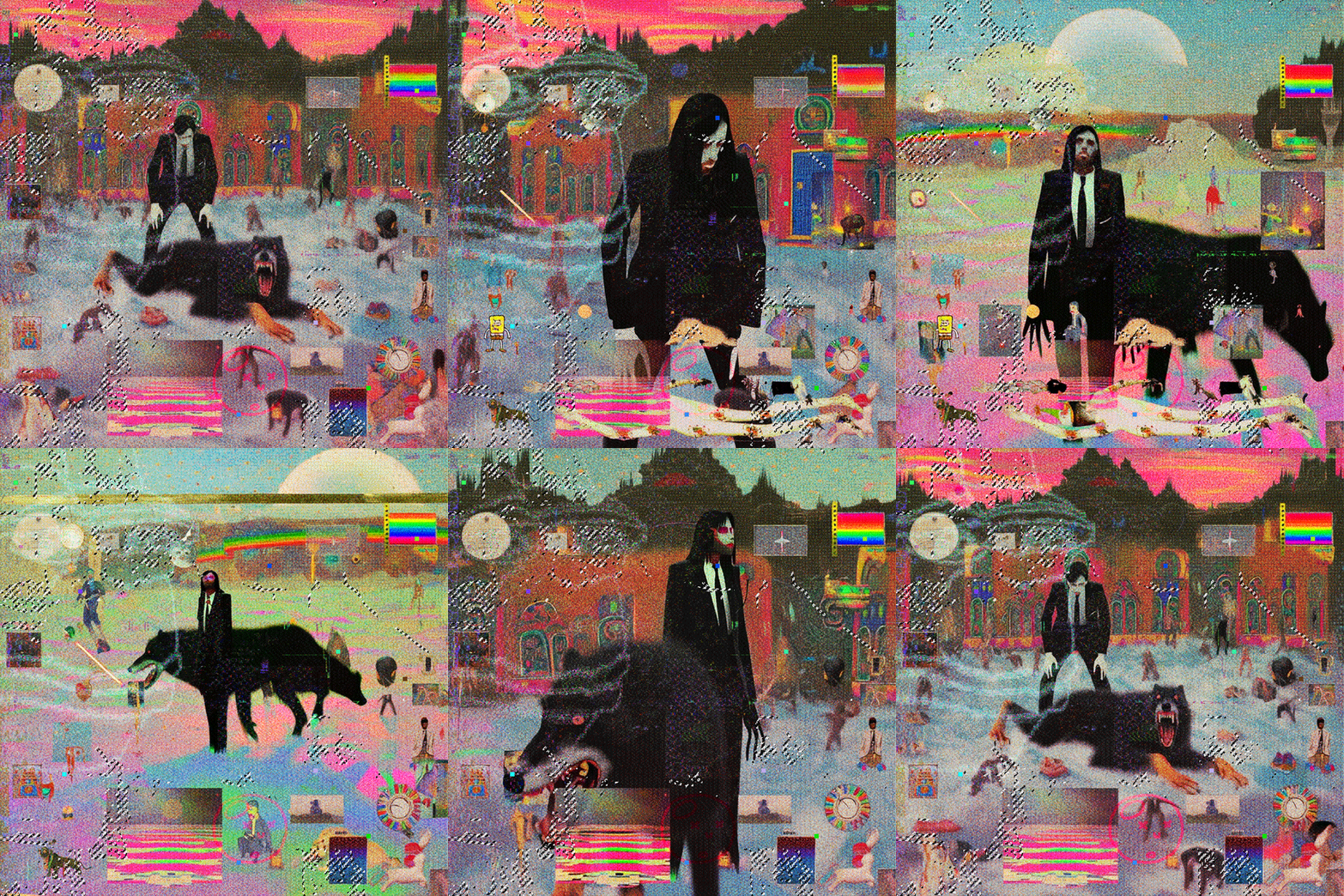
splice, 2026.
KV: How do you imagine collectors engaging with your work, as individual images, or as part of a larger whole?
#1 crush: Eventually, it’s less about a single piece and more about how it sits within the larger whole, how it relates, echoes, and accumulates meaning with the others.
KV: What do you think a collector is actually acquiring when they collect your work?
#1 crush: A non-fungible token.
KV: Do you think meaning changes once a work is owned?
#1 crush: I’d like to say no, but it does. Ownership shifts the context.
KV: Once an image enters circulation, on platforms, timelines, collections, does it become something different from what you created?
#1 crush: Undoubtedly. Once it enters circulation, it stops belonging to me.
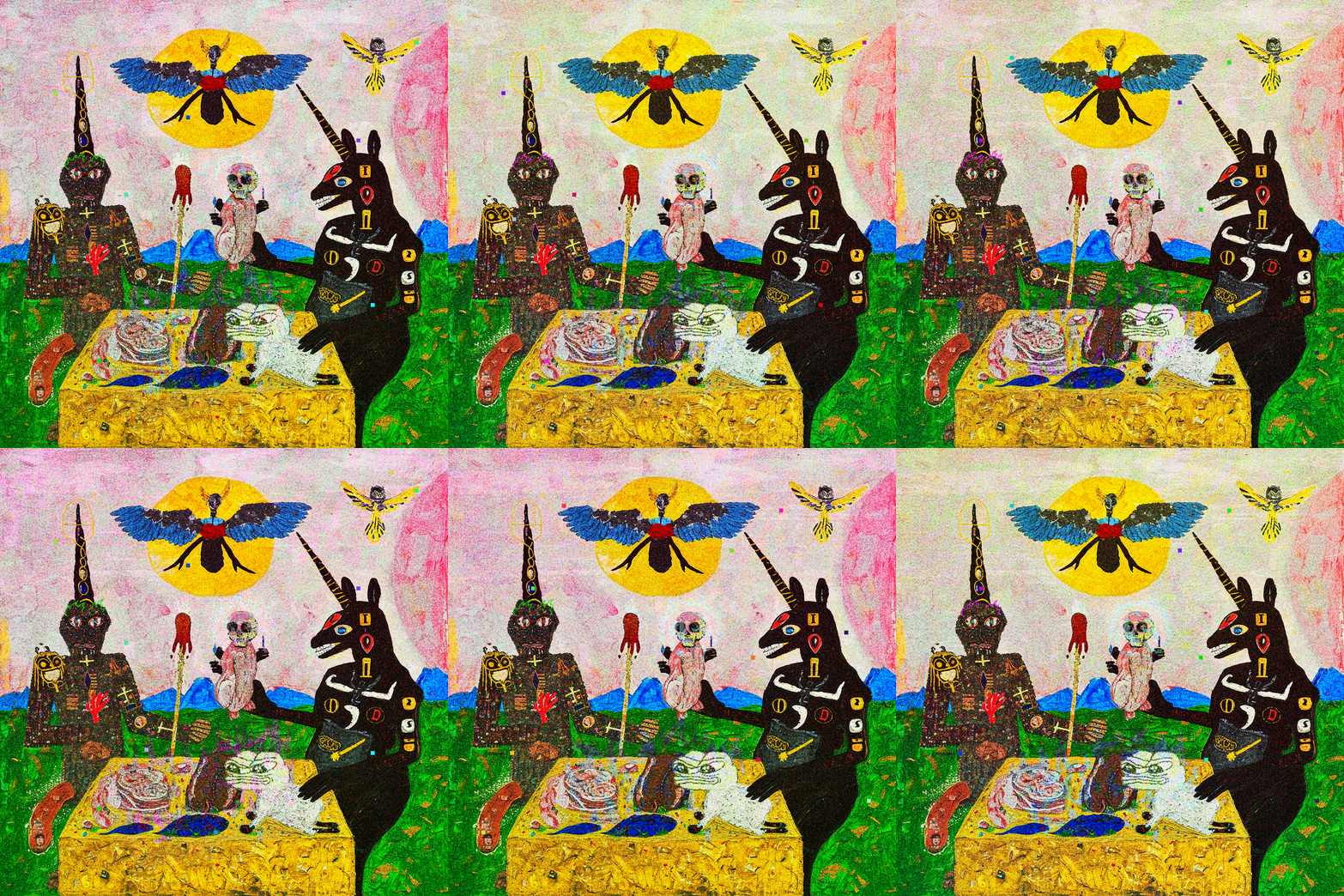
all your jpeg are belong to us, 2025. Courtesy of Chris Granneberg Collection.
KV: Do you think value in your work comes from the image itself, or from how it moves through the system?
#1 crush: The image holds the charge. But how it moves determines how that charge accumulates. Circulation amplifies, distorts, and reinforces what’s already there.
“The image holds the charge. But how it moves determines how that charge accumulates.” - #1 crush
KV: At what point in your process do you feel in control and at what point does the work begin to operate on its own?
#1 crush: At the beginning, I’m in control setting the conditions, shaping the forms, deciding the constraints. Until I start to transition ideas into the medium.
That’s where it begins to shift. The work starts to push back. There has to be a balance: absolute control makes it dead on arrival, and a lack of control makes it irrelevant. And once it’s released, control disappears almost entirely. It begins to operate on its own.
KV: Do you ever feel that the system you’ve created starts to shape your decisions as an artist?
#1 crush: You think you’re shaping it, but it’s shaping you too. Decisions begin to happen inside its logic, not outside it.
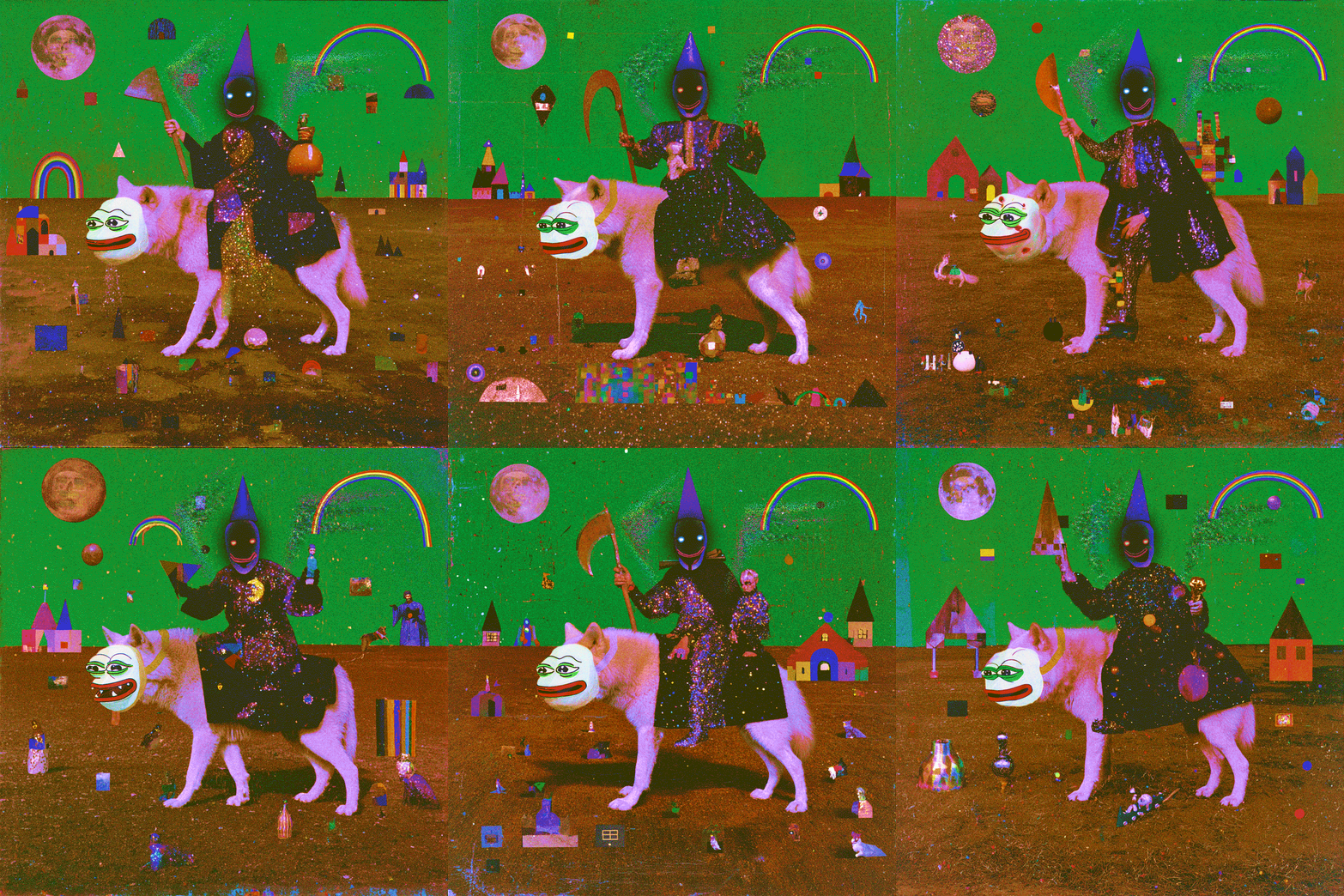
MONONOKE, 2025. Courtesy of the Kate Vass Collection.
KV: What happens to your work when it is no longer visible, does it disappear, or does it persist in another form?
#1 crush: It doesn’t disappear.
Even when it’s not visible, it persists as a trace in memory, in collectors’ wallets, in the network that holds it. The image may fade from view, but its presence doesn’t fully vanish.
It becomes latent. Waiting to resurface, to be seen again, to continue its loop.
“It becomes latent. Waiting to resurface, to be seen again, to continue its loop.” - #1 crush
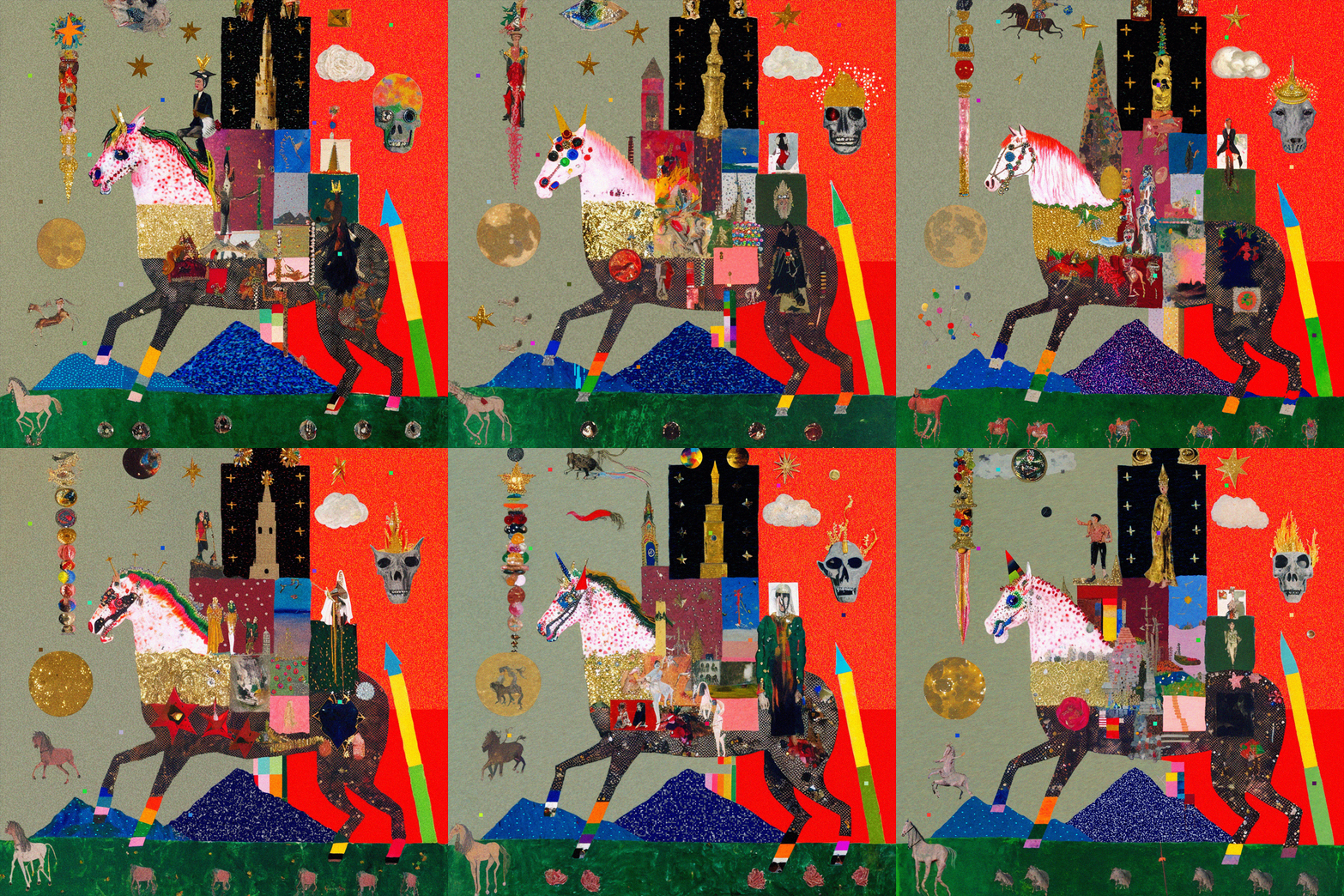
new dawn, 2023. Courtesy of Jediwolf Collection.
KV: Do you think your works are building a kind of memory or are they closer to fleeting signals?
#1 crush: Fleeting signals building memory.
KV: What is the “magic” in your work, is it in the image, the process, or the system that holds it together?
#1 crush: A chance meeting on a dissecting table of a sewing machine and an umbrella.
The image carries it. The process reveals it. And the system sustains it.
KV: Is there a longer story unfolding in your work, one with a beginning and an end or is it something that continuously expands without resolution?
#1 crush: We will see. I’m here for it.
Available works:
The following works are available for acquisition and will be minted upon request.
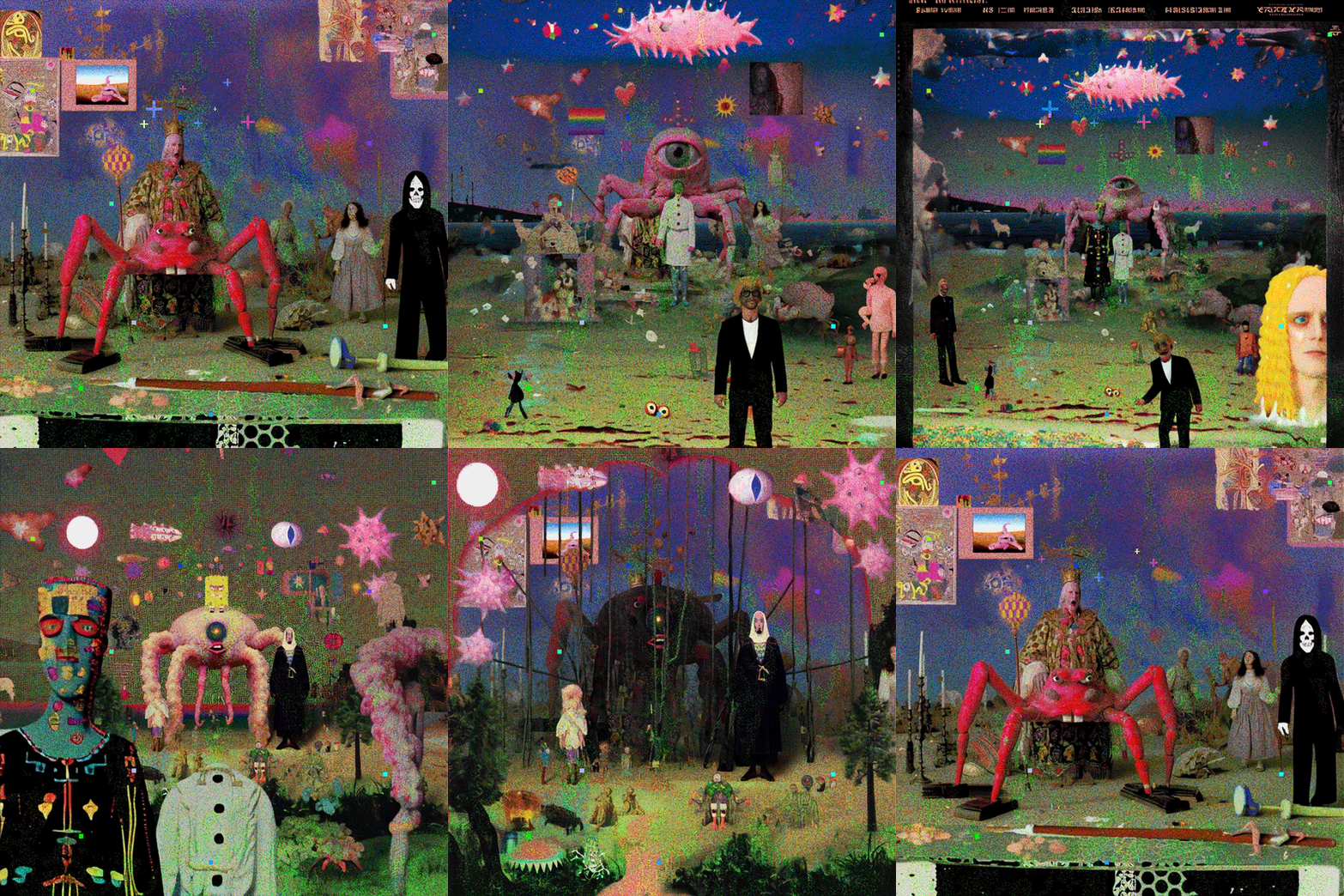
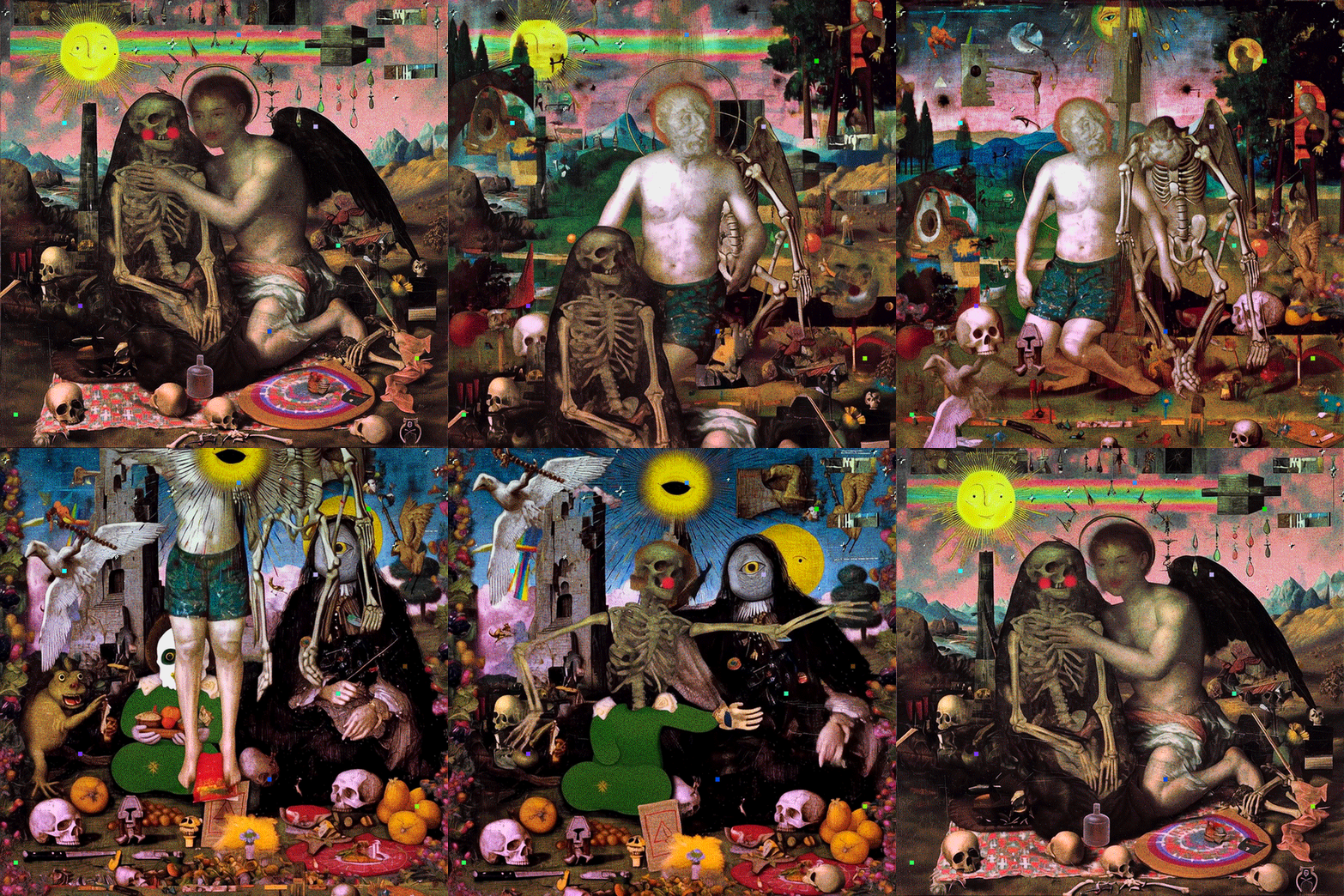
by #1 crush
Unique NFT
Minted upon request
For acquisition inquiries, please contact info@katevassgalerie.com