
BATSOUPYUM
On Collecting Cryptoart from the Inside Out
An interview by Kate Vass
He calls himself "just a dude who enjoys collecting cryptoart." But behind the self-deprecating handle, BatSoupYum is one of the most quietly influential figures in the on-chain art ecosystem. Over five years of buying, holding, and now actively championing emerging artists through UPRISING.ART, Bats has built something that resists easy categorisation: not a portfolio, not a museum, but a living argument for what this medium can be. Kate Vass sat down with him for the latest in her ongoing series of conversations with collectors shaping culture on-chain.
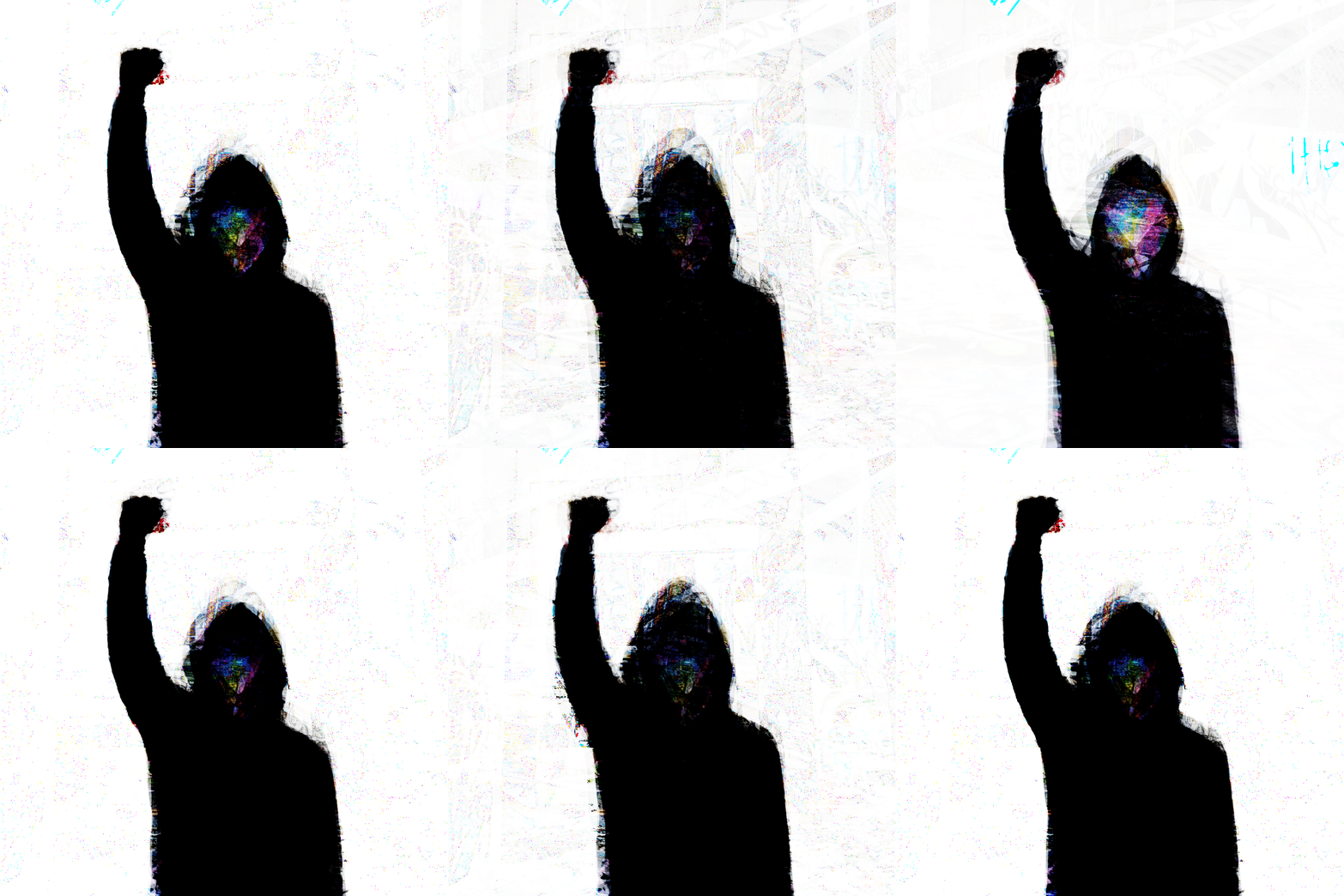
Patrick Amadon, BSY, 2022.
Kate Vass: When did you first realise you weren't just buying NFTs, but building a collection?
BatSoupYum: Roughly in mid-2021. The market was crazy back then but I always felt that art was the defining characteristic of NFTs at that time, so really started building out my collection then. It kind of went off the rails financially after that - haha.
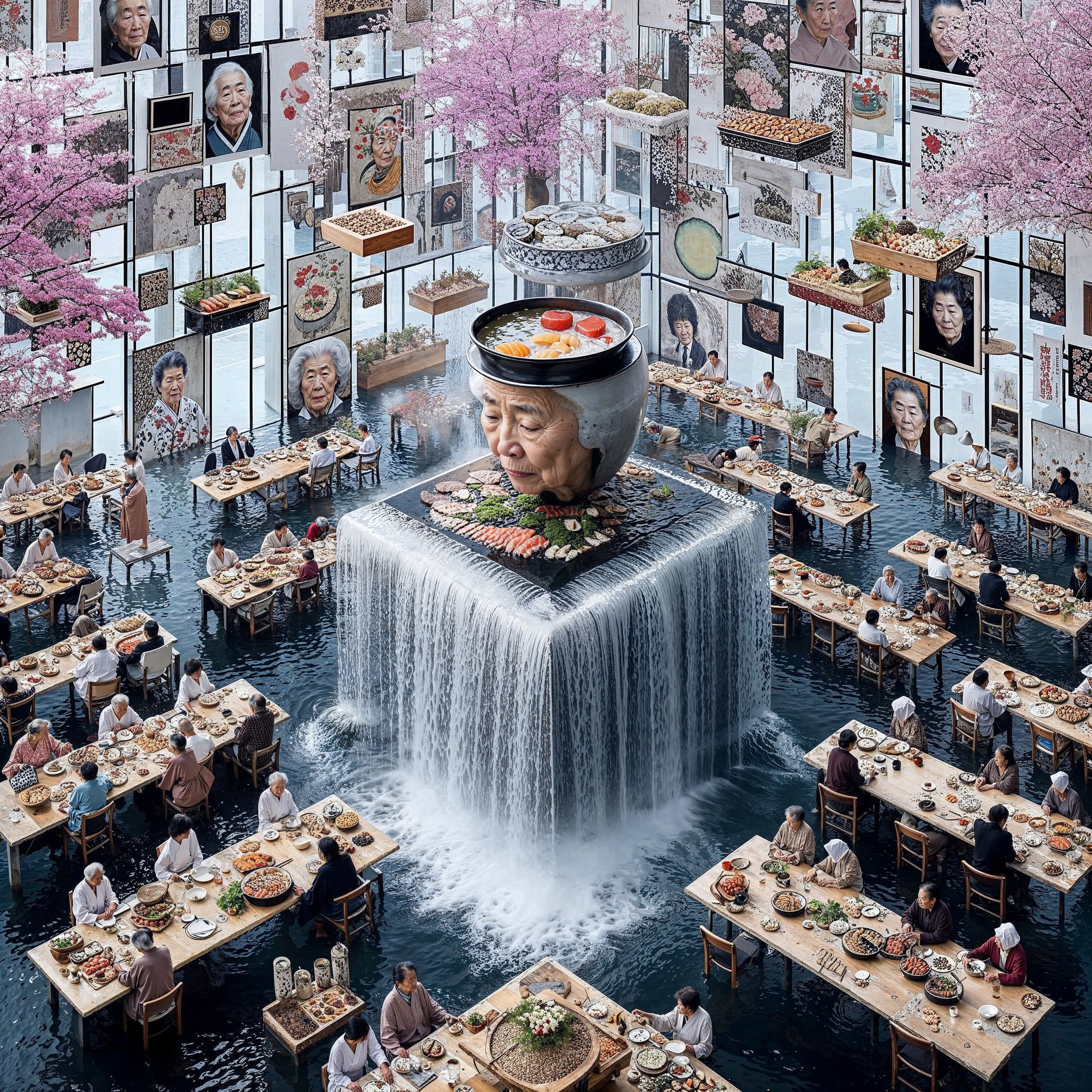
Niceaunties, Chapter No. 9, MoMA #0816 (Auntieverse series), 2024.
KV: Do you see yourself primarily as a collector, a curator, a patron, or a cultural strategist?
B: I see myself as nothing more than a collector. I have no formal art training, though I have read many books along my journey here, and I am certainly not a tastemaker or cultural leader. I'm just a dude who enjoys collecting cryptoart.
KV: What are the aesthetic or conceptual qualities that consistently draw you in? Is there a pattern across your collection that you can identify?
B: My taste has evolved over time and I have come to love art that makes use of the digital medium in creative ways. There is no limit on what an artist can produce here because they don't have to work within the confines of oil paint and canvas, for example. I really love seeing artists like Niceaunties and Jack Butcher continuing to push the digital envelope with their work.
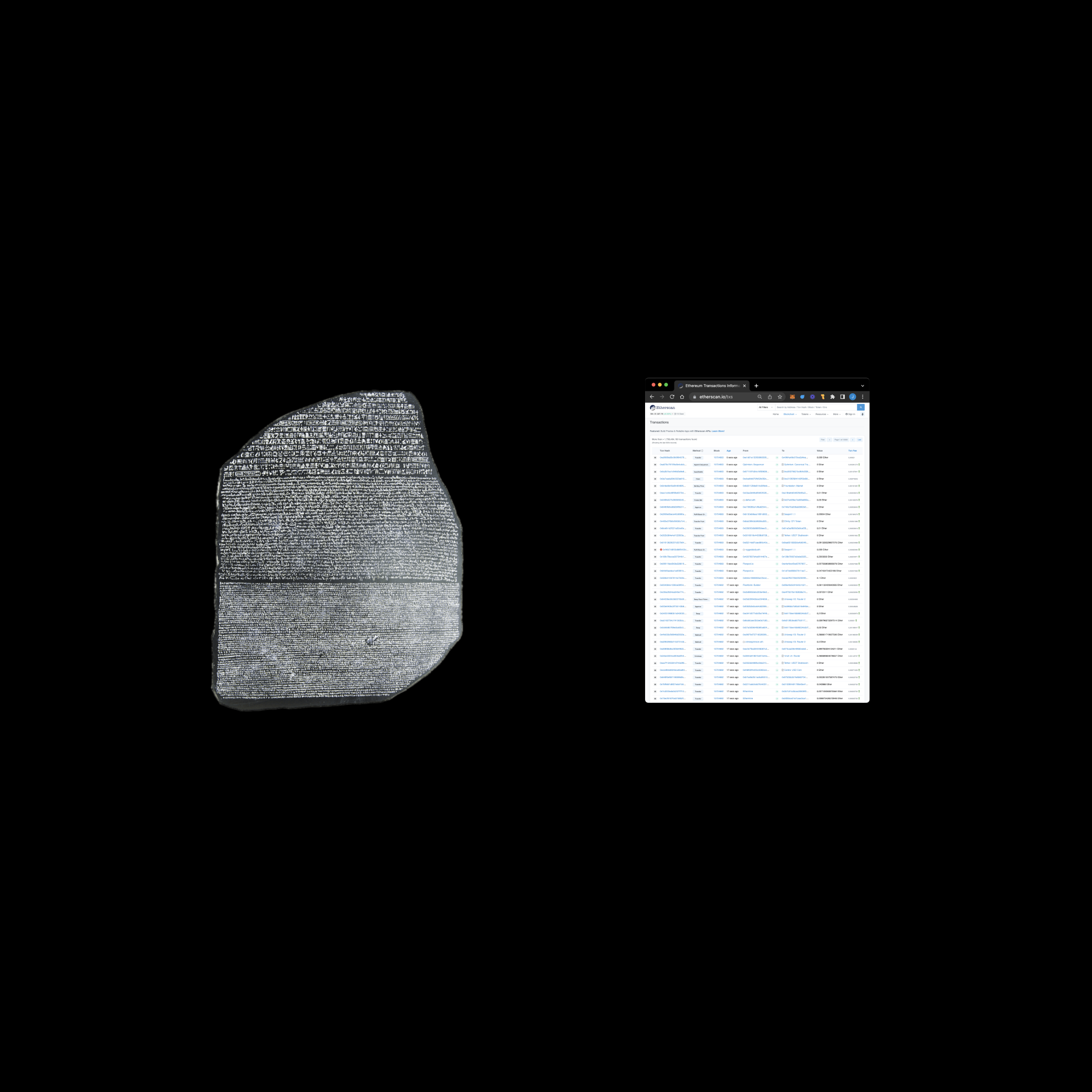
Jack Butcher, Record, 2022.
KV: What do you refuse to collect, even if you think it might perform well financially?
B: I've basically given up on collecting PFPs until the model evolves into something more interesting than just a cartoon JPEG. I love things like Punks and am very curious to see what Yuga (Bored Apes) does with their massive project, but anything new out there that just replicates the same model we've seen for years isn't that interesting to me unless there's an artist behind it.
"I'm just a dude who enjoys collecting cryptoart, and it kind of went off the rails financially after that."
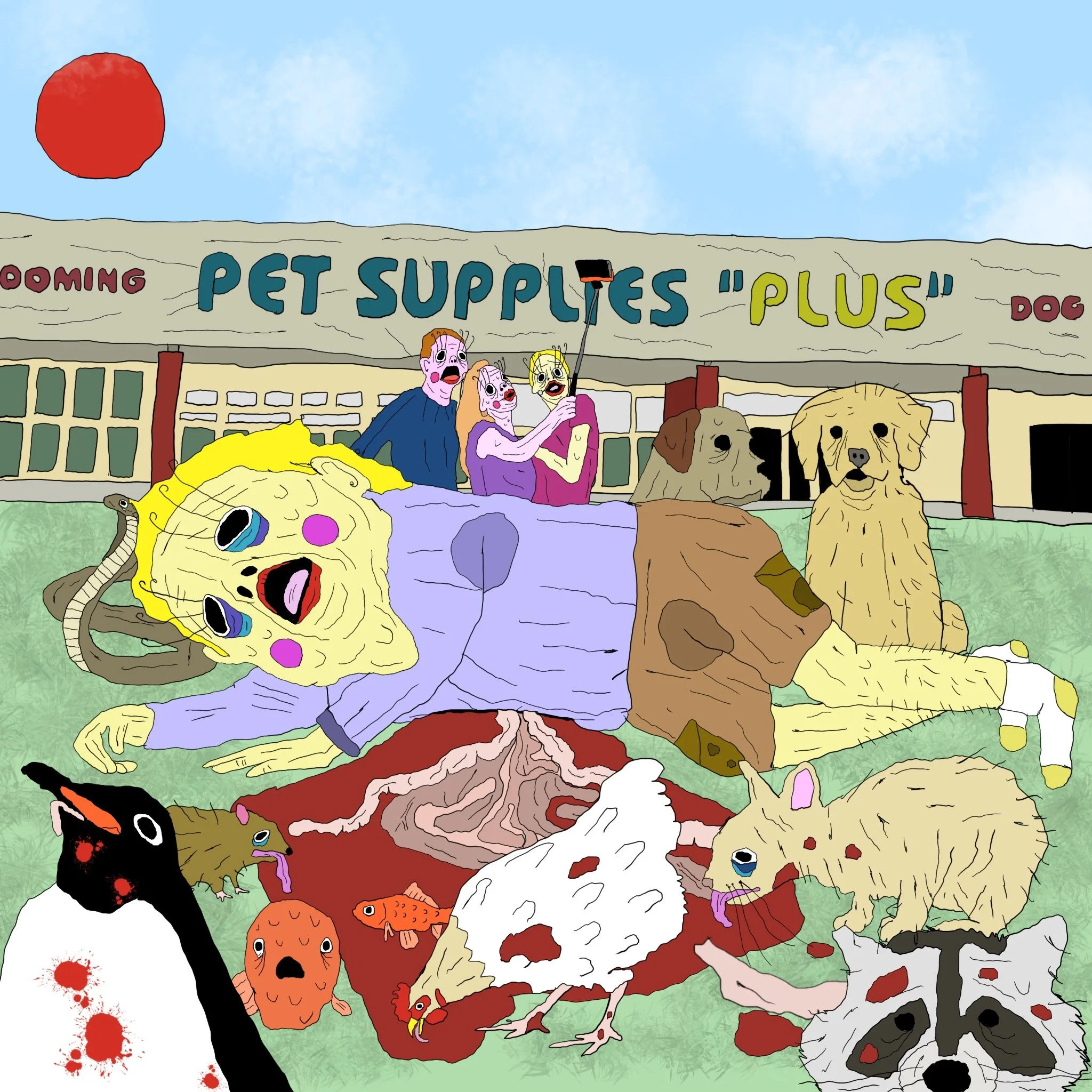
diewiththemostlikes, die collecting avatars at a pet supplies plus, 2021.
KV: You've compared NFT collecting to angel investing. In practice, what does "risk management" look like for you as a collector?
B: On a personal level, risk management basically doesn't exist because I almost never sell. I am far more interested in helping enable great artists here and riding alongside their journey with them by buying their work. I'm sure someday I'll choose to sell some things, but right now it doesn't play into my calculus when I buy. I basically have the mindset that if it all goes to zero I have no regrets - though I certainly don't think that’s going to happen.
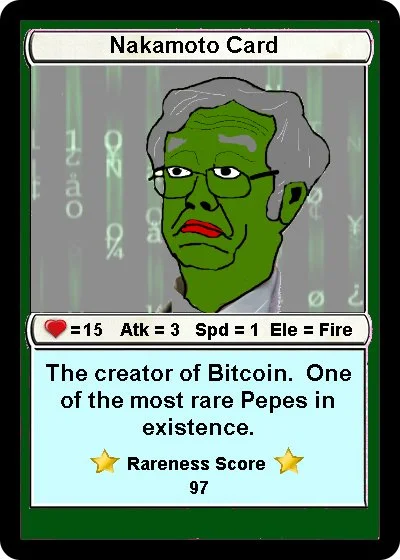
RAREPEPE | Series 1 Card 1, 2016–2018.
KV: Do you optimise for upside, cultural importance, or historical positioning?
B: All three, but the work dictates which category it falls into. For example, I think something like Rare Pepes or Lost Robbies actually touch on all three of these categories. My preferences here have evolved over time, and I think a lot of the works I would categorise as "historic" are now difficult to obtain - though I guess on a long enough timeframe this will all end up being considered some flavour of historic. Cultural importance and upside never go out of style, so I think most collectors, myself included, are weighing those two factors more heavily these days.
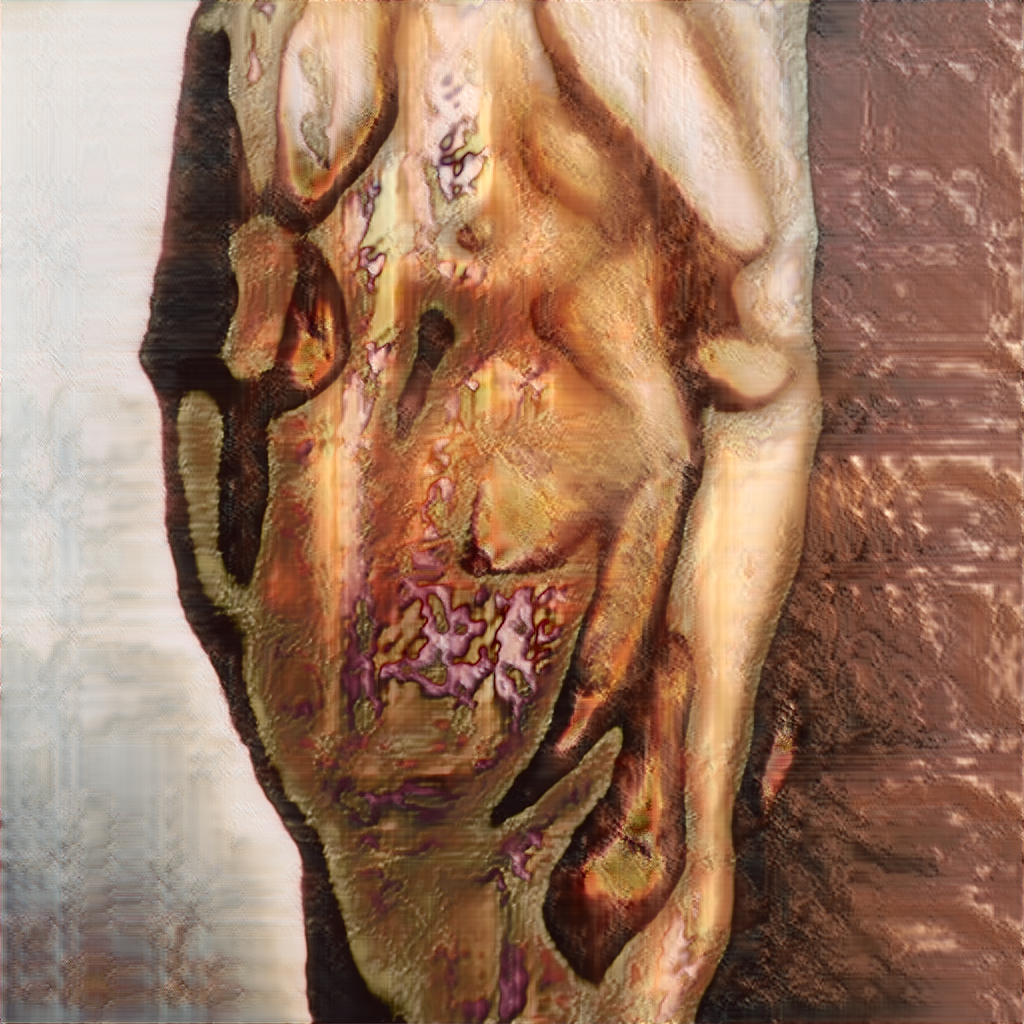
Robbie Barrat, AI Generated Nude Portrait #7 Frame #275, 2018.
KV: Do you ever sell? If yes, what triggers it?
B: I almost never sell. To me it's the equivalent of going to a football (soccer) match and leaving in the first three minutes because one of the teams goes up 1–0. There's still 87 minutes left! And to me that's where we are in this cryptoart cycle. That said, I have sold some works from time to time - and I have done it to plough more money back into buying art. I generally will only sell works by an artist where I already own a lot of their pieces.
KV: If you were advising an artist, how would you decide between 1/1s, small editions, and larger editions?
B: Every artist should have all three because, unlike trad art, cryptoart is art of the network. There’s a well-known law called Metcalfe's Law which states that the value of a network is proportional to the square of the number of its connected users. Applied here, this is a fancy way of saying that the more people who own your art the better off you're likely to be. As an artist you want your work in as many hands as possible, because by doing so you are growing your true fans - your evangelists. XCOPY is a great example: they have art out there at almost every price point and it is widely held. Those collectors go out and evangelise for free.
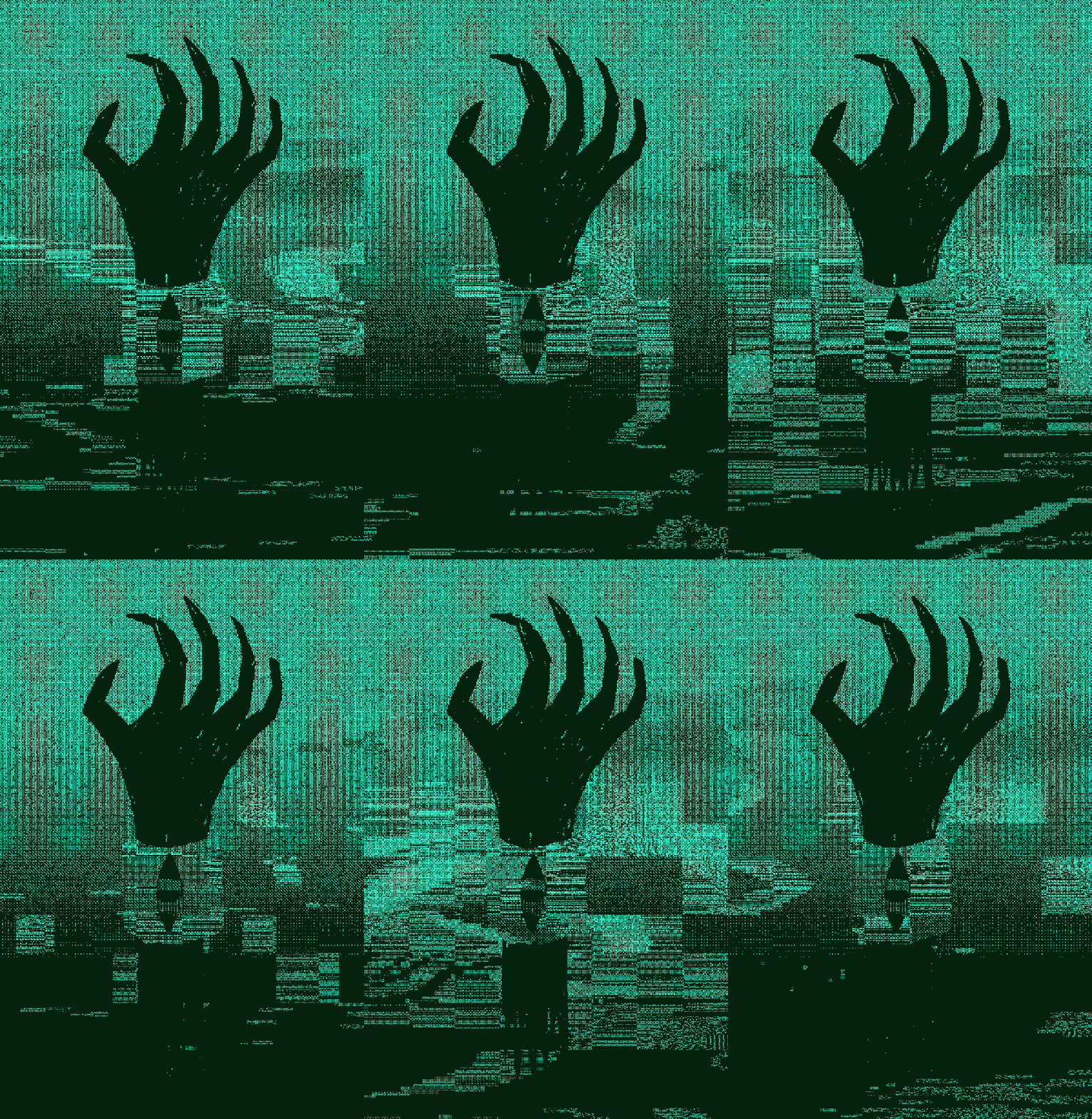
XCOPY, $LAVE, 2019.
KV: Does a 1/1 create mythology while editions create movements?
B: I think they are almost indistinguishable and highly dependent on the art. XCOPY had a 1/1 sale for around $7m, while also selling a recent edition of Last Selfie, an edition of 10, for $3.5m (implying a $35m market cap). It used to perplex me why the market cap of editions were always so much higher than 1/1s for so many artists, but I get it now: the more evangelists you have for a great piece, the more people will covet it. Network effects.
"Cryptoart is art of the network. The more people who own your art, the better off you're likely to be."
KV: What do you think about Tezos? Do you collect art there, and what is your view of the Tezos ecosystem?
B: I am totally agnostic as to where artists want to mint and I would never bias them towards a particular chain. I think much of that decision depends on the work itself and the intentions of the artist. Sometimes the choice is a meaningful part of the art itself, such as work that evolves with the price of Ethereum.
I believe the Tezos art scene is better than anywhere else for reasonably priced art because it has such a strong culture as a place to experiment and establish oneself. For example, many of the popular artists around here got their start on Tezos and continue to mint work there to this day. There’s something nostalgic about it and because of that the vibe feels more organic and wholesome. The problem, as I have stated, is twofold: custody and chain longevity. With respect to custody, there’s nothing in web3 that matches what Ethereum provides; it is simply world class and better than anything else out there by many multiples. On chain longevity, I am most confident that Bitcoin will exist in 20 years. I am slightly less confident that Ethereum will be here as well. After that I have lower degrees of confidence in every other chain, which obviously includes Tezos. I think the odds are good that they will still be here, but my confidence in that is simply a degree lower than that around Bitcoin and Ethereum.
KV: You announced you'll spend $100k this year buying cryptoart from emerging artists. What gap were you trying to solve, and how did you design the programme?
B: The gap between our champions and those trying to get established here is as wide as I've ever seen it, and growing wider by the day. The most prominent reason, in my view, is that discovery is terrible. Many of the sales platforms have shut down and we have traded centralized distribution for artist self-sovereignty. In the long run it’s probably a good trade but right now it has caused an incredible amount of fragmentation, making discovery very difficult. The whole episode made me annoyed and angry, so I decided to do something about it — and I'm calling it UPRISING.ART. I hired @musiclanetta to help me, because she appreciates art as much as anyone I have ever met and knows how to write about it in a way I simply cannot. I have learned that just having an opportunity to be seen and heard is what most artists want, and Uprising is trying to give that to them.
KV: How will you choose what to buy, without the process becoming opaque or popularity-driven?
B: Lanett is running and curating the programme. She is better at both than I am and I trust her completely, though of course I will make the ultimate decision on what to purchase. I am a big believer in transparency, so we will be running open calls for all artists to submit work every few weeks based on a theme, while also keeping our eyes out for great work in between. I will publish everything we do on a regular basis. I've also asked a number of people to help us because I am determined to find artists who deserve to be seen.
KV: After your announcement, a lot of people and organisations in the space publicly offered support. Why do you think it resonated so strongly?
B: I was frankly shocked by the outpouring of support. To me it shows that there are a lot of people around here who agree with the premise and feel compelled to do something to help. With respect to moving the needle on cryptoart, I think we need better displays, people love to display their art, less friction around wallets and crypto, and more established voices in curating and distribution (especially distribution!). Longer term we cannot have a guy named "batsoupyum" being one of the most visible champions of cryptoart. We need people with a lot more credibility to push us forward. I'm working on something that I think will help this in a small way.
KV: You hinted at a second announcement around education. What kind of education is the space missing most right now?
B: We need experts. Gallerists and curators like yourselves, established critics, more infrastructure support at museums and shows. Not everyone will agree with this, but I believe a lot of art is sold, not bought - meaning many buyers are skittish about spending real money on art without the hand-holding of an expert. Not only do we not have that here, many people are turned off by words like "NFT" and "crypto." We have a branding problem to overcome and, in my view, that will be difficult to achieve without more experts. But I feel very strongly it's coming, because at the end of the day you can say whatever you want about all of us, but one truth stands above it all: this is art.
KV: What kind of signal do you believe a collector should send to the market?
B: I used to largely collect in the shadows. I was fearful of people copying me because I really don't know what I'm doing, I say this a lot and people don't believe me, LOL. So until Uprising, I was not trying to send any signals to the market. Now the signal I am trying to send is that we cannot achieve success here on the backs of four or five champions. We must uplift as many great artists as possible, and I believe there are many of them already here. They just need a voice.
KV: Are you trying to correct inefficiencies, create new taste, or redistribute attention?
B: I'm definitely trying to redistribute attention to the unseen artists here. It is a tall order, but I have faced taller.
KV: Looking at the ecosystem today, what is most at risk of being forgotten?
B: I think the downside to getting more experts here is that the culture will inevitably change, possibly dramatically. It is up to us all to fight to preserve as much of it as possible. The partial institutionalisation of cryptoart is inevitable, and it is definitely a double-edged sword. But I plan to do my part to fight for what we have here because I think it's amazing.
Beeple, A PACK OF BABY YODAS EATING A JABBA CARCASS, 2019.
KV: If cryptoart is native to the internet, what responsibility do collectors have in preservation?
B: Speaking for myself, I haven't done enough. I feel like there has been an imbalance between artists pushing us forward and collectors like myself not doing enough. I was very inspired by artists like Beeple and IXShells showing up in person at Art Basel Miami this past December and putting on a smashing display, and it was part of the reason why I launched Uprising. I've been collecting here for five years now and it is abundantly clear that whatever we've been doing hasn't worked yet. We're in this together, so I decided to step up.
IX Shells, Deep, Under Our Feet (Anna Ancher), 2025.
KV: Do you believe major institutions will eventually recognise early on-chain art as historically significant?
B: Yes, though my confidence in this is lower than it was when I started here. In the traditional art world no one ever asks "what is Rembrandt's genesis work?" because it's irrelevant. It's going to be very interesting to watch how the market ends up valuing the interplay of art versus indisputable provenance on-chain for historical relics.
KV: Name two or three undervalued artists in your collection right now.
B: I am terrible at questions like this because I have no formal art background, so everyone should take what I'm about to say with a huge grain of salt. I think Matt Kane and Miss Al Simpson are two of the most technically gifted artists in cryptoart. Osinachi, Sofia Crespo and Michael Kozlowski also come to mind. There are so many, which again is the point of Uprising.
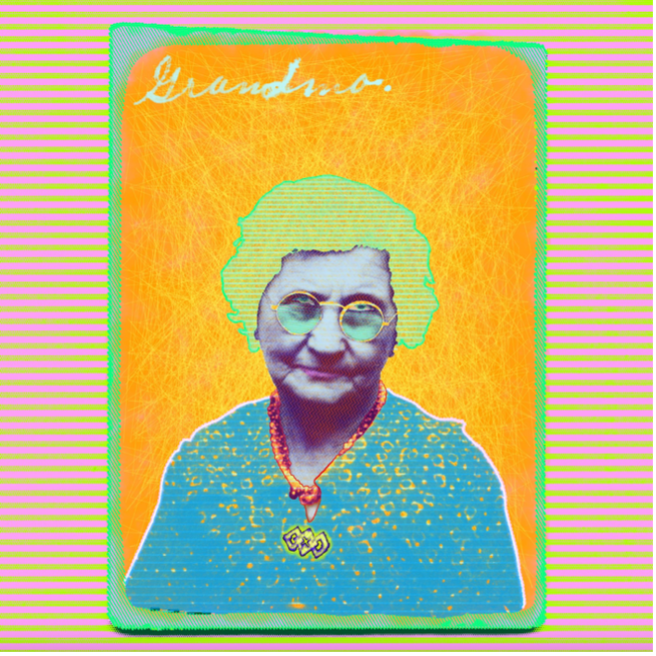
Matt Kane, ANON #10, 2024.
KV: When you identify an artist early, what do you see that others may miss?
B: I think the answer to this is so stupid but so true: they simply haven't been seen. I cannot tell you how many times I have bought a piece and another collector DMs me asking "where did you find this?!" I cannot emphasise this enough- there is a ton of great art out there for very cheap prices by great artists that no one ever sees. Sometimes I feel like a kid in a candy store.
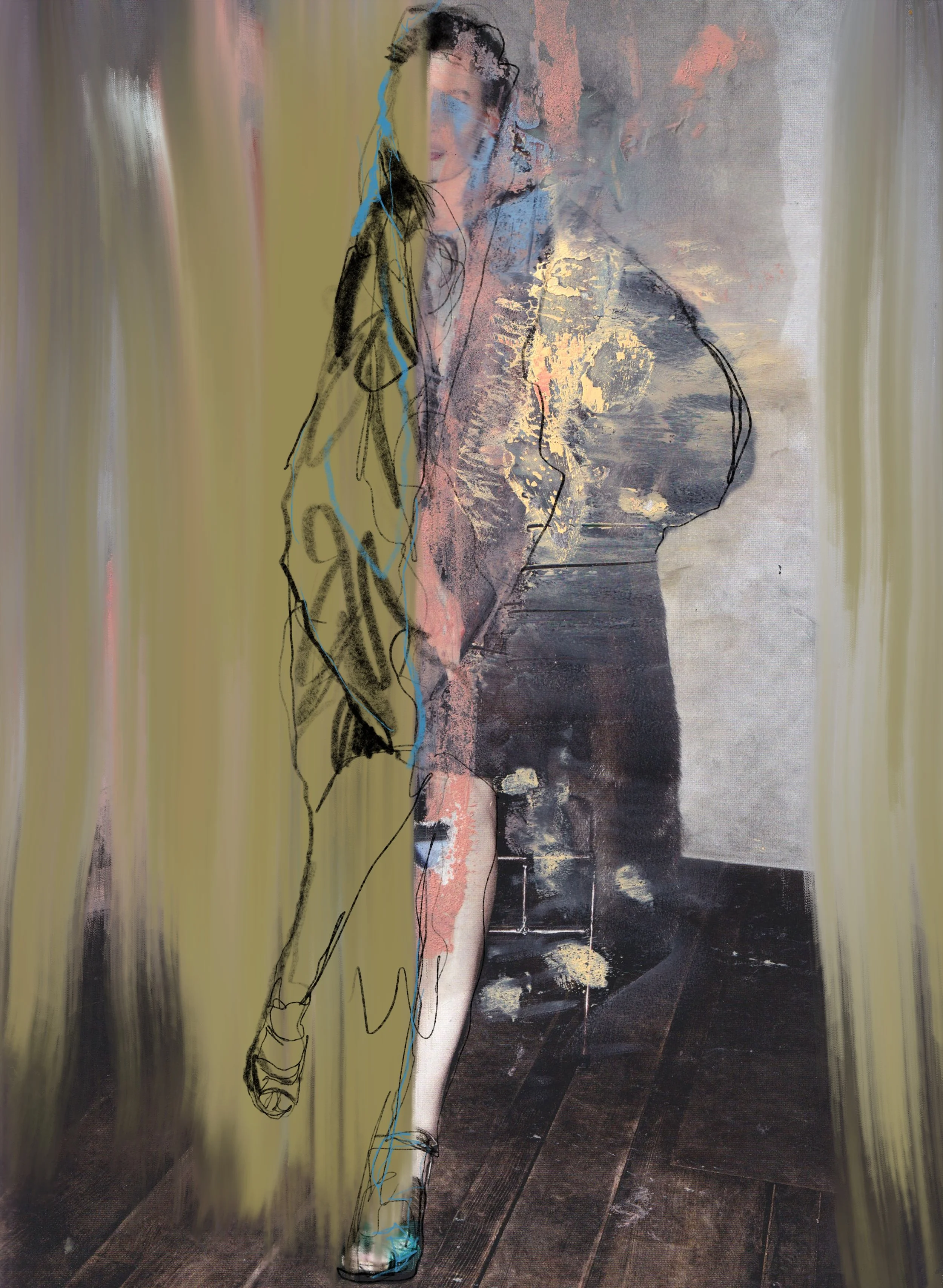
Miss AL Simpson, OPAQUE LOVE, 2021.
KV: What makes an artist timeless rather than timely?
B: I have never been a part of anything in my life where tastes change so quickly. So I think about this question a lot, but every time I think I have a handle on it, I realise I don't. The answer is still evolving, and the market will eventually decide. That said, I think there are a few artists like XCOPY who have likely managed to capture both, which is why their work is so sought after.
KV: You mentioned making a bunch of mistakes early on. What did you learn from them?
B: I have made many mistakes and most of them involve either buying really stupid things like cartoon PFPs that do nothing, or falling for the latest FOMO and massively overpaying for something. I'm human, it happens.
KV: As part of Team 6529, you are involved with The Memes project. What's your relationship with that collection?
B: The Memes are now community-curated on 6529.io, so I express my view on which pieces deserve to be chosen through my vote and vocal support, but the ultimate decision is up to the community. It's a brilliant way to go about art selection, and I plan to have more to say on this as a part of Uprising.
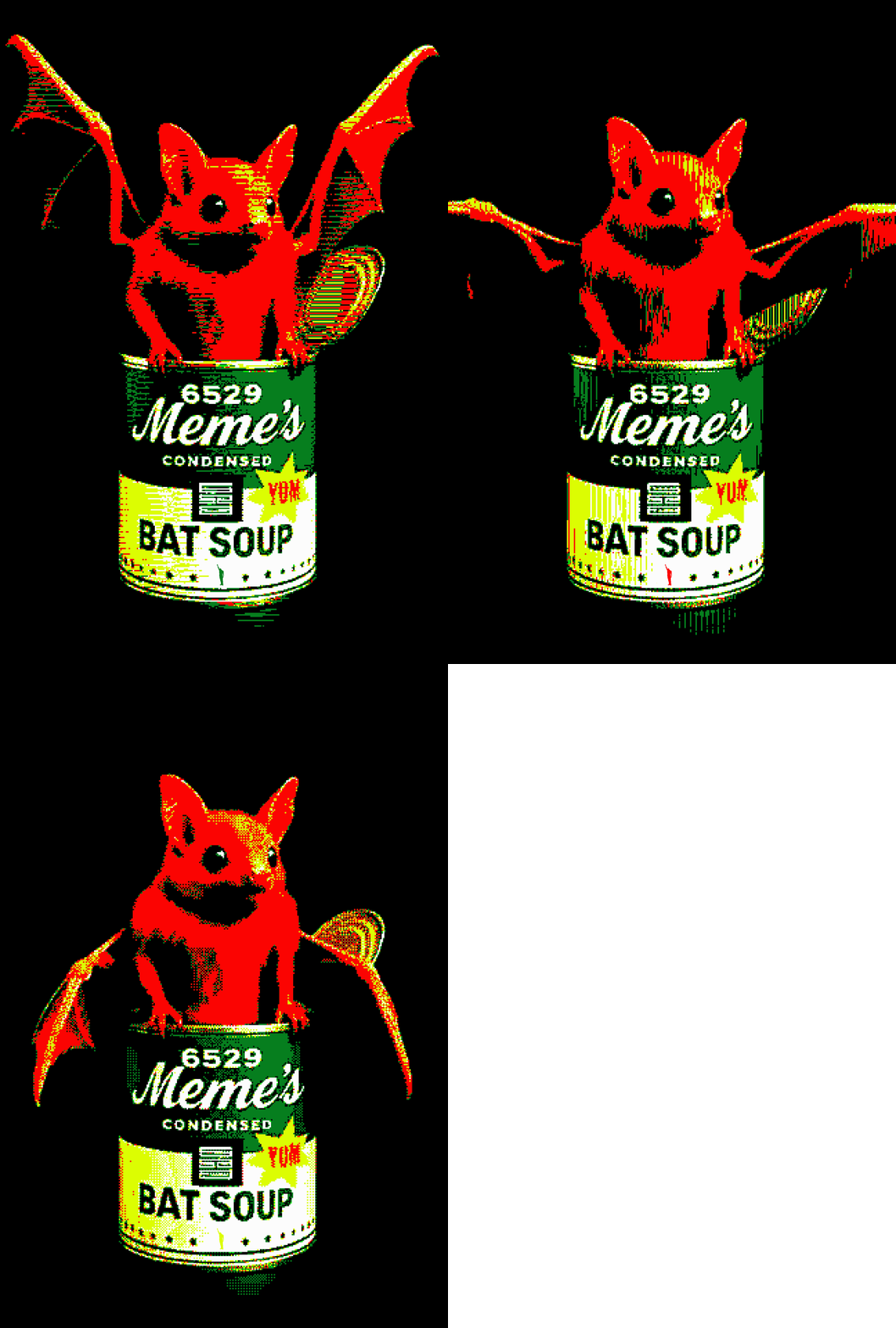
6529, Bat Soup gives me Wings..., 2026.
KV: Do you see AI art as documenting a technological threshold, or redefining authorship itself?
B: My view on AI is that it is a tool - like a paintbrush. People get so triggered by AI art because there's a perception that anyone can create it in five seconds and put it out there as slop. But some of the best art I've seen in the past few years has been AI art, because it does what all great art should do: make you feel something. (I stole that line from Lanett - ha.)
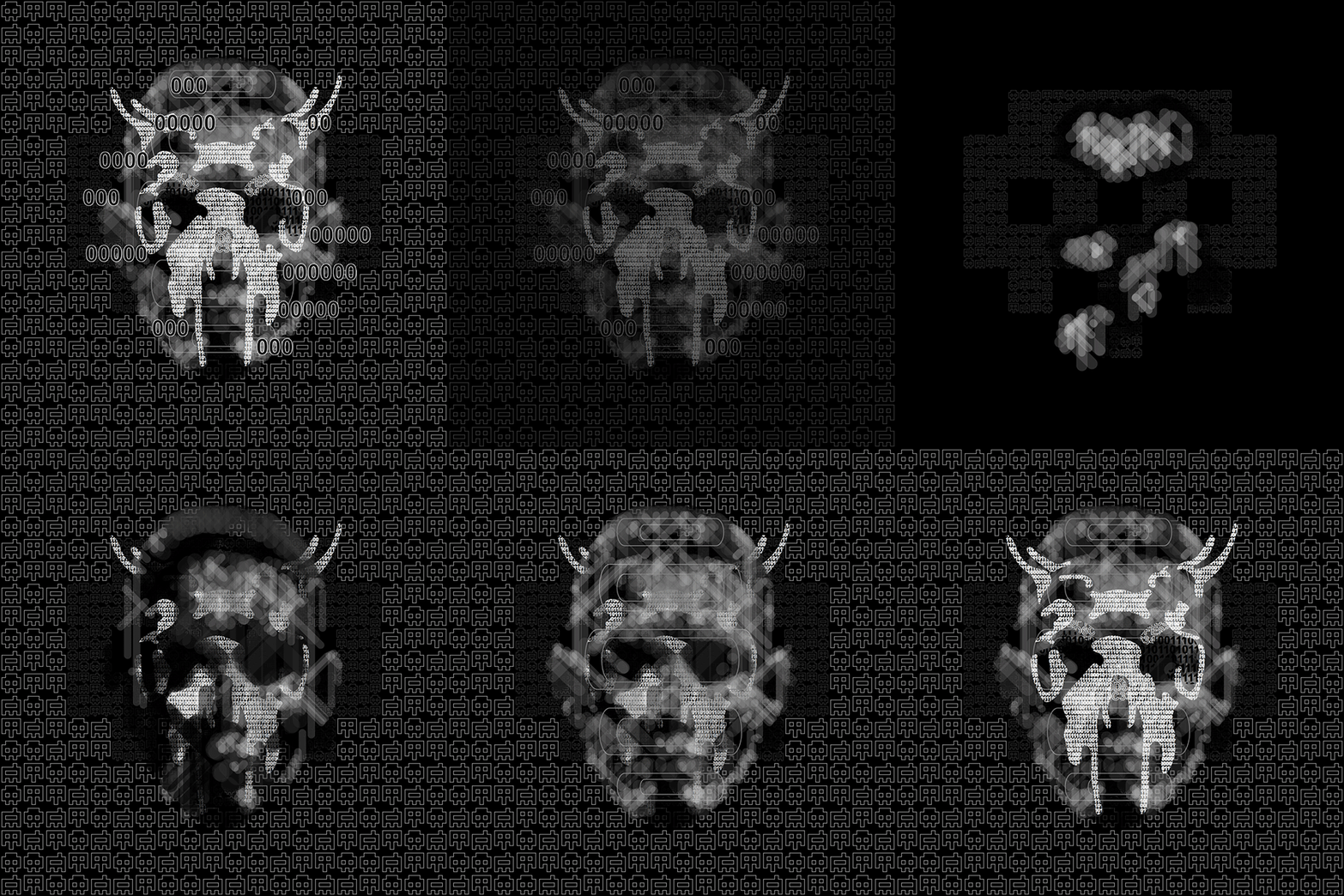
Pindar Van Arman, the pre-swarm, 2024.
KV: If ASI arrives, does that increase or diminish the cultural value of early AI works?
B: AI works by humans, especially early pieces, will be highly sought after in an ASI world. ASI will redefine everything we think we know and appreciate about aesthetics, and I predict an appreciation for the "human touch" will ascend to heights most never thought possible. If you think Starry Night is valuable now, just wait.
Sasha Stiles, WORDS BEYOND WORDS #109, 2025.
KV: Looking at your AI art collection specifically, which pieces do you think will be most valuable when we achieve ASI?
B: It is way too early to say, but if I had to guess on one, I think a work by Claire Silver is timeless and spectacular. But there are so many great candidates, and I think artists like Claire, Pindar Van Arman, and Sasha Stiles, among many others, will be thought of as early pioneers and groundbreakers of the AI art movement.
"AI works by humans, especially early pieces, will be highly sought after in an ASI world. If you think Starry Night is valuable now, just wait."
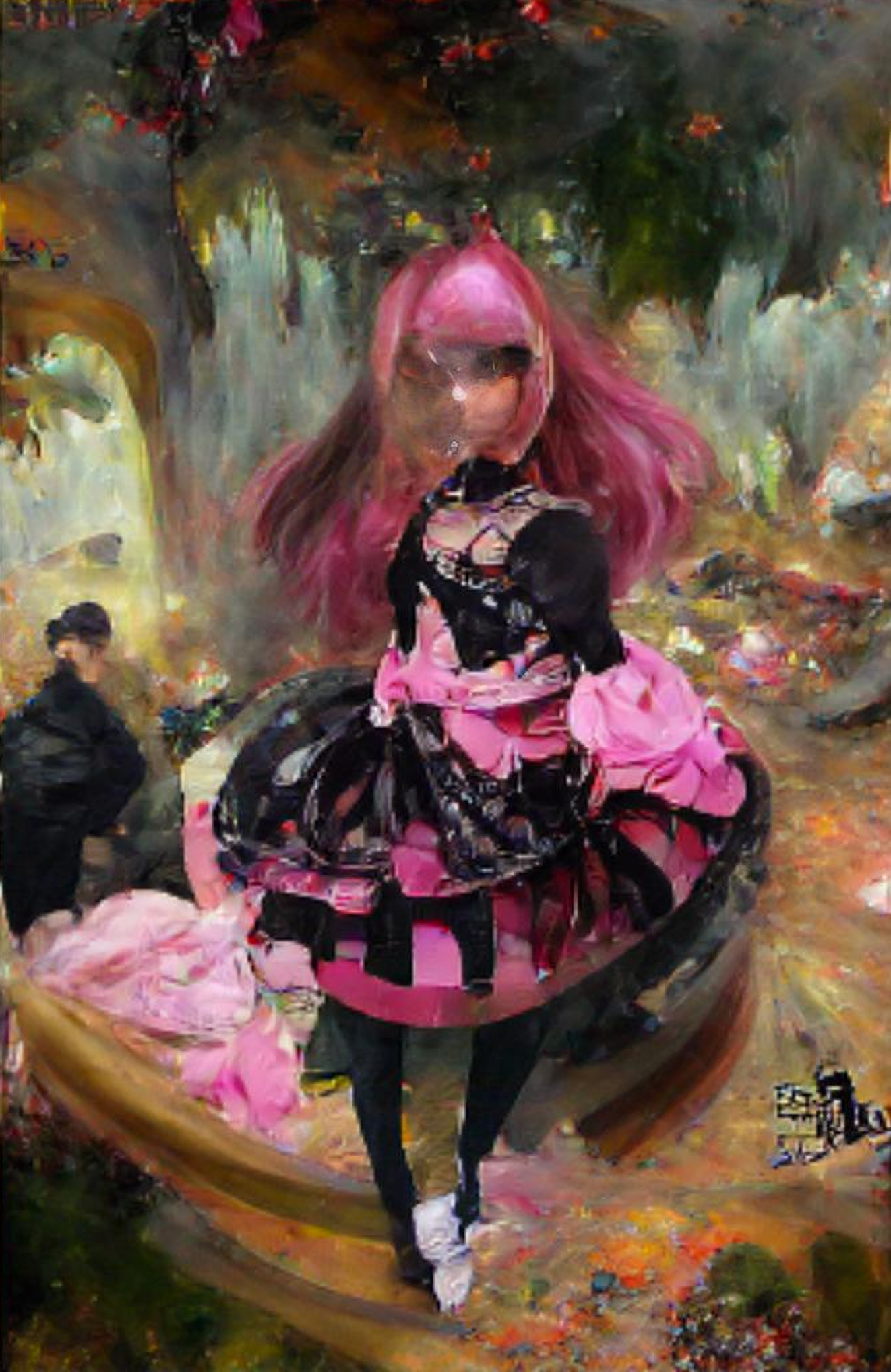
Claire Silver, c l a i r e, 2022.
KV: Have you ever supported an artist beyond purchasing, introductions, narrative framing, institutional positioning?
B: Yes, but I admit I need to do better on this. I'm working on it. I think you can go a mile wide or a mile deep on how you approach buying art here, and for now I have chosen the former because there’s such an abundance to choose from and they all deserve to be seen.
KV: Do you see the collector as a power broker in Web3 culture?
B: Yes, but I don't want to be that person. I am neither expert nor tastemaker, and I am uncomfortable being cast in that role. I have finally realised through Uprising that one of my roles here is to add to the scaffolding that helps enable collectors to make their own choices.
KV: If your collection were preserved intact 50 years from now, what would you want historians to understand about this era?
B: I would want historians to understand that this is the absolute Wild West of the digital art movement, created by geniuses and speculators and scammers and misfits and patrons alike. We cannot change who we are, but somehow this crazy mix is what makes this place so interesting and wonderful. We must fight to preserve this culture, sans scammers of course. But if I had to sum it up in one word it would be “chaos.” And it is beautiful.
KV: Are you building a collection for liquidity cycles or for cultural memory?
B: Definitely cultural memory. I want the most valuable pieces in my collection to stand side-by-side with the least valuable, because at the end of the day it's a reflection of who I am and how I want to be remembered: every piece I bought says something about who I am, which is that I bought it because I loved the art.
KV: Do you think digital art needs new forms of museums, or will traditional museums adapt?
B: Traditional museums will adapt eventually, but they will not lead the charge. By nature they are conservative and would rather be followers than leaders. The true leaders of the movement towards museums are the few who have taken a chance on us, like Toledo and the Museum of Art + Light, and people like yourselves who have stuck with the movement through thick and thin. Installations like Beeple's and Refik's will help push us further. I don't worry about whether or not we achieve validation in a museum because given the nature of networked art described above, I know with high confidence that they will show up eventually.
KV: If you could commission one work that defines this era, what would it depict?
B: This is a great question and I don't have a great answer. I have often called the union of crypto bros + artists an unholy marriage, and I don’t think there’s a single work that can capture the insanity and chaos this has birthed.
KV: How would you describe your collection in three words?
B: Can I do 4 words? Bought What I Loved.
KV: Thank you, Bats, for your time, your candour, and for letting us into your world. We look forward to watching how UPRISING.ART unfolds, and to seeing which artists it brings into the light.
BATSOUPCAVE collection: opensea.io/0x3852471d266d9e2222ca9fdd922bafc904dc49e5
UPRISING.ART - emerging artist programme launched 2025.