
RAOUL PAL
Liquidity, Crypto, Culture & the Architecture of Value
in a conversation with Kate Vass
There are few people who move as fluidly between macroeconomics and meme culture as Raoul Pal. For decades, he studied liquidity, the invisible force that drives markets, inflates bubbles, and silently reshapes wealth distribution. From Goldman Sachs to global macro hedge funds, from founding Global Macro Investor to building Real Vision, he has spent his career decoding the architecture of financial cycles.
But his lens widened. Liquidity, he argues, does not merely move markets, it moves culture. It shapes what societies value, what they preserve, what they immortalize. And nowhere is this more visible than in crypto and digital art, where technological adoption, monetary debasement, social consensus, and identity collide in real time.
We sat down on a video call - Raoul unhurried, generous with thought, occasionally drifting from macro systems to a particular GIF, then back again. What follows is that conversation.
“It’s not about owning everything. It’s about owning what moves you.”
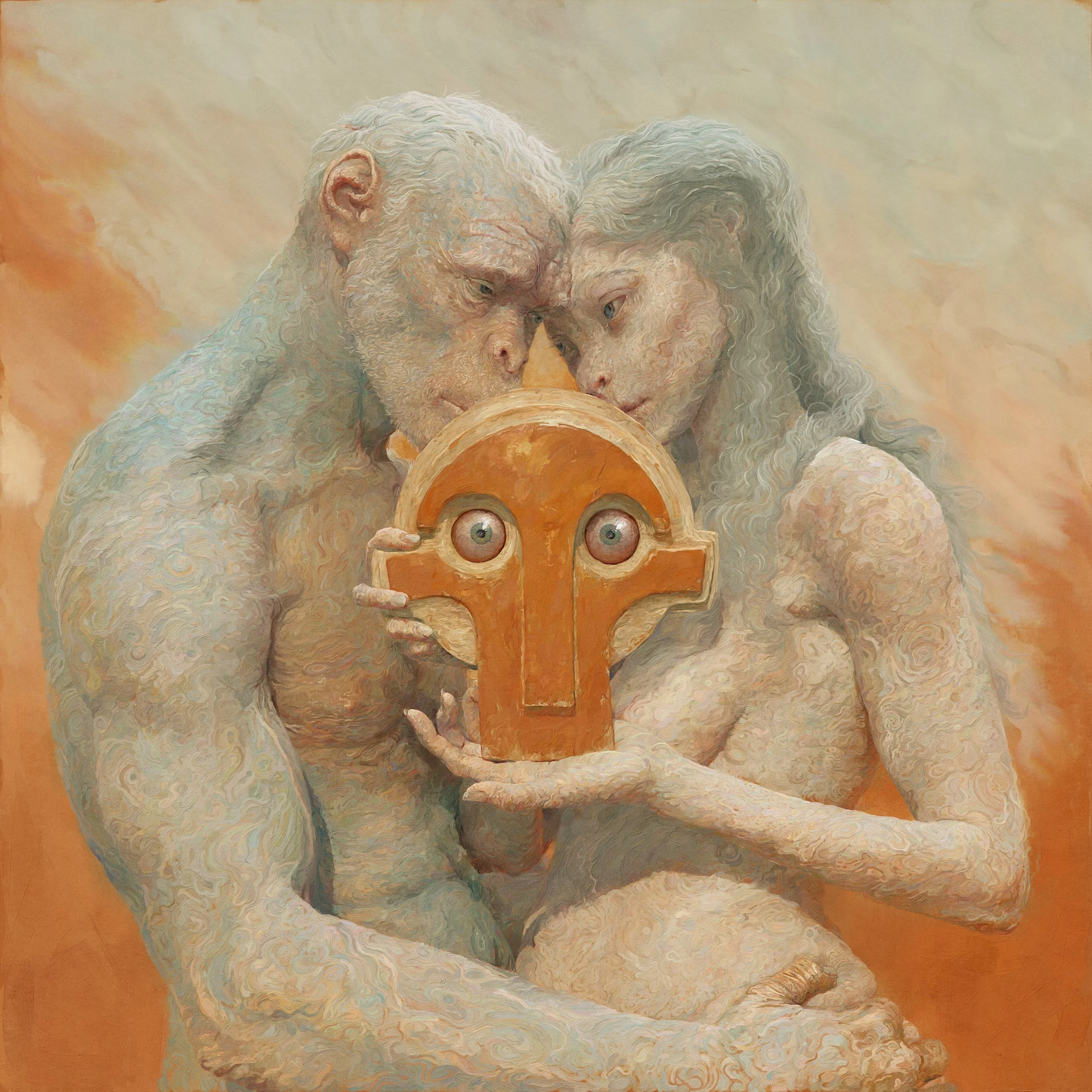
Sam Spratt, Player #127/256, 2023. Courtesy of The Culture Vault Collection and the artist.
KV: I’m fascinated by your career - Real Vision, your role as one of the key voices connecting liquidity cycles, crypto markets, and the emerging network economy. You’ve also become a very special force in the Web3 community.
I’d like to step back from NFTs and culture first and zoom out. You worked inside the institutional ecosystem - Goldman Sachs, then global macro hedge funds at GLG. Later, you said you opted out of the rat race and built your own ecosystem instead. What exactly felt broken about the old pipeline?
RP: The hedge fund industry became obsessed with short-term performance. Global macro trends take time, sometimes years, to play out. But if you're reporting P&L monthly, you're structurally prevented from taking long-term positions. Investors wanted less volatility. That meant you couldn't let your P&L move around. So everything became short-term. Returns collapsed.
And the industry shifted from "How good is your performance?" to "How much capital can you raise?"
I reached a point where I thought: What's the point? You endure enormous stress, make less money, and compromise your strategy. So I opted out.
I started writing Global Macro Investor, now twenty-one years running, with a clear bias: to prove that long-term investing outperforms. And it has. Even with terrible years in between, the compounded results demonstrate that patience works.
“The industry optimized for short-term performance. I optimized for long game."
KV: After Global Macro Investor, you founded Real Vision. What makes it different from traditional financial media built on headlines and hot takes?
RP: The origin story matters. During the 2008 crisis and later the European crisis, I was living in Spain. I saw both crises coming. I made money. But I watched friends and my parents' friends lose savings, pensions, businesses. They would ask: Why didn't we know?
That bothered me deeply.
So I thought, how do we democratize financial intelligence? How do we invert the elite hedge-fund model? Instead of a cheaper newsletter, we built long-form video interviews with the best hedge fund managers in the world. This was 2013, early YouTube. People were stunned. They had never heard this kind of depth.
Over time, Real Vision evolved from media into a community. A living ecosystem. You can come for education or trade ideas. Both paths converge: increasing your probability of making money over time.
“It feels like drama in the moment. Zoom out and it’s exponential.”
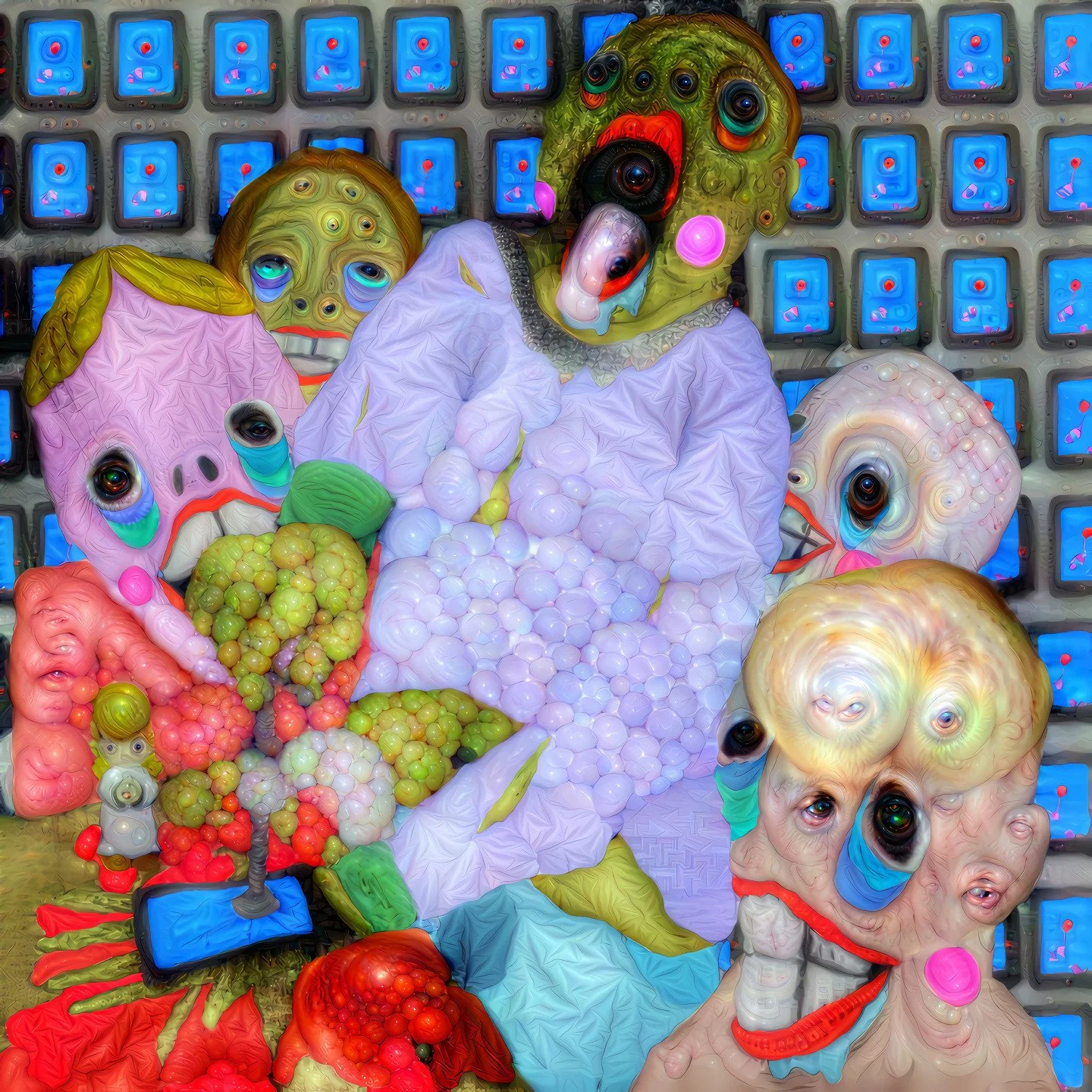
diewithmostlikes, eternal harvest, 2021. Courtesy of The Culture Vault Collection and the artist.
KV: The markets feel difficult right now. You speak often about liquidity. Why are crypto markets down?
RP: Perspective is everything. I've seen crypto down 80% multiple times. Bitcoin was $200 when I started. It hit $130,000. It feels dramatic in the moment, but zoom out.
Crypto prices are primarily driven by liquidity, global money supply expansion. Governments print money. Fiat debases. Scarce assets rise. That's the structural dynamic.
Over long periods, only two asset classes truly compound wealth: technology and crypto. Crypto is essentially a leveraged play on liquidity plus adoption.
Recently, U.S. liquidity contracted temporarily due to Treasury mechanics and government shutdowns. Liquidity drained, risk assets sold off. Crypto sits further out on the risk curve, so it fell more. But global liquidity is at all-time highs. This feels like a mid-cycle pause, not the end.
We've seen this before. Ethereum fell 70% in the middle of 2017's bull market. Solana fell 75% in 2021's bull market. Liquidity remains the dominant force.
"Crypto isn't volatile. Your time horizon is."
KV:You've called crypto an "alien asset class" and the biggest macro opportunity of all time. What makes it different from past tech waves?
RP: Performance. Bitcoin has annualized 130% returns since 2012- despite 80% drawdowns. Nothing compares. It's alien because of its asymmetric risk-reward profile. The challenge is psychological. People watch their P&L too closely. If you believe in the adoption curve, then drawdowns are opportunities, not disasters.
KV: Liquidity doesn't just flow into equities, it flows into watches, wine, art. Why does surplus liquidity eventually express itself through culture?
RP: Liquidity leads the business cycle. More money, more earnings, more confidence. When people earn more, they reward themselves. Rolex prices rise. Fine art rises. Luxury real estate rises.
Then there's cultural resonance. If we're living through a transformative era, people want mementos. Digital art is exactly that, a catalog of this moment.
KV: Do you see crypto creating a new class of native digital cultural assets?
RP: Absolutely. We live online. Crypto is cultural. Even bear markets are cultural: memes, drama, collective experience. Digital art captures the rise of AI, the debasement of currency, the fragmentation of society, internet language.
Artists like XCOPY reflect the culture of the internet itself. Early digital art from 2017 onward will be extremely hard to own in the future.
“Ethereum is a fast-growing emerging economy. NFTs are prime real estate inside it.”

Larva Labs, CryptoPunk #3588, 2017. Courtesy of The Culture Vault Collection and the duo artists.
KV: You've said NFTs behave like trophy assets. What makes an NFT trophy-grade?
RP: Blockchain solved digital scarcity. In a digital world, everything trends to zero value. NFTs introduced provable scarcity and ownership. Trophy assets always emerge when wealth expands. It happened with Warhol. With Basquiat. With watches.
CryptoPunks signal identity and status, but also belonging. Networked ownership makes this different. A Warhol hangs privately. A Punk is globally visible and provably yours.
Take XCOPY's Last Selfie - 1 of 10, trading like a 1 of 1. Why? Social consensus. Ten owners reinforce belief. That's powerful.
"A Warhol hangs on your wall. A Punk signals to the world."
KV: What was the first on-chain artwork that felt like art to you - not just an NFT?
RP: XCOPY became my entry point. He was the epicenter of internet culture. But the real shift happened at a dinner in Paris, technologists, artists, financiers all sharing genuine passion for digital art. That doesn't happen normally. That moment crystallized it.
Then generative art - the merging of human and machine. AI as collaborator. That's when I understood we weren't just collecting assets. We were cataloging a civilization's handover to machine intelligence.

XCOPY, Last Selfie, 2018-2019. Courtesy of The Culture Vault Collection and the artist.
KV: You call your personal collection TheCultureVault. Why that name?
RP: TheCultureVault collects what is culturally resonant and technologically significant. Not everything. Not everything deserves the title. But the work that captures this specific moment of transformation - the rise of AI, the debasement of fiat, the birth of digital ownership - that work should be preserved.
KV: You own works by diewiththemostlikes - a visceral, grotesque critique of mid-American consumerism. You've called them a legend. What draws you to that confrontational register?
RP: Culture should be rebellion. Art and culture should push back. Diewiththemostlikes is working in that tradition. The critique is savage. The humor is real. And the discomfort is intentional.
It fits the broader thesis: we are living through a moment of profound economic transformation. Currency debasement. The collapse of institutions. The grotesque has always documented collapse.
KV: In 2022, you discovered Roope Rainisto's Life in West America series. Do you remember the first piece you saw, and what about it convinced you it mattered?
RP: It was the uncanny accuracy. Here was a Finnish artist using AI to depict American landscapes - and somehow capturing something more true than a photograph. The series has the quality of memory rather than documentation. That's rare.
And it raises something I find genuinely fascinating: an artist who hasn't lived in America can depict it more honestly than someone inside it. AI removed the ego. What remained was pure cultural signal.
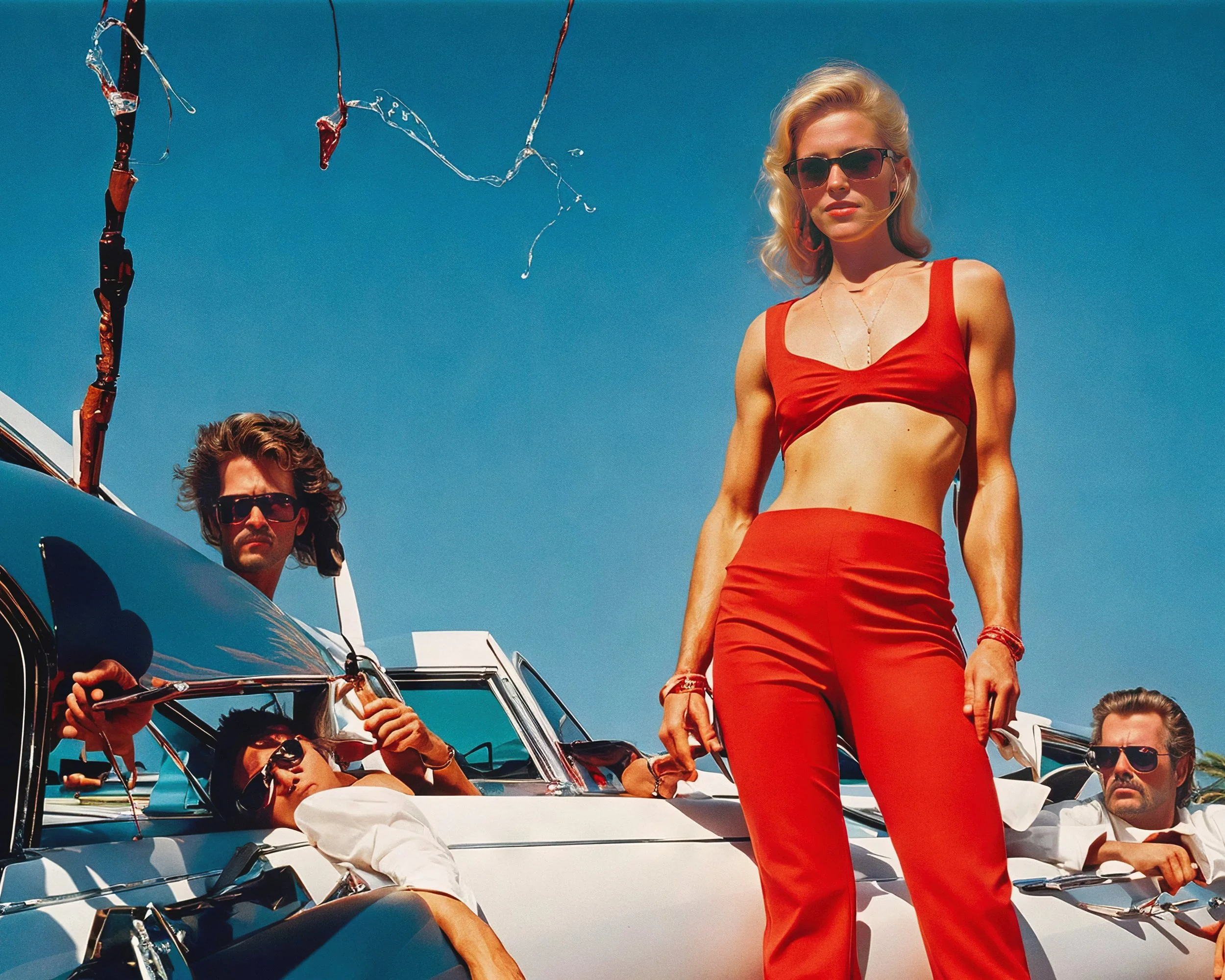
Roope Rainisto, Vice Squad, 2023. Courtesy of The Culture Vault Collection and the artist.
KV: You don't own a Fidenza. How come?
RP: No. I respect Tyler Hobbs enormously. But it doesn't move me. I won't buy what I don't love. Investment lens matters, but emotional attachment matters more.
KV: You collected Beeple seriously. How do you think about that work now, its place in the canon?
RP: Beeple documented the internet, daily, for years before anyone was paying attention. The everydays are a record. ABUNDANCE, GIGACHAD, POLITICS IS BULLSHIT, REAL ART, these aren't just provocations. They're journalism. They're evidence.
The $69 million sale wasn't just a market event. It was a cultural declaration. The most expensive block space on Earth.
Beeple, REAL ART, 2021. Courtesy of The Culture Vaultl Collection and the artist.
KV: You also collect Snowfro. The Chromie Squiggle is almost the opposite of XCOPY- minimal, generative, almost meditative.
RP: Snowfro built the infrastructure, Art Blocks, that made generative art possible at scale. The Squiggle is a proof of concept for the entire movement. It's the purest expression of the idea: a human writes an algorithm, the machine executes it, something new appears that neither could have made alone.
KV: What artists are you hunting right now? What's missing from TheCultureVault that you feel the urge to add?
RP: I'm always looking for cultural signal - work that feels like it's capturing something true about this moment. Gavin Meeler is in that space for me right now.
Kim Asendorf is another. The algorithmic precision, the conceptual rigor.
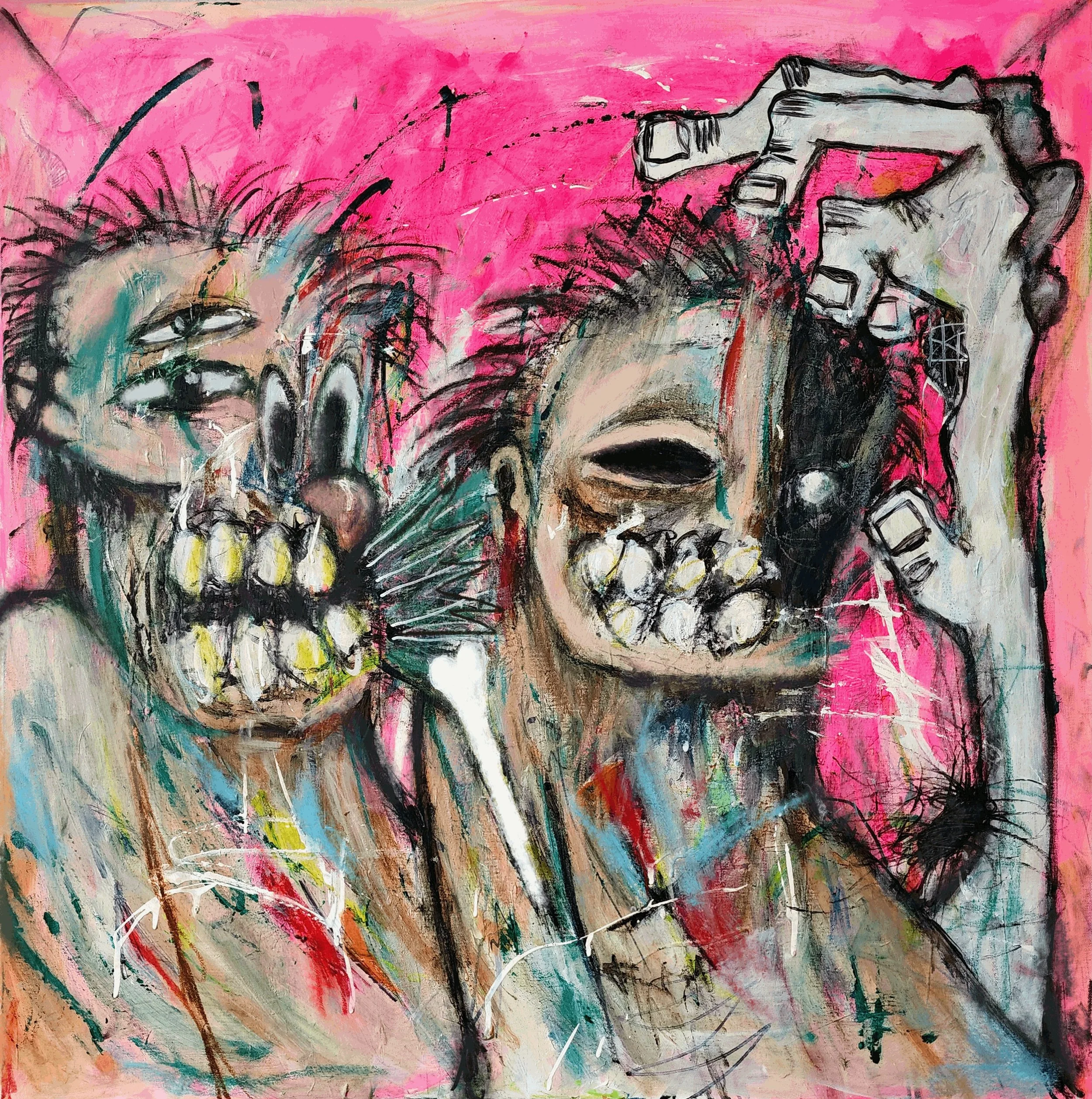
Gavin Meeler, 2nd hand stupidity, 2025. Courtesy of The Culture Vault Collection and the artist.
KV: What does long-term NFT preservation actually require? Technically, institutionally?
RP: Institutionally: social consensus. The same force that makes a CryptoPunk valuable keeps it preserved, enough people agreeing that it matters. Technically: better storage. Many works still rely on IPFS or centralized servers. We need more robust on-chain solutions. As values rise, preservation incentives will follow.
KV: Artists minting across multiple chains, does it dilute value?
RP: Yes. It's debasement. Mint less. Mint when it matters.
Very few artists can maintain a massive social graph. XCOPY structured hierarchy brilliantly. Joe Pease maintains scarcity well. Jack Butcher gamifies supply cleverly. There's no rule book, but you must be thoughtful. Scarcity builds gravity.
"Mint less. Mint when it matters. Scarcity builds gravity."
Joe Pease, crossing, 2024. Courtesy of The Culture Vault Collection and the artist.
KV: Why don't you collect on Tezos?
RP: Tezos has amazing art. But Ethereum has social consensus, security, liquidity. Ethereum is like a fast-growing emerging economy. NFTs on Ethereum are prime real estate - Park Avenue versus The Bronx. Both are real estate. Not equal. Tezos is a culturally vibrant nation with currency crises. A strong arts district, but weaker economic infrastructure. Chain matters.
“Chain matters. Social consensus matters more.”
KV: Do you have works you consider priceless-that you wouldn't sell at any price?
RP: Yes. There are pieces where the offer doesn't matter. Because selling them would be wrong. Not financially wrong, emotionally wrong. Those are the ones that found me, not the other way around.
KV: Do you see the collection as a legacy for your children?
RP: Not really. I don’t have children. AI will preserve everything we've ever said anyway. I'm not driven by immortality through art ownership. We may all be immortal through AI. The question is what we leave behind.
"We may all be immortal through AI. The question is what we leave behind."
KV: What will be remembered more in thirty years: Bitcoin, Ethereum, DeFi, NFTs or something not yet invented?
RP: Bitcoin will be remembered as the origin story. But digital art may be the outlier. If this space grows from $3 trillion to $100 trillion, enormous wealth gets recycled into culture. Early digital art will trade at $200 million. It sounds absurd, until it isn't.
It spreads faster than traditional art because it's networked. A painting requires a gallery. A Punk requires only a wallet and a signal.
KV: If you were 25 today with no capital - what would you do?
RP: First, get some crypto exposure. Not obscure tokens, major layer ones. Ethereum, Solana. The foundational networks that have the best chance of long-term growth.
Then, once that position is working, consider art as a multiplier on top of it. Here's the math: if ETH goes up 5x, and the artwork you bought goes up 10x in ETH terms - that's 50 times your money. Both multipliers working together, without using any leverage.
That's what makes it so interesting. With leverage, if the market goes against you, you lose your position and you're out of the game entirely. But art held in ETH is different, it's like an option with no expiry date. The worst case is that the art stays flat in ETH terms and ETH itself goes up. You still win.
KV: We started where most people start - with the money, the cycles, the macro. And we ended where it actually matters: with what we choose to preserve, and why. That's the conversation I always hoped this would be. Thank you, Raoul.
“I won’t buy what I don’t love - even if it makes money.”
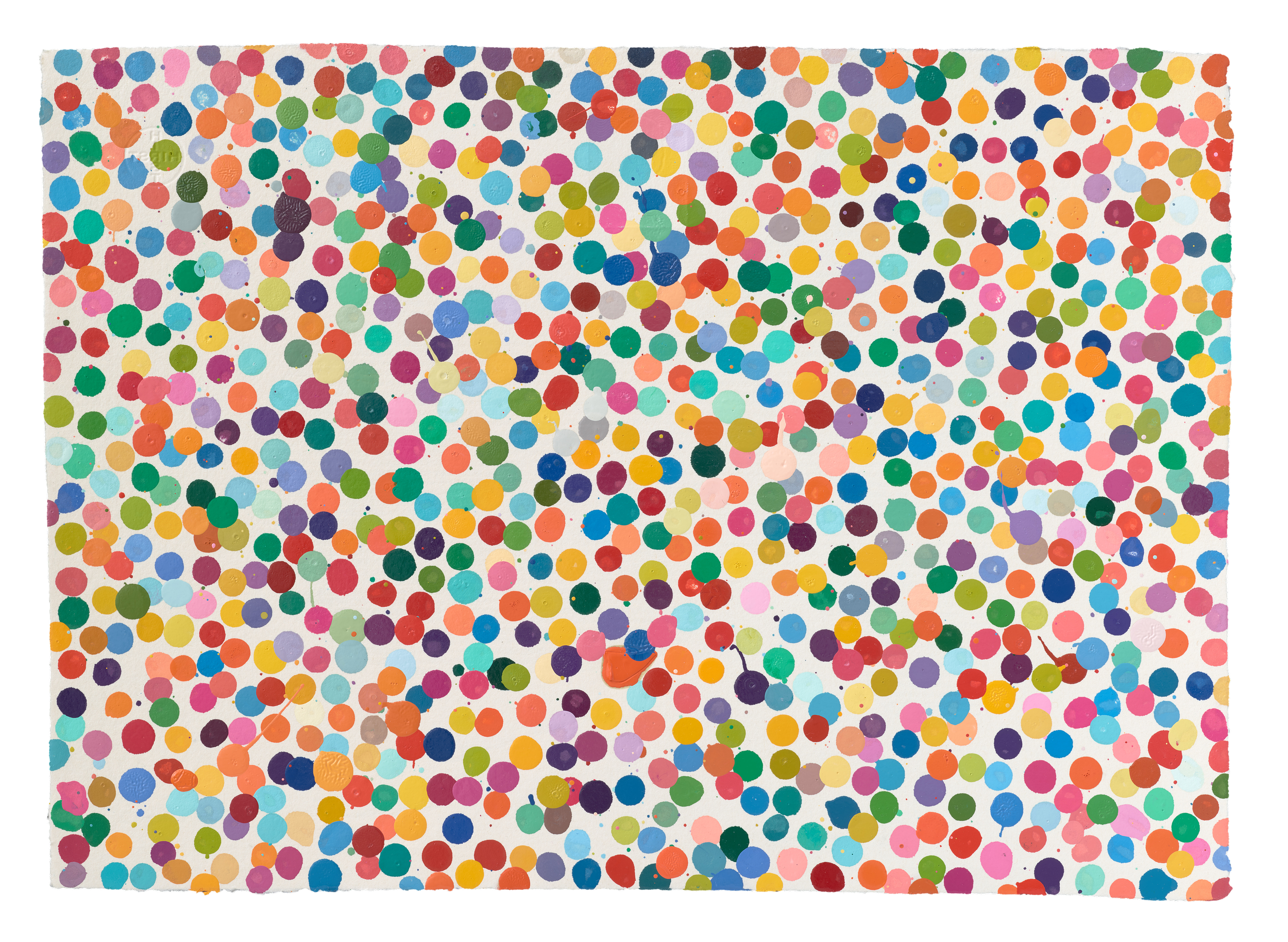
Damien Hirst, You’ve got nothing to lose, 2021. Courtesy of The Culture Vault Collection and the artist.
On X: @RaoulGMI
RaoulGMI’s collection link: https://opensea.io/TheCultureVault