
Alexander Mordvintsev at After the Algorithm
What does artificial “intelligence” mean for artistic practice, creativity, and community today? These questions framed After the Algorithm, a 10-day festival in Zurich that brought together artists, researchers, and builders to examine how algorithmic systems shape contemporary life.
Through exhibitions, panels, and workshops, After the Algorithm invited audiences to question, explore, and reimagine the role of algorithms across disciplines. It created space for dialogue, encouraging participants to engage critically with the systems that increasingly mediate perception, authorship, and knowledge.
The festival unfolded across multiple venues in Zurich, including Kulturhaus Helferei, which hosted the main exhibition, and Debattierhaus Karl der Grosse, where panels and workshops took place. Supported by Stadt Zürich Kultur, the foundations Temperatio, Cassinelli-Vogel, and Pro Litteris, ZHAW Digital, PHZH Center Digital Learning, Zürcher Hochschule der Künste, and the Swiss Center for Responsible AI, the program reflected the growing intersection between artistic experimentation and technological research.
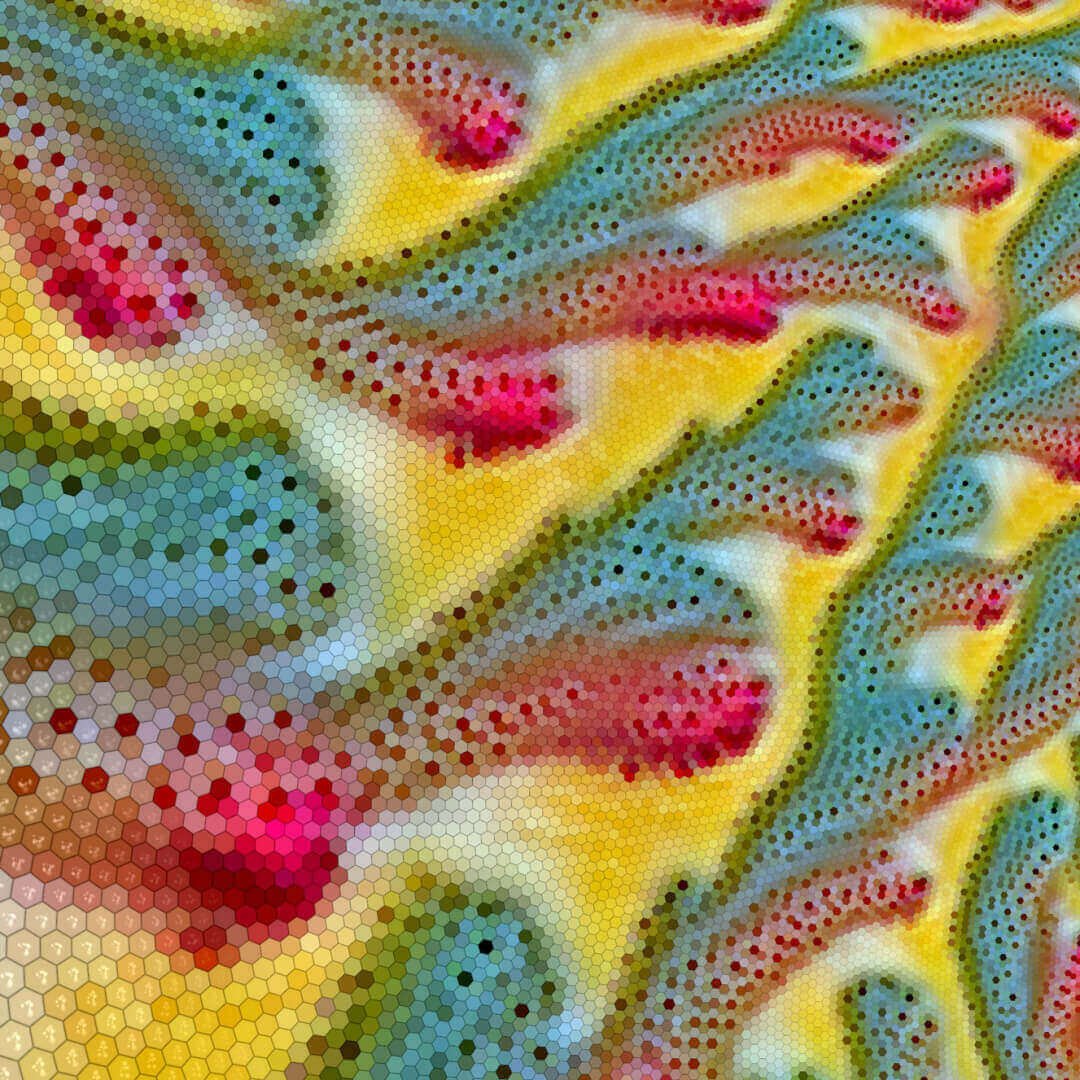
Alexander Mordvintsev, Substrates of (A)Life, 2026.
Bringing together a wide range of international artists, the exhibition presented diverse approaches to AI, with works by artists such as Boris Eldagsen, Gonçalo Guiomar, Jonathan Uliel Saldanha, Estampa Collective, 2girls1comp, Theresa Reiwer, Martyna Marciniak, Lennart K.M. Schulz, Isotta Magistrali, Gianmarco Albano, Dalia Shaaban, Amanda E. Metzger, Adam Harvey, Liat Grayver, Daniel Berio, MetaOffice, t8y, Esther Hunziker, Marc Lee, Alexander Mordvintsev, Lauren Lee McCarthy, AATB, Alexa Weiss, Vittoria Rondelli, Meriton Ajdini, Fynn Heitzer, Kurt Caviezel, Helmut Grabner, and Fitim Abdullahu.
Among the participating artists was Alexander Mordvintsev, who presented Substrates of (A)Life, a projection-based installation that questions the perceived divide between nature and technology. Just as biologists continue to debate where life ends and non-life begins, our technological creations, both physical and conceptual, share something essential with organic life. This installation makes visible the deep structural similarities between biology and technology. It places the precise timing of digital signals alongside the irregular firing of neurons and compares cellular energy cycles with the self-regulating feedback loops of computer hardware. Substrates of (A)Life reveals that silicon and carbon are simply different materials running the same underlying program: evolution.
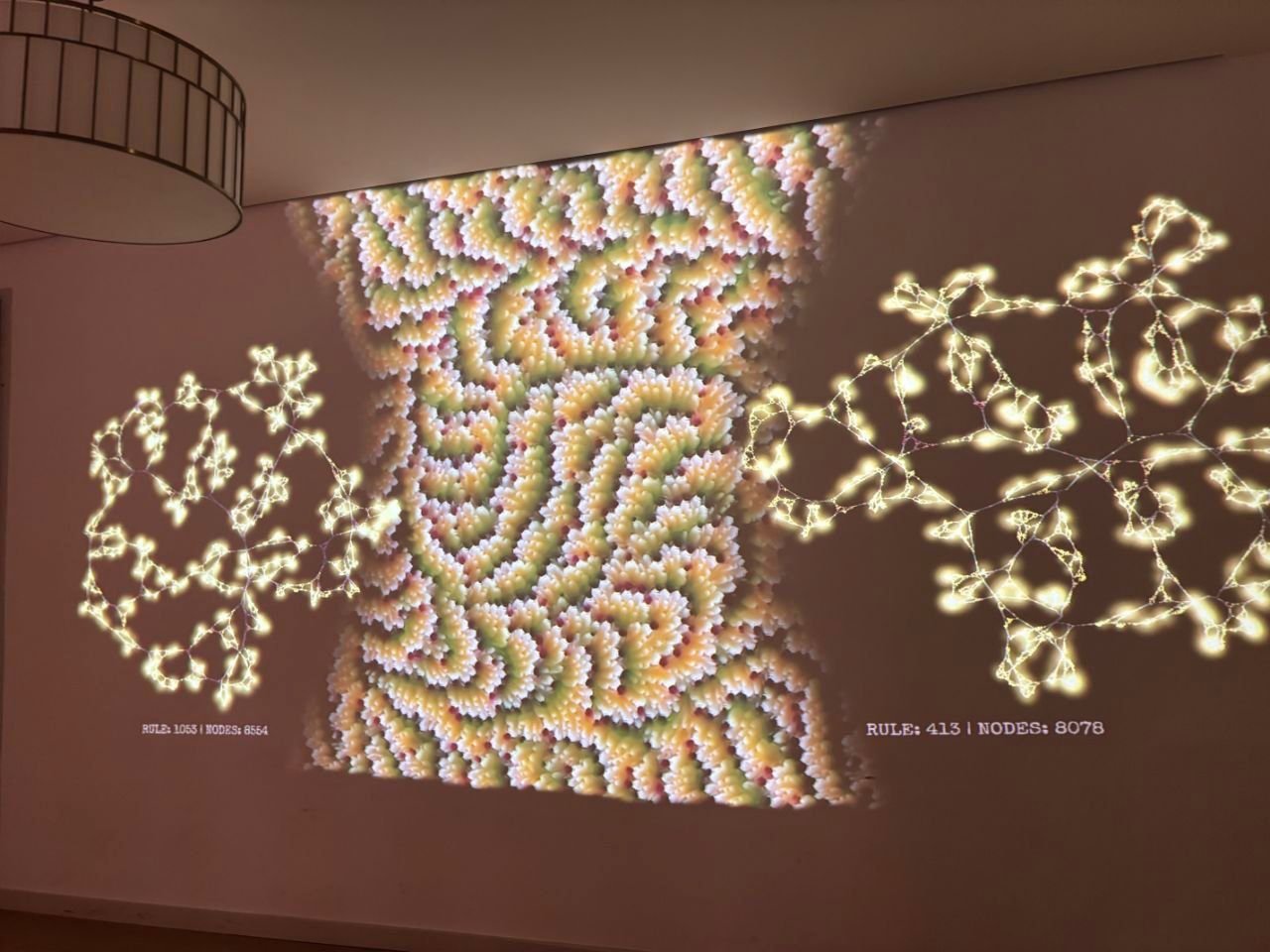
A projection of Substrates of (A)Life by Alexander Mordvintsev at the festival.