Alexander Mordvintsev
Alexander Mordvintsev is a researcher, artist, and the creative mind behind the renowned DeepDream project. Currently part of Google Research, his work revolves around the visualization, interpretation, and understanding of Deep Neural Networks. Driven by his fascination for emergent phenomena, Alexander combines his expertise in Machine Learning, Computer Graphics, and Vision to create remarkable visual interpretations of complex systems.
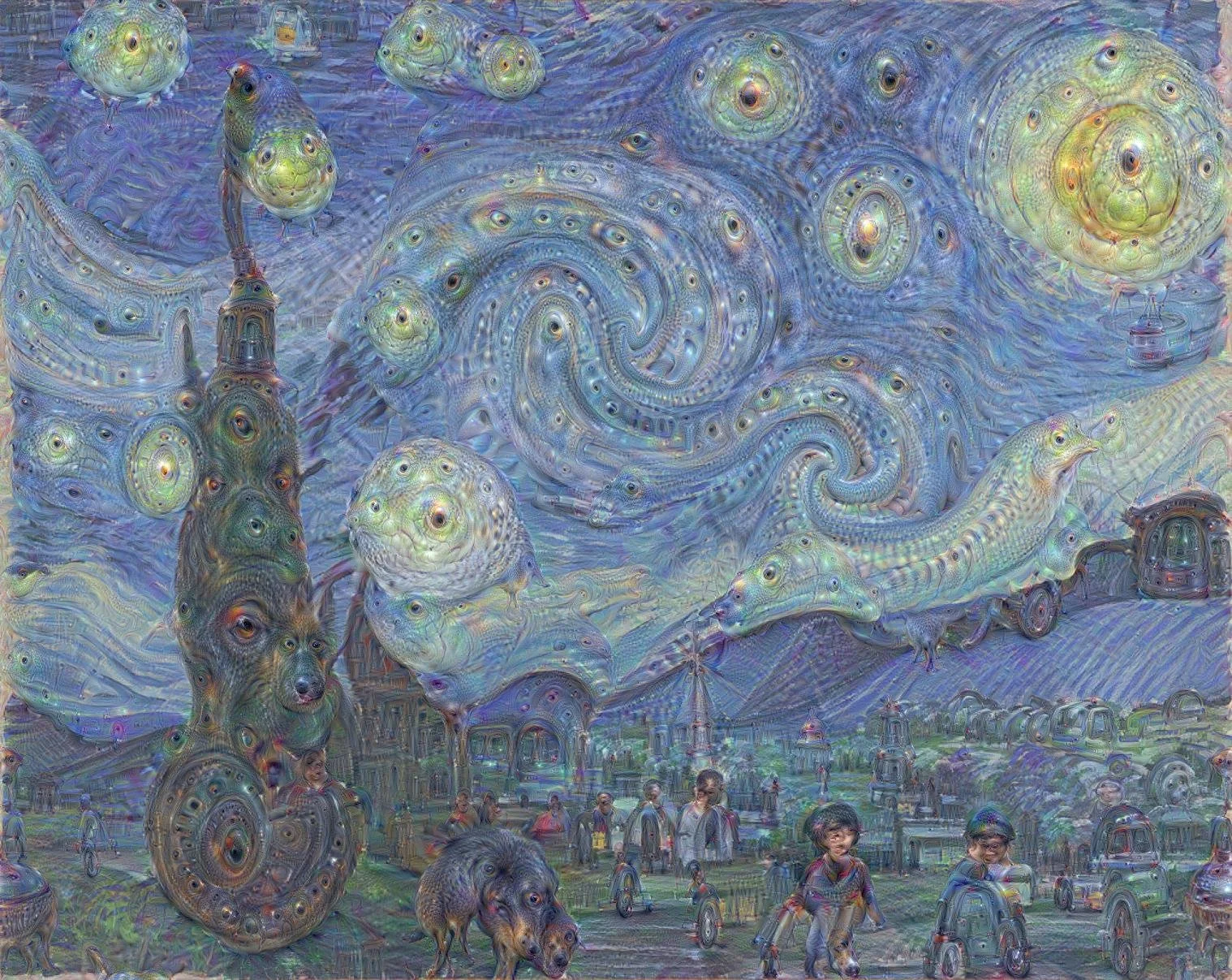
Analog
by Alexander Mordvintsev
SOLD OUT
Fine Art Print on paper
Size: 60 x 60 cm
The work is also available as a unique NFT (minted upon request) for 5 ETH
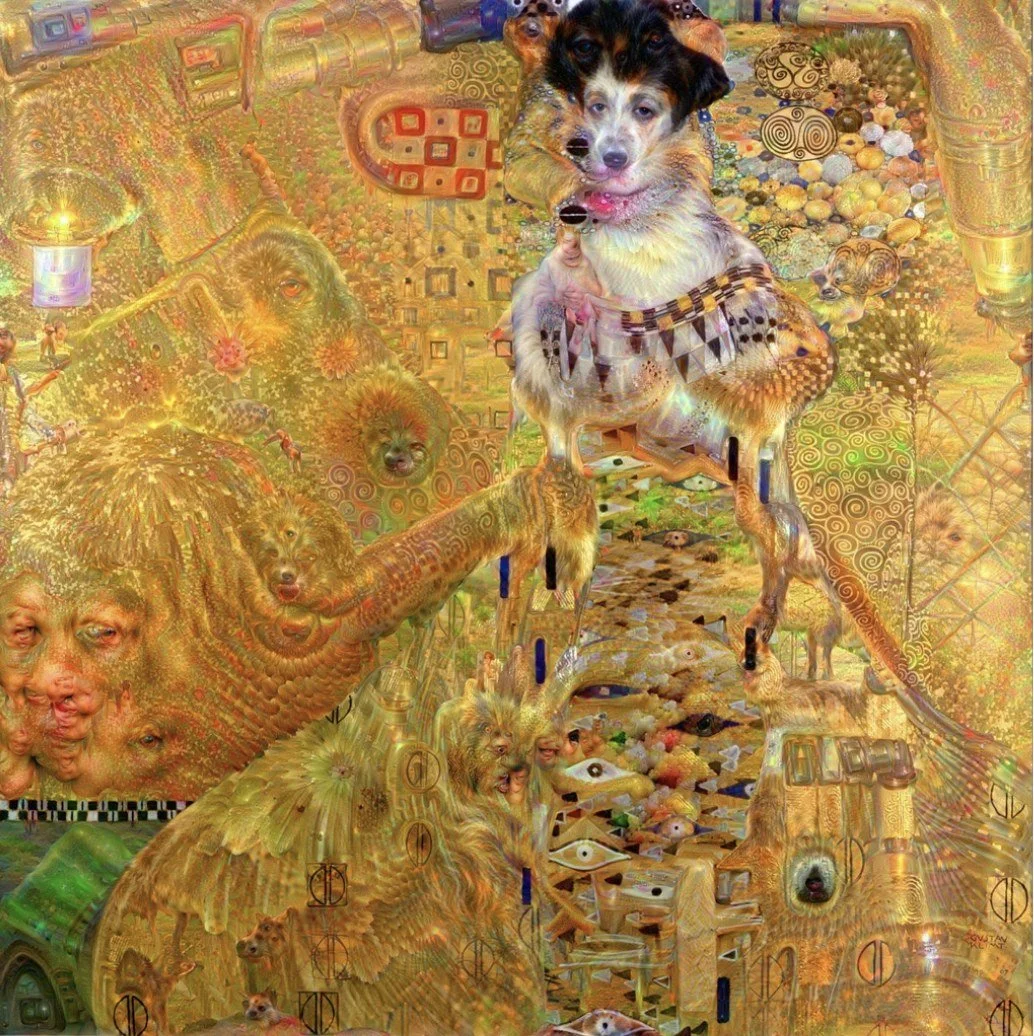
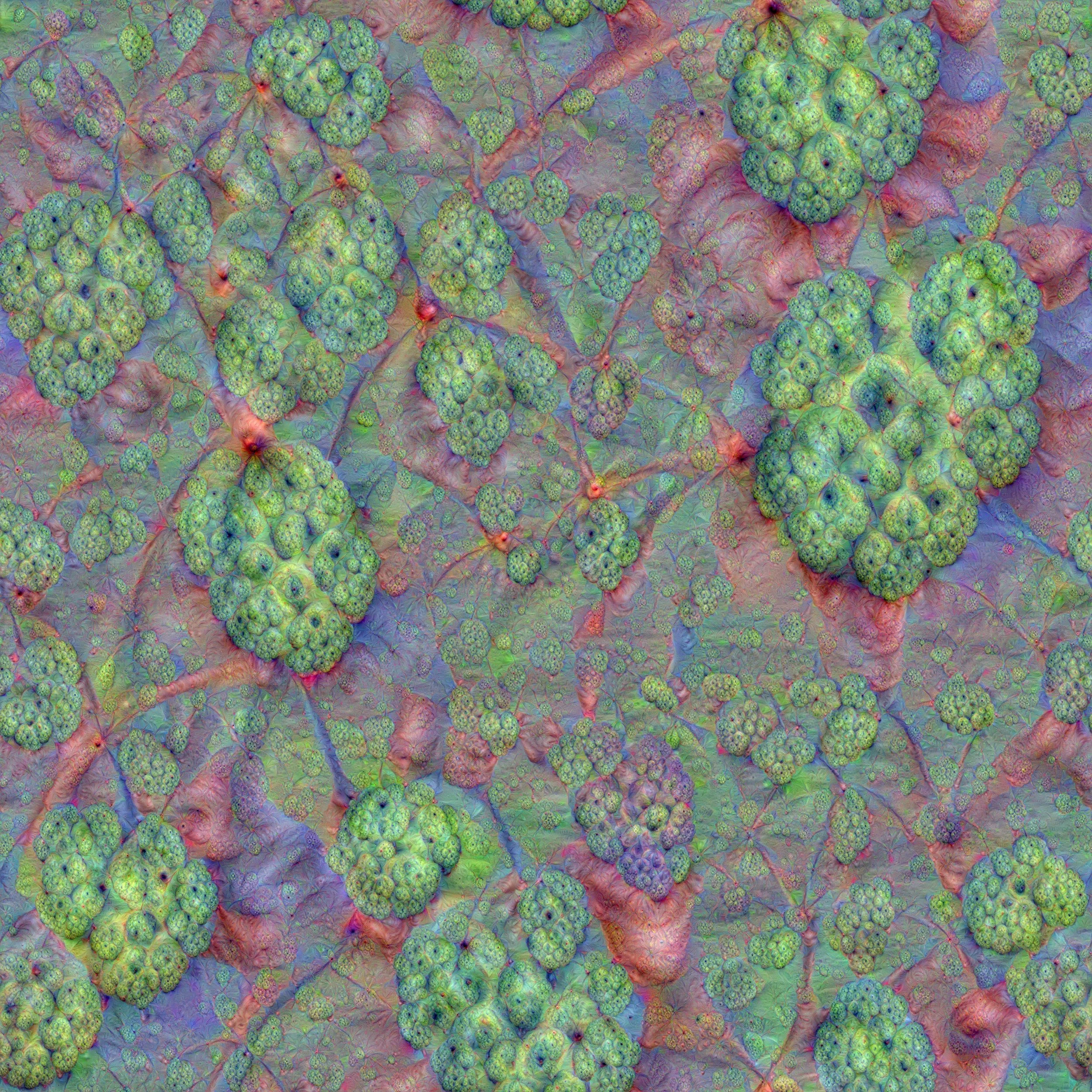
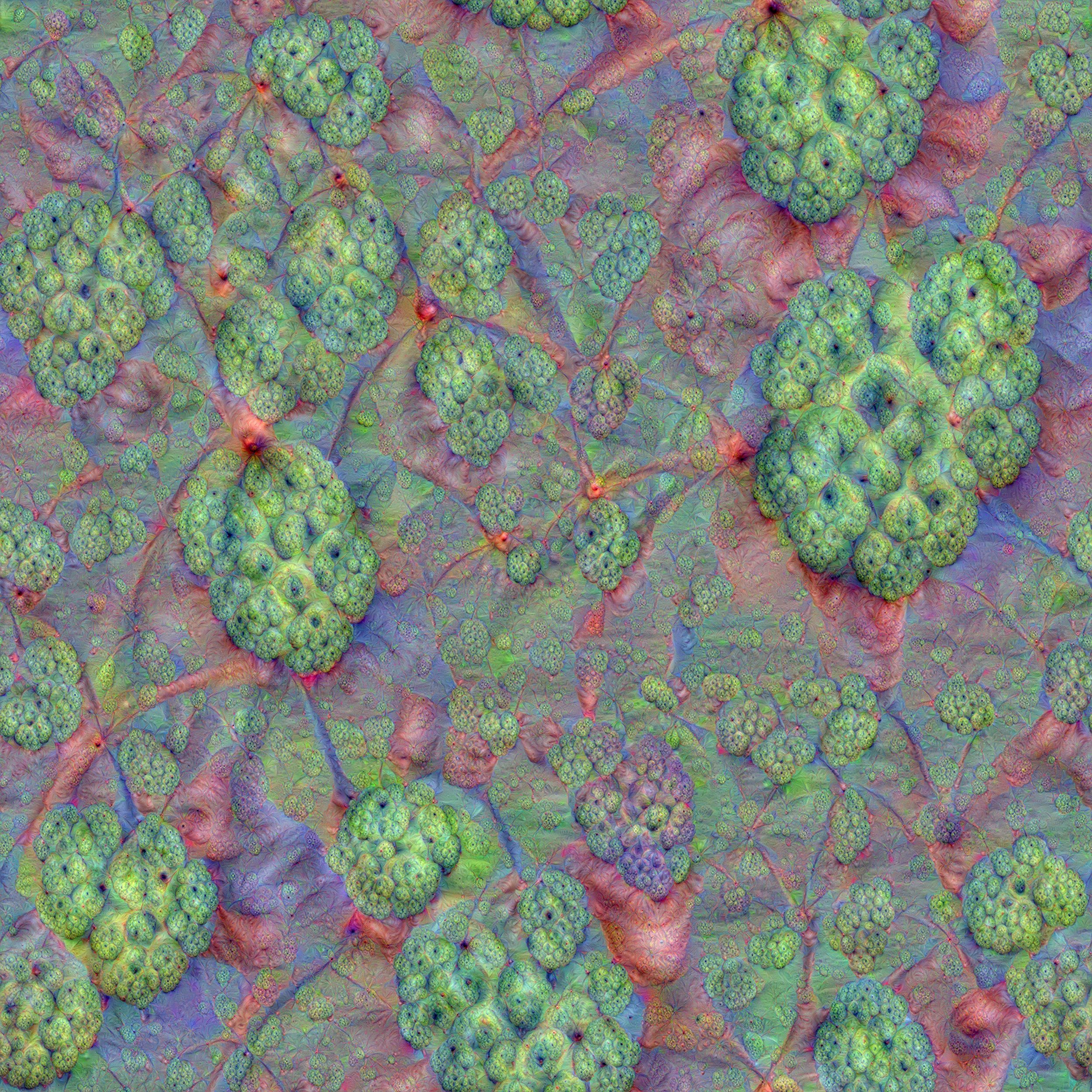
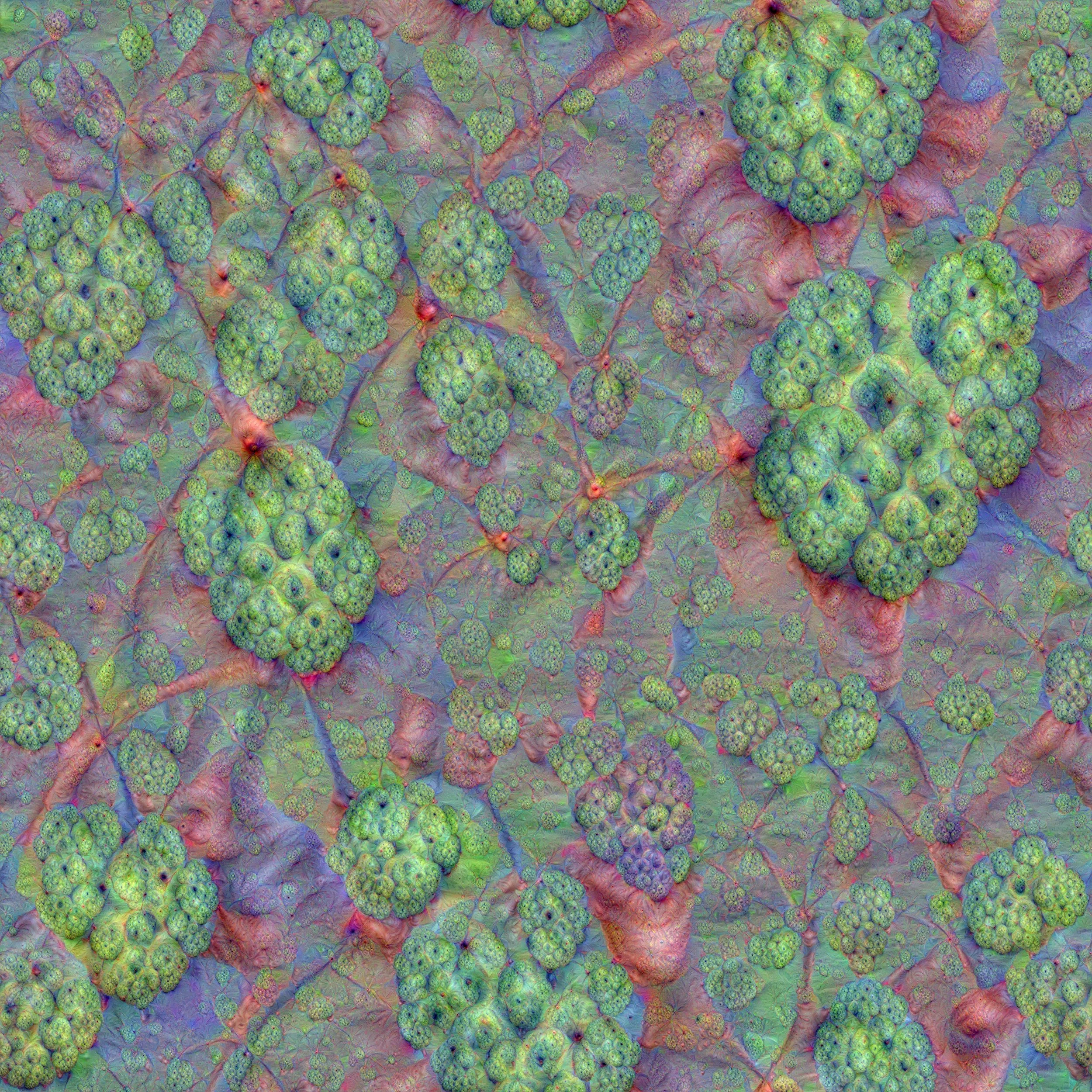
Custard Apple is one of the first DeepDream images produced by its inventor, Alex Mordvintsev in May 2015 before its public release.
DeepDream is a computer vision program developed by Google engineer Alexander Mordvintsev, utilizing a convolutional neural network (CNN) to enhance patterns in images through algorithmic pareidolia, producing surreal, psychedelic visuals. The program popularized the term "deep dreaming," referring to the generation of images that activate specific features in a trained deep network. Originating from Google's "Inception" neural network for the 2014 ImageNet Challenge, DeepDream's open-source code was released in July 2015. The process involves feeding an image into the neural network and iteratively adjusting it based on the network’s recognition of various features, amplifying edges, and shapes to create hallucinatory effects where familiar objects morph into complex, often bizarre patterns. DeepDream showcases the power of neural networks in image processing and offers insight into the workings of machine learning models, merging technology and art.
Created in May 2015, minted as a unique NFT on request as part of the group show "Automat und Mensch 2.0," a retrospective of AI history at Kate Vass Galerie. While DeepDream was released in July 2015 as an open source for public use, Custard Apple was made before Google's public launch and only became allowed for sale since June 2024. This work was also featured in a 2018 article by curator Jason Bailey.
For more information, please contact info@katevassgalerie.com
by Alexander Mordvintsev
Fine Art Print on paper
Size: 60 x 60 cm
The work is also available as a unique NFT (minted upon request) for 5 ETH
Description:
The Deep Dream algorithm was created in a series of experiments that led to the generation of psychedelic images full of intricate details that swept across the globe in the summer of 2015. Slides 4-8 show images that were created on the way to the final algorithm. Scientific progress is enabled by accumulation of ideas and building on the work of others. For example, p.4 “Just before DeepDream 1000 classes” shows a few images out of 1000 that were generated by the algorithm inspired by the paper . The network was also different: these images were produced by the AlexNet , created in 2012, which is often cited as one of the main triggering points of the Deep Learning revolution. These images lack the resolution and rich details, but already show promising capabilities of deep nets for image generation. The subsequent slides show steps that Alexander Mordivntsev took to improve the fidelity of the machine generations and finally giving the network more “creative freedom” by formulating the objective for amplification patterns already perceived by the network in a particular input image.
For more information please email us on info@katevassgalerie.com
Exhibited at Untitled Miami Art Fair, Miami, Kate Vass Galerie Booth A43, December 2024
Exhibited at Automat und Mensch 2.0, Kate Vass Galerie, May 2024
by Alexander Mordvintsev
SOLD OUT
Unique NFT
Price: 5 ETH
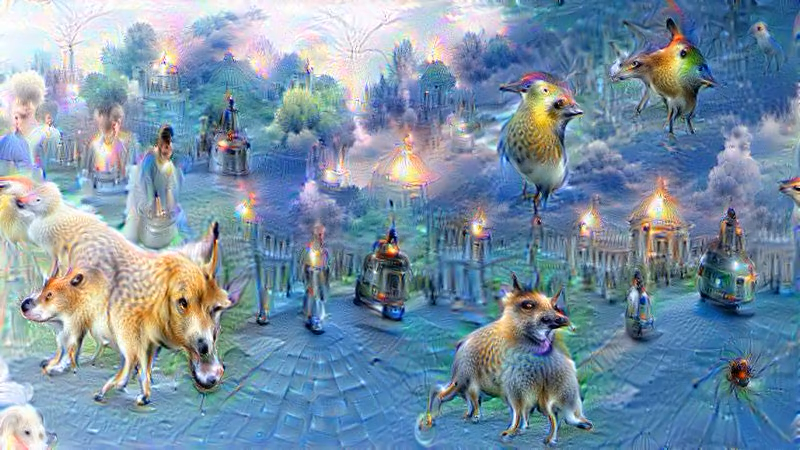
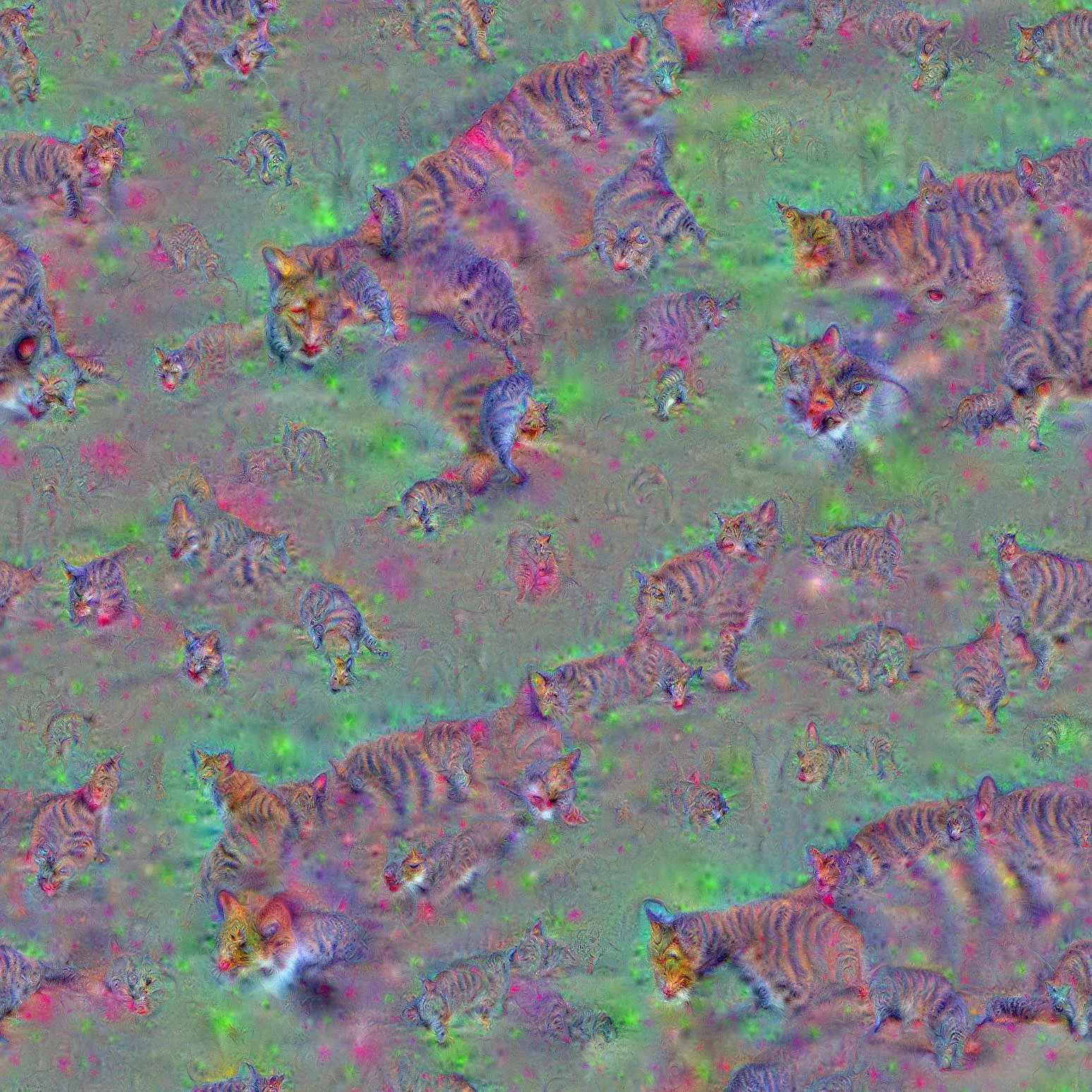
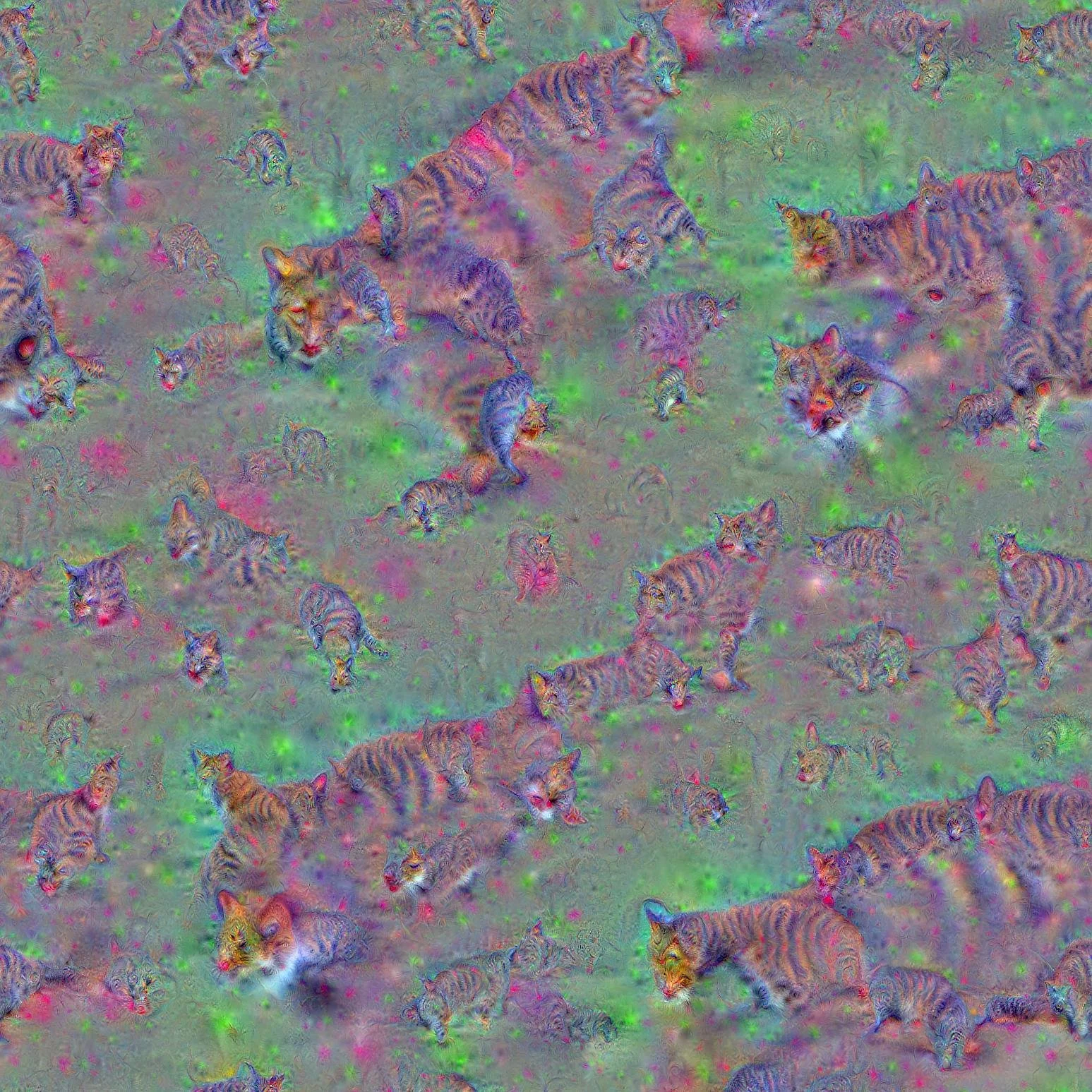
Cats, one of the first DeepDream images produced by its inventor, Alex Mordvintsev in May 2015 before its public release.
DeepDream is a computer vision program developed by Google engineer Alexander Mordvintsev, utilizing a convolutional neural network (CNN) to enhance patterns in images through algorithmic pareidolia, producing surreal, psychedelic visuals. The program popularized the term "deep dreaming," referring to the generation of images that activate specific features in a trained deep network. Originating from Google's "Inception" neural network for the 2014 ImageNet Challenge, DeepDream's open-source code was released in July 2015. The process involves feeding an image into the neural network and iteratively adjusting it based on the network’s recognition of various features, amplifying edges, and shapes to create hallucinatory effects where familiar objects morph into complex, often bizarre patterns. DeepDream showcases the power of neural networks in image processing and offers insight into the workings of machine learning models, merging technology and art.
Provenance:
"Cats," created in May 2015, was minted as a unique NFT in June 2024 as part of the group show "Automat und Mensch 2.0," a retrospective on AI history at Kate Vass Galerie. The artwork was first shown in May 2019 as a small physical print, not for sale and included in multiple publications since then. Although DeepDream was released in July 2015 as an open-source for public, "Cats" was created before this public launch and was only permitted for sale since June 2024. This work was also featured in a 2018 article by curator Jason Bailey.
by Alexander Mordvintsev
SOLD OUT
Fine Art Print
Size: 60 x 60 cm
Unique
Description:
The DeepDream algorithm was developed through a series of experiments that led to the generation of psychedelic images filled with intricate details, capturing global attention in the summer of 2015. The "Just Before DeepDream" series presents a few images out of 1,000 that were generated before DeepDream's open-source code was released in July 2015. The network used was also different: these images were produced by AlexNet, created in 2012, which is often cited as one of the main catalysts of the Deep Learning revolution. These images already demonstrate the promising capabilities of deep nets for image generation. The series shows steps that Mordvintsev took to improve the fidelity of machine-generated images,
Exhibited at Untitled Miami Art Fair, Miami, Kate Vass Galerie Booth A43, December 2024
by Alexander Mordvintsev
Fine Art Print on paper
Size: 60 x 60 cm
The work is also available as a unique NFT (minted upon request) for 5 ETH
Description:
The Deep Dream algorithm was created in a series of experiments that led to the generation of psychedelic images full of intricate details that swept across the globe in the summer of 2015. Slides 4-8 show images that were created on the way to the final algorithm. Scientific progress is enabled by accumulation of ideas and building on the work of others. For example, p.4 “Just before DeepDream 1000 classes” shows a few images out of 1000 that were generated by the algorithm inspired by the paper . The network was also different: these images were produced by the AlexNet , created in 2012, which is often cited as one of the main triggering points of the Deep Learning revolution. These images lack the resolution and rich details, but already show promising capabilities of deep nets for image generation. The subsequent slides show steps that Alexander Mordivntsev took to improve the fidelity of the machine generations and finally giving the network more “creative freedom” by formulating the objective for amplification patterns already perceived by the network in a particular input image.
For more information please email us on info@katevassgalerie.com
Exhibited at Untitled Miami Art Fair, Miami, Kate Vass Galerie Booth A43, December 2024
Exhibited at Automat und Mensch 2.0, Kate Vass Galerie, May 2024
by Alexander Mordvintsev
SOLD
Unique NFT
Description:
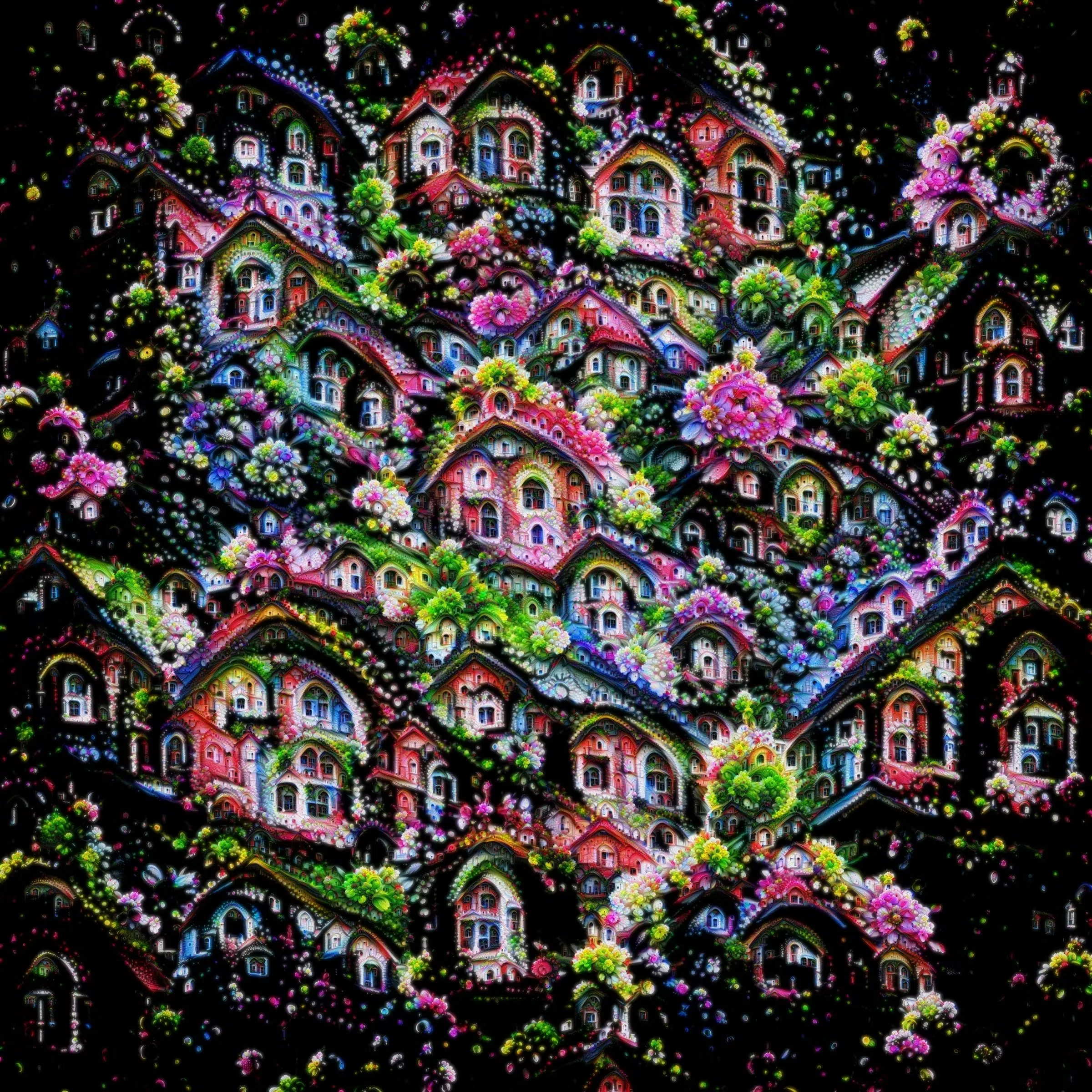
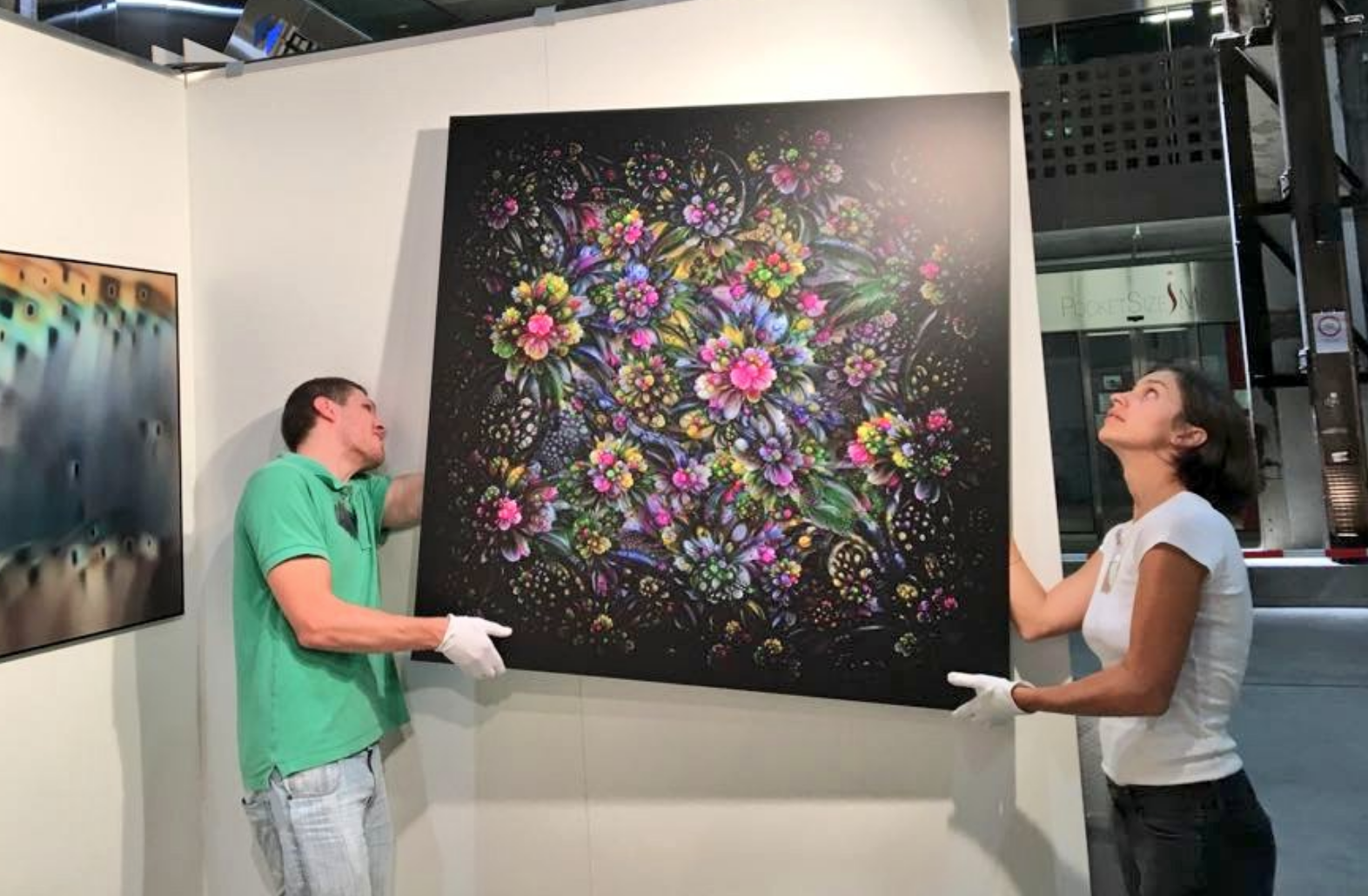
Flourishing (2018) was created using DeepDream, a technique developed by Google engineer Alexander Mordvintsev. This artwork, showcased at Art Fair Zurich 2018, features a vibrant composition of colorful houses intertwined with surreal floral patterns, evoking a sense of flourishing nature.
DeepDream is a computer vision program developed by Google engineer Alexander Mordvintsev, utilizing a convolutional neural network (CNN) to enhance patterns in images through algorithmic pareidolia, producing surreal, psychedelic visuals. The program popularized the term "deep dreaming," referring to the generation of images that activate specific features in a trained deep network. Originating from Google's "Inception" neural network for the 2014 ImageNet Challenge, DeepDream's open-source code was released in July 2015. The process involves feeding an image into the neural network and iteratively adjusting it based on the network’s recognition of various features, amplifying edges, and shapes to create hallucinatory effects where familiar objects morph into complex, often bizarre patterns. DeepDream showcases the power of neural networks in image processing and offers insight into the workings of machine learning models, merging technology and art.
For more information please email us on info@katevassgalerie.com
Exhibited at Untitled Miami Art Fair, Miami, Kate Vass Galerie Booth A43, December 2024
Exhibited at Art Fair Zurich 2018
by Alexander Mordvintsev
SOLD OUT
Unique NFT
Price: 5 ETH
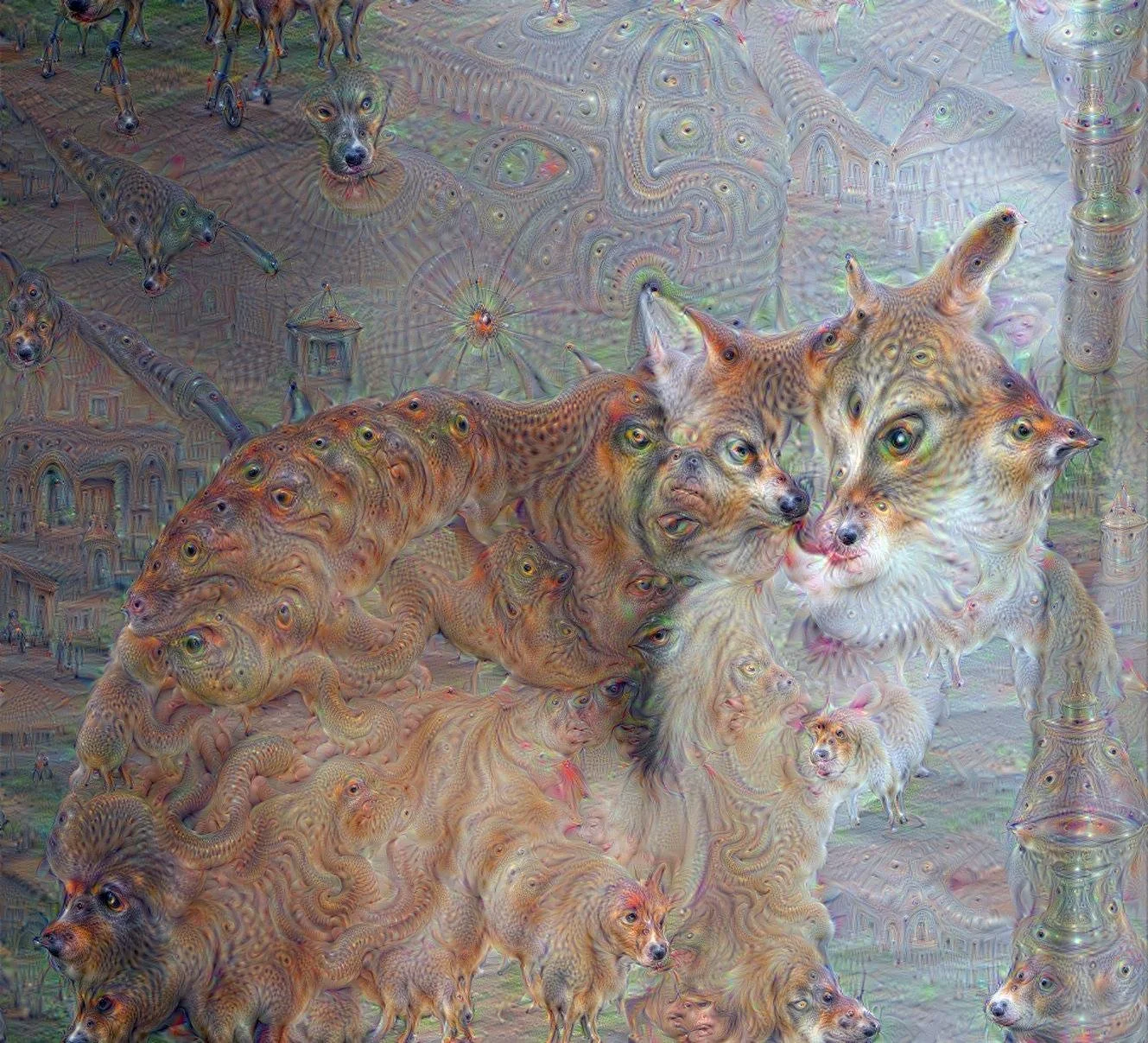
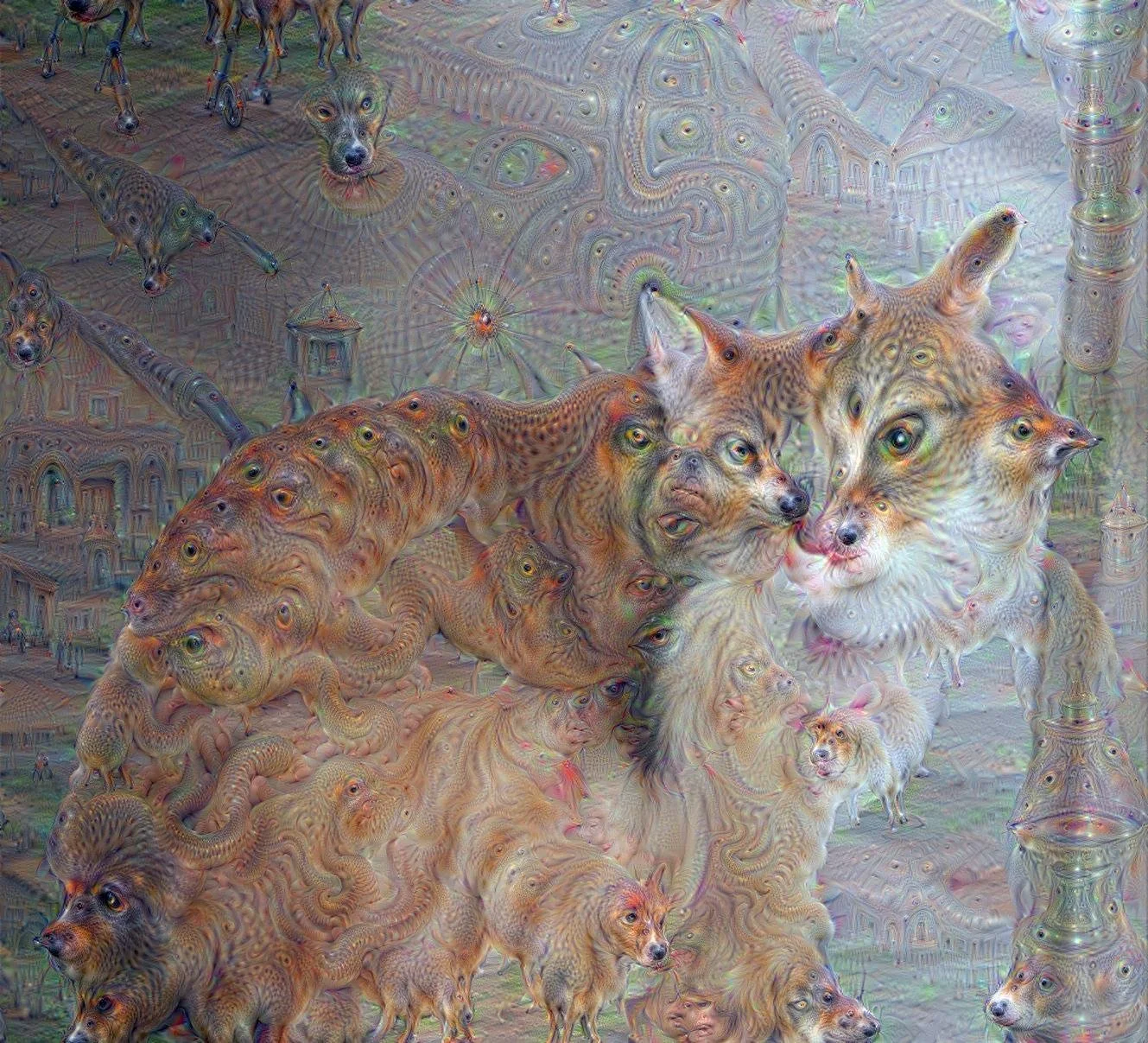
Father Cat, one of the first DeepDream images produced by its inventor, Alex Mordvintsev in May 2015 before its public release.
DeepDream is a computer vision program developed by Google engineer Alexander Mordvintsev, utilizing a convolutional neural network (CNN) to enhance patterns in images through algorithmic pareidolia, producing surreal, psychedelic visuals. The program popularized the term "deep dreaming," referring to the generation of images that activate specific features in a trained deep network. Originating from Google's "Inception" neural network for the 2014 ImageNet Challenge, DeepDream's open-source code was released in July 2015. The process involves feeding an image into the neural network and iteratively adjusting it based on the network’s recognition of various features, amplifying edges, and shapes to create hallucinatory effects where familiar objects morph into complex, often bizarre patterns. DeepDream showcases the power of neural networks in image processing and offers insight into the workings of machine learning models, merging technology and art.
Provenance:
“Father Cat”, created in May 2015, was minted as a unique NFT in June 2024 as part of the group show "Automat und Mensch 2.0," a retrospective of AI history at Kate Vass Galerie. While DeepDream was released in July 2015 as an open source for public use, “Father Cat” was made before Google's public launch and only became allowed for sale since June 2024. This work was also featured in a 2018 article by curator Jason Bailey.
by Alexander Mordvintsev
SOLD OUT
Unique NFT
Price: 5 ETH
DeepDream is looking for patterns everywhere, one of the first DeepDream images produced by its inventor, Alex Mordvintsev in May 2015 before its public release.
DeepDream is a computer vision program developed by Google engineer Alexander Mordvintsev, utilizing a convolutional neural network (CNN) to enhance patterns in images through algorithmic pareidolia, producing surreal, psychedelic visuals. The program popularized the term "deep dreaming," referring to the generation of images that activate specific features in a trained deep network. Originating from Google's "Inception" neural network for the 2014 ImageNet Challenge, DeepDream's open-source code was released in July 2015. The process involves feeding an image into the neural network and iteratively adjusting it based on the network’s recognition of various features, amplifying edges, and shapes to create hallucinatory effects where familiar objects morph into complex, often bizarre patterns. DeepDream showcases the power of neural networks in image processing and offers insight into the workings of machine learning models, merging technology and art.
Provenance:
DeepDream is looking for patterns everywhere, created in May 2015, was minted as a unique NFT in June 2024 as part of the group show "Automat und Mensch 2.0," a retrospective of AI history at Kate Vass Galerie. While DeepDream was released in July 2015 as an open source for public use, “DeepDream is looking for patterns everywhere” was made before Google's public launch and only became allowed for sale since June 2024. This work was also featured in the article https://medium.com/kanon-log/alexander-mordvintsev-deepdream-c-2015-2021-5ba5ab55f6cf
by Alexander Mordvintsev
SOLD OUT
Fine Art Print on paper
Size: around 60 x 85 cm
The work is also available as a unique NFT (minted upon request) for 5 ETH
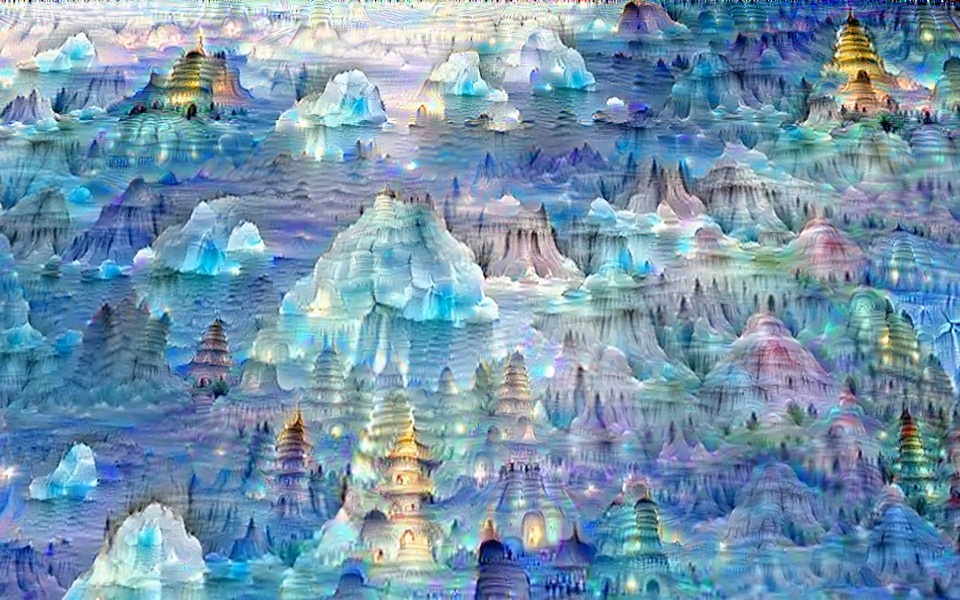
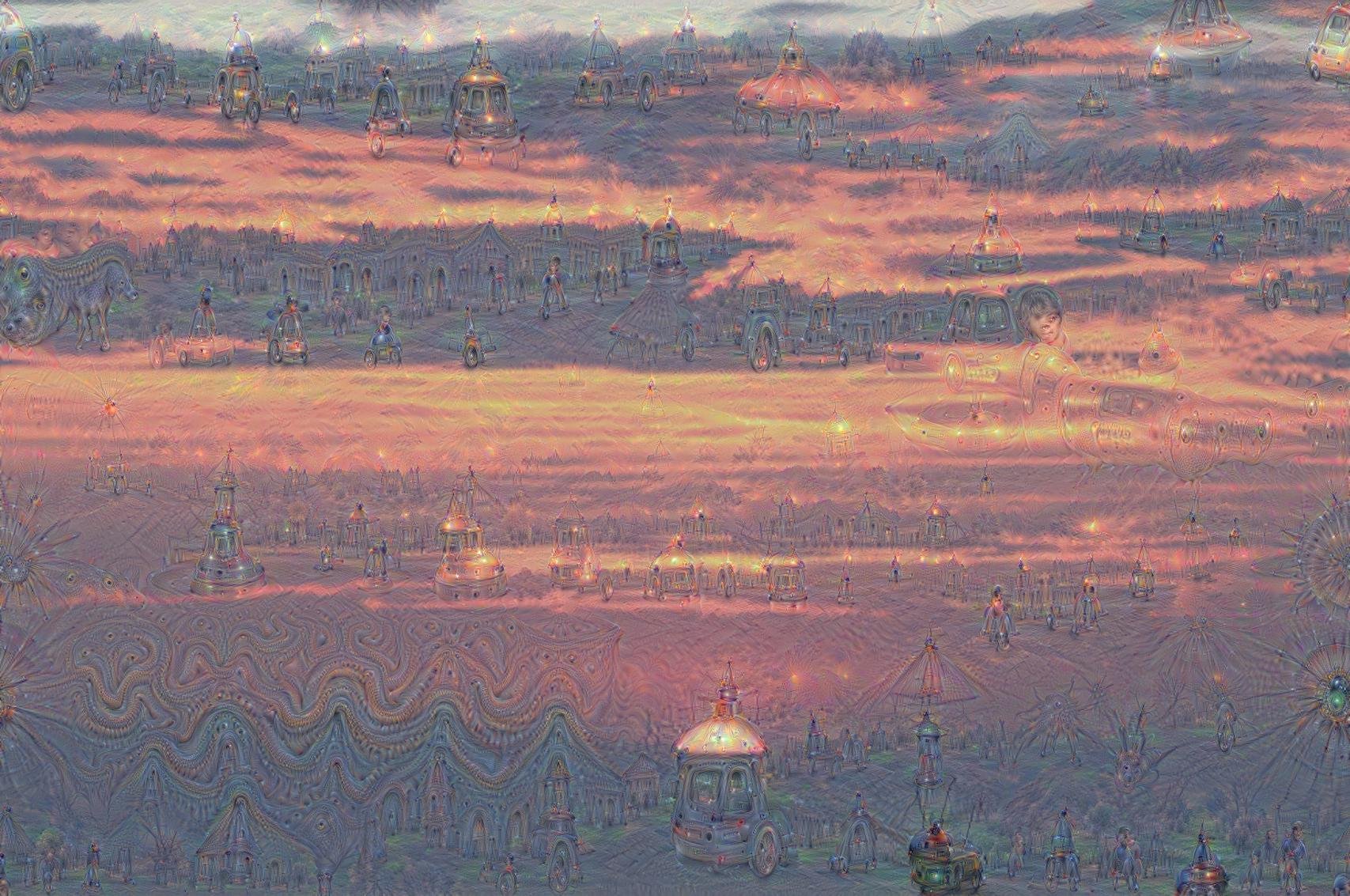
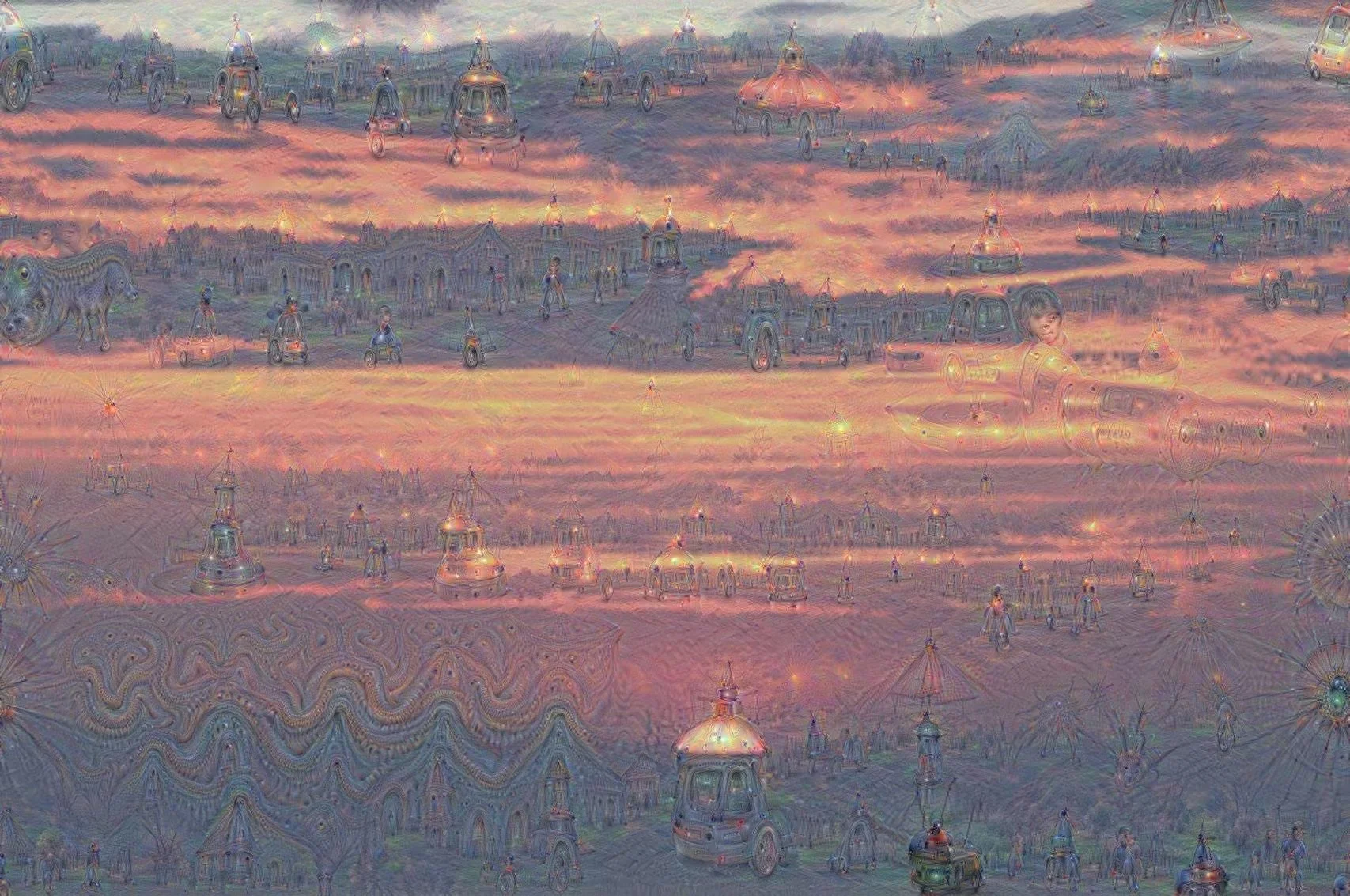
Sunset, 2015/05 is one of the first DeepDream images produced by its inventor, Alex Mordvintsev in May 2015 before its public release.
DeepDream is a computer vision program developed by Google engineer Alexander Mordvintsev, utilizing a convolutional neural network (CNN) to enhance patterns in images through algorithmic pareidolia, producing surreal, psychedelic visuals. The program popularized the term "deep dreaming," referring to the generation of images that activate specific features in a trained deep network. Originating from Google's "Inception" neural network for the 2014 ImageNet Challenge, DeepDream's open-source code was released in July 2015. The process involves feeding an image into the neural network and iteratively adjusting it based on the network’s recognition of various features, amplifying edges, and shapes to create hallucinatory effects where familiar objects morph into complex, often bizarre patterns. DeepDream showcases the power of neural networks in image processing and offers insight into the workings of machine learning models, merging technology and art.
Created in May 2015, minted as a unique NFT on request as part of the group show "Automat und Mensch 2.0," a retrospective of AI history at Kate Vass Galerie. While DeepDream was released in July 2015 as an open source for public use, Sunset was made before Google's public launch and only became allowed for sale since June 2024.
For more information, please contact info@katevassgalerie.com
by Alexander Mordvintsev
Fine Art Print on paper
The work is also available as a unique NFT (minted upon request) for 5 ETH
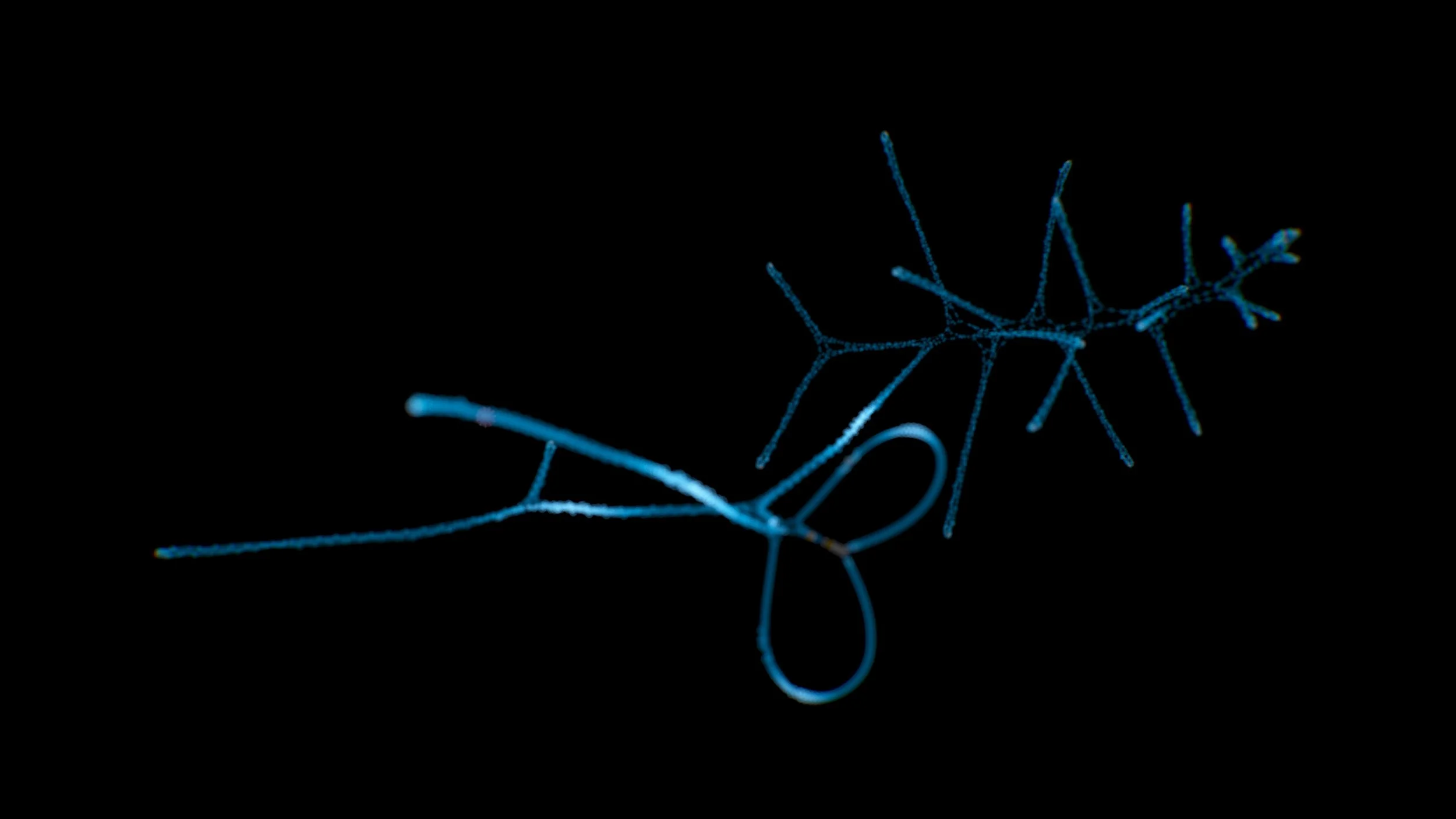
This fractal artwork is not related to Deep Dream, but it represents my long-standing interest in creating life-like systems, which are one of Alex’s primary focuses today. Originally, it was part of a video and an interactive demo.
For more information, please contact info@katevassgalerie.com
Art On-Chain
-
Sunset, 2015/05
-
Father Cat, 2015/05
-
Deep Dream is looking for patterns everywhere 2015/05
-
Cats, 2015/05
-
Custard Apple, 2015/05
-
Flourishing, 2018
Articles
-
THE ART AND SCIENCE OF ALEXANDER MORDVINTSEV
Alexander Mordvintsev is best known for creating the DeepDream algorithm, which was introduced in 2015 and marks a major milestone in AI image generation. Apart from his significant contributions to this technology, Mordvintsev is also an active artist. In our article, we delve into both his invention and the beginning of his artistic journey.
-
DEEPDREAM: HOW ALEXANDER MORDVINTSEV EXCAVATED THE COMPUTER’S HIDDEN LAYERS
This article by Arthur I. Miller, published in The MIT Press Reader, tells the story of Alexander Mordvintsev, the Google researcher who created DeepDream algorithm that visualizes how neural networks interpret images. The piece explores how Mordvintsev’s discovery opened a new path in the intersection of art and AI.
-
DEEPDREAM CREATOR UNVEILS VERY FIRST IMAGES AFTER THREE YEARS
In this article Jason Bailey interviews Alexander Mordvintsev, the creator of DeepDream. The piece reflects on DeepDream’s explosive rise, cultural impact, and influence on the AI art movement, including artists like Mario Klingemann. Mordvintsev discusses the origin of the project, its scientific roots, and his evolving identity as an artist working alongside his wife Iana.
-
INCEPTIONISM: GOING DEEPER INTO NEURAL NETWORKS
Alexander Mordvintsev, along with colleagues Christopher Olah and Mike Tyka, introduced DeepDream in the article titled "Inceptionism: Going Deeper into Neural Networks," published on the Google Research Blog on June 17, 2015. This article delves into the methods used to visualize and understand the patterns learned by neural networks.
Exhibitions
-
ART BASEL, UNTITLED ART FAIR, MIAMI, 2024
We presented a curated selection of pioneering AI and technology-driven artworks at the Untitled Miami Art Fair. This program emphasized the historical development and innovative potential of AI in art.
-
AUTOMAT UND MENSCH 2.0, KVG, ZÜRICH, 2024
As we journeyed 5 years back in time to revisit the Automat und Mensch show, our aim was to reflect upon the trajectory of AI in art and the evolution of generative art over the past half-decade.
-
AUTOMAT UND MENSCH, KVG, ZÜRICH, 2019
The Automat und Mensch exhibition is, above all, an opportunity to put important work by generative artists spanning the last 70 years into context by showing it in a single location.
-
MORE THAN HUMAN, BARBICAN CENTRE, 2019
The Barbican's AI: More than Human was an major exhibition exploring creative and scientific developments in artificial intelligence demonstrating its potential to revolutionise our lives.
-
DEEPDREAM: THE ART OF NEURAL NETWORKS, GRAY AREA, 2016
DeepDream: The art of neural networks is a special gallery show of artworks made using artificial neural networks, organized by Gray Area Foundation & Arts and Research at Google.
-
ART FAIR ZÜRICH, ZÜRICH, 2018
Alexander Mordvintsev exhibited with Art Me at Art Fair Zurich, sponsorsed by Google, showcasing his artworks created using DeepDream algorithms.
by Alexander Mordvintsev
SOLD OUT
Fine Art Print on paper
Size: 60 × 60 cm
The work is also available as a unique NFT (minted upon request) for 5 ETH
Description:
The Deep Dream algorithm was created in a series of experiments that led to the generation of psychedelic images full of intricate details that swept across the globe in the summer of 2015. Slides 4-8 show images that were created on the way to the final algorithm. Scientific progress is enabled by accumulation of ideas and building on the work of others. For example, p.4 “Just before DeepDream 1000 classes” shows a few images out of 1000 that were generated by the algorithm inspired by the paper . The network was also different: these images were produced by the AlexNet , created in 2012, which is often cited as one of the main triggering points of the Deep Learning revolution. These images lack the resolution and rich details, but already show promising capabilities of deep nets for image generation. The subsequent slides show steps that Alexander Mordivntsev took to improve the fidelity of the machine generations and finally giving the network more “creative freedom” by formulating the objective for amplification patterns already perceived by the network in a particular input image.
For more information please email us on info@katevassgalerie.com
Exhibited at Untitled Miami Art Fair, Miami, Kate Vass Galerie Booth A43, December 2024
Exhibited at Automat und Mensch 2.0, Kate Vass Galerie, May 2024