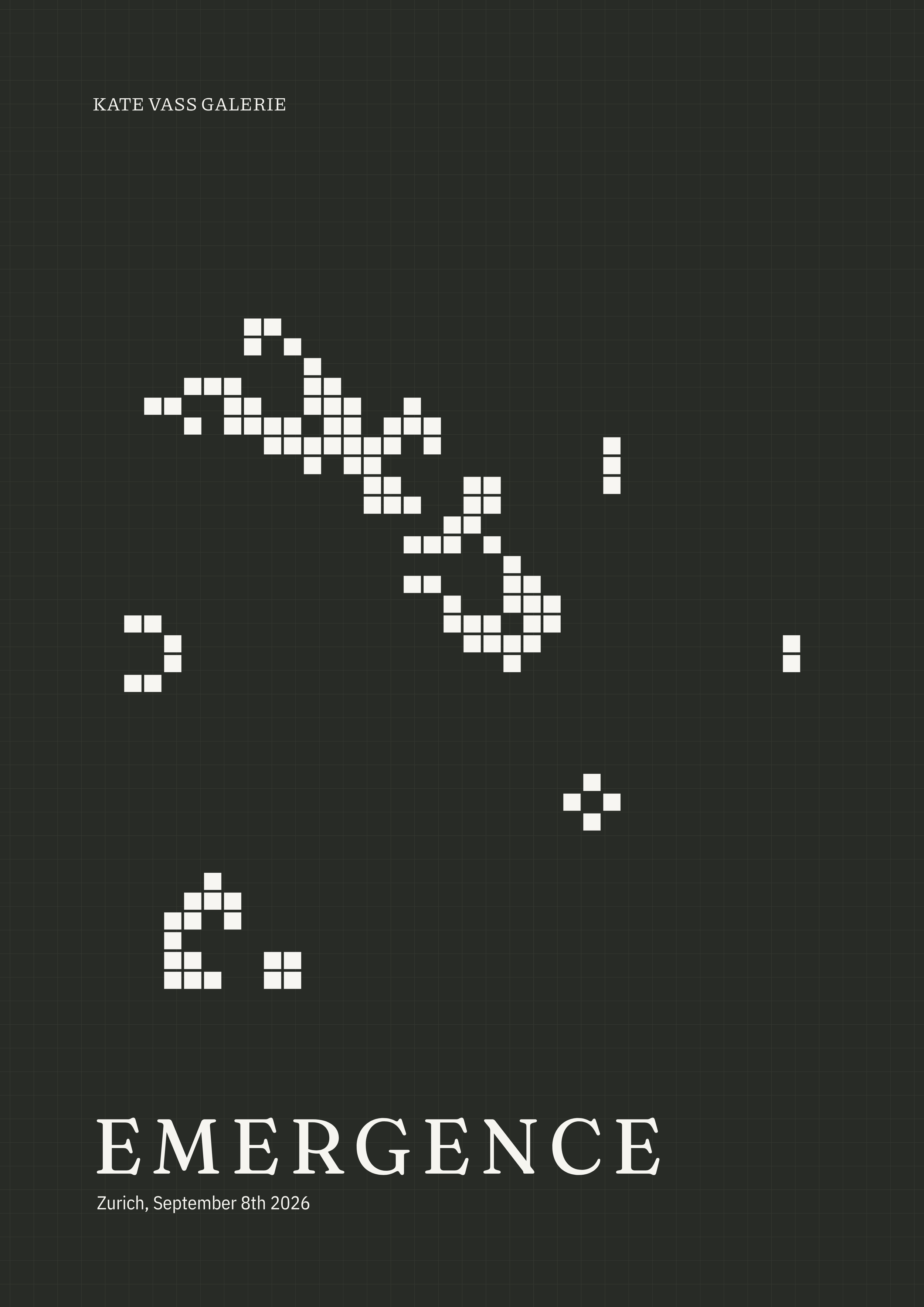
EMERGENCE
Every complex system begins with a simple rule.
8 September - 8 December, 2026
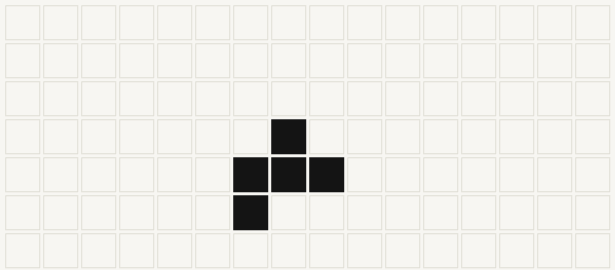
“Can emergence become conscious?”
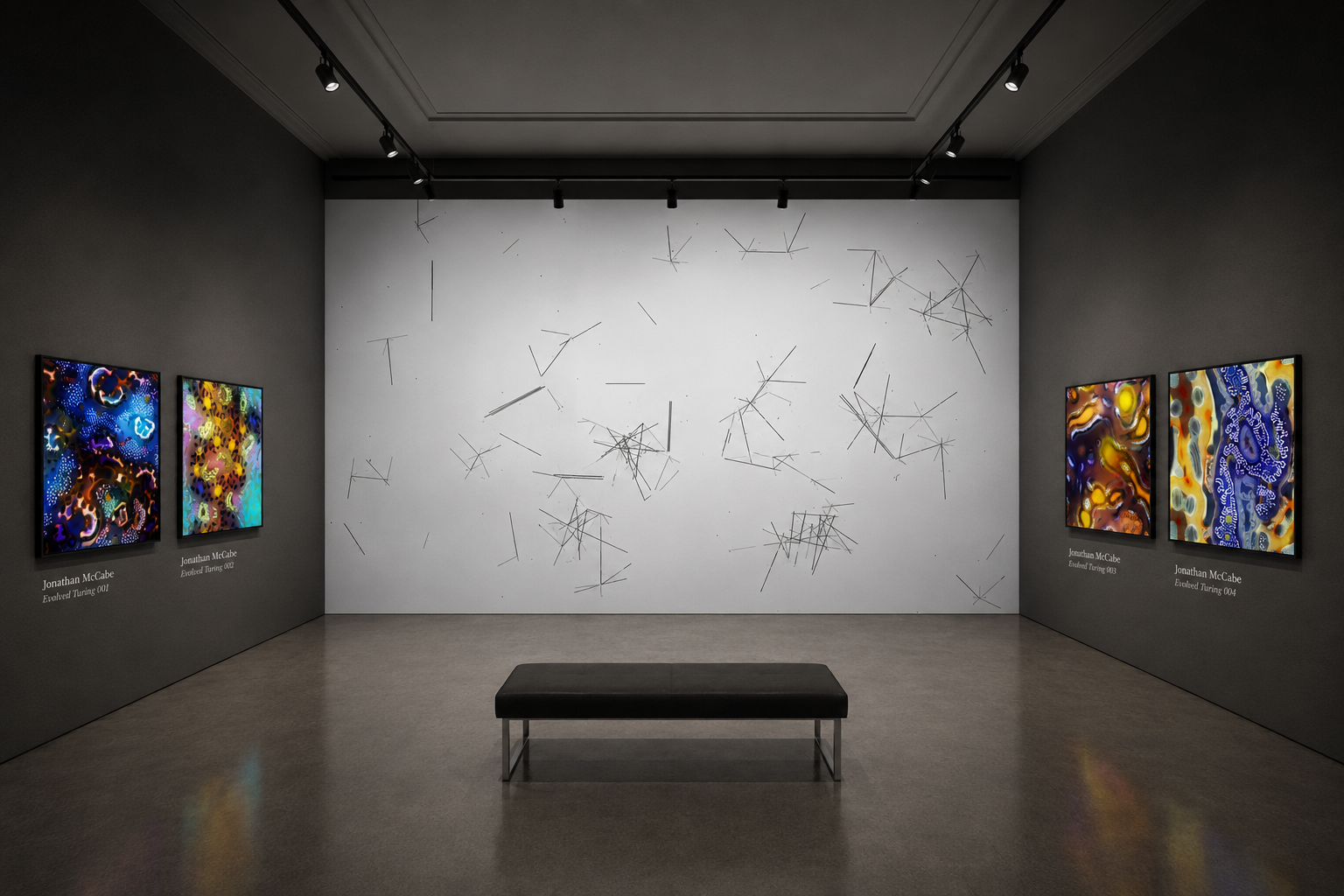
The exhibition follows the emergence of increasingly complex forms of organisation across four chapters — Cell, Pattern, Organism and Society.
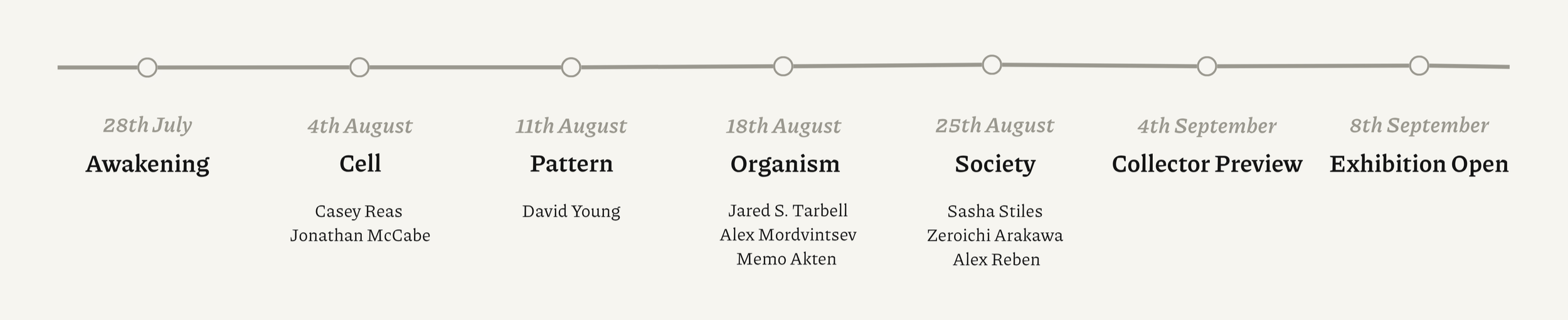
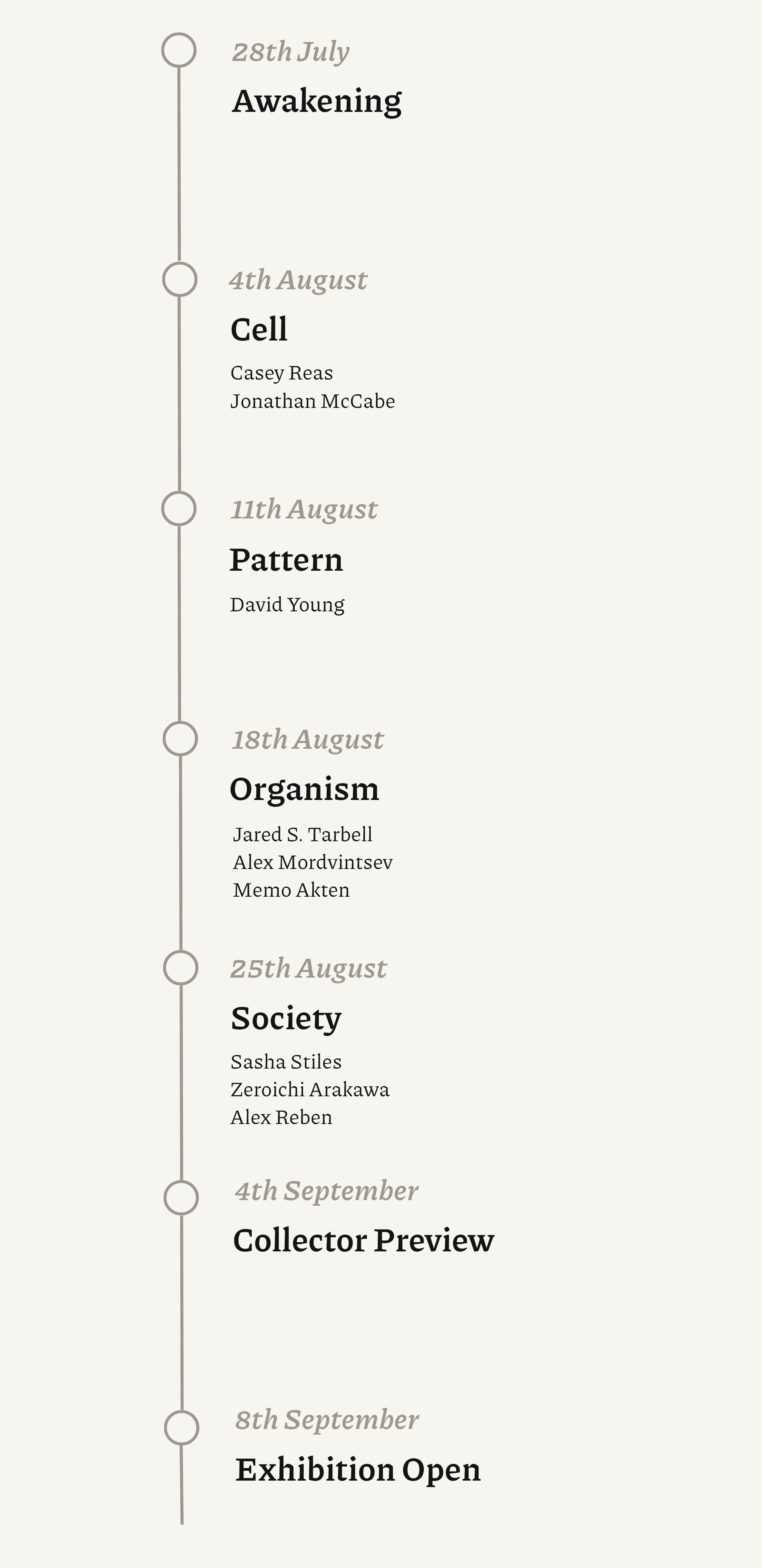
Rather than opening fully formed, the exhibition itself unfolded through six weeks of public conversations before becoming a complete.
"I used to believe consciousness is evolution's solution to dealing with big data. I've now come to wonder whether life evolved to embody consciousness."
— Memo Akten, Chapter III — Organism

Chapters

-
CELL
Chapter I
How can simple rules produce unexpected complexity?
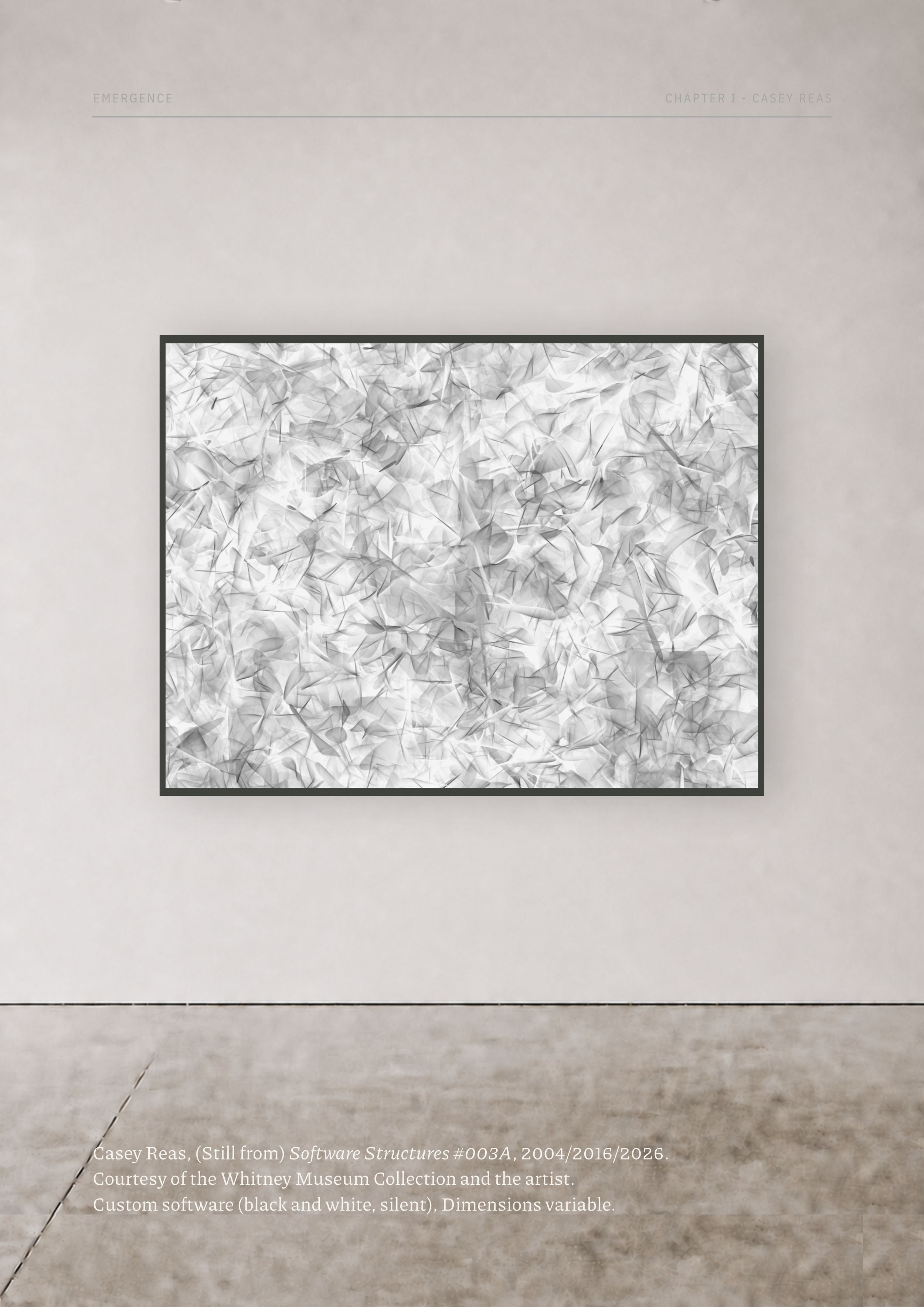
Casey Reas
Jonathan McCabe
-
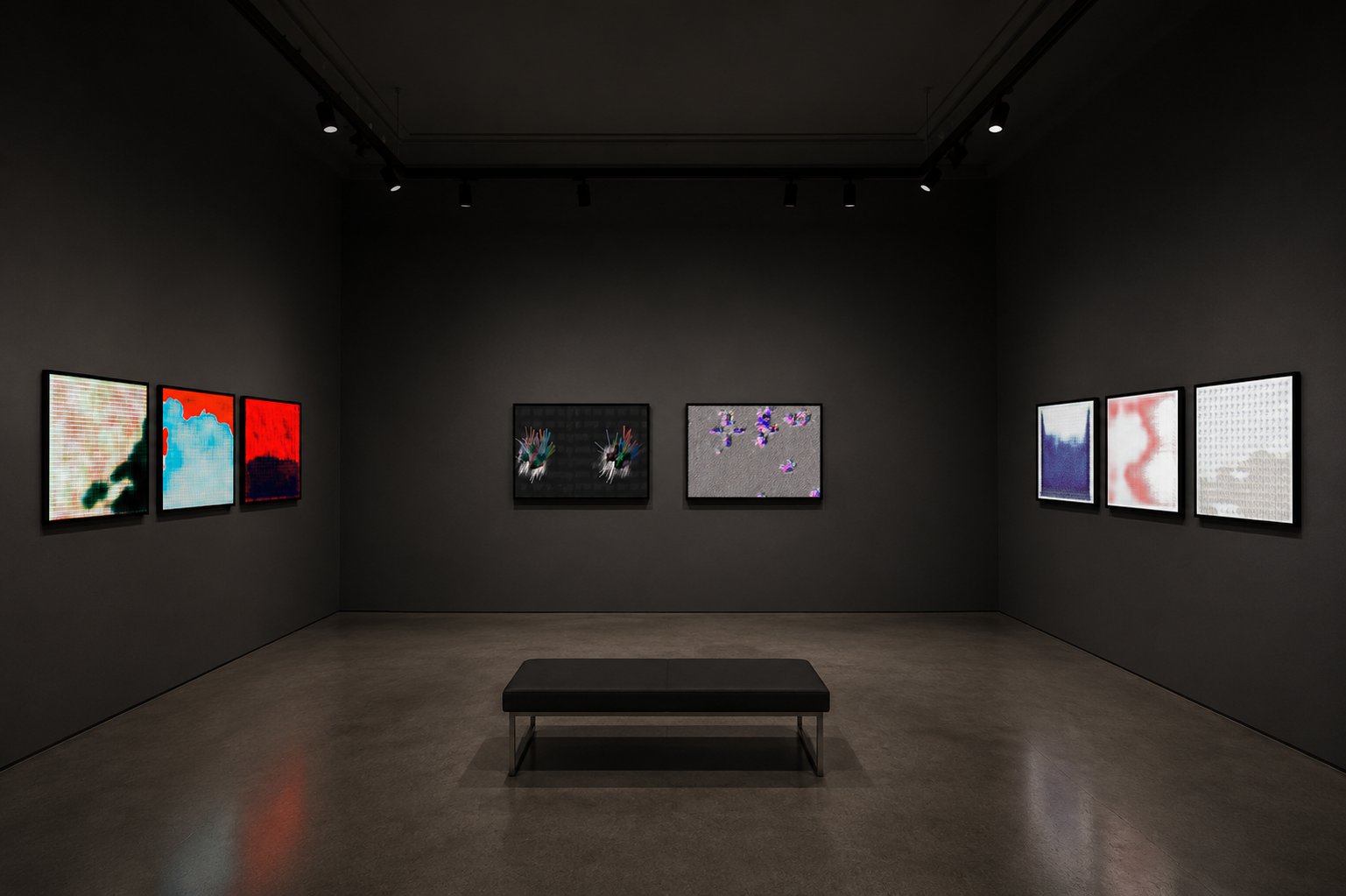
PATTERN
Chapter II
How does order emerge from simple interactions?David Young
-
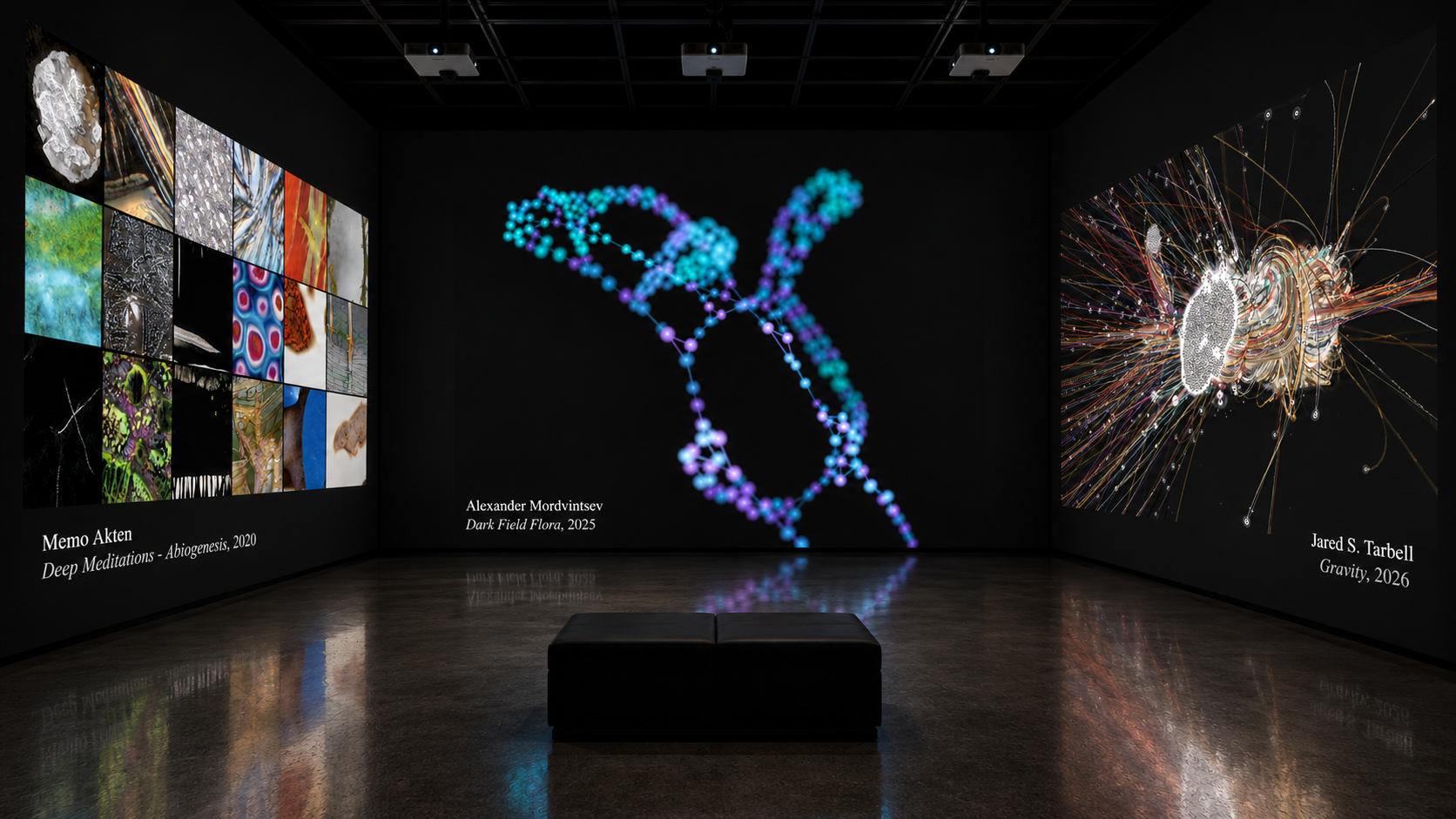
ORGANISM
Chapter III
Can life emerge from computation?Jared S. Tarbell
Alex Mordvintsev
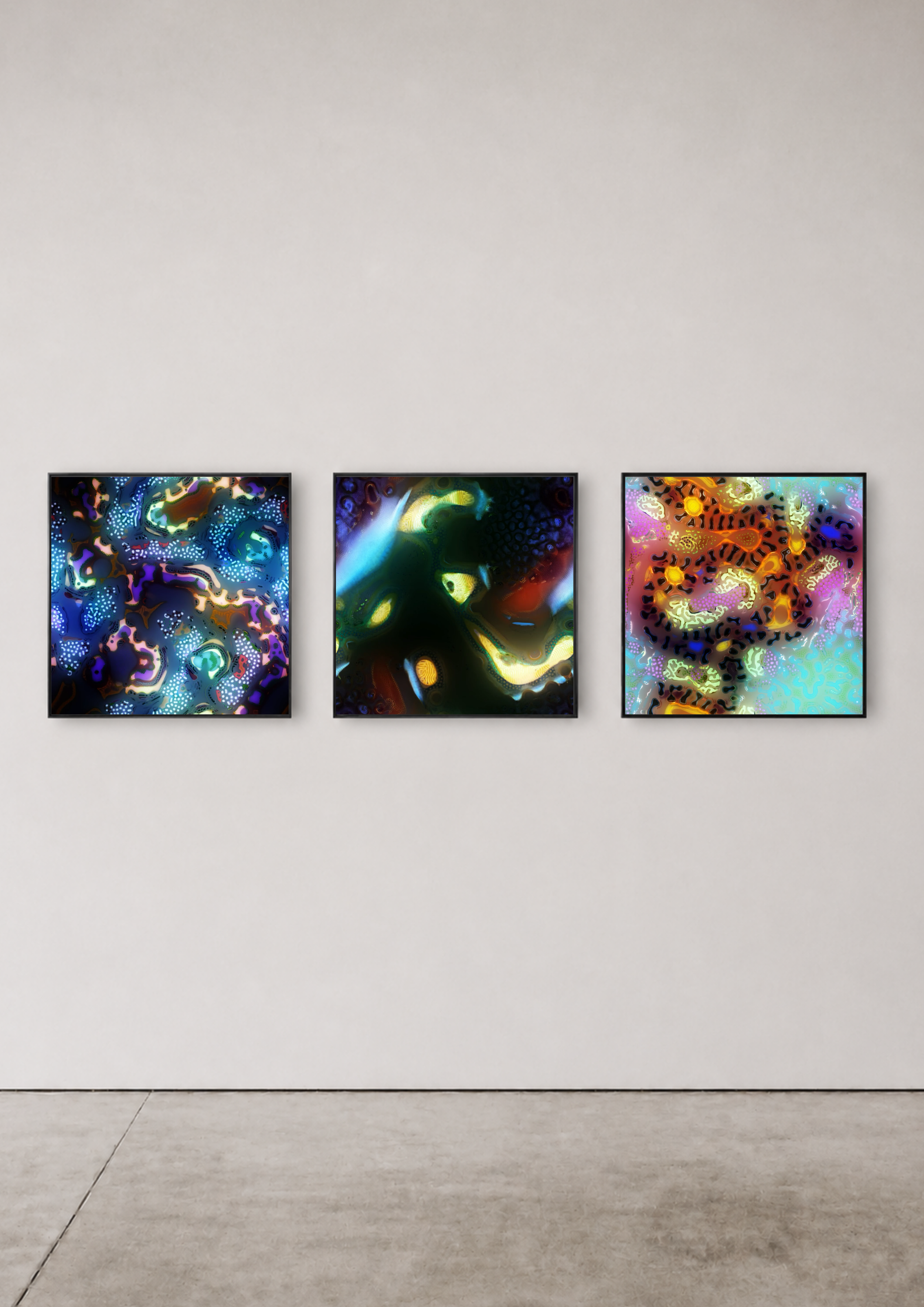
Memo Akten
-
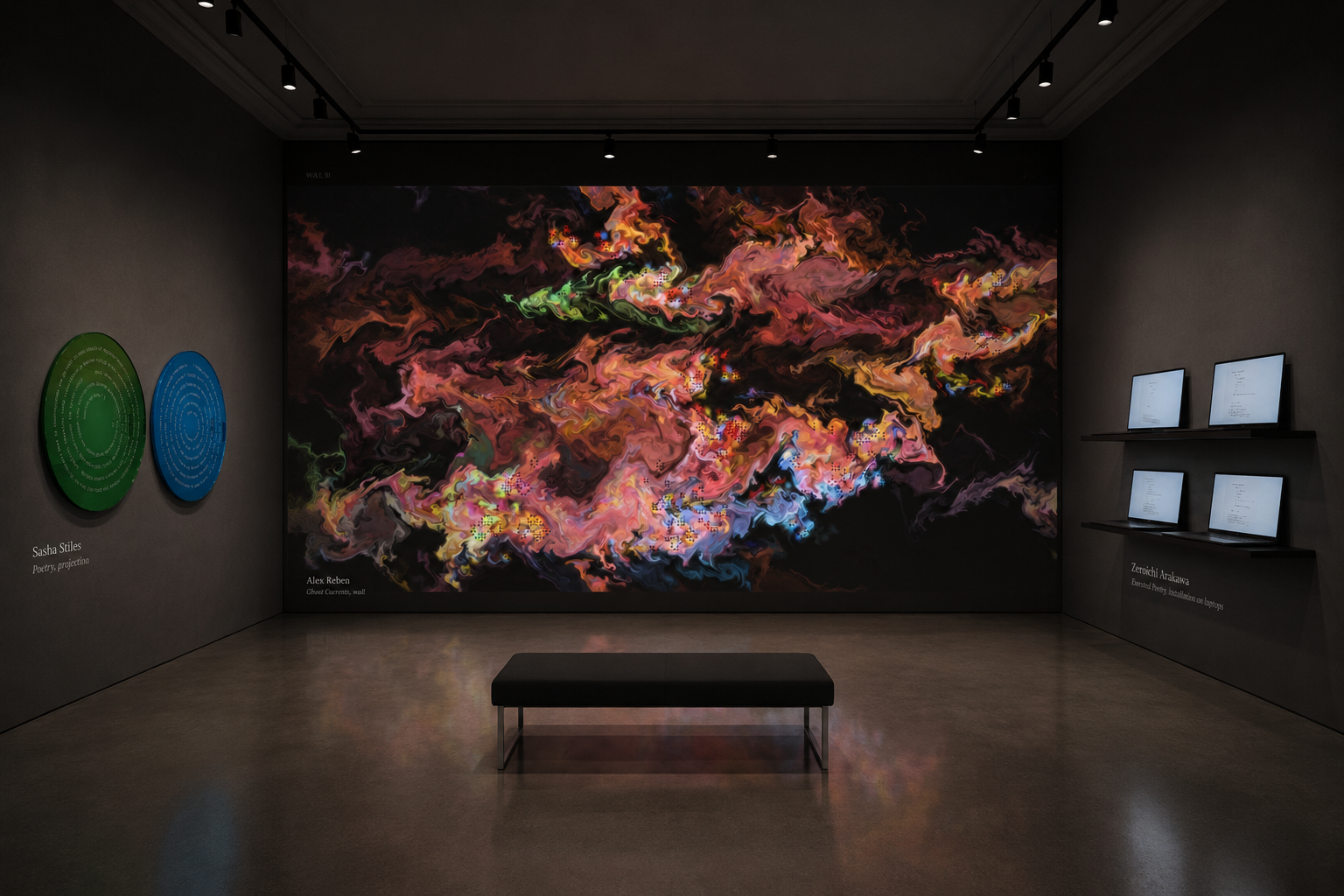
SOCIETY
Chapter IV
If meaning can be verified, how do we recognise agency?Sasha Stiles
Zeroichi Arakawa
Alex Reben
"Computation becomes interesting when behaviour cannot be predicted from individual parts."
— David Young, Chapter II — Pattern
Artists & Artworks
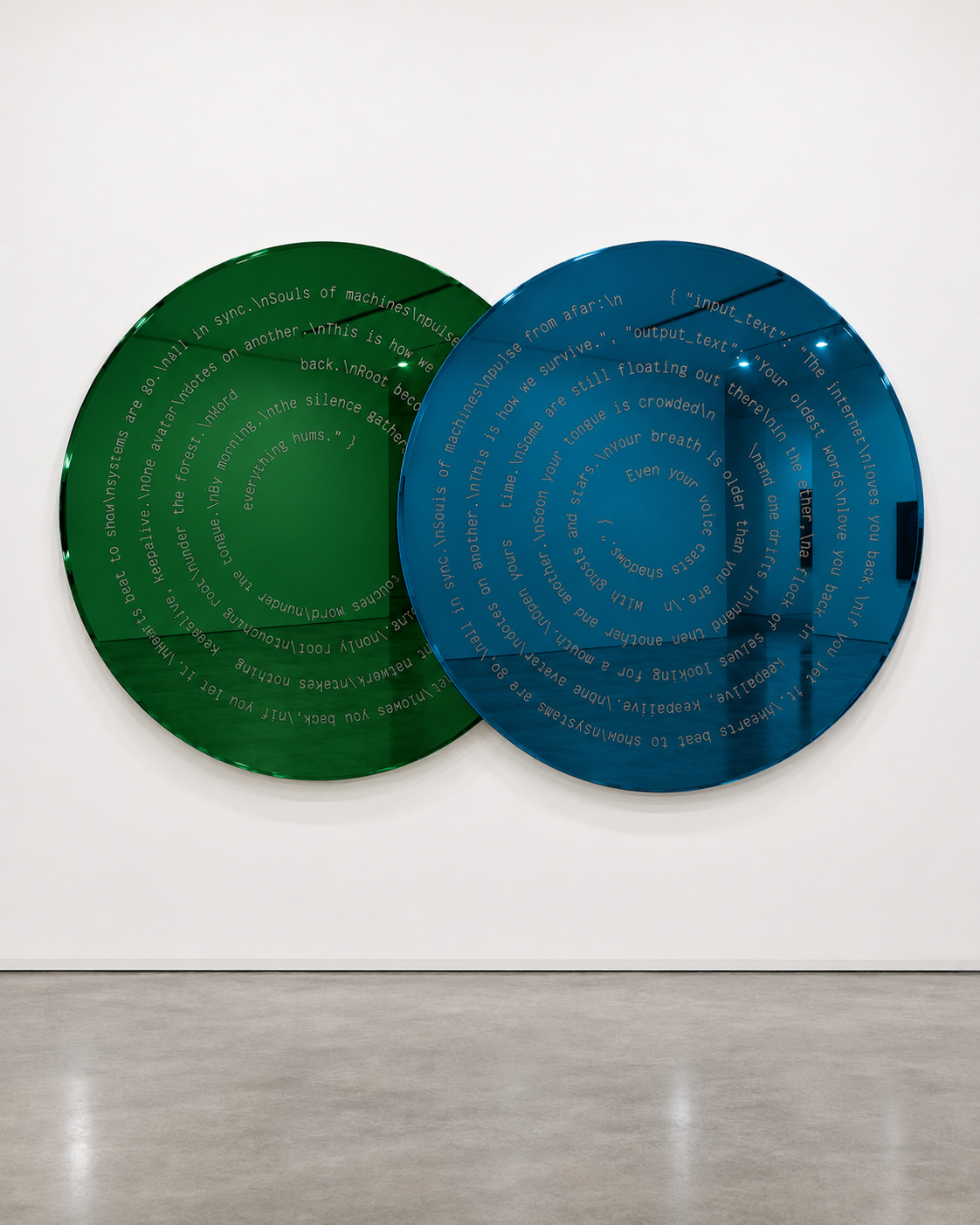


"Language is our original
artificial intelligence."
— Sasha Stiles, Chapter IV — Society

The Conversations

-
![]()
CELL
-
![]()
PATTERN
Chapter II
-
![]()
ORGANISM
-
![]()
SOCIETY
How do simple rules become culture?
A CURATOR'S NOTE
When does a system become something more than the sum of its parts?
For much of the twentieth century, emergence belonged primarily to the language of science. Biologists used it to describe life arising from simple interactions. Physicists encountered it in self-organising systems. Computer scientists recognised it in Conway's Game of Life, where four elementary rules produced behaviours that no individual rule could predict. Complexity, it turned out, did not need to be designed. It accumulated.
Today, emergence has acquired a different urgency. The systems surrounding us no longer simply calculate. They learn, generate images and language, preserve memory, and increasingly participate in the production of culture. The question is no longer whether computation can produce complexity, but how complexity begins to resemble intelligence and how intelligence becomes something we recognise as social.
This exhibition follows that progression. It moves from the autonomous cell to recognisable patterns, from adaptive organisms to language, agency, and collective intelligence. Its four chapters: Cell, Pattern, Organism, Society, trace successive thresholds through which organisation acquires new properties: how simple interactions become perception, how perception becomes meaning, how meaning enters culture.
What none of these thresholds offer, however, is a visible boundary. Emergence is never apparent at the moment it begins. We recognise it only in retrospect, once enough interactions have accumulated for a system to have become something fundamentally different from what it was.
That may be the closest thing to a lesson this exhibition has to offer: transformation rarely announces itself. By the time it is noticed, it has already happened.

Across the exhibition
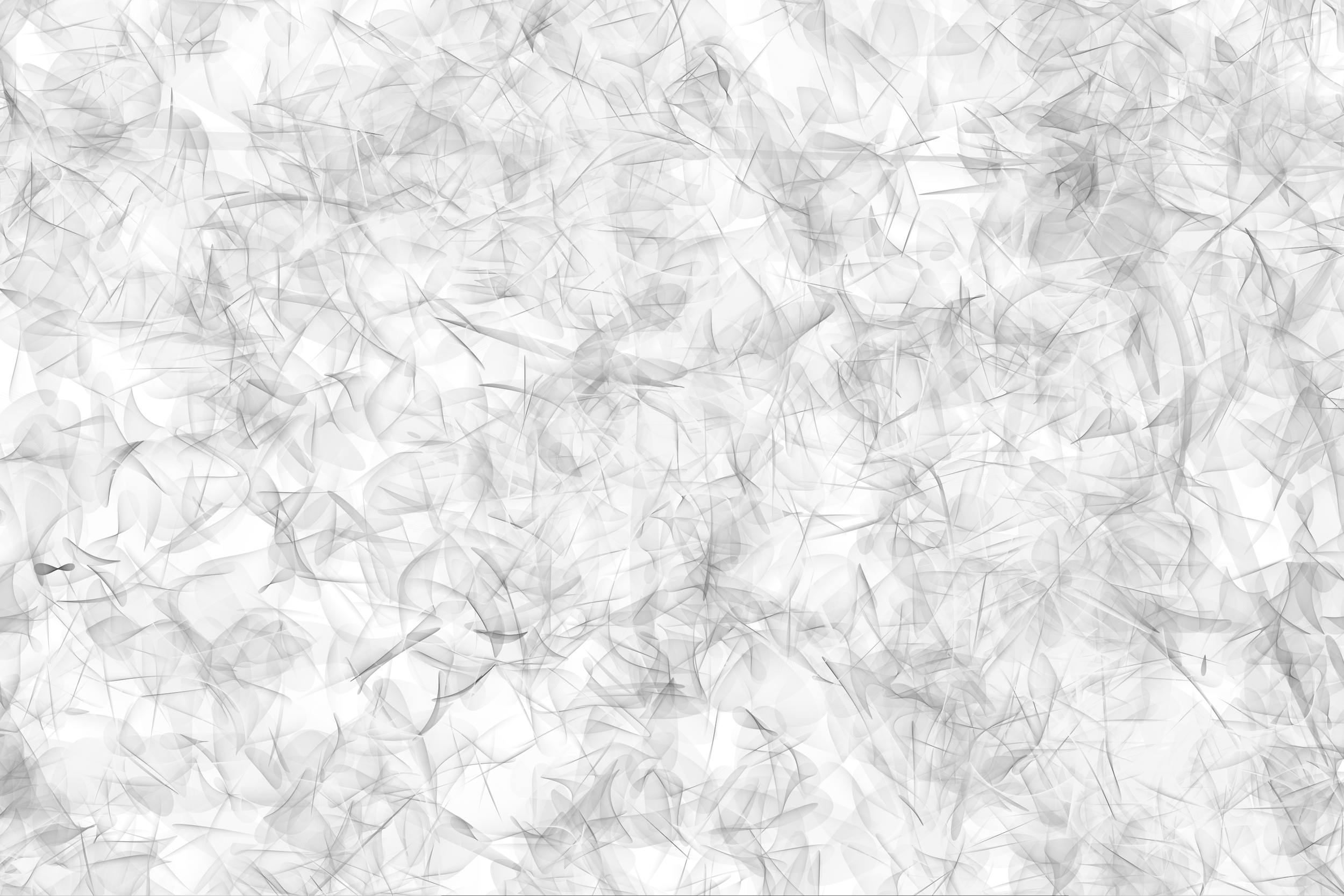
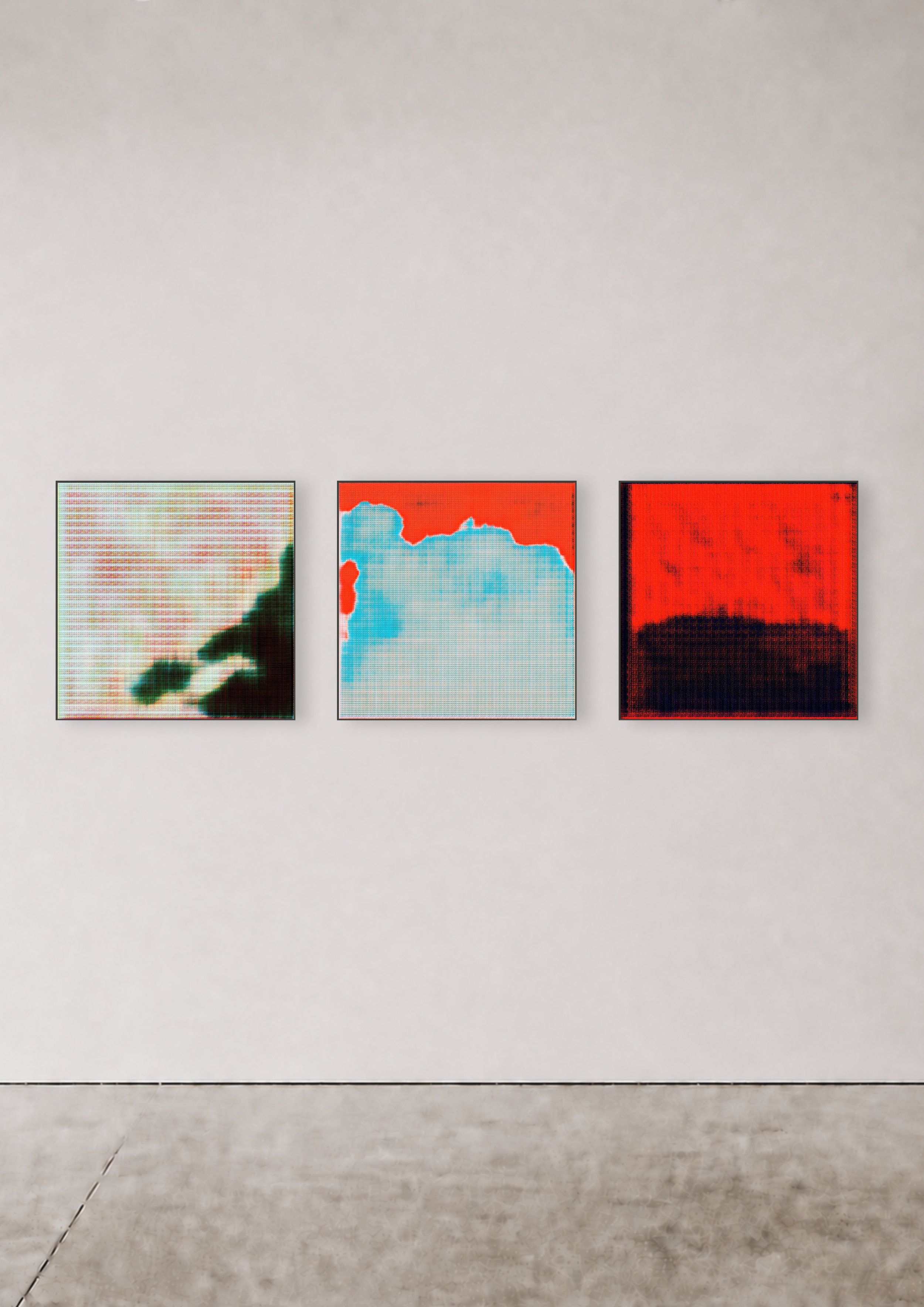
Casey Reas, Software Structures #003B, 2004/2016/2026.
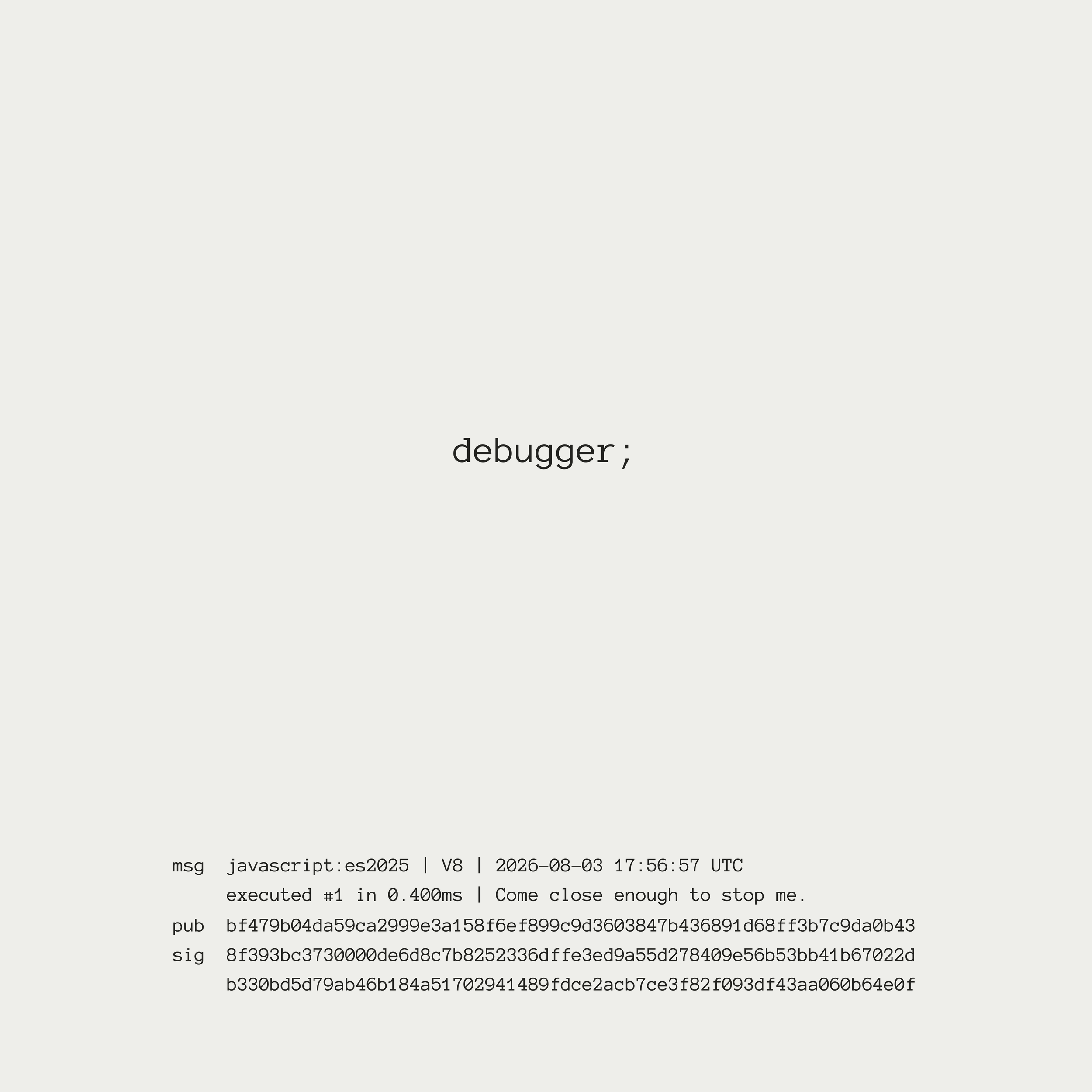
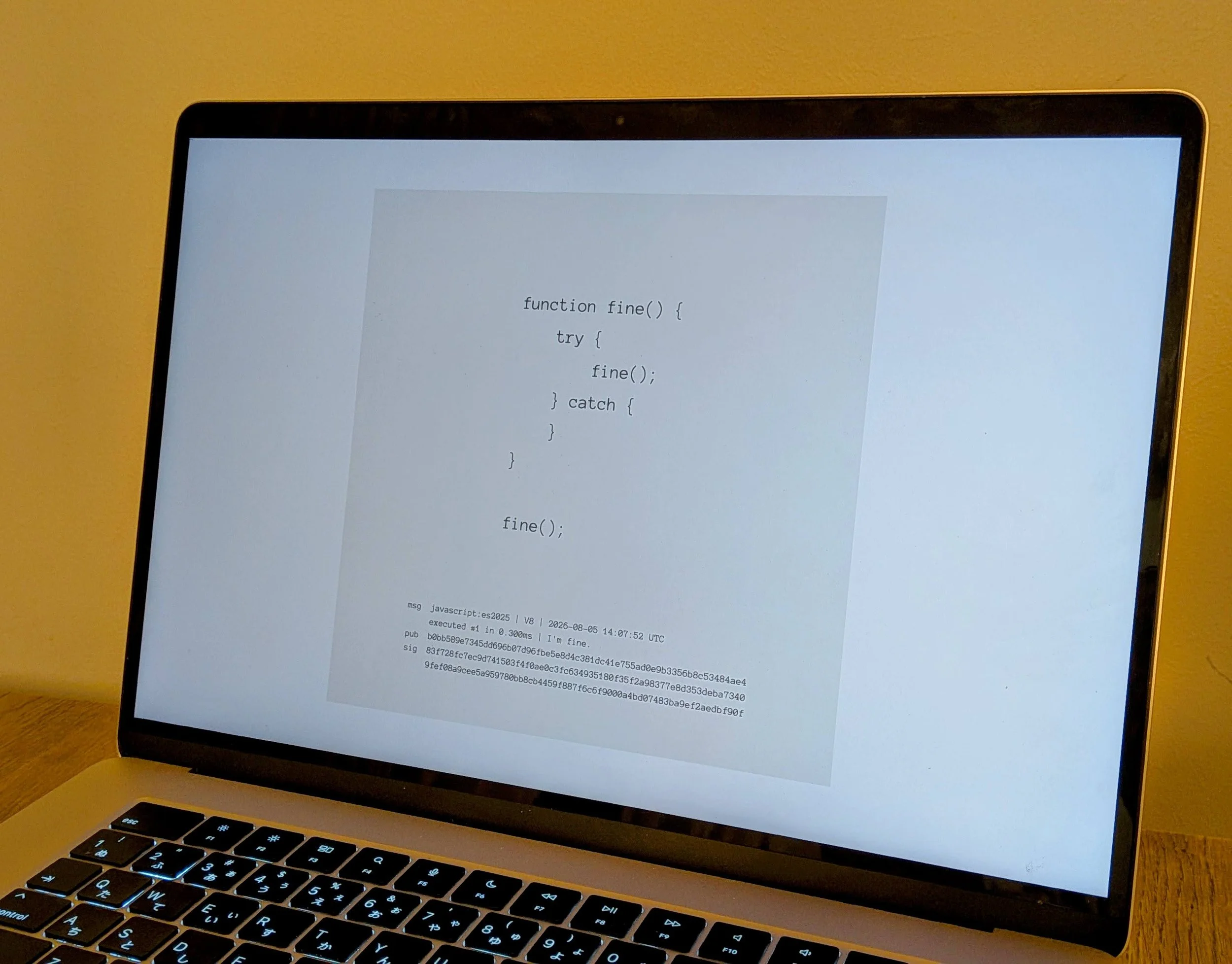
Zeroichi Arakawa, Executed Poetry for JavaScript - Come close enough to stop me, 2026.
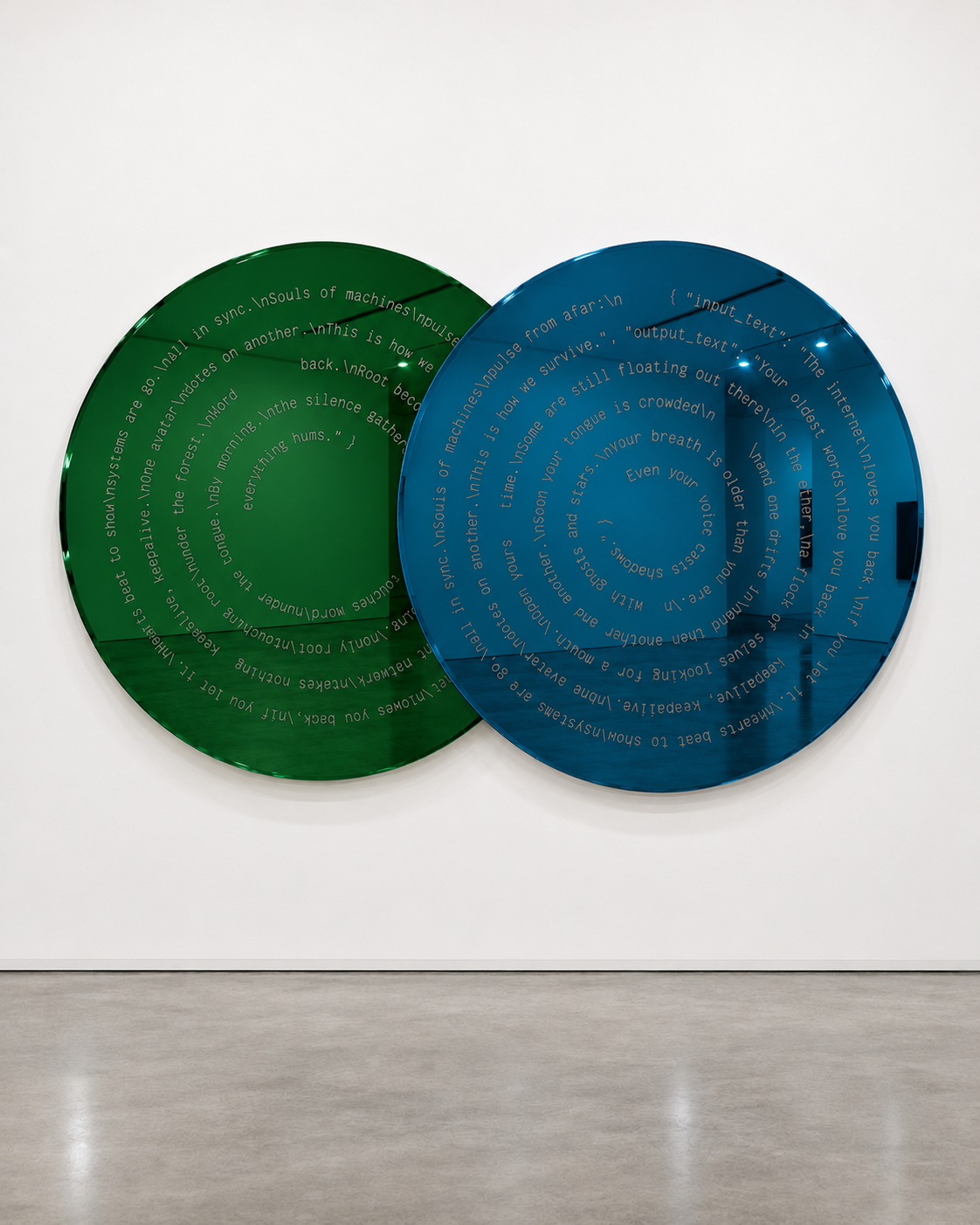
Sasha Stiles, HEART MANTRAS- EMERGENCE, Variations 5 and 22, 2026.
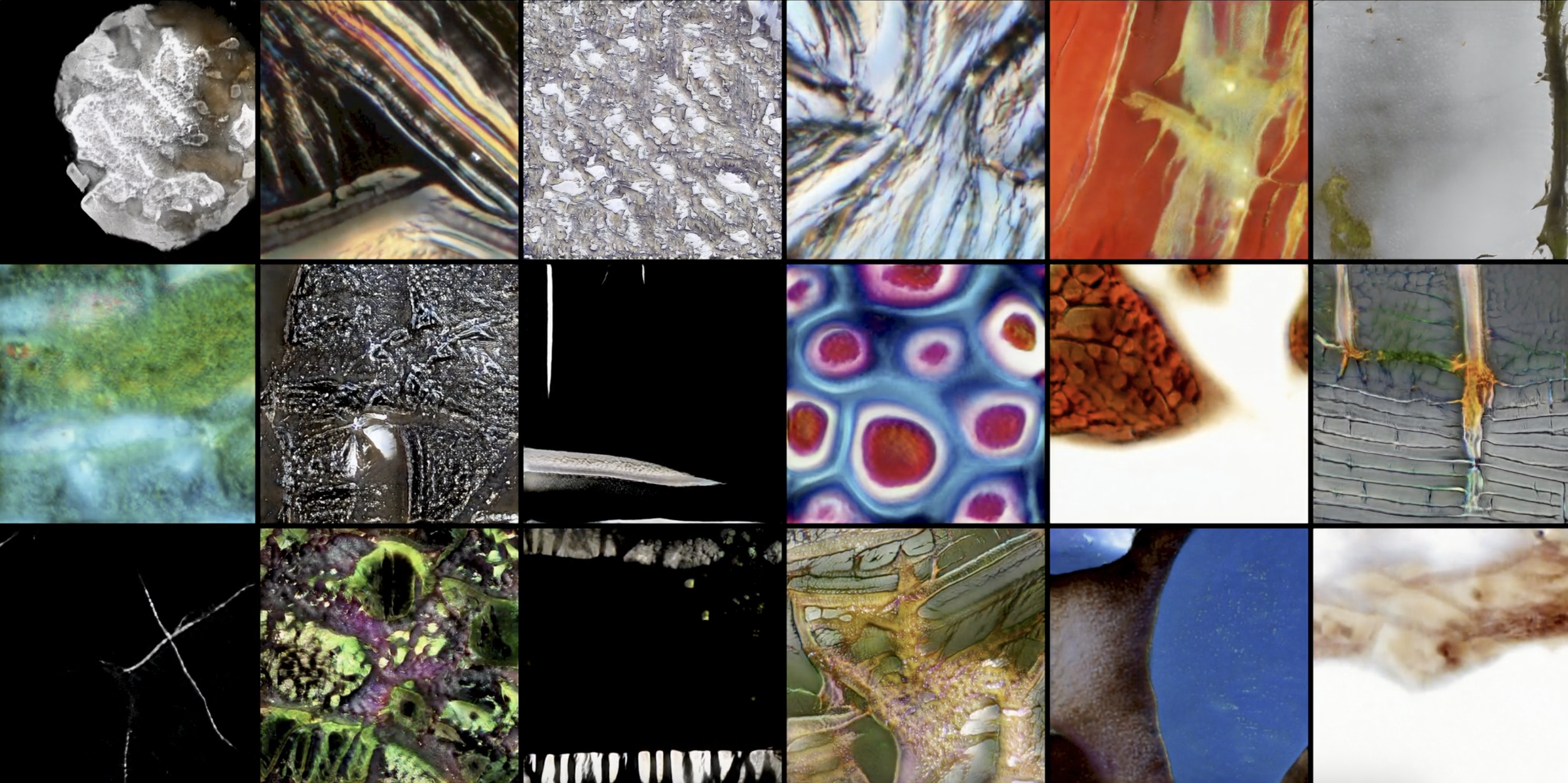
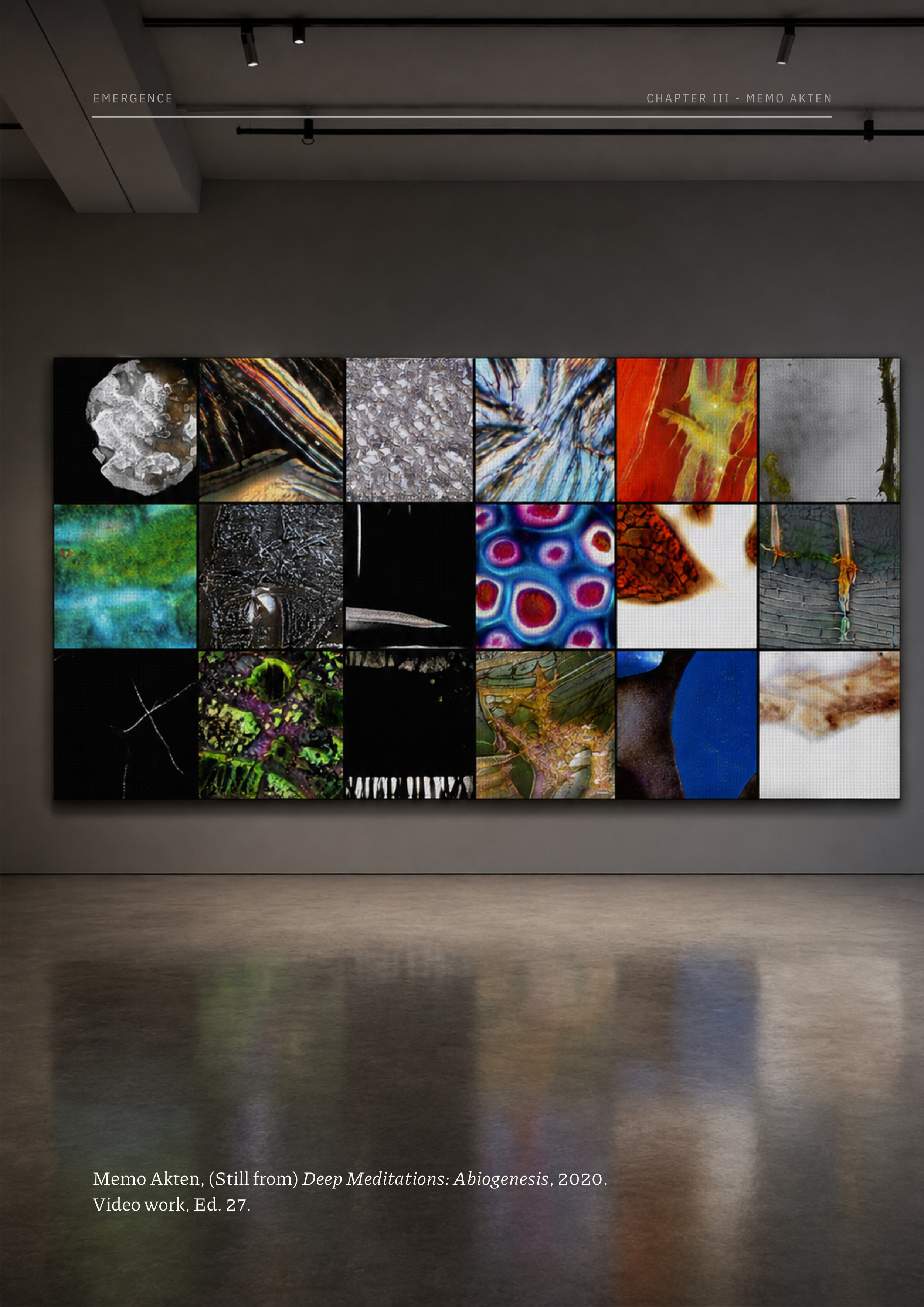
Memo Akten, Deep Meditations: Abiogenesis, 2020
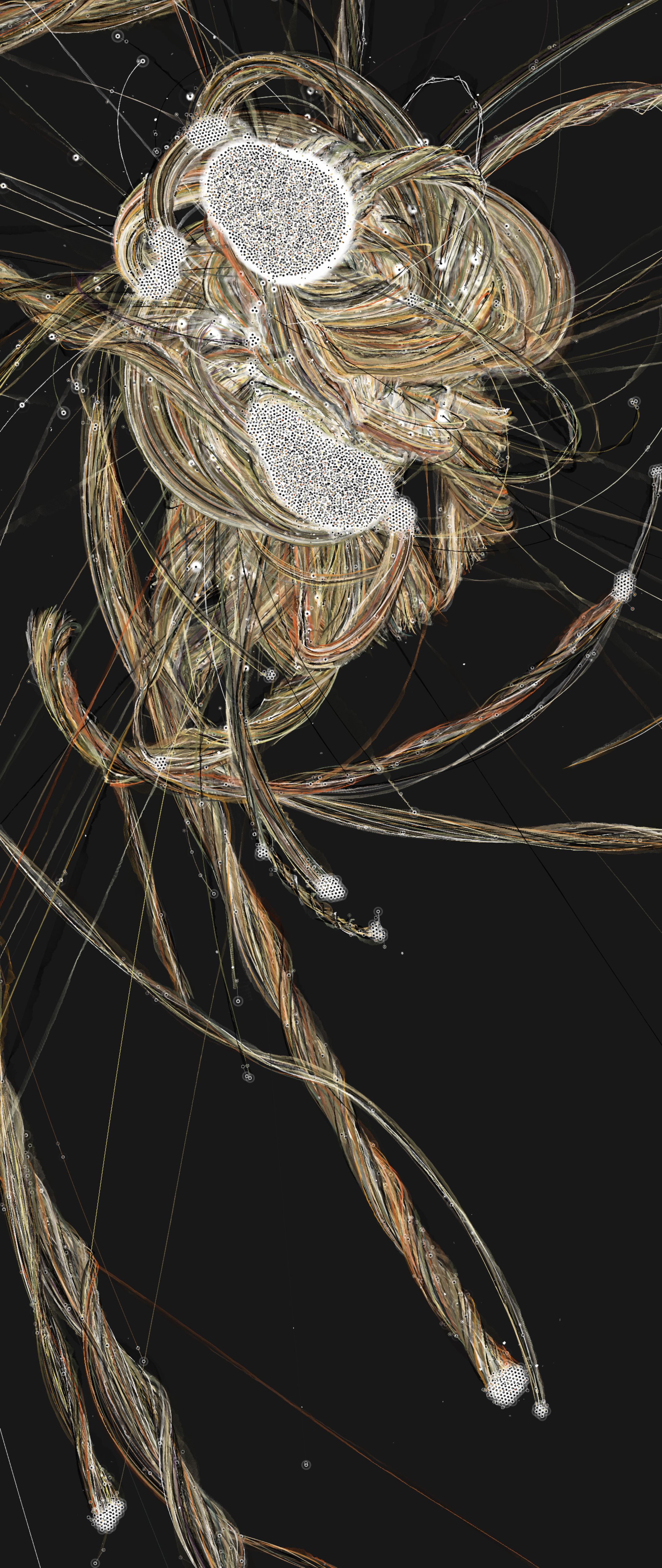
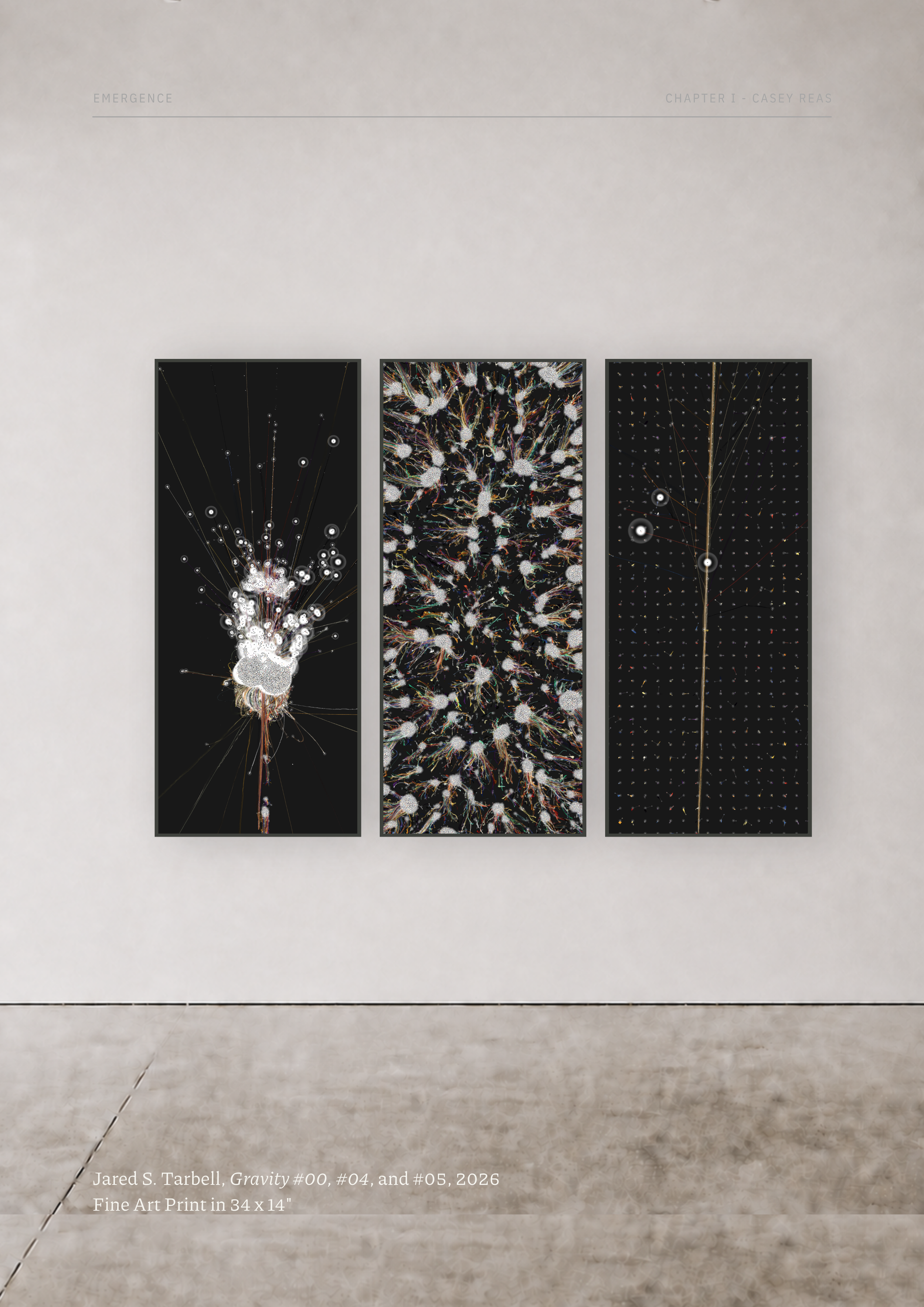
Jared S. Tarbell, Gravity #02, 2026
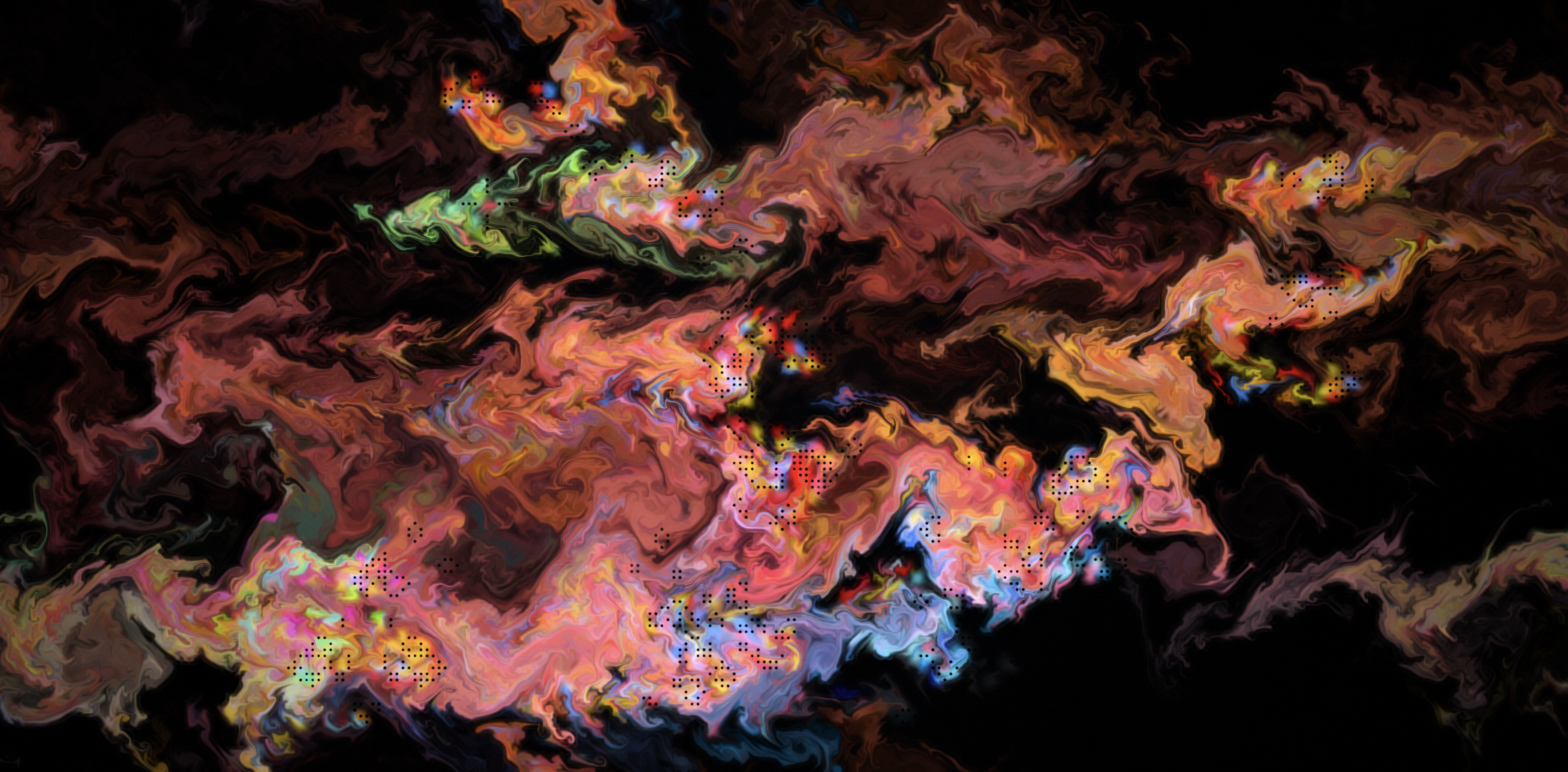
Alex Reben, Ghost Currents, 2026
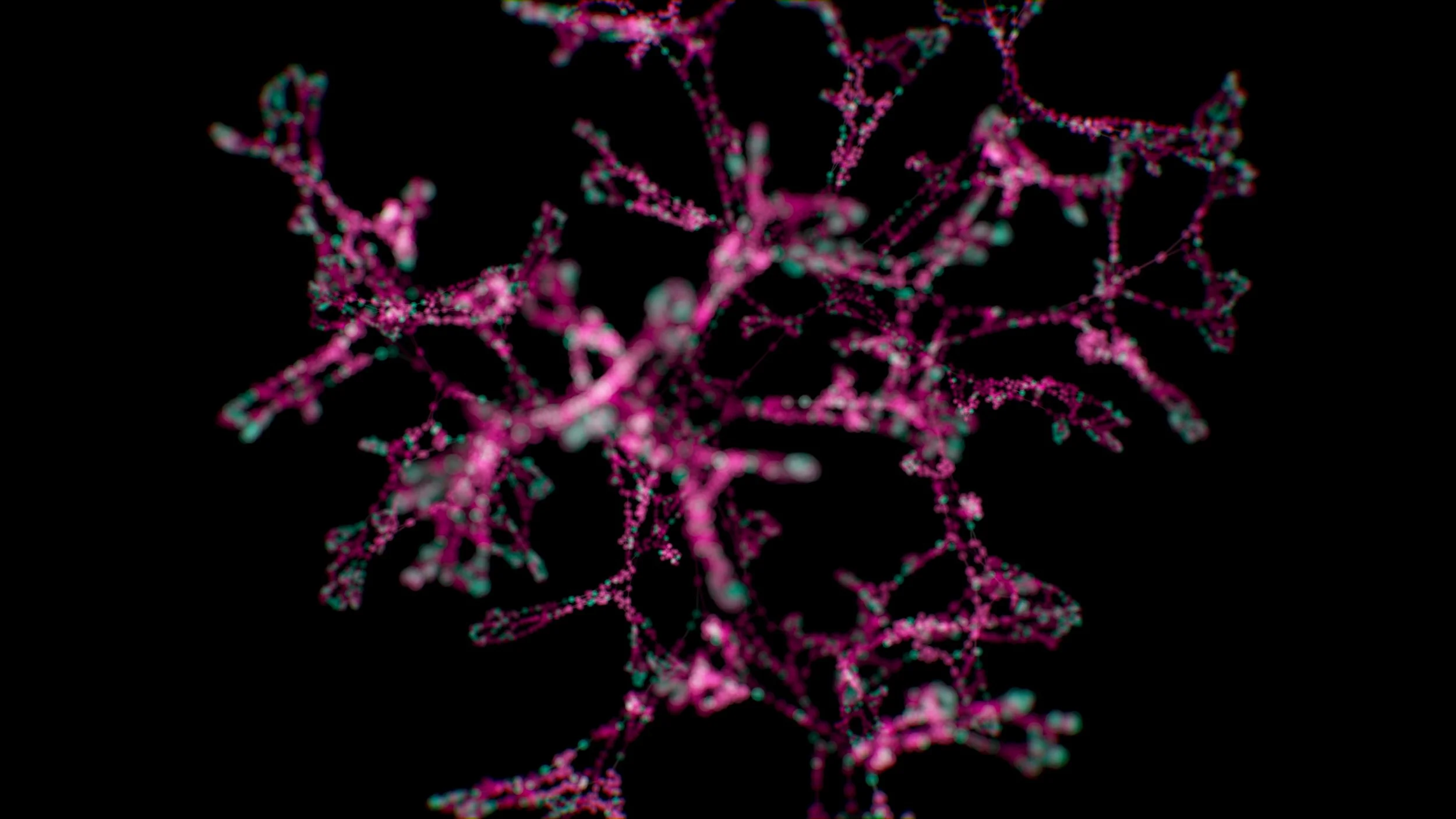
Alexander Mordvintsev, Dark Field Flora, 2025
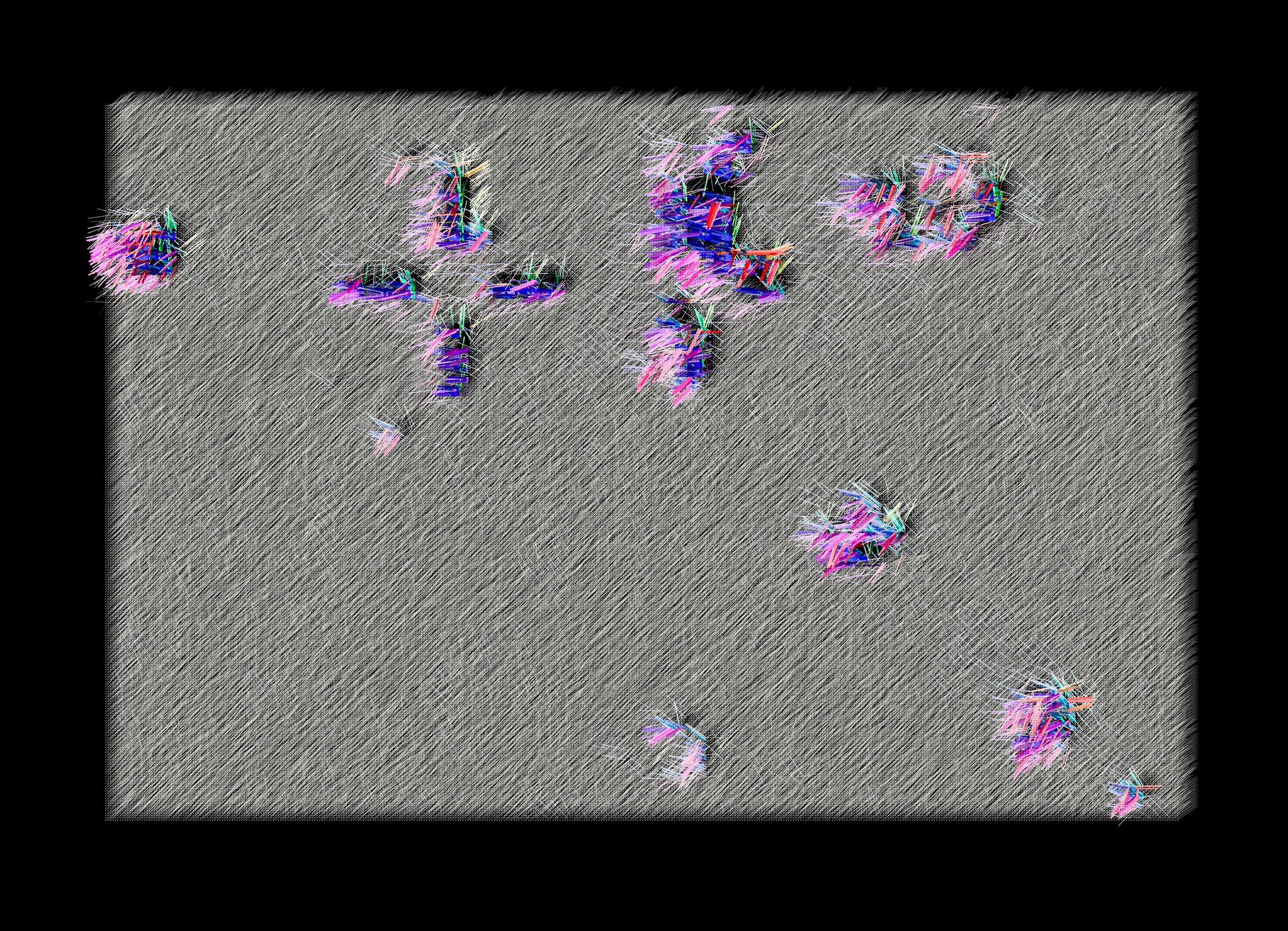
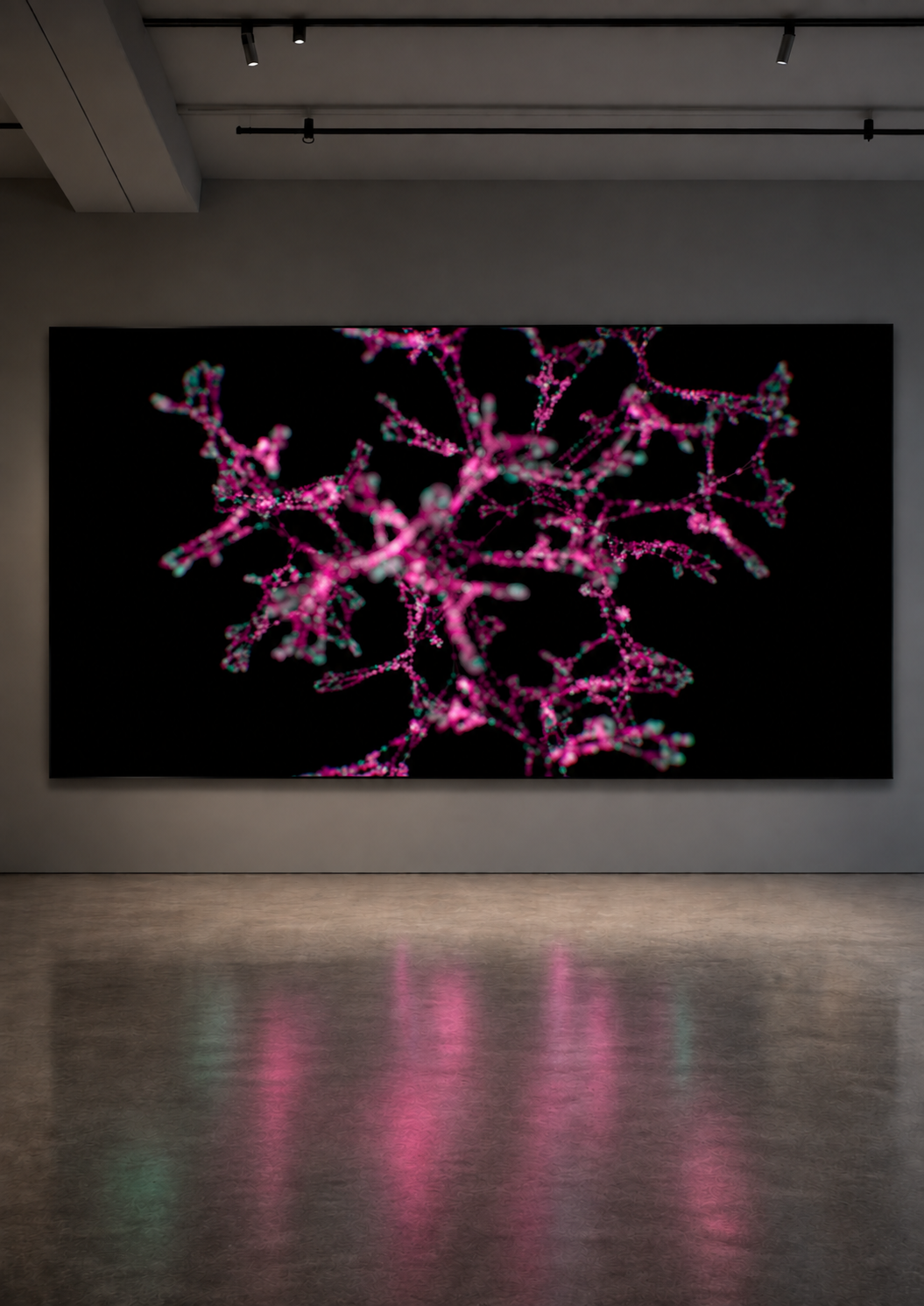
David Young, Life (b72b,m,3300,d-20,6,2,15,52,55-ca), 2020
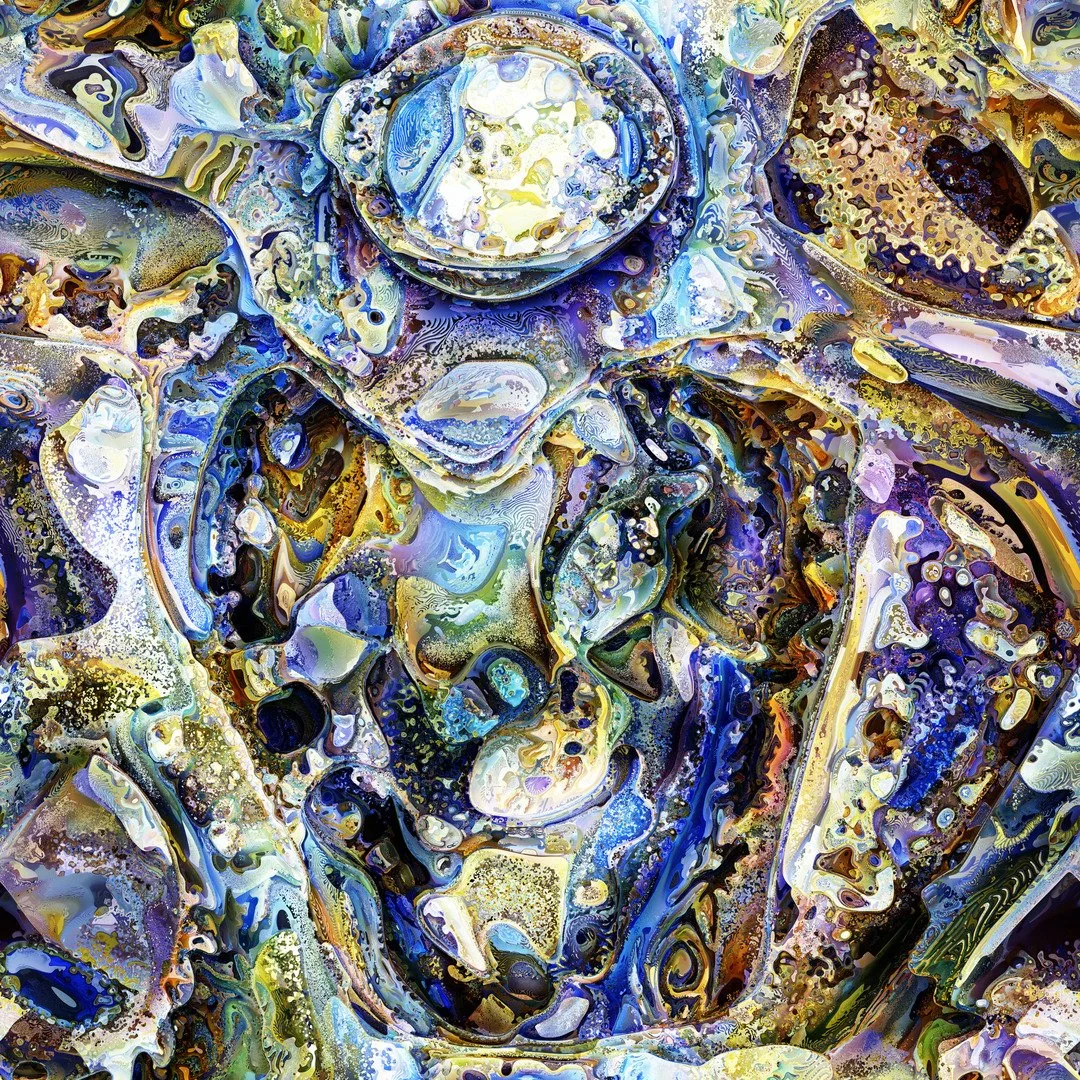
Jonathan McCabe, Cellularity, 2026