by Alexander Mordvintsev
Live code, real-time simulation
Explore the artwork in your browser: https://znah.net/flora/
Dark Field Flora is an interactive computational artwork exploring artificial life and morphogenesis through topological graph rewriting.
In classical cellular automata like Conway’s Game of Life, simple local rules unfold into rich emergent universes across a static, rigid grid. Dark Field Flora expands this paradigm into dynamic space: rather than living on a fixed lattice, space itself is an evolving graph. Cells communicate with their immediate neighbors, update their internal states, and undergo mitotic division, continuously generating new spatial fabric and structural complexity from within.
Starting from a minimalist 10-node seed, discrete graph substitution rules guide growth into diverse organic architectures, from pristine radiolarians and dendritic trees to resilient species that must continually adapt to genetic noise and stochastic mutations. Rendered in real time through the visual language of dark-field microscopy, the work captures living computational specimens unfolding in deep optical space.
Exhibited at EMERGENCE, Kate Vass Galerie, Zürich, Switzerland, 2026.
by Alexander Mordvintsev
Live code, real-time simulation
Explore the artwork in your browser: https://znah.net/flora/
Dark Field Flora is an interactive computational artwork exploring artificial life and morphogenesis through topological graph rewriting.
In classical cellular automata like Conway’s Game of Life, simple local rules unfold into rich emergent universes across a static, rigid grid. Dark Field Flora expands this paradigm into dynamic space: rather than living on a fixed lattice, space itself is an evolving graph. Cells communicate with their immediate neighbors, update their internal states, and undergo mitotic division, continuously generating new spatial fabric and structural complexity from within.
Starting from a minimalist 10-node seed, discrete graph substitution rules guide growth into diverse organic architectures, from pristine radiolarians and dendritic trees to resilient species that must continually adapt to genetic noise and stochastic mutations. Rendered in real time through the visual language of dark-field microscopy, the work captures living computational specimens unfolding in deep optical space.
Exhibited at EMERGENCE, Kate Vass Galerie, Zürich, Switzerland, 2026.

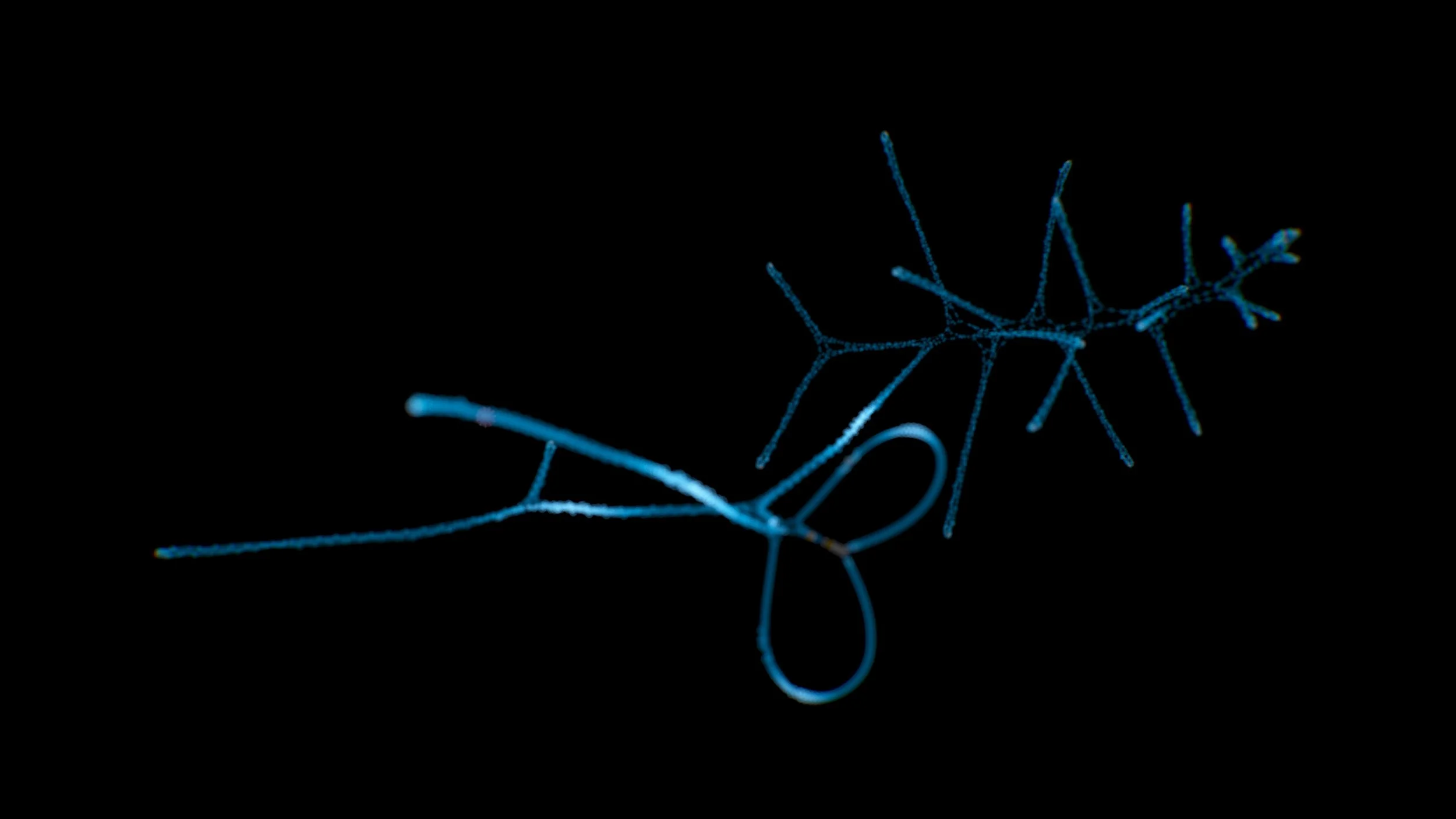 Image 1 of 6
 Image 2 of 6
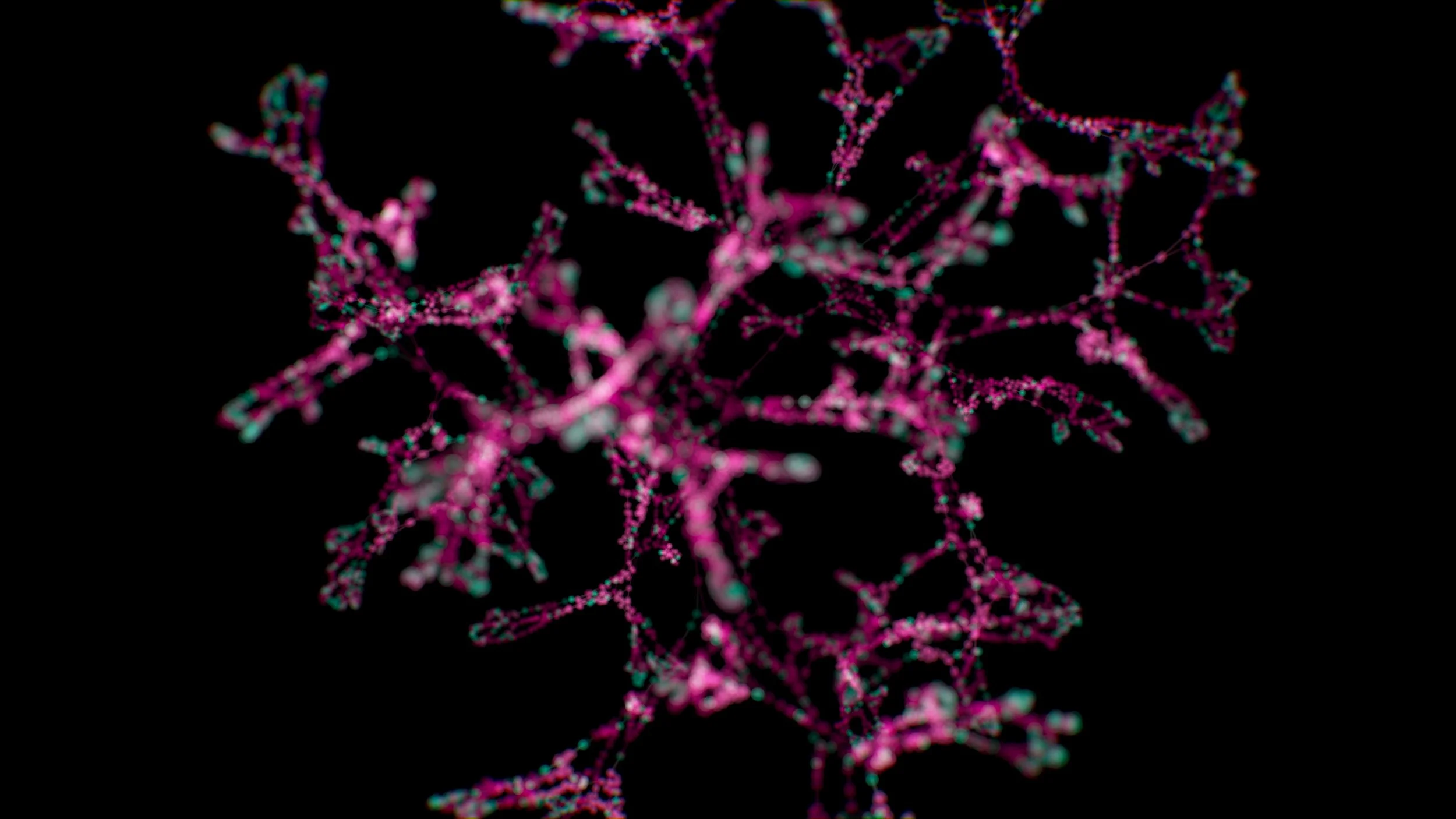 Image 3 of 6
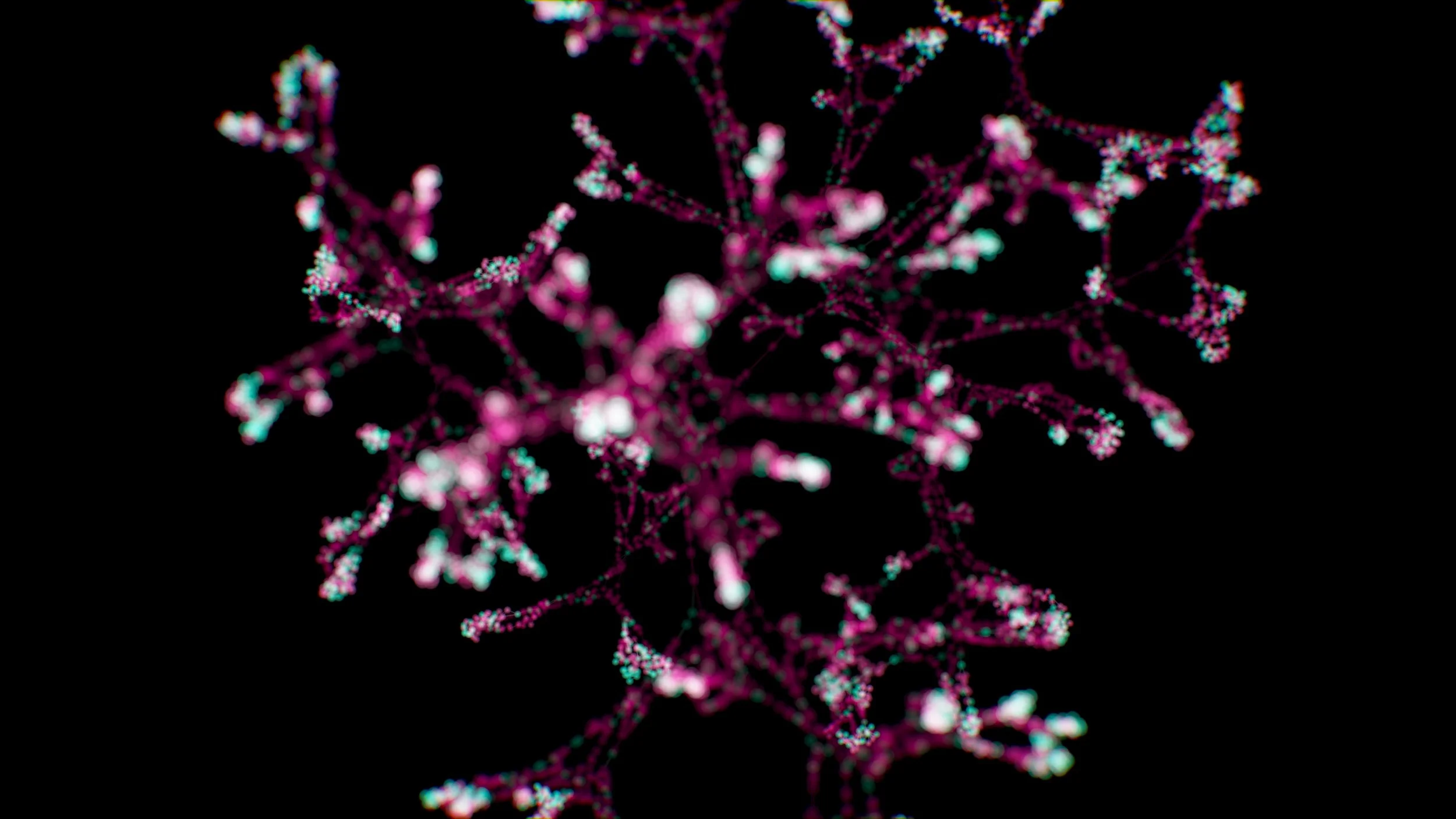 Image 4 of 6
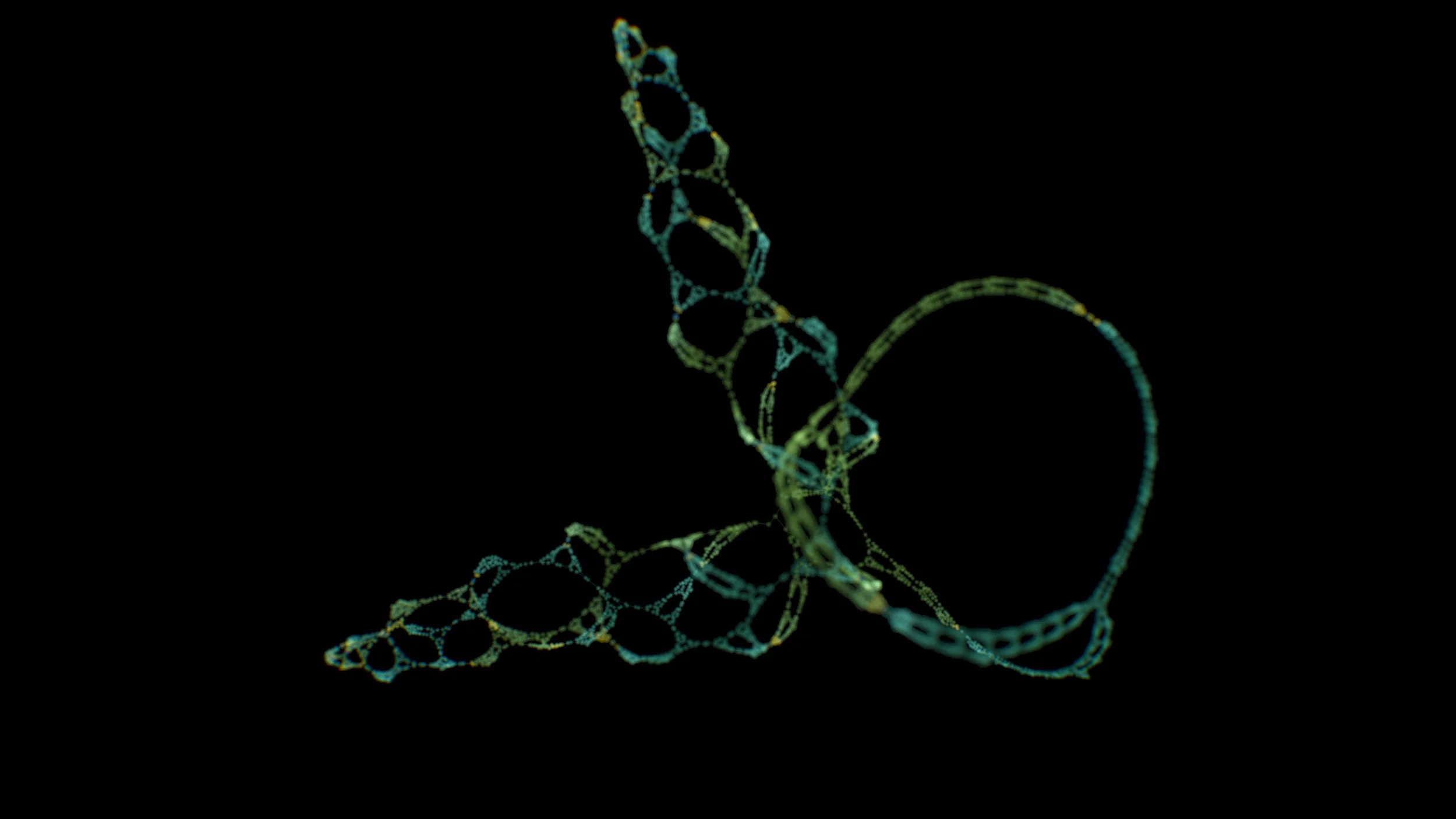 Image 5 of 6
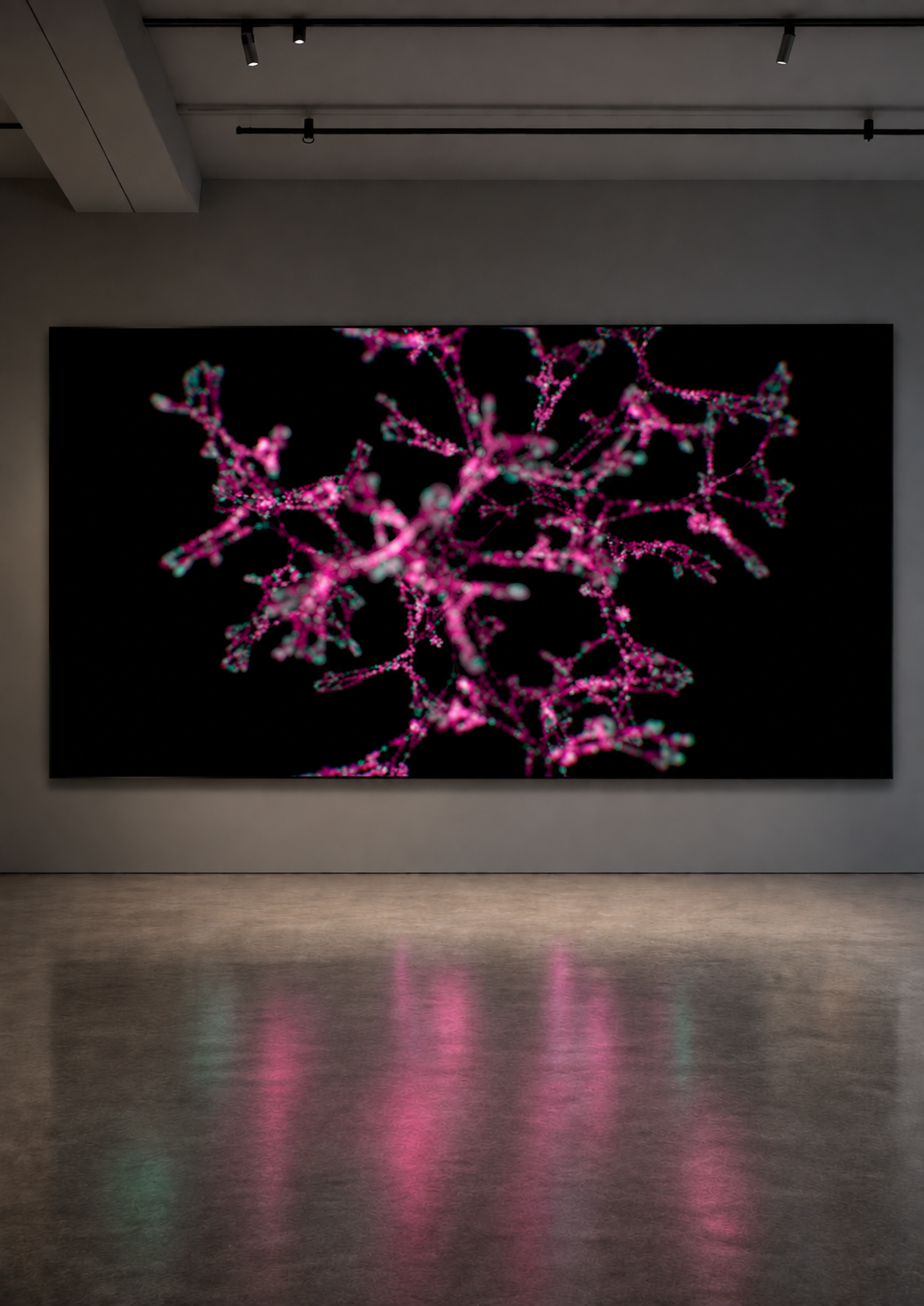 Image 6 of 6