
Came for the Money, Stayed for the Art
Kate Vass in conversation with the art collector, aka chrisroc.
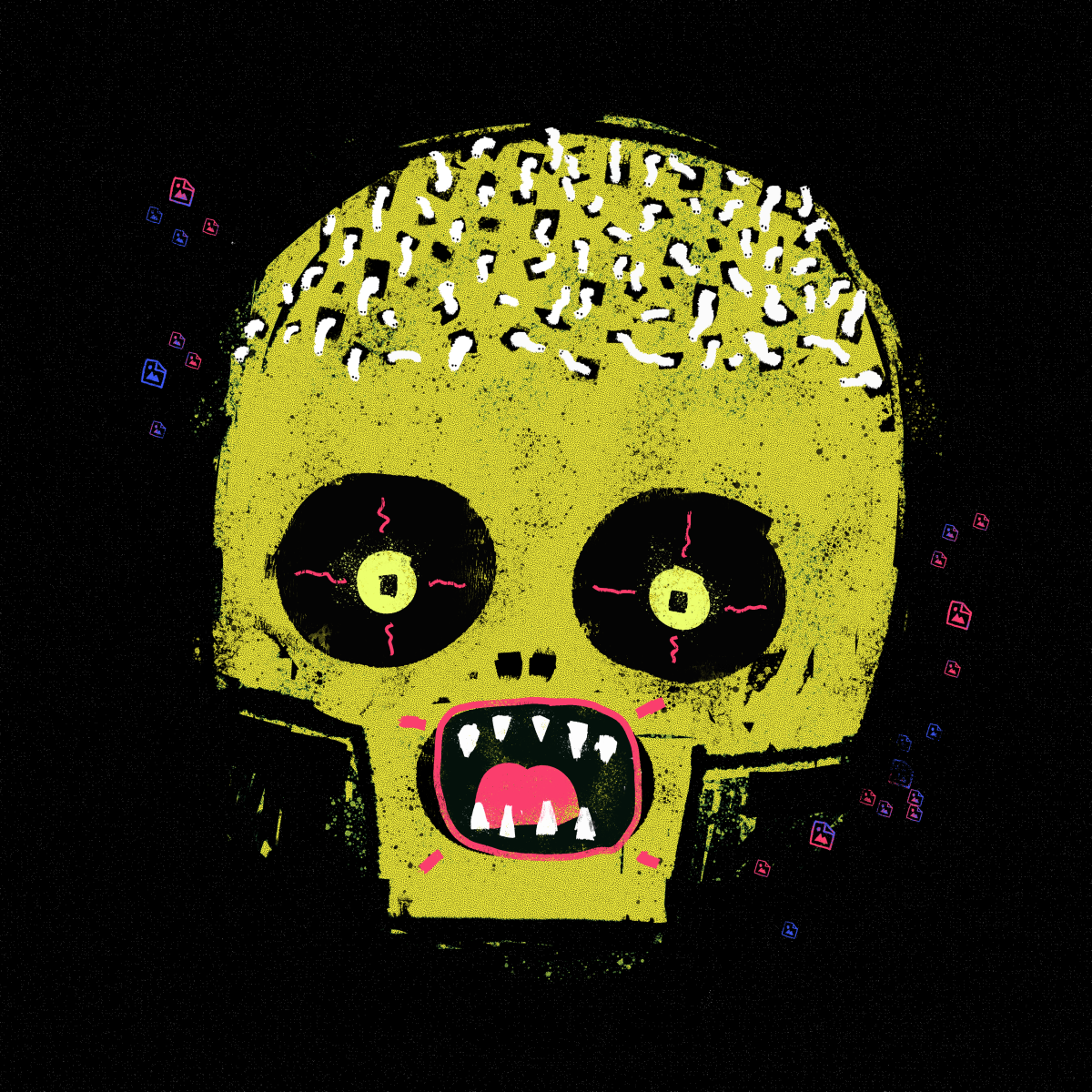
XCOPY, Grifter #023, 2021. Courtesy of the chrisroc Collection and the artist.
He was at a friend's dinner when the Dutch auction went live. He didn't mention it. He went to the bathroom, opened his laptop, watched the price drop, told himself he'd lock in later and missed it entirely. The Proof Pass he almost minted that night would go on to trade at around half a million dollars. chrisroc calls it, without much drama, the biggest fumble of his life.
It's a story that tells you something about how he collects: instinctive, self-aware, and completely embedded in a world most dinner guests wouldn't recognize. With a background in technical physics and a career spanning digital products and Web3 infrastructure, chrisroc came into crypto the way many of his generation did: through technology and podcasts, through the vague sense that something important was happening. What surprised him was that the thing he stayed for wasn't the money after all. It was the art.
Over the past several years he has built a collection centered on crypto-native work , including XCOPY, Goldcat, 6529's Memes, The Doomed DAO and more, guided less by market logic than by a belief in open systems, CC0 culture, and the importance of decentralized networks as a form of resistance. His favorite format is the GIF. His chain is Ethereum.
In this conversation, we discuss how value gets made in on-chain art, what preservation actually means in a decentralized world, and why the future of digital culture may depend on holding a line between increasingly centralized AI and the open infrastructure of the blockchain.
A collector who, in his own words, "came for the money, stayed for the art."
Kate Vass: You studied technical physics, which trains a very systems-oriented way of thinking. Can you walk us through when you first discovered crypto and NFTs and how that eventually led you to building your career around digital products and Web3?
chrisroc: It's really two separate timelines that are converging. I was quite late to crypto. I bought my first bitcoin when it was still four digits, so compared to today it was early, but at the time it felt like, oh wow, bitcoin is almost 10k, I'm probably too late. I just bought some via a centralized exchange and only got into self-custody and NFTs on the back of the 2021 bull market. My first NFT was late 2021.
I am a partner in a consulting and tech boutique. On the back of the bull market, some of our clients had interest in metaverse-related topics. The first significant project was helping a major automotive company explore integrating NFTs into their user experience. That was early 2022, the first moment where my personal NFT-related interest and professional interest met. We also helped with an NFT collection around that time. Then the bear market hit and interest in Web3 declined sharply. But recently, with the change of US administration and the GENIUS Act, stablecoins have gained enormous legitimacy and that's where I'm spending more and more professional time now.
KV: As someone who works daily with large, centralized organizations, where do you see the biggest gap between crypto-native ideals and enterprise reality?
chrisroc: Web3 or crypto projects only work if, on the client side, you have someone who is almost crypto-native themselves. Otherwise, there are too many foundational concepts to explain before you can even pitch anything. It's different from other technology domains. The biggest gap is a fundamental illiteracy around how distributed systems and blockchains actually work, what it means to not need a centralized third party to exchange value with a stranger. If you're not crypto-native, that might take a long time to wrap your head around.
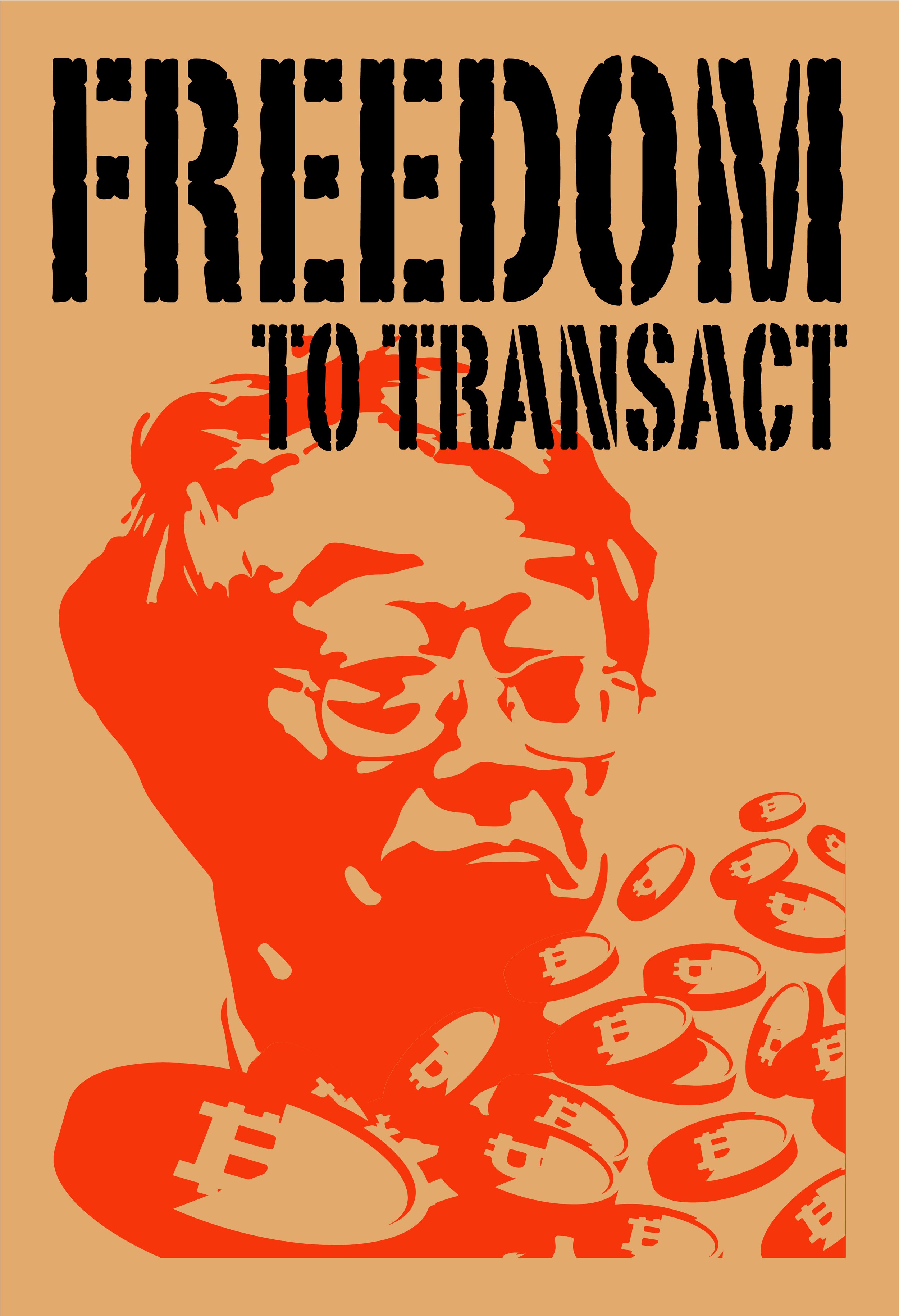
6529er, NakamotoFreedom, 2022. Courtesy of the chrisroc Collection and the artist.
KV: Working on digital products and value creation every day, did that professional perspective influence how you think about NFTs as collectibles?
chrisroc: There's one common thread worth sharing. My previous employer strongly believed in the power of open source software, and how open source eventually shaped how most enterprise systems are built, Linux, the contributions from Google, IBM, all the major players. Twenty years ago that was a genuinely novel idea, at a time when corporations were still trying to own the internet, when it was all Microsoft versus Linux.
“I think an artwork has the chance to become more valuable the more it is shared, the more it is spread. That's why I'm a big fan of CC0.”
- chrisroc
I understand there are artists who want their work to be proprietary and there are fantastic proprietary software solutions too. But all things being equal, I would always prefer an artwork to be in the public domain. I recently talked with an artist about a work I own, and she was considering releasing prints. I think she was a little afraid how I'd react. I said I love the idea, I'd want to buy one. A print is just another form to display the artwork. As long as the 1-of-1 underlying token isn't copied or reproduced, I'm completely fine with that.
KV: Do you have any experience collecting in the traditional art sector, galleries, fairs, studio visits?
chrisroc: Very, very limited. There's a signed and numbered edition hanging next to me right now, purchased in Melbourne in 2014. Pre-NFTs. As a collector, I mostly appreciated art by visiting contemporary art museums, my wife and I went to MoMA on our first trip to New York together. But I was always more visitor than collector. The only other non-digital piece I'd count is a sculpture, and even that is based on an NFT. So it doesn't really count. No gallery invitations, no art fair history. It really changed after NFTs.
KV: In the traditional art market, value is constructed through scarcity, opacity, institutional endorsement, Art Basel, auction house records, branded collectors. How do you think value gets created in on-chain digital art?
chrisroc: There's a lot to unpack. First, I don't think the price of an artwork needs to be tied to the effort that went into making it at all. It can be a component, but it doesn't have to be. What makes something special is the overall story: the artist, the individual context in which the piece was created, the technical execution. Something like Tyler Hobbs's Fidenza has its own technical merits that speak to a certain crowd. Whether the work is fully on-chain versus dependent on external infrastructure matters to me. I like artworks with as few dependencies as possible.
Then you have the very interesting concept of networked art. What is opaque in the traditional market, you don't know who owns the other four editions of an edition of five, is completely visible on-chain. There's a community around an artist, around an artwork. PFP collections are the poster child for that kind of emerging behavior. You own a piece, you make it part of your identity, which is very hard to do with traditional artworks.
“Branded artists, branded collectors, branded institutions - we copy all of that from the traditional art world. If you have an edition of 10 and it sits in Cozomo's vault and in 6529's vault, that's a signal. People see it as validation.”
- chrisroc
The most prominent example and this isn't offensive at all, is the skulls by Sam Spratt. People want to be part of the council, and that's why they pay what they pay. The individual skull almost doesn't matter.
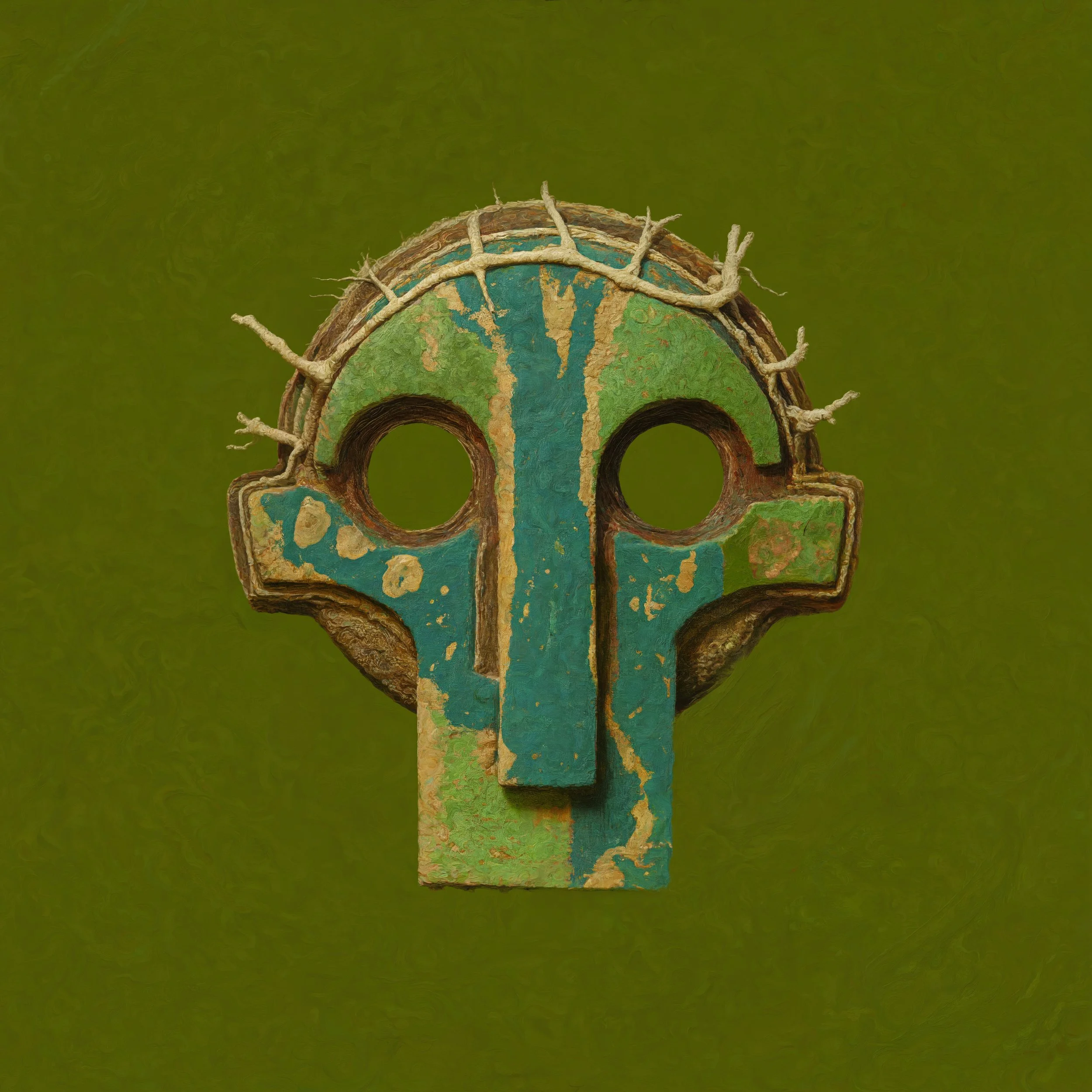
Sam Spratt, Diaspora Cartographer, 2025. Courtesy of the chrisroc Collection and the artist.
KV: Do you remember the first on-chain artwork you actually acquired?
chrisroc: I remember exactly. It was a Crypto Dunk. I had just moved funds from a centralized exchange to a MetaMask wallet I was still figuring out. I went to OpenSea and looked at the biggest collections by floor or trading volume. Cryptopunks were there, I thought, I love that pixel vibe, that's cool. Then I saw the price. Half a million. Not what I wanted for a test transaction.
Somehow I discovered this ridiculous collection called Crypto Dunks - NBA players in pixelated form with various rarity tiers and hilarious names. I tried to buy one. The first transaction failed because I was very greedy on gas. It was the era where you'd see a 50 dollar gas fee on a 20 dollar NFT and think - let me tune that down. The second transaction went through. I bought a pixelated thing with no value that still sits in my vault as my first NFT.
KV: It has emotional value as your first.
chrisroc: Correct. It is not for sale.
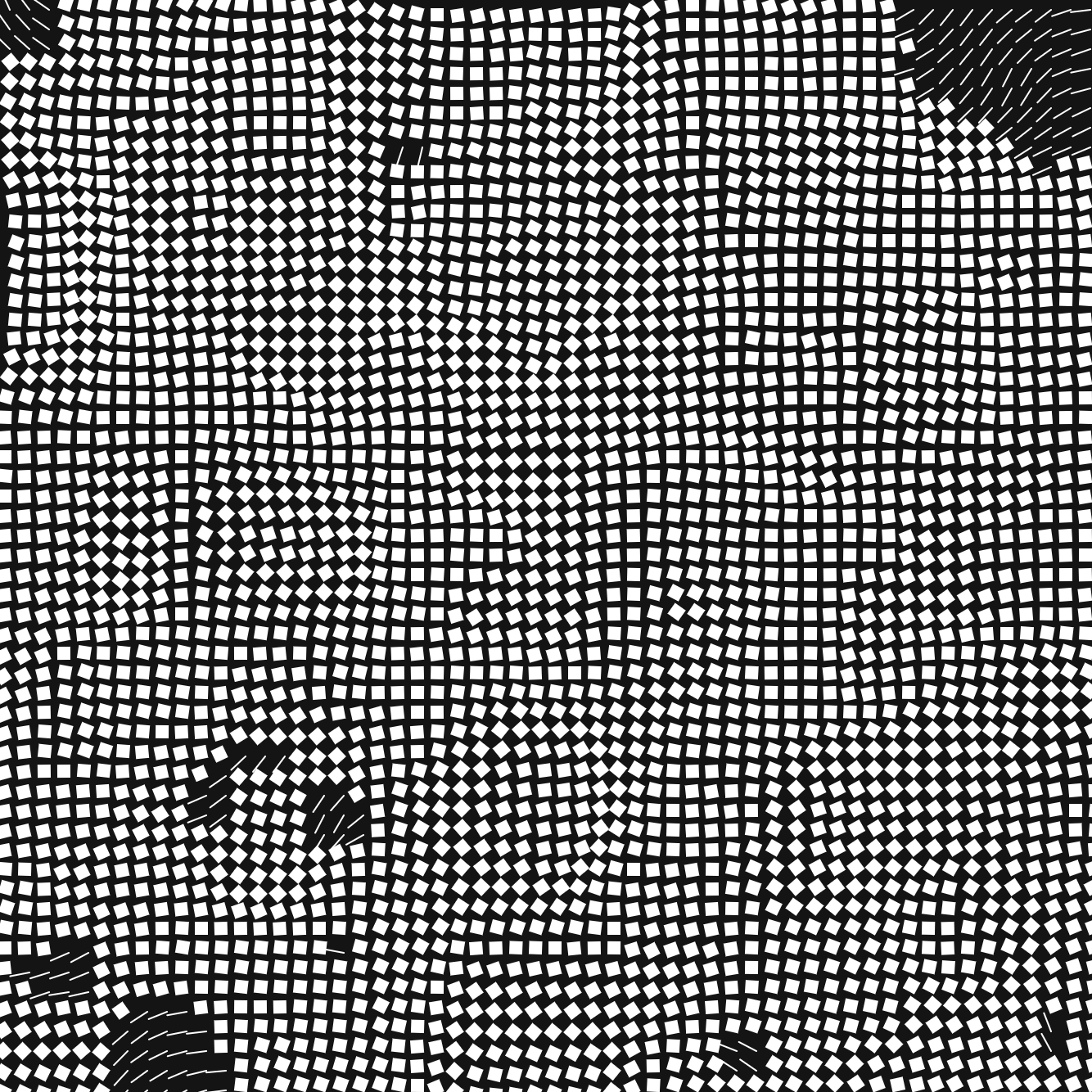
Botto, (Still from) Geometric Fluidity #301, 2025. Courtesy of the chrisroc Collection and the artist.
KV: Looking back at what motivated you, was it curiosity, perceived financial value, or a genuine connection to the work? You mentioned Kevin Rose and the Tim Ferriss show...
chrisroc: Came for the money, stayed for the art or the community. That's the honest story. I'd been listening to the Tim Ferriss podcast for a long time. Kevin Rose was a regular guest. Kevin had his own podcast, Modern Finance, really focused on DeFi. At some point he started talking about NFTs, there was another ridiculous alien punk sale and he was about to launch Proof. I thought: my life got better listening to advice from people smarter than me. These two seem to know their stuff.
So, I moved enough funds into MetaMask because I understood the Proof Pass would be a Dutch auction. I had no idea what that exactly was, but I Googled it. The pitch was that this was really for the art collector. I couldn't exactly see myself as the target audience, but I trusted Kevin Rose. Then I was at a friend's for dinner when the Dutch auction went live. I had about 2 ETH in my wallet, the auction was starting at 5 ETH and going down. It was so embarrassing that I didn't want to tell my wife or my friend I needed to go mint an NFT, so I went to the bathroom with my laptop. The auction hit 2.5 ETH. I thought, I'll lock in later. Then it sold out. Secondary was at 3 or 4 ETH. I did nothing for three months.
“Then I learned the Proof Pass was trading at around 500k. That was probably the biggest fumble of my life.”
- chrisroc
Around Easter, they launched Moonbirds. That was the first very expensive thing I actually bought.
KV: And you eventually sold the Moonbird?
chrisroc: I did. I'll still give Kevin credit, he pointed my attention very early toward XCOPY. I think I bought the Moonbird and maybe 30 days later I entered the XCOPY Discord. I rode the Moonbird all the way up, but not all the way down sold somewhere around 8 ETH after buying just below 7. I got my flipper experience. I still have the Moonbird fanny pack and cap somewhere. Whatever you think of Kevin Rose and Moonbirds now, it's a very well-made cap. I like caps. And the productions Proof made around their artists, the video backstories, they're still the benchmark for what any platform has produced in this space.
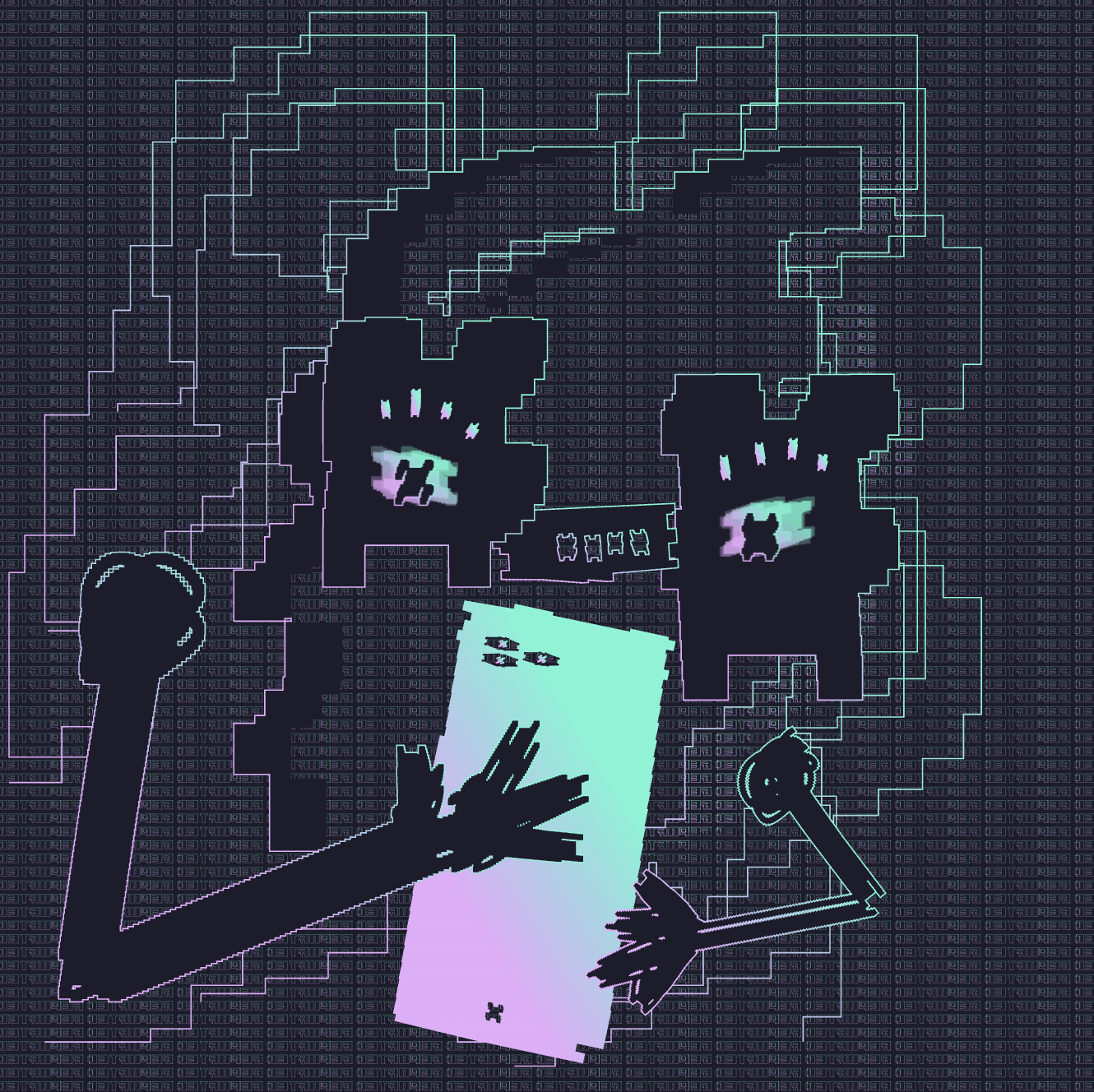
XCOPY, (Still from) SIMULACRUM, 2023. Courtesy of the chrisroc Collection and the artist.
KV: So you sold the Moonbird and ended up in the XCOPY Discord. What happened?
chrisroc: The first love. Initially when I looked at those pieces I thought: oh wow, that's a lot. That's really strong. The way I keep describing it: with drinks, there are different drinks for different occasions. Some are very smooth, well-rounded, no ugly faces required. And then there's the peaty stuff from Scotland, a lot to process. Makes you feel alive. Triggers an emotion.
“Looking at an XCOPY piece is like sipping a Laphroaig. It demands your attention. There's something going on.”
- chrisroc
The first piece I bought was an edition of Max Pain, which today I'd say is one of his top ten artworks. It's a big edition and still relatively accessible, you can probably find one below a thousand dollars. But I was very lucky with what followed. I collected the Max Pain, then hunted for a Yellow Shady Grifter for weeks, maybe a couple of months. Finally bought one, and it's been the PFP on most of my accounts ever since. Since owning the Grifter, I've had the privilege of minting everything else I own by XCOPY from primary: I won the raffle for Simulacrum, won it again for Empire Things, minted the collaboration released on Art Blocks, ICXN and most recently minted the collab with Lewis Osborne.
I still remember the Simulacrum mint. You went directly to the XCOPY website and purchased right there. XCOPY is not super receptive to feedback, but that beats a private listing on OpenSea ten times out of ten.
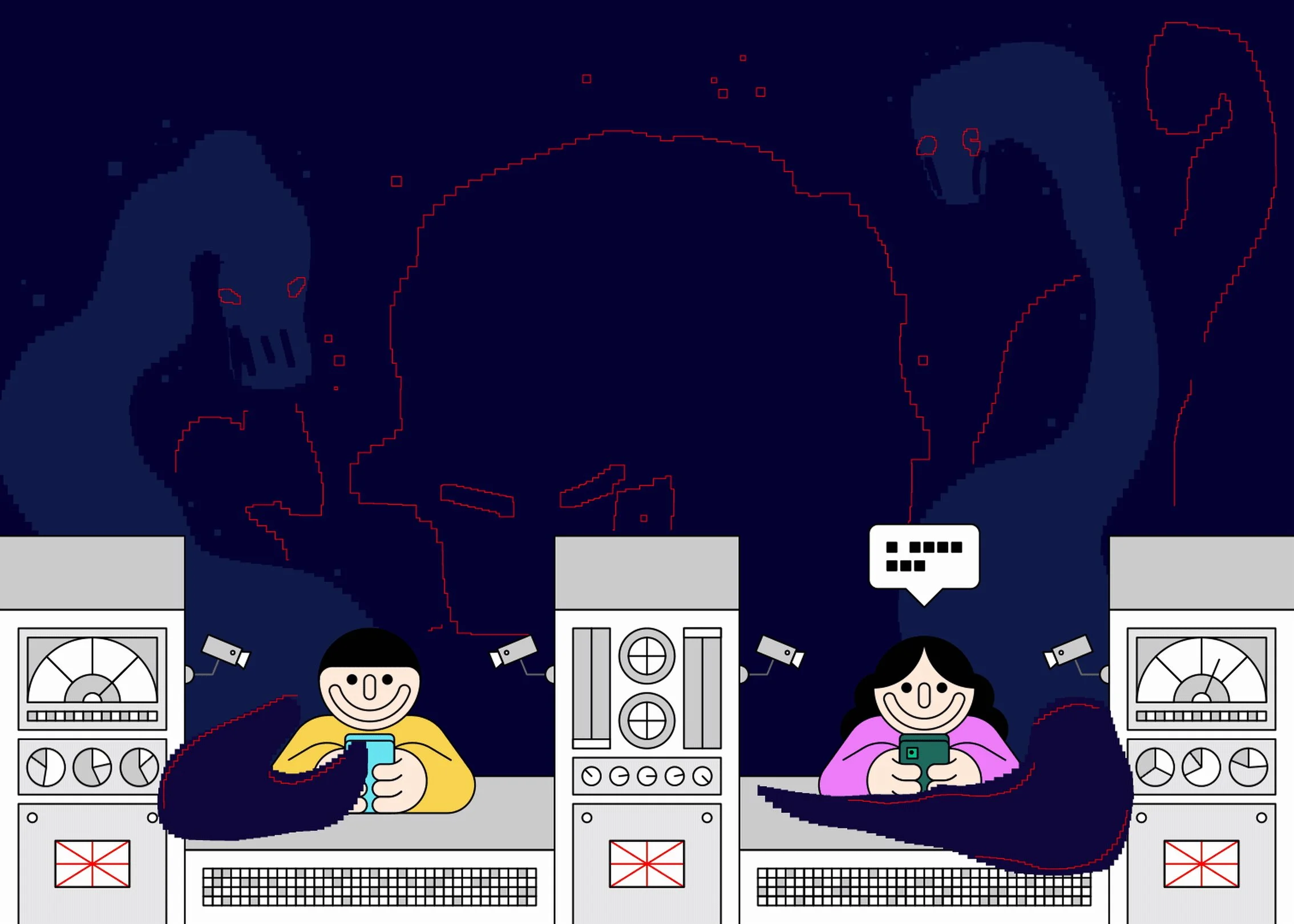
XCOPY & Lewis Osborne, (Still from) MISSION CREEP, 2026. Courtesy of the chrisroc Collection and the artist.
KV: How did you end up in DoomedDAO?
chrisroc: I think it was November 2023 or 2024 still invite-only. A lot of the founding members also happened to be Grifters. Jediwolf shared it in the Grifter Twitter chat before it was announced anywhere publicly. As per usual I got into a panic, sent him a message immediately, and bought a token within 24 hours. I think I was one of the first ten non-founding members, not because I was especially deserving, just because I moved fast.
What I'll say honestly: the DoomedDAO helped me understand XCOPY's broader body of work more deeply, especially the KO editions, which hadn't been a major focus of mine. It gave me context I didn't have before. I value the community most of all. I'm not super interested in shared ownership per se. It would actually feel wrong to put a piece on my wall that I only own 0.2% of even if it's CC0. What works great is having a DAO as the institutional backbone for activities like the show we did with SuperRare in New York, or hosting the meetup in Lisbon. What's very difficult in any DAO is allocating resources to things outside the core mission. That's something every DAO has struggled with, and I don't think we'll be the ones to solve it. You have to have realistic expectations.
KV: You've built a significant collection of Meme Cards around 250+ from the 6529 ecosystem. What role do memes play in shaping culture in this space, and why are they such an effective vehicle for communicating it?
chrisroc: 6529 has informed a lot of how I think about this. Internet culture has these recurring motifs and some of them are very important in crypto specifically. 'Not your keys, not your coins.' The freedom to transact. These aren't just slogans. The surface-level name is the Memes by 6529, but the actual ambition is to build a decentralized network state, to fund public goods, to create a decentralized way to hold identity and reputation. It's the concept of the network state - made popular by Balaji - with NFTs as the foundation. I think that's a genuinely interesting experiment. Fifty percent of every mint goes to the artist, fifty percent to the 6529 team to build the infrastructure. They've built profile systems, channel structures, voting mechanisms - the whole thing is open source, you can spin up your own version. And all the Meme Cards themselves are CC0.
At some point minting every card became unsustainable three mints a week, infinite supply. So I stopped at some point. But I still support the project from the outside. 6529 is pretty much behind schedule on his broader vision, but I would have said the same a year ago and two years ago. It's the beginning of something I want to be part of.
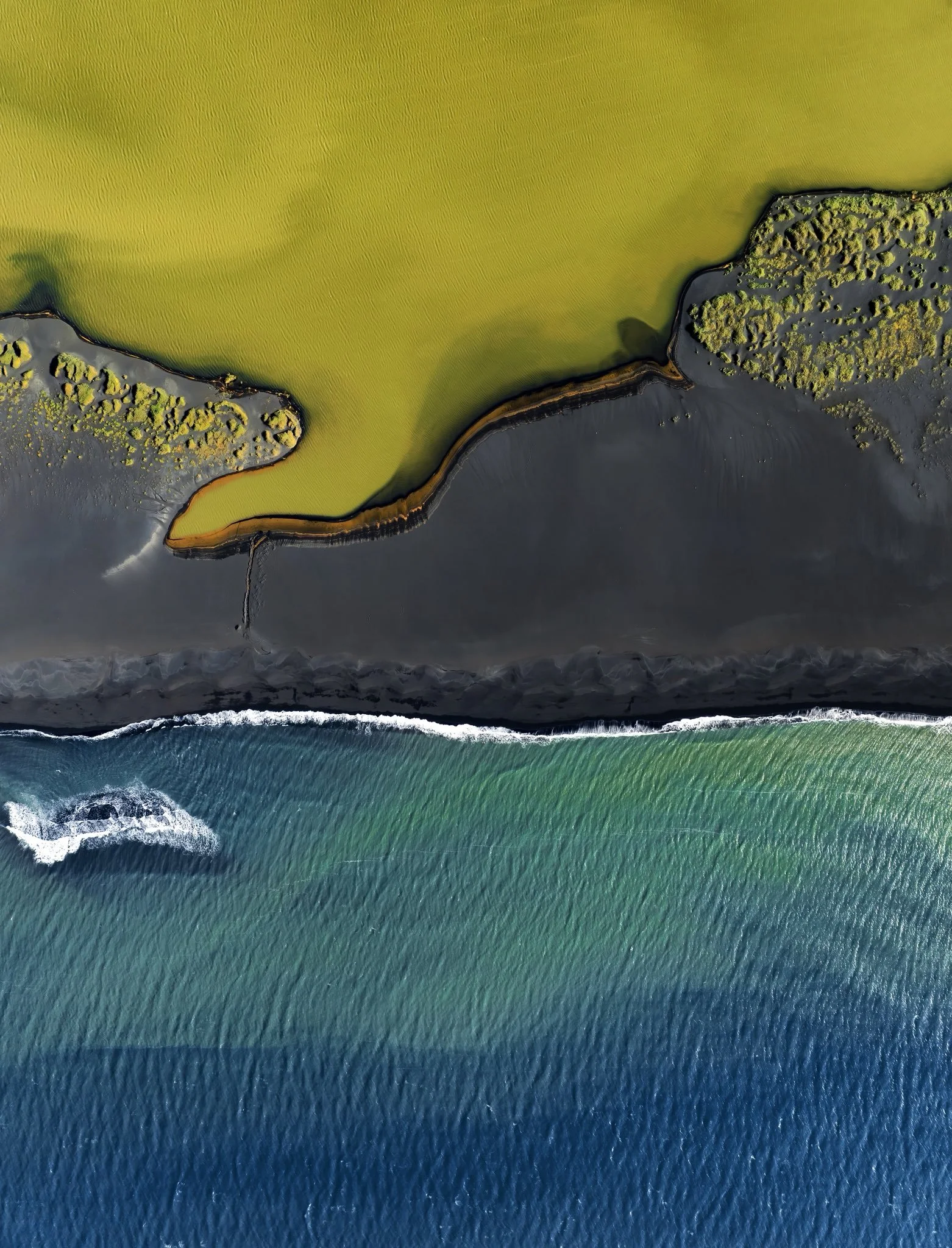
Rakesh Pulapa, Liquid Canvas, 2025. Courtesy of the chrisroc Collection and the artist.
KV: When you look at your collection as a whole, do you see a unifying theme or more a reflection of different phases?
chrisroc: One unifying thread is definitely crypto-native values. The 6529 messages around freedom to transact, self-custody, CC0 and contributing to the public domain, that runs through a lot of what I own. But there are exceptions. I also gravitate toward what you might call bold character pieces. One non-obvious artist in my collection is Goldcat, I don't want to compare her to anyone, but I think bold brushstrokes, figurative work, capturing a face or a pose in a way that's somehow obvious and not obvious at the same time. That's also a common thread.
And then there's a certain darkness. Not a lot of unicorns and rainbows. A lot of pieces that might evoke stronger emotions, that dystopian, cyberpunk, tech-won't-save-us attitude resonates with me. That's a theme too.
KV: What do you actively avoid collecting?
chrisroc: The first twelve months were wild. I came in via Moonbirds, bought a couple of other PFPs, flipped them, made money, lost money. Right now I pretty much avoid PFPs. I avoid anything highly dependent on a centralized team executing a roadmap, no utility, no promises is ideal. XCOPY is the perfect example of what I like: CC0, no roadmap, no promises. I could actually see myself eventually buying into some of the OG PFP collections, because I think they've been de-risked, they're at fair value and they're not going anywhere. If you do a retrospective in ten years, you'll probably still be looking at the same five collections. Owning a piece of that culture might be worth it.
In terms of format, I'm not much of a generative art or AI art collector. I need to like the artwork first, and the works I gravitate toward evoke strong emotions. They're stark, in-your-face. And I love GIFs. For me, a GIF is the perfect digital-native primitive - it couldn't exist outside the digital world, but it still allows you to draw a character, make a statement, capture something. That's probably my favorite format.
KV: Crypto art is native to the internet, but not necessarily permanent. What does long-term preservation of NFT art actually require?
chrisroc: On-chain art without dependencies on external infrastructure will be around as long as Ethereum is around. If Ethereum is no longer around, we probably have bigger problems anyway. I'm less concerned than many people about the metadata debates, IPFS, pinning, all of that. I think ultimately what carries value is the provable connection to the artist, the smart contract, the tokens, the ownership record. Let's say some artwork was to disappear. We'd still have the contract. We'd still know the ten owners. The internet would find a way to reconstruct the rest. What really matters is being able to go to Etherscan and see: here are the ten owners of the token that once was Last Selfie.
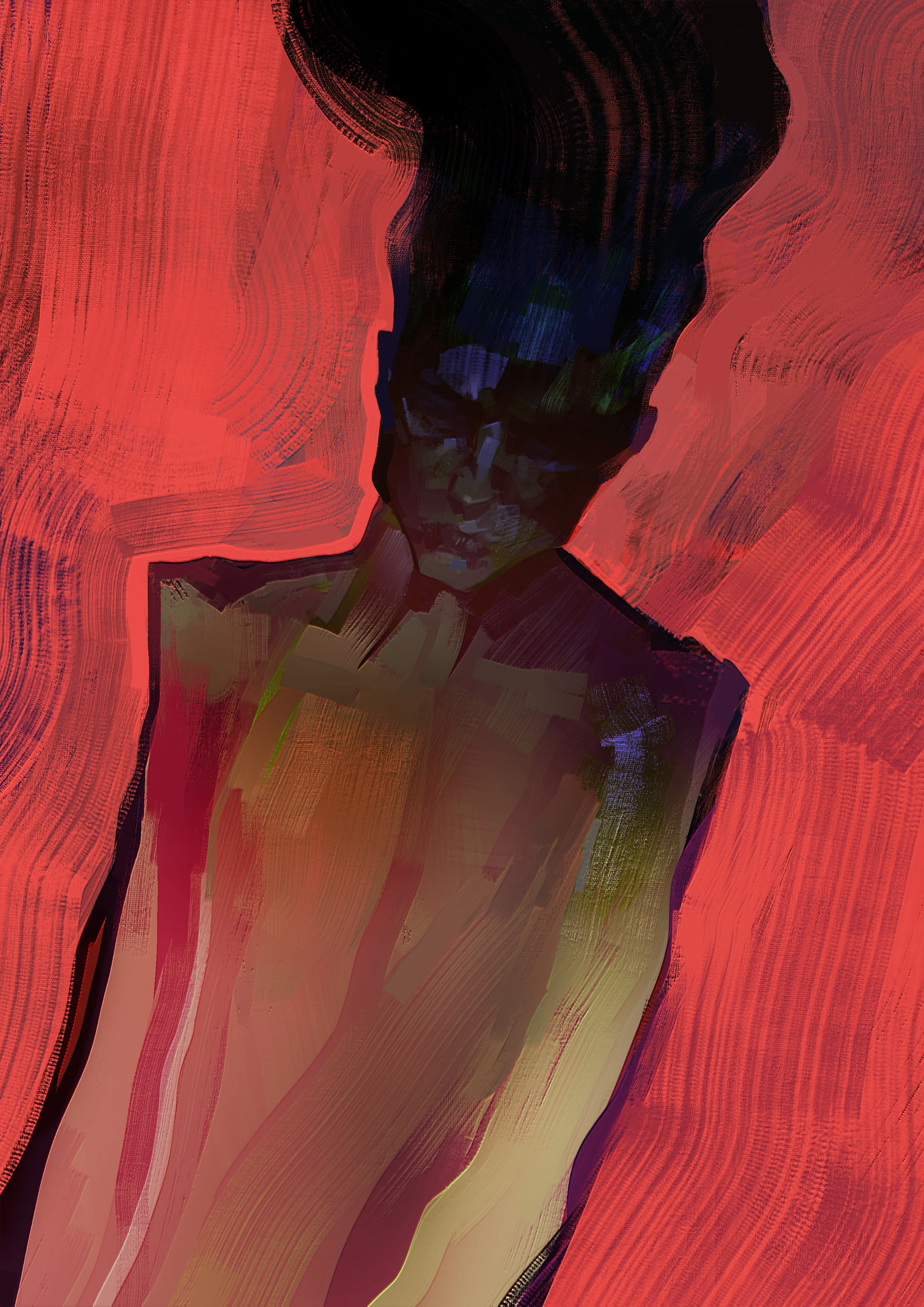
Goldcat, Memories of Nothing, 2022. Courtesy of the chrisroc Collection and the artist.
KV: You sound like a fairly committed Ethereum maximalist. What about other chains Tezos, Solana?
chrisroc: That is absolutely correct. I have a few pieces on Tezos, particularly from Goldcat, she was very active there before Ethereum moved to proof-of-stake. And XCOPY did mint on Tezos. But I would not put five figures anywhere other than Bitcoin or Ethereum right now. On Bitcoin, the chain simply isn't perfect for art, there are great ordinals, I own some, but it's not ideal. Ethereum is the gold standard for anything I consider genuinely valuable. Solana? no.
KV: The early internet was also decentralized and unregulated and look where that ended up. Inevitable centralization, controlled by the Big Five. Do you see a similar trajectory for crypto art and Web3? And what happens when some gatekeepers starts dictating what counts as legitimate on-chain art?
chrisroc: I see a future we have to keep fighting for. When 6529's mission was born, there were serious concerns that the metaverse would become a closed, privately owned system. That concern hasn't gone away, it's just taken new forms. What I still believe in, even if it sounds unfashionable now, is an open metaverse on decentralized rails that allows people to have sovereign ownership of digital goods.
“AI is an incredibly centralizing force. Blockchain can be an incredibly decentralizing force. Both need to be in balance.”
- chrisroc
The UK restricting under-16s from social media, AI labs being pressured to cooperate with governments, Anthropic's content decisions, all of it points toward why a digital space where you can stay anonymous, coordinate around a common goal, allocate funds, and remain resistant to censorship actually matters. That's what 6529 is trying to build. The decentralized network state isn't a cringe idea. It's a necessary one.

Larva Labs, CryptoPunk #7143, 2017. Courtesy of the chrisroc Collection and the artist.
KV: You own The Swimmer, a physical sculpture by Goldcat. How do you think about physical counterparts to digital artworks?
chrisroc: The only thing that would be a problem is if, somehow, the 1-of-1 token were duplicated, if there were suddenly ten tokens you couldn't distinguish. But a sculpture, a print, a 3D model on Tezos, none of that affects what I own. I'm not a big believer in the IP ownership and monetization frameworks that became popular in some PFP communities. If an artist wants to release prints, I'd want to buy one. A print is just another way to display something I care about.
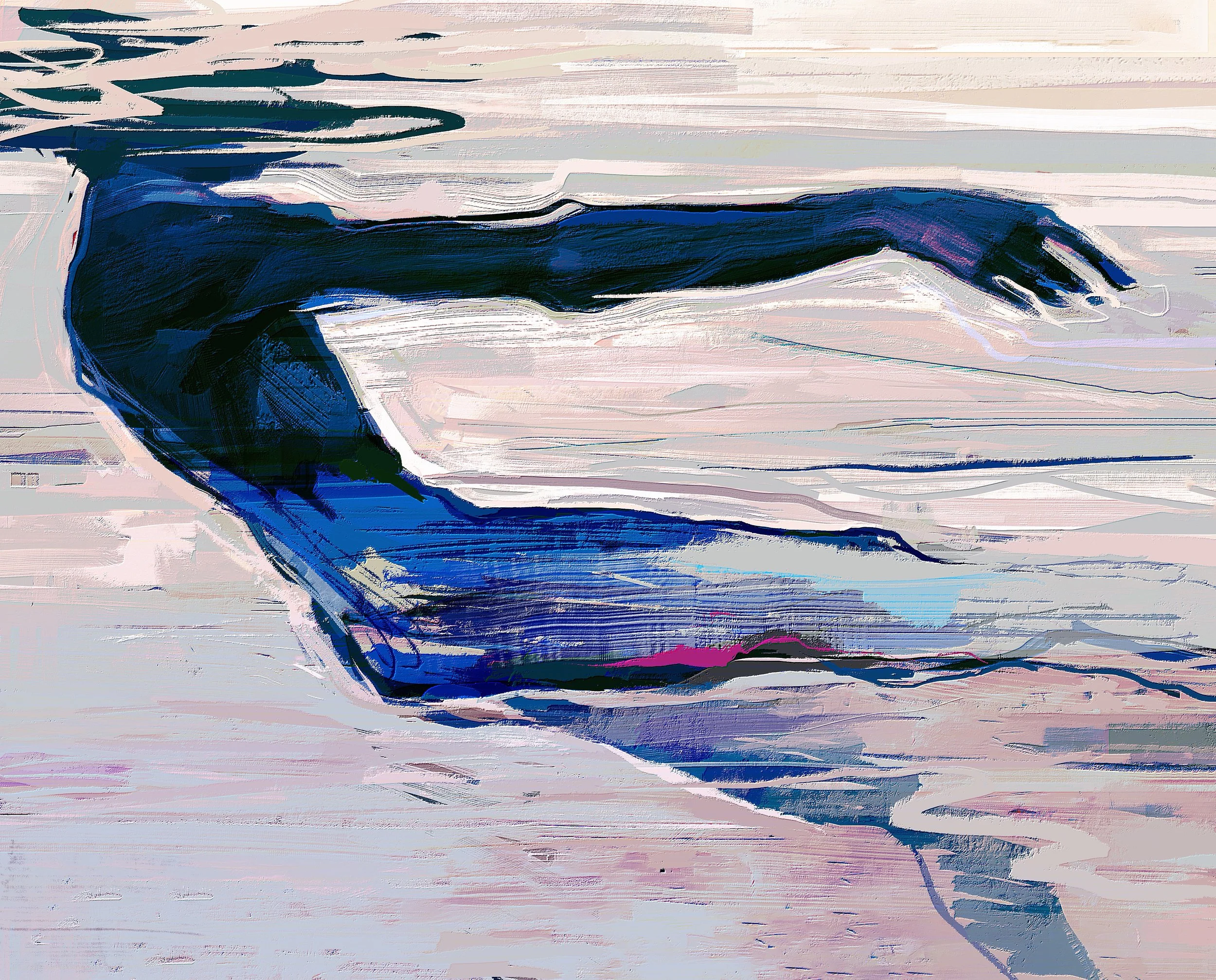
Goldcat, The Swimmer, 2022. Courtesy of the chrisroc Collection and the artist.
KV: What's missing from your collection? What are you currently hunting for?
chrisroc: There's always something missing. I think at some point I'll need to go to secondary and buy an edition of the Doomed.
KV: Describe your collection in three words.
chrisroc: Curated. At the beginning I was flipping things, putting whatever in my vault. By now it's really important to me that if I put something there, I genuinely like it.
Depth. I think of my collection as having deeper spikes rather than very broad coverage. XCOPY is a pillar. Goldcat is a pillar. The Memes are a pillar. If it weren't for the Memes, I probably would have collected works by fewer than twenty artists. I like focused verticals.
Crypto-native. The social commentary, the crypto commentary, the message in the Memes, the way XCOPY works - that's the thread running through everything.
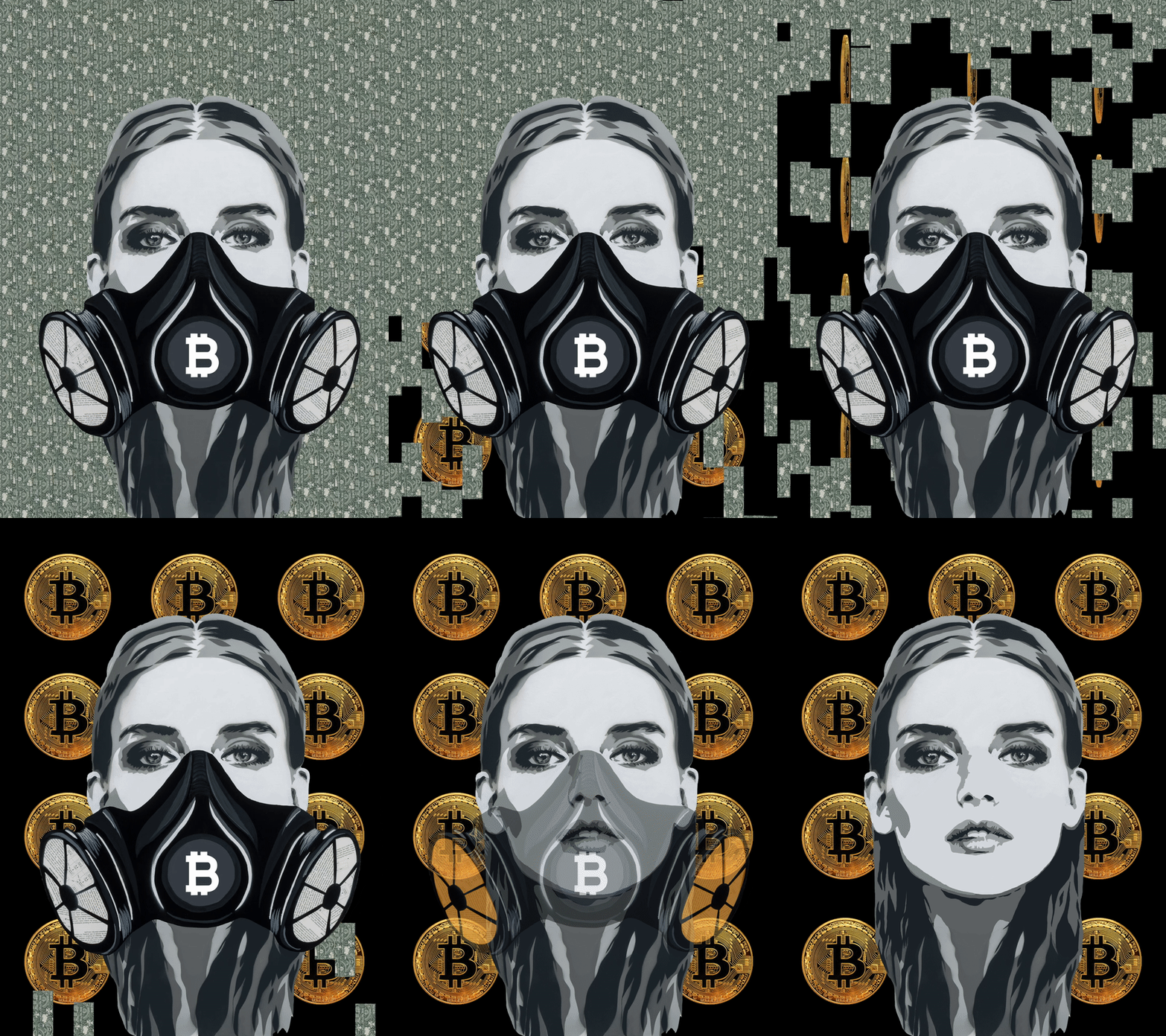
Josie, Filter #22, 2021. Courtesy of the chrisroc Collection and the artist.
Featuring artworks by XCOPY,Sam Spratt, Rakesh Pulapa, Goldcat, Larva Labs, Josie, Botto, Lewis Osborne and 6529er
chrisroc X: https://x.com/ChrizRoc
Collections: The Memes by 6529 , Opensea
This is a short excerpt from the interview. The full conversation will appear in the Public Edition of Collecting Art Onchain book. Pre-orders are now open. 250 limited edition.