
In a Conversation with Mdiac
An interview by Kate Vass
There is a particular kind of collector who does not accumulate, but goes deep rather than wide, treating a single artist’s body of work as a lens through which culture, markets, psychology, and systems become legible.
Mdiac is that kind of collector.
Raised around art, drawn into the on-chain world in 2021 through instinct and community, he has since built a considerable collection, joined Hivemind to help shape the Digital Culture Fund, and co-founded Lightyear to address the infrastructure gaps the market still struggles to solve on its own.
This conversation follows that arc from Francis Bacon to XCOPY and asks what it really means to go deep.
This interview was conducted by Kate Vass, and the full version will appear in the forthcoming Public Edition of Collecting Art Onchain.
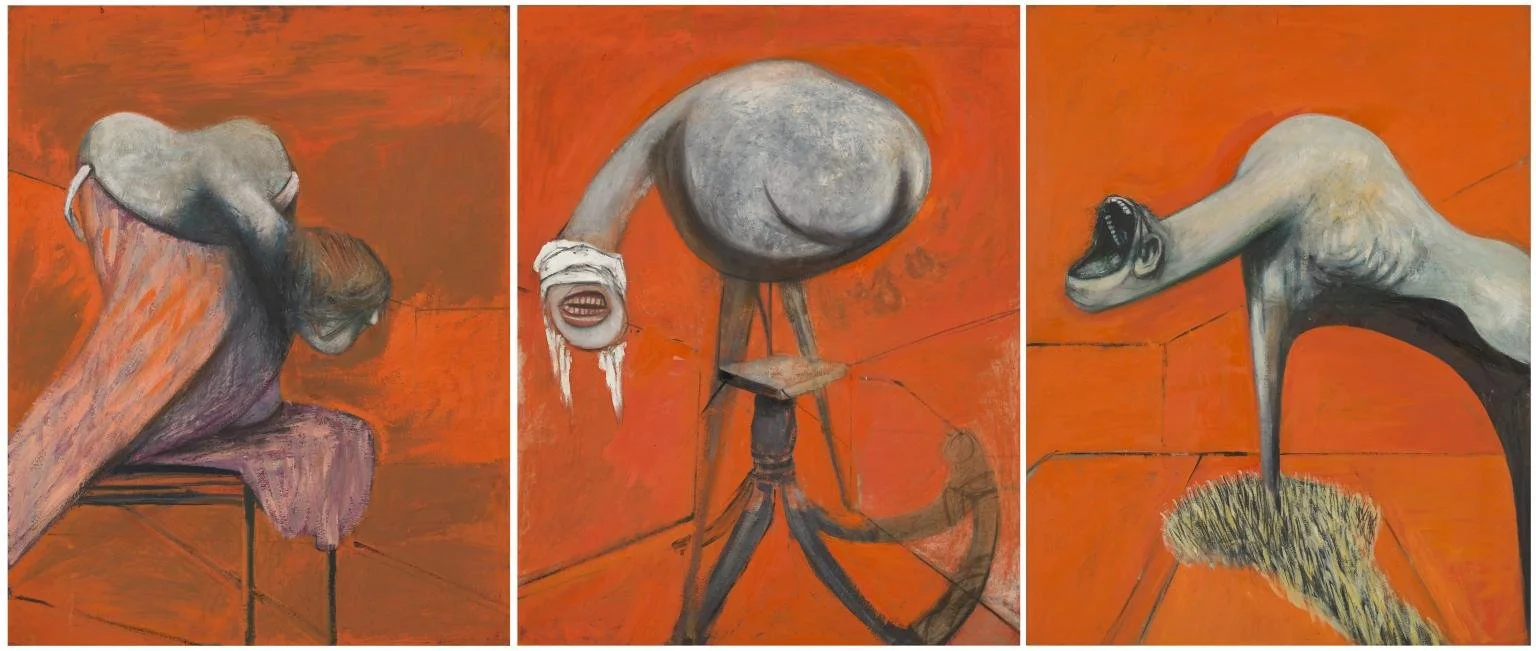
Francis Bacon, Three Studies for Figures at the Base of a Crucifixion, 1944. Courtesy of the Tate London Collection.
Kate Vass: Did you collect art before entering the on-chain space?
Mdiac: I grew up around art. I come from a family of artists, a long lineage on my mother's side, predominantly watercolorists. My mom is a wonderful botanical watercolorist. My siblings draw. My dad is very artistic. But I never felt it flow to me, so I never developed that as a practice.
I started growing a greater appreciation for art when I moved to London about fifteen years ago. Being able to see Turner in person, and fully appreciate what I grew up around, was special for me. Artists like Francis Bacon were really impactful.
I was the more capitalist-minded one - I wanted to go into business and finance. I was always into collecting as a kid, football stickers and Pokémon cards, but never collected art until I entered the on-chain space.
KV: What drew you into NFTs initially? Was it technology, markets, or culture?
M: It was the end of JPEG summer, August 2021. I'd missed the first run on Art Blocks, missed Bored Apes, and Mutant Apes were about to launch. There was a lot of vibrancy. But what really drew me in wasn't the art first, it was the idea of being in online groups talking collectively about moments and culture, and being able to own and trade it. That was instinctively interesting to me.
I'd been in crypto since 2018, but I found it a bit directionless until I understood Ethereum smart contracts, the ability to use ETH as a currency itself rather than just a speculative asset. The fact that you could buy and sell other items on-chain with verifiability, with other people involved, really just clicked.
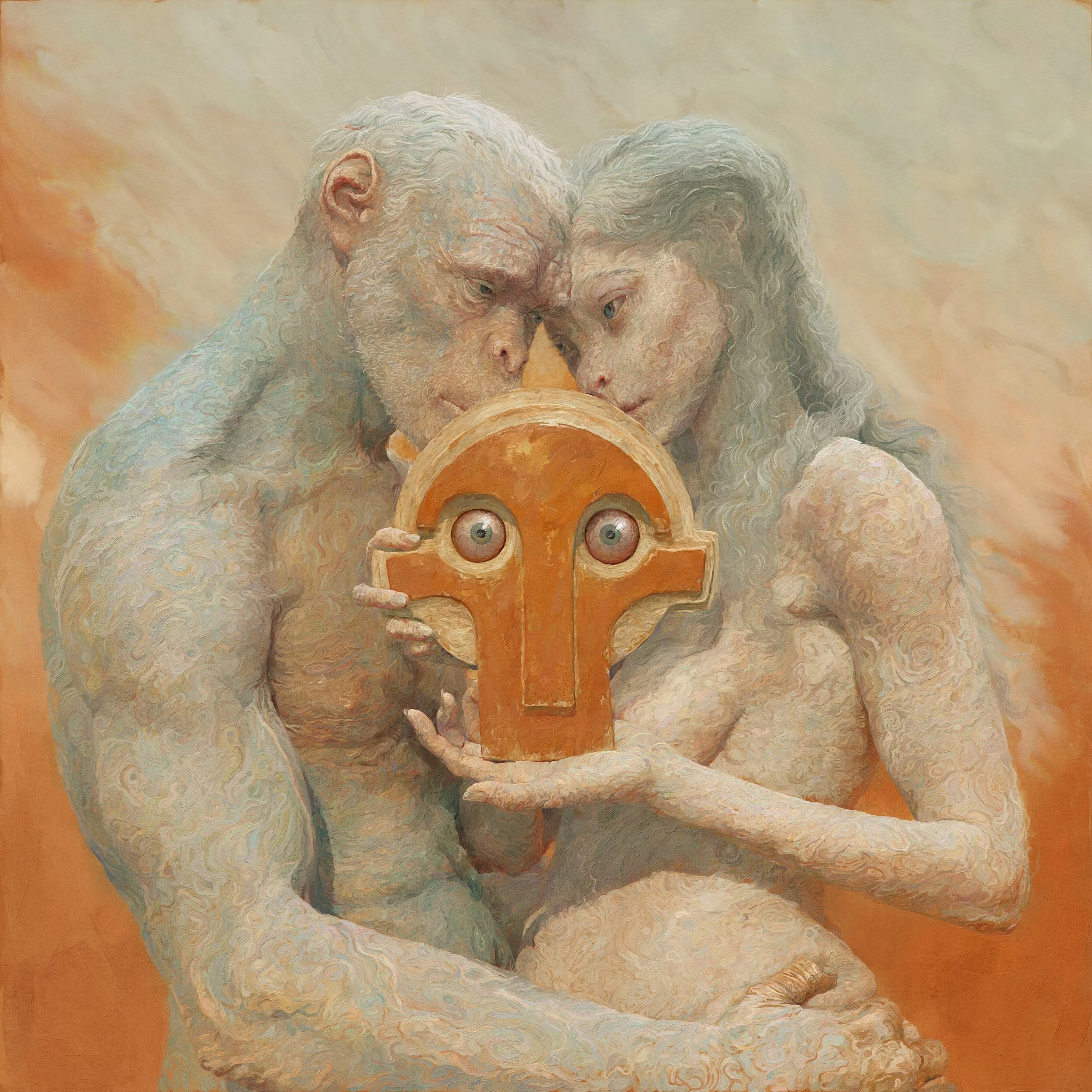
Sam Spratt, Player #43/256, 2023. Courtesy of the Mdiac Collection.
KV: At that early stage, were you thinking like a collector or more like a participant in a new system?
M: Very much a participant for at least the first year. I collected through communities, through the likes of Noble Gallery, where I liked the ability to collect alongside other people with the artist available to explain their practice. But over time I realized that while that's a great way to access many artists, it doesn't allow you to explore your individual curiosity, because the work's being curated to you rather than you independently considering what you want.
What I really craved was networked participation, contributing to the artwork by participating with it, altering the metadata. Sam Spratt's Monument Game, Jules and his Birds collection. There was even a transitional moment I remember clearly: I sold my Mutant Ape ten minutes before I minted my Player by Sam Spratt, and used the rest to buy a Winds of Yawanawa and a physical print from a.c.k.. In my mind, that was the moment I put aside collecting at scale and focused on what interests me.
KV: What first drew you to XCOPY, and when did it shift from observation to belief?
M: I was almost drawn to the descriptions and the language before the images.
There's a misanthropic comedy to the work - absurdist, nihilistic, but always with a title that contextualizes it to a specific moment. I'd never seen the rawness of an artwork contextualized to an individual moment with a title as a reference point. That's the benefit of on-chain metadata, it's available, it's part of the work.
The cultural impact clicked a bit later when I went down the Tumblr rabbit hole. He'd been experimenting for years, with different visual approaches, different frame rates, different themes. I found that technically interesting. The evolution from early collage work to very political work. I don't think people appreciate how political XCOPY has been across his career in 2016, going hard against Brexit, against US politics, how he felt it was impacting the world economically and environmentally.
Looking back through works like Overlord, Deathless, Evader, Hope, Broken, the Covid-era pieces, I could get a sense of who he is and what he was going through.
"There's a misanthropic comedy to it - absurdist, nihilistic, but always with a title that contextualizes it to a specific moment. I'd never had rawness like that given a reference point before." - Mdiac
KV: You've written about XCOPY. What's driving that impulse?
M: One of the greatest features of digital art is the availability of the artist, you can have a direct relationship, speak with them, commission them, ask questions. That relationship strengthens the emotional bond to the work, but the viewer's ability to interpret independently gets weaker through authored interpretation. You're being almost told what to feel.
XCOPY is different. He has that vast body of minted and unminted work to reference, but he releases pieces without a statement or thread explaining process or symbolism. Often the work relates to a theme or moment that has personal relevance to him, but also to the viewer, like The State of Us, like Doom, like Panic Stations. This gives the viewer a genuine chance to interpret both what it means to them, but also what it might have meant to XCOPY at the time. There's no authorized version to refer to.
It's almost like the CC0 license he extends to the artwork is extended to the observer too. Pieces that come pre-explained to you often flatten with repeated viewing, there's not as much depth to keep looking for. With XCOPY, I can look at a piece, I might be entirely wrong with my interpretation, but it doesn't matter. It's open. It's CC0.
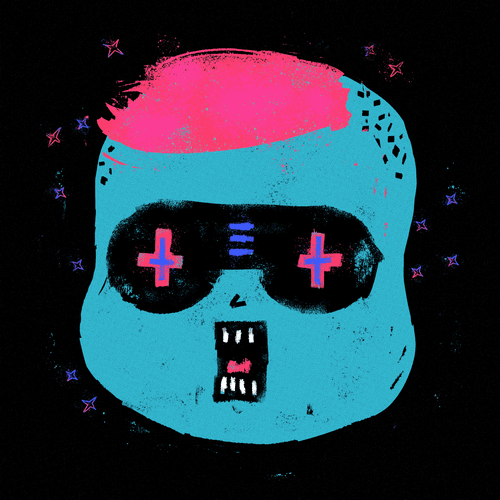
XCOPY, Grifter #441, 2021. Courtesy of the Mdiac Collection.
KV: If your XCOPY collection were distilled into a single work, what would it be about?
M: It would be something that defines this current period, being a collector of illiquid JPEGs online in the twenty-first century. Honestly, it's not far off from Grifters. The idea of Grifters and how it sums up the space, the collectability of PFPs, the language used around it. I'd probably sum up my collection and my view on NFTs within a Grifter.
“I'd probably sum up my collection and my view on NFTs within a Grifter.” - Mdiac
KV: When did you join Hivemind and what is your role there?
M: I joined in January 2025. The fund itself was launched in early 2024, so there had been significant collecting already done over that period, including some works from the 3AC liquidation auction. I joined to collect for the Digital Culture Fund, while also managing the portfolio day-to-day.
KV: You operate at the intersection of trader and curator. How do you reconcile those two modes?
M: For Hivemind, I consider myself a collector first, but it is relevant to separate the roles within collecting. I'm a curator when it comes to selection and a trader when it comes to price and execution. It's important to have both - a pure trader will focus too much on the deal over whether we should own the piece, and a pure curator will overpay out of emotion.
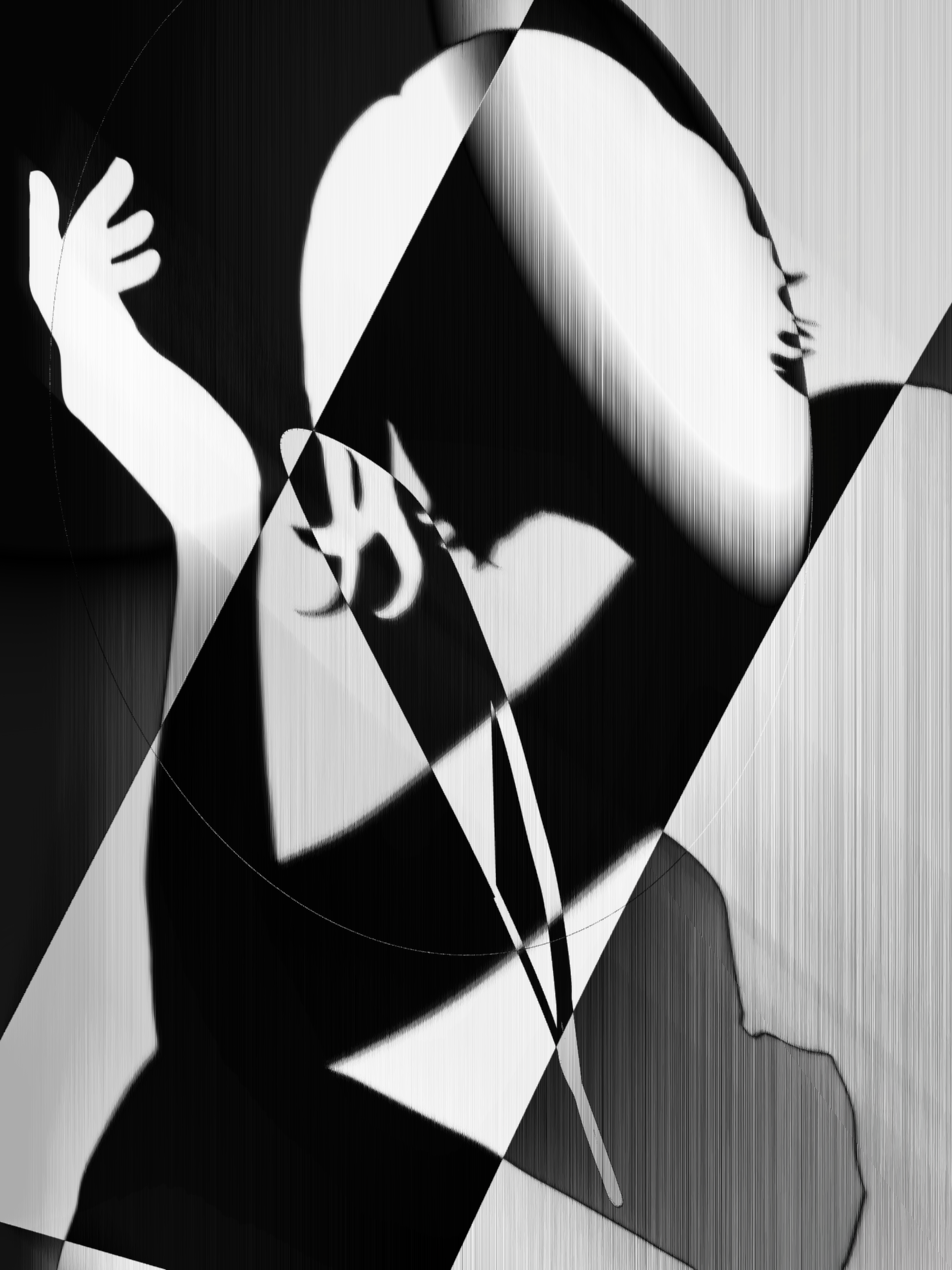
Operator, Human Unreadable #124, 2023. Courtesy of the Digital Culture Fund Collection.
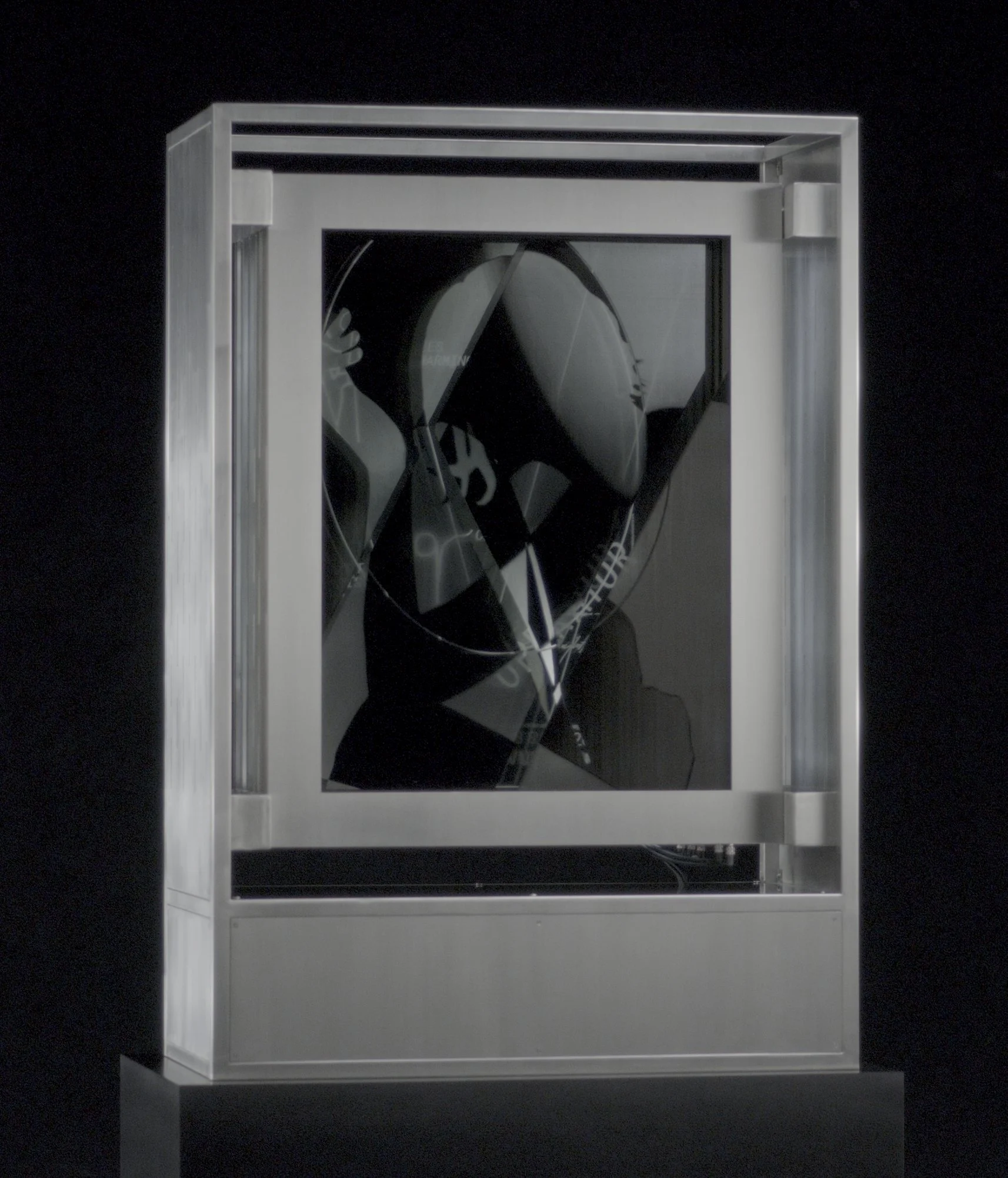
Operator, X-ray Machine - Human Unreadable #124 (physical), 2025. Courtesy of the Digital Culture Fund Collection.
KV: What convinced Hivemind that digital art deserved its own category, not just part of the broader crypto narrative?
M: Richard and Matt are collectors themselves, of art and digital art, but they also understand markets. There was a personal interest, and there was an awareness that wealth has always flowed into culture. We're at the beginning of the largest wealth transfer in human history, from boomers to digital natives. Crypto itself created enormous new wealth on-chain, which is in large part staying on-chain.
When crypto crashed in 2022, few things held as well as top digital art. You could see the Lindy effect and parallels come into play. These digital assets are a store of value. They're a flex for those who've created wealth on-chain. They're a way to own internet culture. And it became clear that digital art assets were solving structural issues that have always plagued traditional art - provenance, liquidity, access, verifiability.
KV: When you began building the Digital Culture Fund, what was the core mission?
M: Part of the mission was to contribute to the maturation of the on-chain economy and to the thinking behind how digital art assets should be structured. But the primary goal was to build a museum-worthy collection. We wanted to create something unique and special that exemplified the core themes and chapters of the digital art movement. We started with an ideal end state, with eight to ten core artists curated top-down, which has allowed our collecting to be disciplined.
KV: You use the term vertical versus horizontal collecting. Can you explain what you mean?
M: I possibly just invented it on the fly. [laughs] The way a lot of people collect is to collect one or two or five pieces by many different artists. A diversified, horizontal approach. That's great for exposure to as many styles as possible and supporting many artists.
For our structure, you need to be a lot more disciplined and focused. Rather than spreading thin, we go much deeper into individual artists, finding rare, iconic works that are difficult to own, and collecting down from there.
For a.c.k., we own the five Piano Blossoms auctioned at his first solo show in Amsterdam in October 2024, plus kissed by the Moonlight as a supporting one-of-one built around a ‘blossoms’ theme. For Sam Spratt, we have two Skulls of Luci and two Masks of Luci full sets. For XCOPY, five one-of-ones and twenty-five Grifters. For Operator, their large-scale Human Unreadable X-ray Machine and we’re top holders of the Human Unreadable collection.
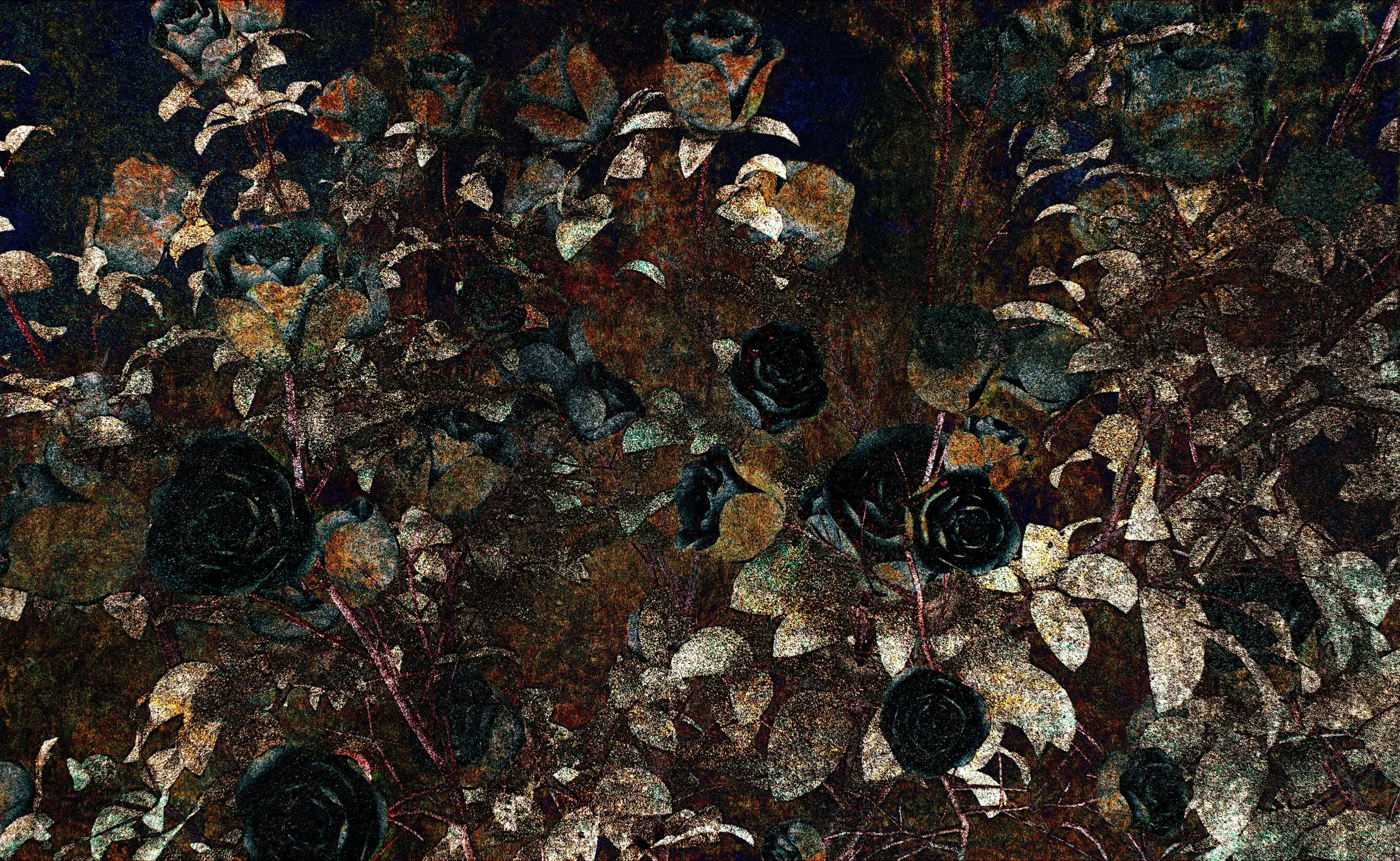
a.c.k., kissed by the Moonlight, 2023. Courtesy of the Digital Culture Fund Collection
KV: How do you make decisions on great works, for Hivemind and for yourself?
M: With Hivemind, we’ve got structures in place to make decisions faster. We know the types of artworks that fit best within our collection. We often see beautiful works at a great price that we’d objectively love to own, but if it doesn’t stylistically fit or we’d struggle to go deeper into an arc or artist, we’ll pass. Every acquisition needs to look organic within the collection we’re building.
For myself, it’s much more emotional. My mood, taste and liquidity fluctuate with the market. I don’t have an end goal for my personal collection, so I’m a lot more reactive to opportunities that capture me.
KV: How do you distinguish cultural value from momentum in a market where attention, price, and narrative all move together?
M: The first signal is time. The 2022-23 drawdown was a very clean filter for the market. Those that survived best now have staying power and are beginning to become more Lindy. Closely related to timing is who is buying - collectors with long-term conviction, liquidity, market experience. Momentum traders don't tend to show the same traits as long-term conviction collectors.
Underneath that, there are quality signals that tell you whether the work is strong enough to build cultural value. Is it clearly by a certain artist and coherent within their wider work? Does the work have supply discipline while supporting a healthy collector base? Is it legible to a non-web3 audience. Does it innovate and is the work secure.
If you can find artworks that tick across several of these signals, I think you're onto something that will still be relevant and desired in years to come.
KV: What is still missing from the Digital Culture Fund? Where are the gaps?
M: We're still focused on the ten artists we have currently. There are thematic gaps we're looking to fill. When I speak to artists we don’t yet collect from, I like to ask: 'What would a curated arc of your work look like?' Several of the artists we collect, like Operator, have important works coming out this year. I'm a very strong fan of theirs, and I think they have a very interesting practice flowing across both traditional and Web3 spaces.
KV: What led you to build Lightyear?
M: Lightyear is building on a simple observation: unique assets - whether digital art, collectibles, or tokenized real-world items - don’t have the pricing infrastructure that fungible markets take for granted. If you’re trading ETH, there are a hundred places to get a reliable price. If you’re trading a Punk or a tokenized graded card, you’re mostly guessing. This will be even more important in the coming years as activity shifts further towards the agentic economy.
We’re building that missing layer, starting with digital assets because the data is on-chain, permissionless and we have a lot of proprietary data to apply on top. Punks Terminal is our first product, built on top of existing CryptoPunks infrastructure, with an API for agents coming next. The same engine that prices an NFT can price any asset.
KV: Where are the biggest inefficiencies today?
M: Data unavailability first - for new collectors especially, there's a lack of actionable data. Several platforms have closed in recent months and years. Artacle was a great reference point. Reservoir provided a lot of necessary data. We’re hoping Lightyear can play a role here.
ETH volatility is a real barrier too. Whether you price in ETH or USD is often attached to capital cost basis. To make the space accessible to new participants, we need to recognize the importance of dollar pricing. That's a structural inefficiency. The main feature we need to preserve is the crypto rails and the culture. I don't think the currency is as important as some people say.
And then there's what I'd call toxic positivity, and toxic negativity, in the space. Neither creates conditions where serious work can be seriously discussed. There are fears of offense that prohibit honest discussions around royalties, provenance, pricing, ETH volatility. A bit more freedom of speech would benefit us.
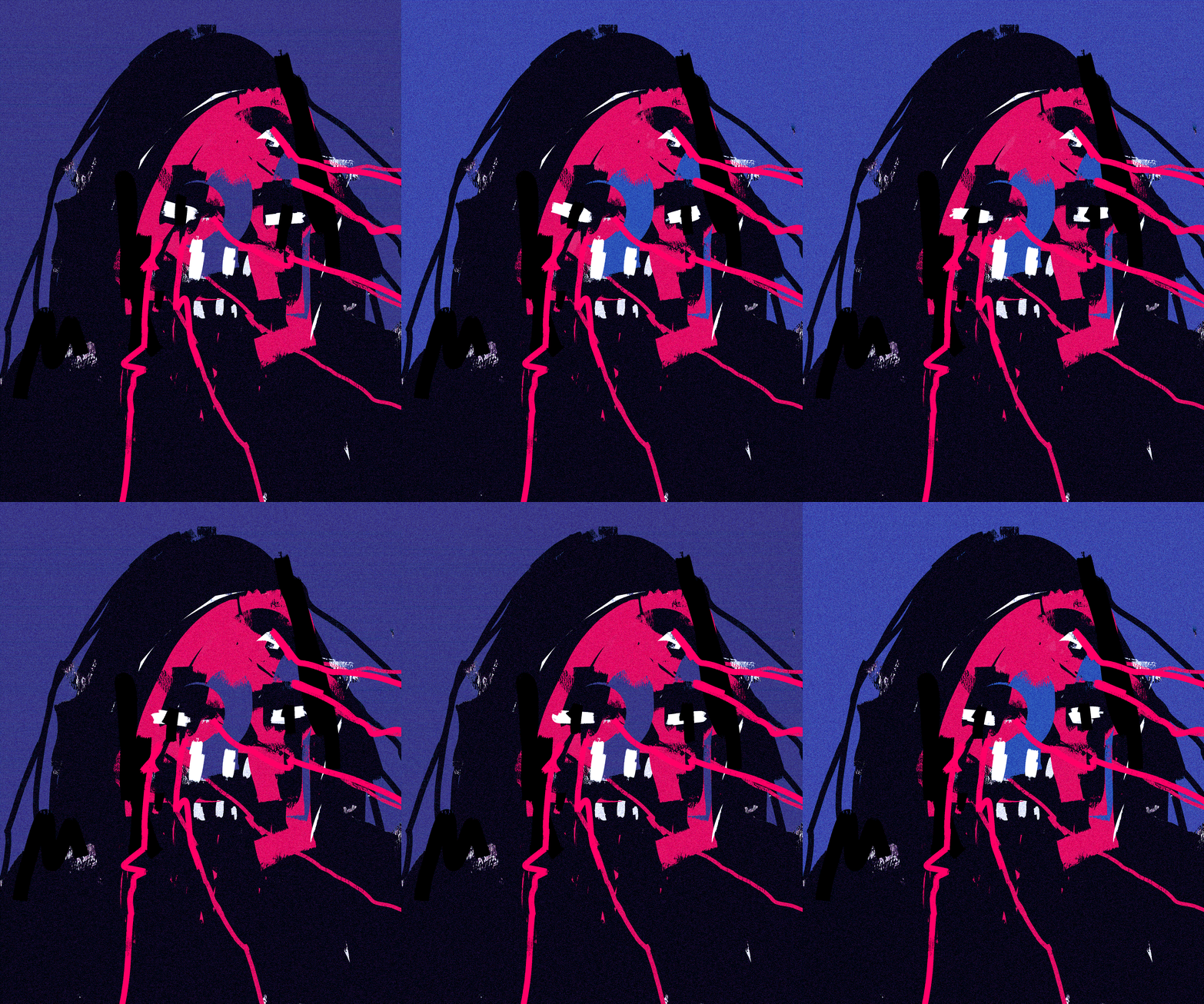
XCOPY, DANKRUPT, 2021. Courtesy of the Digital Culture Fund Collection.
KV: Back in 2018 and 2019, much of this space was deeply skeptical of traditional art institutions. What's changed?
M: People have recognized that building within the crypto Twitter echo chamber isn't enough. If we want to be taken seriously, which I fully believe we are beginning to be, and have our own place within the canon of contemporary art, we do need external validation. We need to give art institutions the ability to interact and explore their curiosity around the space.
When people talk about institutional recognition, a lot of it is around acquisitions and shows. That matters, but it doesn't legitimize a medium by itself. In my mind, what digital art really needs from institutions is upstream of acquisitions.
"What digital art really needs from institutions is upstream of acquisitions, a working critical vocabulary and scholarship that contextualizes the work within contemporary art." - Mdiac
It needs a working critical vocabulary and scholarship that contextualizes the work within contemporary art and as a canon of its own. Most writing, my own included, is a market commentary and artist hagiography. It builds things up, it's personal, but it's not criticism, and it doesn't engage seriously in the lineage of the work. You need to talk about XCOPY's lineage before Tumblr, and how it connects to art across the last century. That full contextualization will distinguish strong work from weak. Institutions aren't the arbiter of what matters, that was the concern before, and their main role here isn't to say whether something is good. It's to facilitate serious discourse and sustained critical engagement that we just don't currently have.
KV: And what are you still searching for personally?
M: I'm very much reactive. I'd love to own a CryptoPunk for myself, which is an easy answer. There are lots of on-chain and dynamic and participatory works that I have my eye on. I’ll have a clearer mind for future acquisitions once I’ve secured a Starry Night by a.c.k.
Xxx
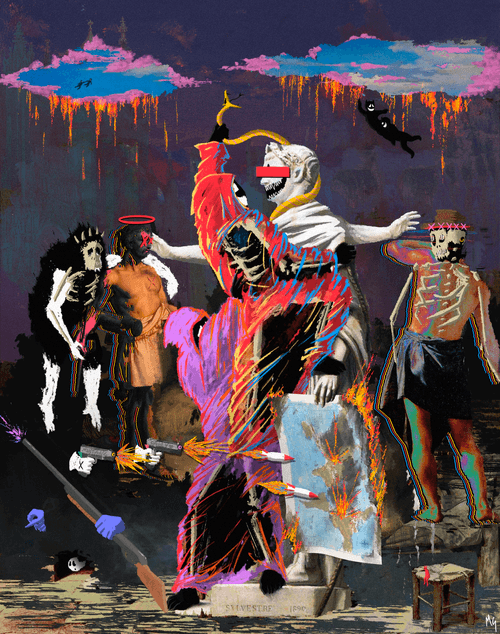
Other World, STAIRWAY TO HEAVEN, 2022. Courtesy of the Mdiac Collection.
Mdiac is a collector and co-founder of Lightyear. He manages the Digital Culture Fund, focused on building a museum-quality collection of native digital art. This interview was conducted by Kate Vass for Collecting Art Onchain book (public edition).
This article features artworks by Francis Bacon, Sam Spratt, XCOPY, Operator, a.c.k., and Other World.
This is a short excerpt from the interview. The full conversation will appear in the Public Editionof Collecting Art Onchain book. Pre-orders are now open. 250 limited edition.