
The Interview I Art Collector thefunnyguys
As part of my ongoing project Collecting Art Onchain - an initiative dedicated to documenting and preserving blockchain-native culture through conversations with early collectors, I sat down with thefunnyguys (TFG), an early generative art collector and the co-founder of Le Random and Raster.art.
thefunnyguys belongs to a generation of collectors who entered the space through experimentation with crypto, NBA Top Shot, pure curiosity and gradually moved toward generative art not as a trend, but as a conviction.
His trajectory mirrors the maturation of the field itself: from personal acquisition to institutional framing, from participation to infrastructure-building. Through Le Random, he has helped shape one of the most historically conscious generative art collections operating today, spanning pioneers of the 1960s to contemporary on-chain artists. Through Raster, he addresses one of the most pressing structural challenges in digital art: fragmentation and cross-chain legibility.
What emerges in this conversation is not a collector chasing legacy, but someone responding to gaps in context, in infrastructure, in continuity. His path reflects a broader shift within the digital art ecosystem: from acceleration to consolidation, from speculation to stewardship.
Before we sat down for this conversation, thefunnyguys asked me a simple but revealing question: why did I call the book Collecting Art Onchain - and not digital art, or contemporary art or else?
It felt like the right place to begin.

Manoloide, plasma004, 2021. Courtesy of thefunnyguys Collection and the artist.
TFG: Why does Collecting Art Onchain focus specifically on blockchain-native art rather than digital art more broadly?
KV: For me, the answer is quite precise. The moment you say “digital art,” the scope explodes: video, net art, software art, decades of pre-blockchain history. It becomes impossible to speak meaningfully about one thing without addressing everything.
What interested me instead was something much narrower - and paradoxically much more radical: the decade in which blockchain introduced digital scarcity, decentralised ownership, and a new social layer around art.
That small signal - which only a handful of collectors picked up early - didn’t just produce artworks. It produced an entirely new ecosystem. A parallel art world: unfinished, messy, still forming, but undeniably real.
But lets focus on you now, how did you engage with the space?
TFG: You entered this space very early and have been part of it longer than most - your curatorial work, and exhibitions that many of us still return to as reference points. Having spoken with so many collectors over the years, I’m curious: when you look at collectors today, what do you think actually connects them?
KV: Curiosity. That’s really the only common denominator.
People often try to identify patterns - background, wealth, geography - but none of that holds or matters. What does hold is curiosity. Early on, this space wasn’t capital-intensive; it was time-intensive. You had to learn how wallets worked, how platforms worked, spend hours in Discords [1], follow conversations that made no sense yet.
If you weren’t genuinely curious, you simply wouldn’t stay.
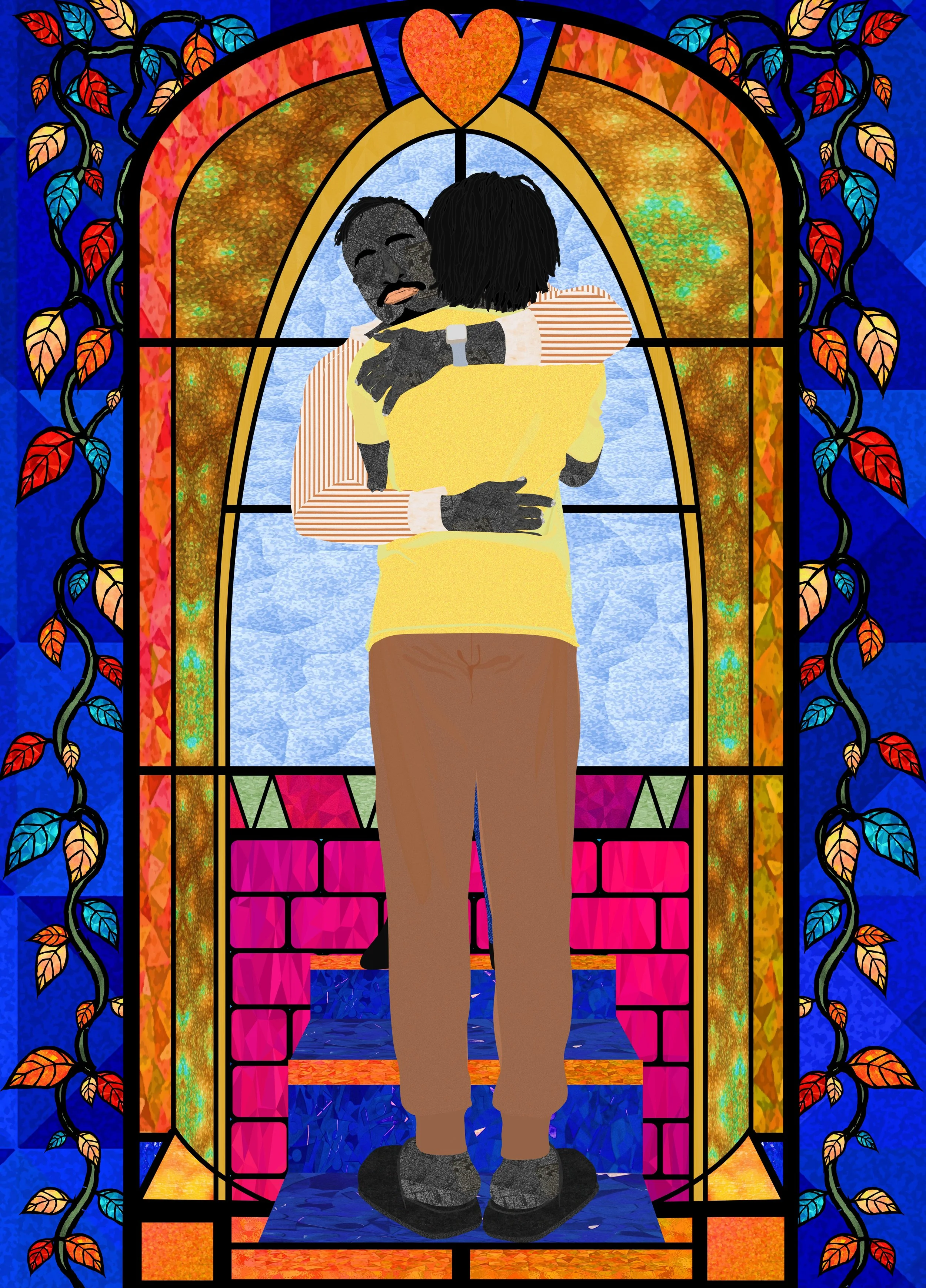
Osinachi, The Embrace, 2025. Courtesy of thefunnyguys Collection and the artist.
TFG: For me, it started with experimentation.
I was already in crypto around 2018, during the ICO period [2], so I was familiar with blockchains, decentralisation, and the idea of digital ownership. But with fungible tokens, it never really clicked. A lot of it didn’t make much sense to me at the time - and looking back, much of it probably didn’t make sense to anyone.
KV: You grew up around art though - traditional art, physical collections. Did that shape how you approached collecting digital work later?
TFG: Very much, but indirectly.
On my mother’s side, art was everywhere. My grandfather collected African and Japanese sculptures, Dutch paintings. The house was full of objects with presence. My mother took us to museums constantly. She still has this childlike awe when she looks at art - and that stayed with me.
At the same time, I never thought I’d work with art. If anything, I imagined that maybe one day, much later, I’d slow down and collect seriously. Instead, everything happened in reverse. I started collecting digital art while I was still at university, then founded Le Random [3], and only later built what looks like a “normal” company.
None of it was planned.
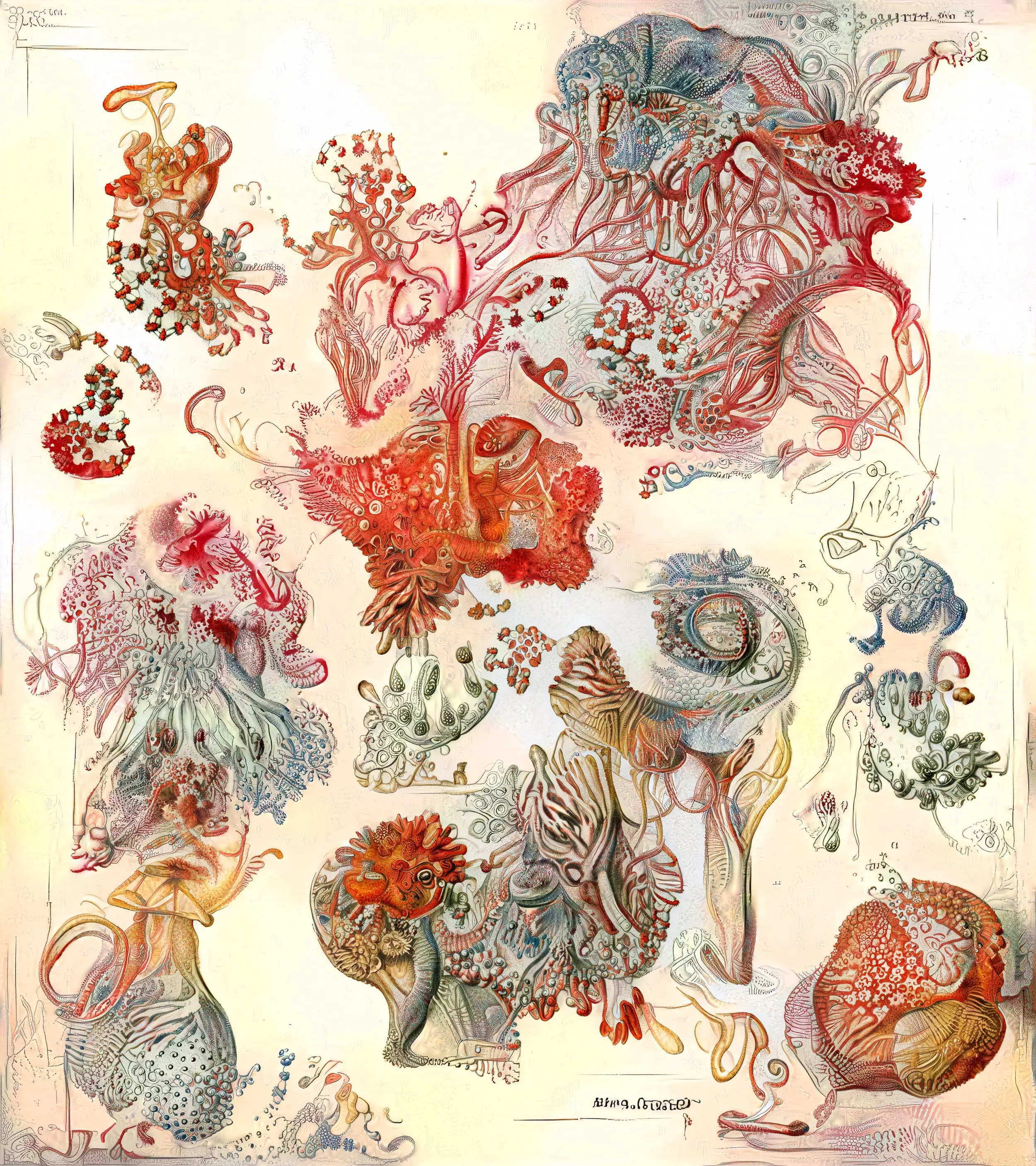
Sofia Crespo, soft_colonies_1898, 2022. Courtesy of thefunnyguys Collection and the artist.
KV: Your first encounter with NFTs wasn’t art - it was NBA Top Shot [4], why?
TFG: Yes. I had been in crypto since the 2018 ICO cycle, but fungible tokens never really clicked emotionally. NBA Top Shot did.
Suddenly, ownership made intuitive sense. A digital object you could own, trade, share globally - always in perfect condition. I’m not a basketball fan, but the logic was undeniable. And being early helped. Most of those were eventually sold, and that capital became the fuel for everything that followed, including the art collection.
KV: You began collecting with your two brothers. How did that evolve?
TFG: At the time, I was collecting together with my two brothers. I was the one who initially discovered NFTs and pulled them in. We explored Top Shot together - deciding which moments to collect, which players mattered. Being three people also increased our chances of getting into early drops.
We were very early. When NBA Top Shot later exploded in early 2021, some of the moments we had collected for relatively little suddenly became very valuable.
But by the end of 2021, the paths diverged. My brothers are doctors - busy lives, different priorities. I became increasingly focused, almost exclusively, on generative art. Eventually, I was the only one still collecting.
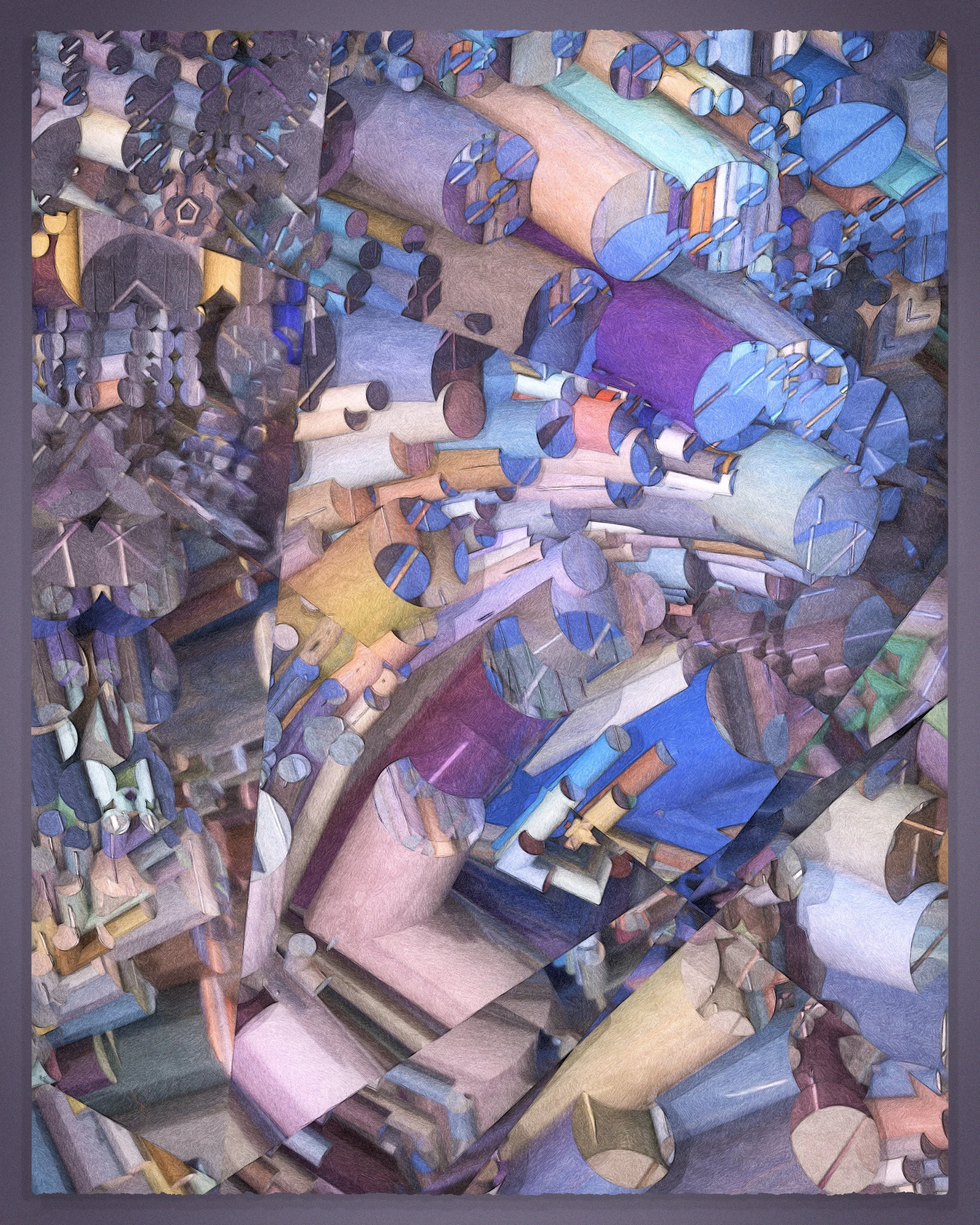
Michael Kozlowski, Tectonics #014, 2022. Courtesy of thefunnyguys Collection and the artist.
KV: From there, you moved into generative art - specifically your first Art Blocks [5] mint.
TFG: That moment changed everything.
I didn’t know what Art Blocks was. I didn’t know who Dmitri Cherniak [6] was. I just saw an announcement about Ringers, minted a few works, and watched the outputs appear. For the first time, art and blockchain were inseparable. The algorithm lived on-chain. The output was derived from the transaction hash. The artwork was literally born from the network.
Compared to projects where someone photographed a painting and sold the image as an NFT, this felt ontologically different. Fully self-contained. Honest.
That was the turning point.
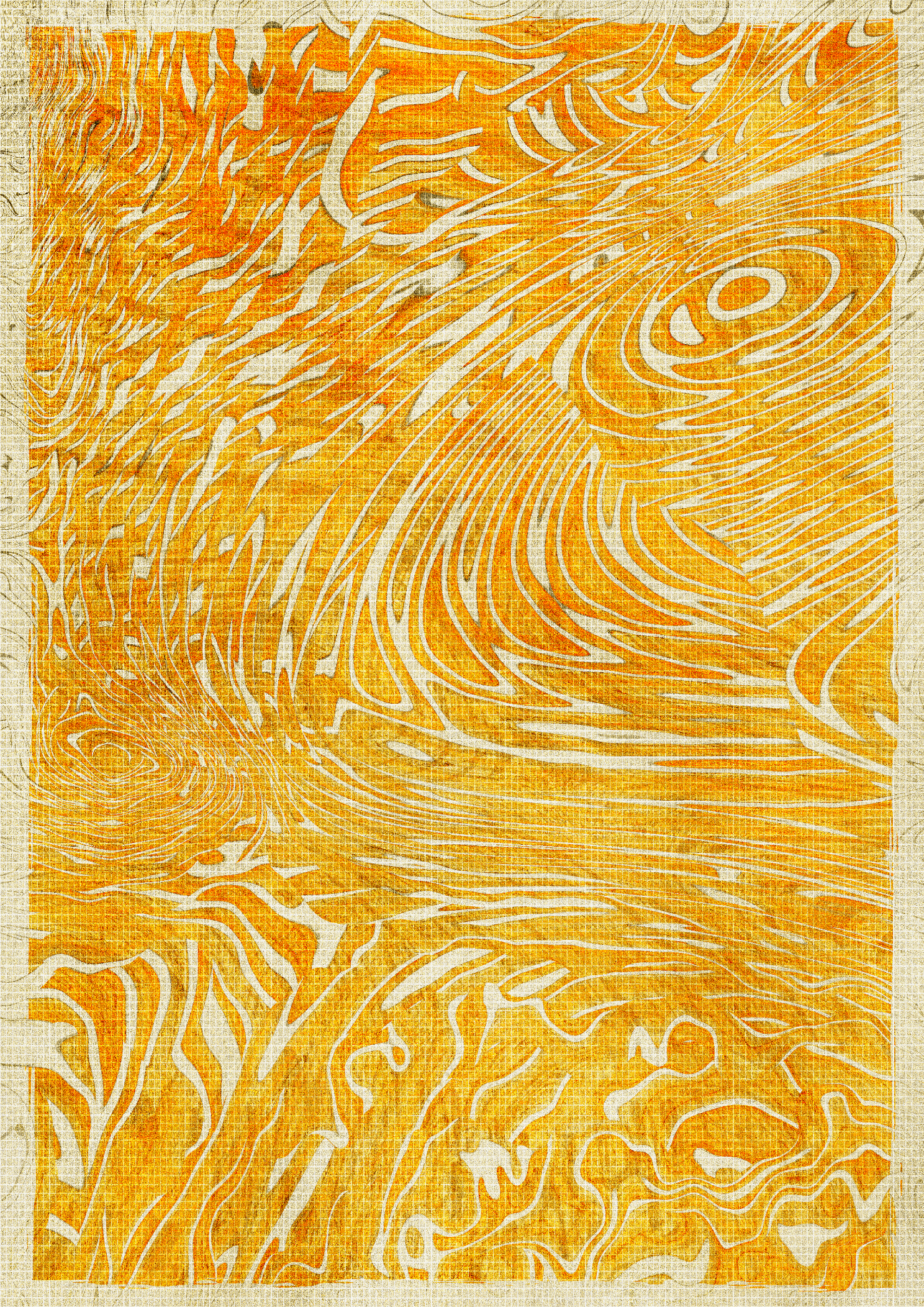
William Mapan, Anticyclone #303, 2022. Courtesy of thefunnyguys Collection and the artist.
KV: Five years later, you’ve collected over 6,000 works. Do you still collect instinctively - or has the knowledge and experience you gathered over time changed how you decide?
TFG: Both, and that tension is important.
Early on, collecting was emotional and exploratory. Now I have filters. Experience helps you see through marketing narratives - “firsts” that aren’t really firsts. But I’m very conscious of not letting knowledge kill joy. I don’t want my collecting style to be only rational.
Art collecting shouldn’t become a checklist. I still want that moment of falling in love with a work - otherwise it turns into asset management, not collecting.
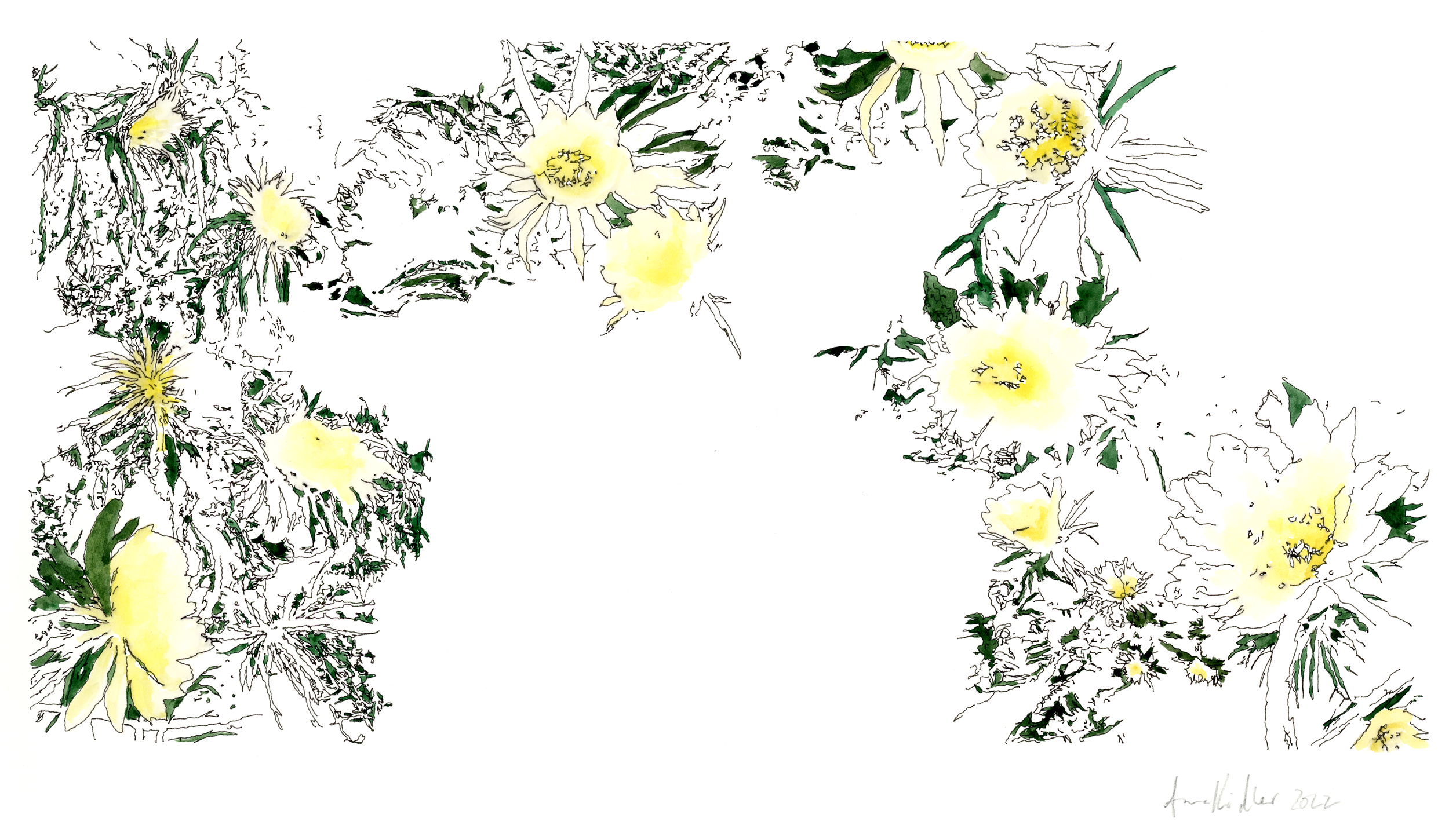
Anna Ridler, Truth to Nature Flower II, 2022. Courtesy of thefunnyguys Collection and the artist.
KV: Is there a work in your collection you would never part with, regardless of price, or do you believe that, ultimately, everything is for sale under the right conditions?
TFG: Under the right conditions, everything is for sale. But some works would take an astronomical number for me to part ways with them. My CryptoPunk by Larva Labs and baba and plasma004 by Manolo are good examples.
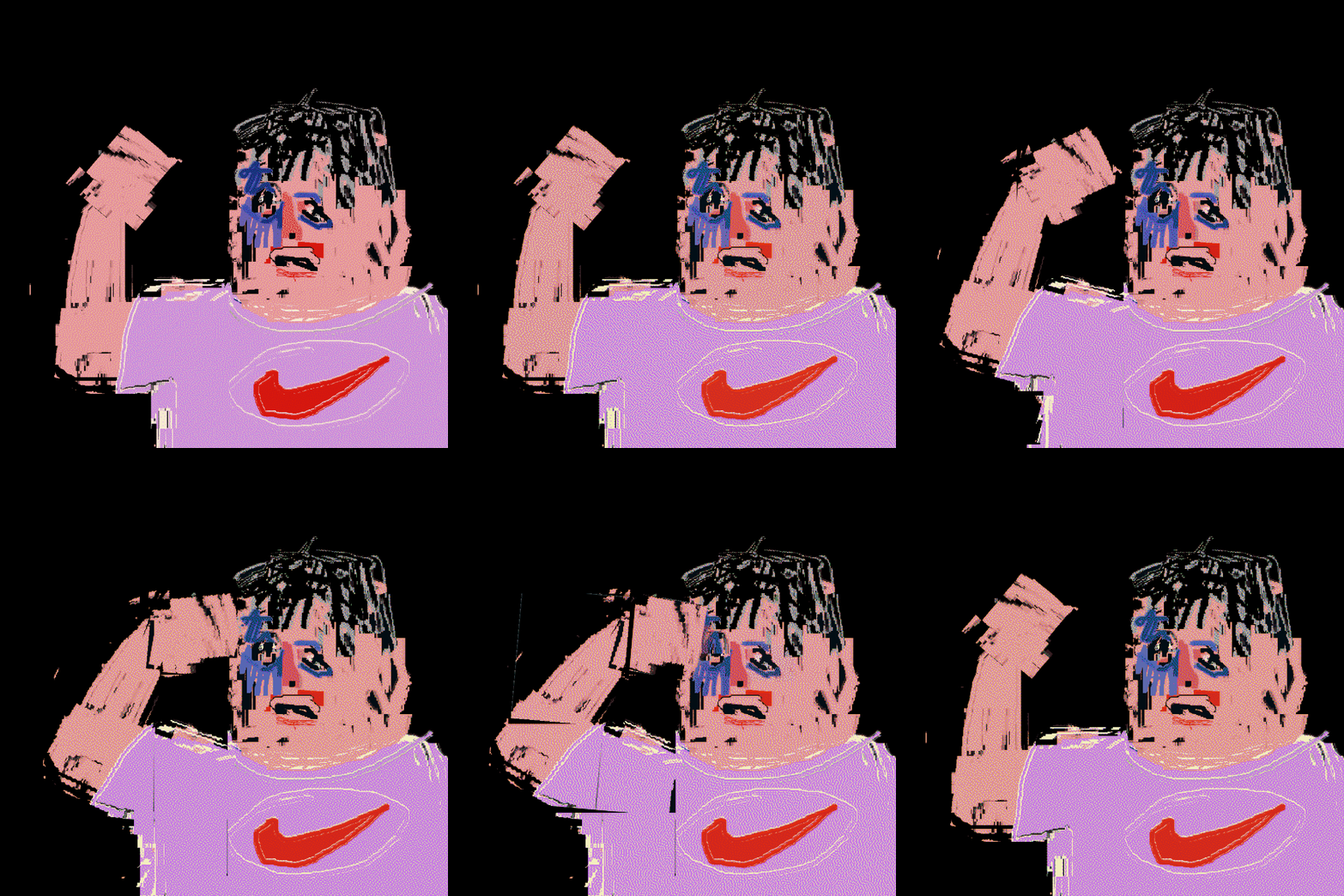
RJ, Self Care, 2025. Courtesy of thefunnyguys Collection and the artist.
KV: What is currently on your screen or hanging on your wall where you live? Is there anything from your generative art collection that you live with day to day?
TFG: Most of my physical artworks are safely stored at my parents' house, as I move around a lot. I currently have the pleasure of living with artworks by Qubibi [7], Travess Smalley [8] and Matt DesLauriers [9], and I use Feral File's FF1 Art Computer [10] to display software works such as 36 Points by Sage Jenson [11] (from Le Random's collection) on my television.

Travess Smalley, 11_05_22_Pixel_Rug_01_TFG_100, 2022. Courtesy of thefunnyguys Collection and the artist.
KV: That distinction becomes sharper when you collect privately and institutionally through Le Random. It’s inevitable that you have to be more rational when you collect on behalf of the institution, no?
TFG: Exactly. My private collection can wander. Le Random cannot.
KV: When did you realize there was a need for a platform like Le Random?
TFG: Le Random exists because I was frustrated. Great generative works were being lumped together with Metaverse Land [12] and profile-picture projects, with no context. It felt like a disservice. Generative art has a lineage from the 1960s onward and needed a collection with a thesis, not a shopping cart.
That’s why Le Random isn’t just about ownership. It’s about research, writing, timelines, education. The collection isn’t meant to be traded - it’s meant to exist.
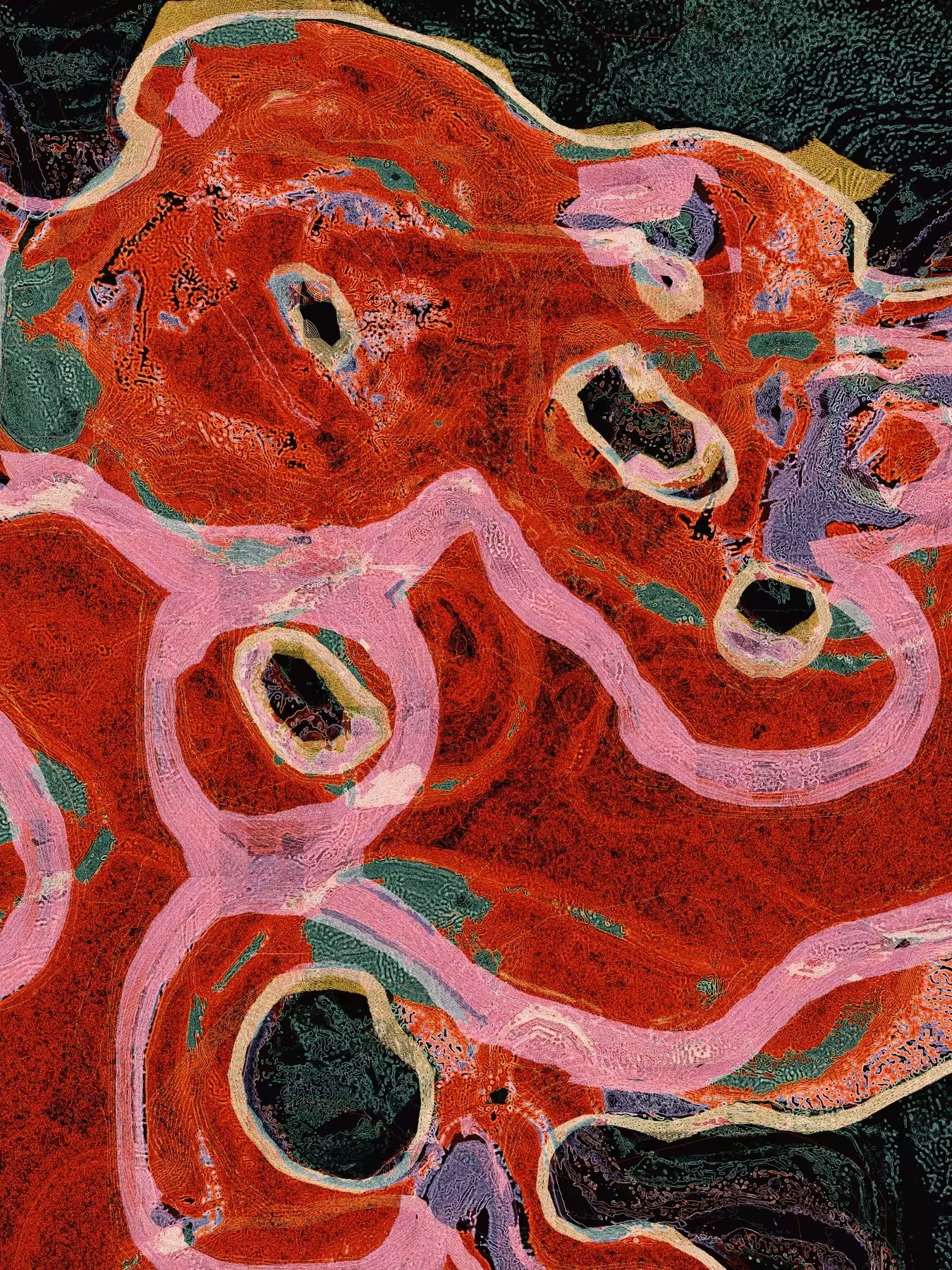
Qubibi, mimizu Untitled #26, 2023. Courtesy of thefunnyguys Collection and the artist.
KV: You structured Le Random around three generations of generative art.
TFG: Yes.
1965–1989: pioneers, pre-internet.
1990–2015: the internet era.
2016–now: the on-chain era.
Even though everything we collect is on-chain, we still use that framework to ensure continuity. It also means actively onboarding pioneers - encouraging them to release work on-chain, rather than rewriting history as if everything began in 2021.
KV: You’ve expressed a strong interest in the history and pioneers of generative art. Who was the first pioneering generative artist whose work you collected, and are there specific pioneers you especially value?
TFG: I believe Frieder Nake [13]'s Polygonzug from 1965 is the first generative artwork by a true pioneer that I collected. Peter Beyls [14] is a personal favourite as I have had the pleasure of visiting his studio numerous times and I helped him mint his first on-chain software work. Having a close relationship with a pioneer from my home country of Belgium feels truly special. I hope to collect the work of Roman Verostko [15], Jean-Pierre Hebert [16] and Hiroshi Kawano [17] at some point. In my opinion, the sensitivity of Verostko and Hebert's work is unparalleled among pioneers, and Kawano is such a special character in this movement, coming from a philosophy background and creating early digital designs in Tokyo as early as 1964.
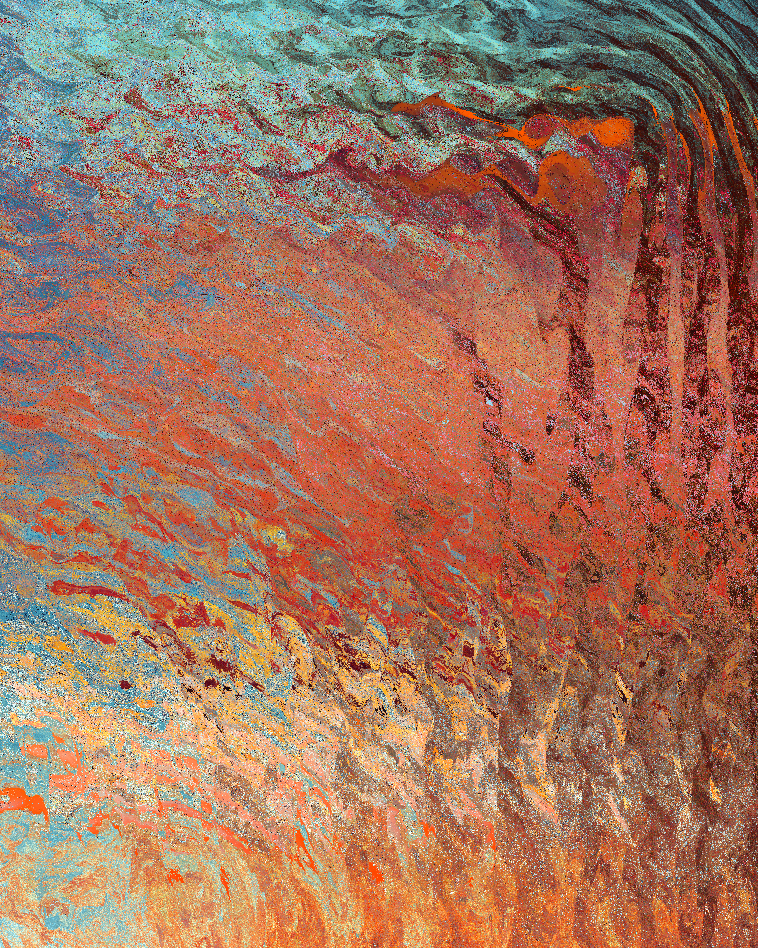
Zach Lieberman, 100 Sunsets #40, 2022. Courtesy of thefunnyguys Collection and the artist.
KV: We briefly touched on Le Random commissioning artists - including pioneers such as Vera Molnár - to mint work on-chain. How do you think about collecting and preserving the work of pioneers who have already passed away and are no longer able to mint or create new, commissioned works themselves?
TFG: In that case, I believe no on-chain works should be released. It's a complicated topic, but I'm generally not a fan of artist foundations retroactively minting works after the pioneer has passed away. If the artist has passed away, their physical works should be collected and preserved similarly to traditional physical art I think.
(We haven't commissioned Molnar, by the way. Beyls, Giloth [18] and Cosic [19] are good examples where we did)
KV: Related to that: what is your perspective on post-minted or retroactively minted works - for example, AI or generative works that are later put on-chain to establish provenance? Do you think they hold the same value, or is something fundamentally different?
TFG: If the artist is alive and the physical equivalents haven't been offered on the market, I think it can make sense. When both the digital and physical are offered on the market, I find it rather confusing. Does this mean the work is an edition, even if both the physical and digital are unique artworks? Which one should carry the most value? Was the work intended to exist in both formats? ... In general, I prefer collecting artworks that only exist in digital format and that have certain characteristics that make the digital space a natural or even necessary home for the artwork.
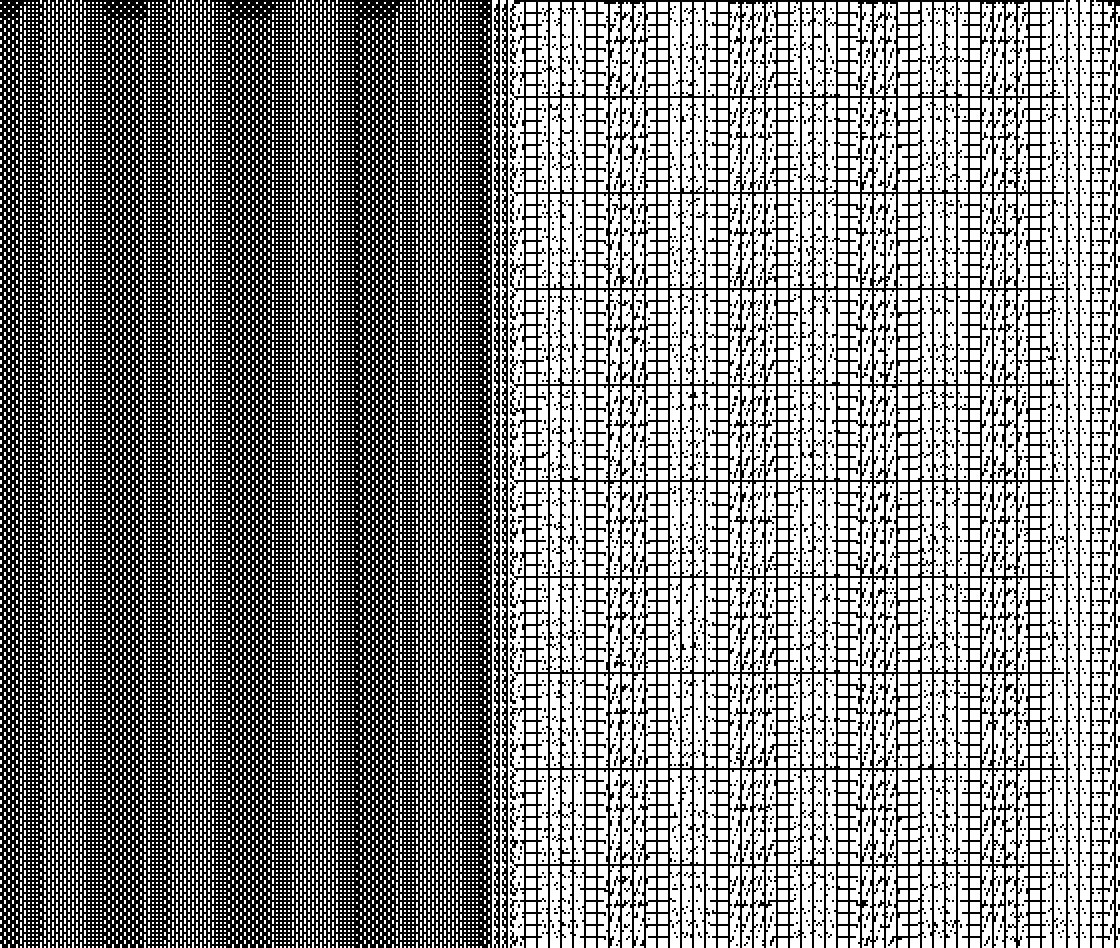
Kim Asendorf, monogrid a5, 2021. Courtesy of thefunnyguys Collection and the artist.
KV: What have been the most challenging aspects of your collecting journey - storage, preservation, context, or something else entirely?
TFG: Preservation has become the biggest concern over time, not in theory, but very concretely.
In recent years, we’ve seen multiple platforms shut down or effectively go dormant. Even when a platform disappears quietly, it exposes structural weaknesses: artworks stored on centralised servers, metadata that can’t be migrated, media that becomes inaccessible even though the token still exists.
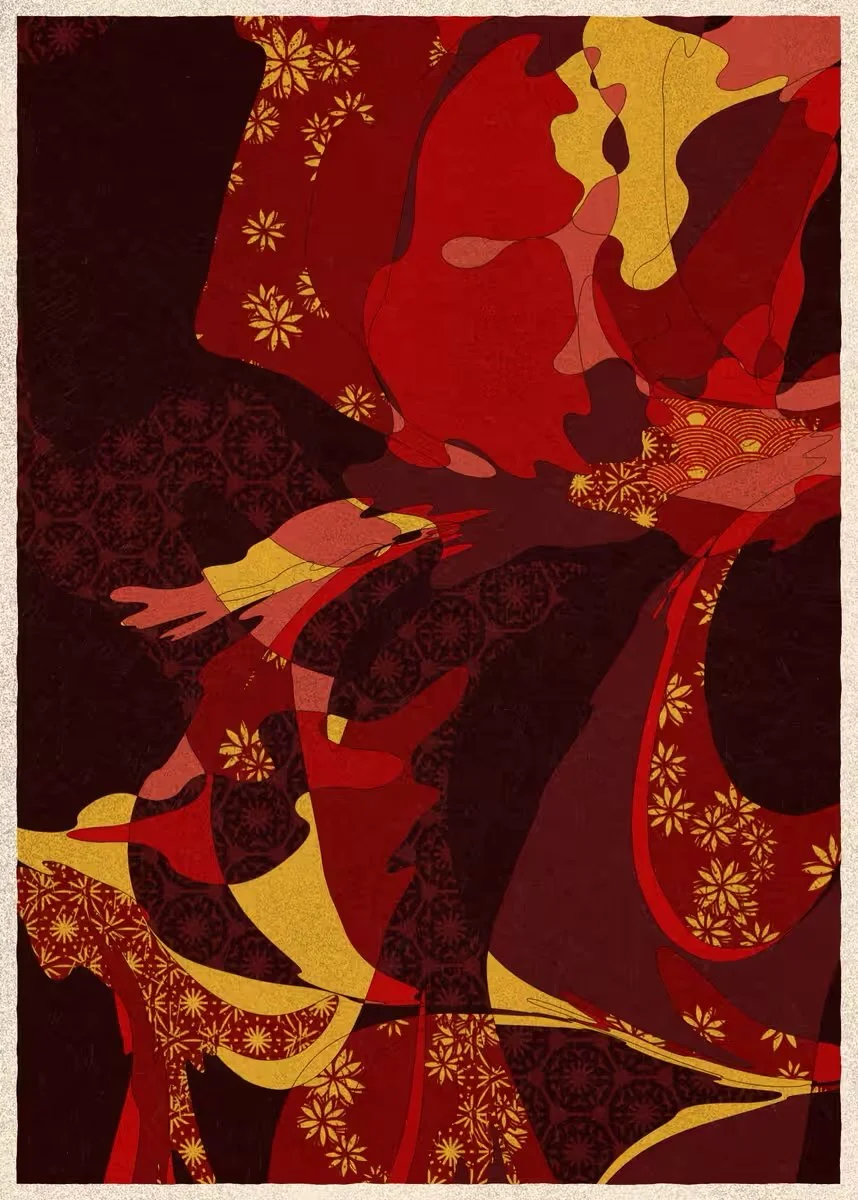
Emily Xie, Memories of Qilin #595, 2022. Courtesy of thefunnyguys Collection and the artist.
KV: Can you tell me more about Raster.art [20]? And again, your motivation?
TFG: Raster came out of frustration as a collector.
Digital art doesn’t live on one chain. It doesn’t live on one platform. Artists release work on Ethereum, Tezos, Solana, Bitcoin - often across multiple wallets, sometimes over many years. Yet most platforms force you into a fragmented view of that practice.
OpenSea [21], in particular, became increasingly difficult to use from a digital art perspective. In 2021, the experience was actually better than it is today. Over time, the interface prioritised volume and liquidity over legibility and context. For someone trying to understand an artist’s full body of work, it became almost unusable.
Raster was built to solve that fragmentation. The goal is simple: make it possible to see all of an artist’s on-chain work across chains, platforms, and wallets in one coherent place.
We don’t mint new works. We index existing ones. We back up media. We focus on legibility, context, and continuity. It’s about reducing friction - both for experienced collectors and for newcomers who would otherwise face an impossibly steep learning curve.
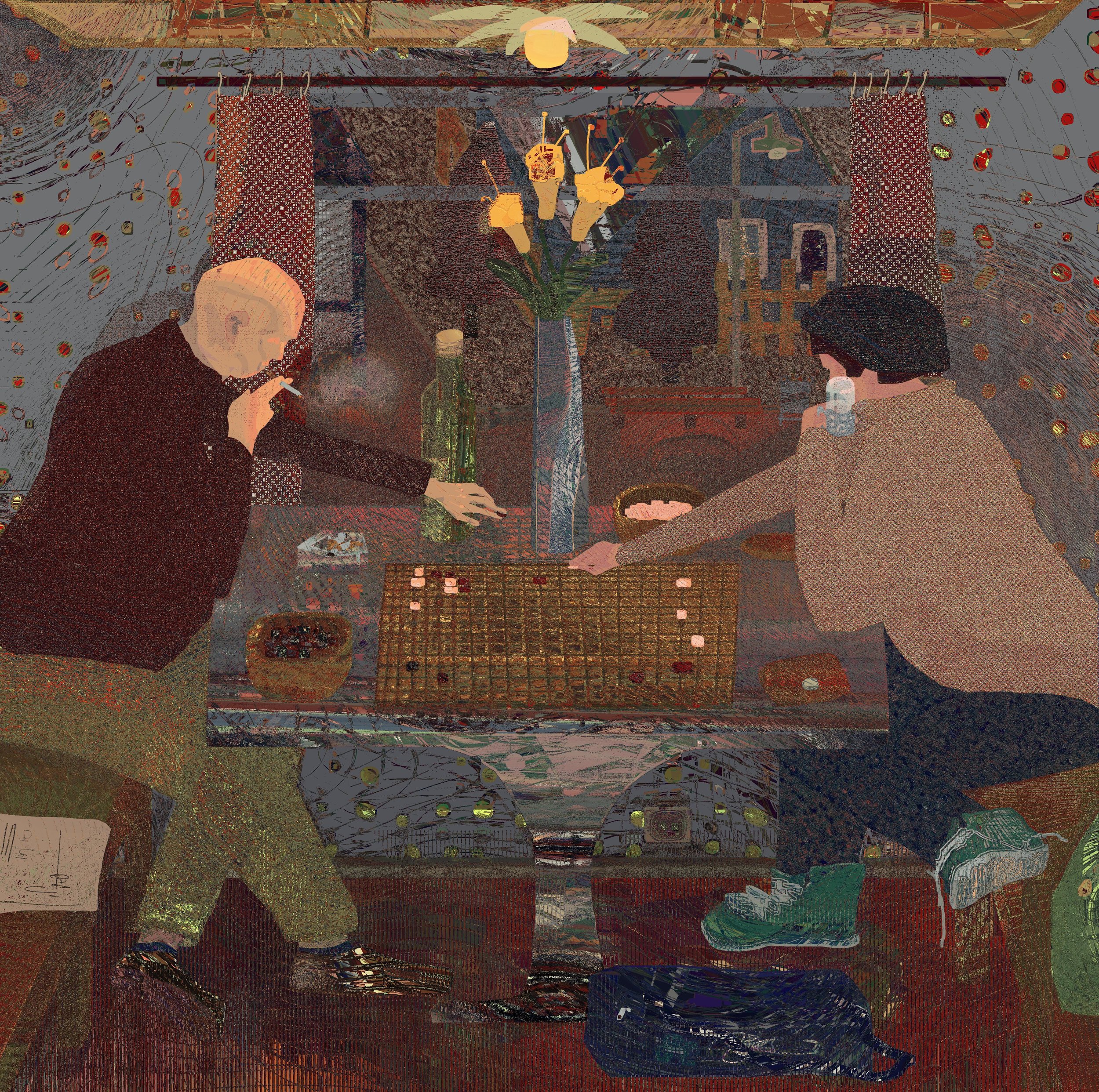
yuri, Go Players, 2025. Courtesy of thefunnyguys Collection and the artist.
KV: How do you think about risk?
TFG: It worries me - and it should worry everyone.
Centralised storage is fragile. When platforms disappear, tokens break. With Raster, we started by solving a simpler problem - fragmentation. Artists working across chains, across wallets, across platforms. No coherent view.
But preservation naturally follows. We back up media, index metadata, prepare for migration if needed. If a chain fails, it won’t be solved by one company - it’ll require community consensus. But infrastructure has to anticipate that possibility.
KV: When people talk about value in Web3, they default to price. How do you define value?
TFG: Value is composite.
Aesthetic value. Conceptual value. Historical position. Cultural relevance. Community resonance.
What’s different in Web3 is that value formation started bottom-up. Communities rejected imported hierarchies. Over time, though, we’re seeing convergence. Some traditional structures exist for a reason.
The challenge is keeping grassroots experimentation alive while allowing institutions to mature.
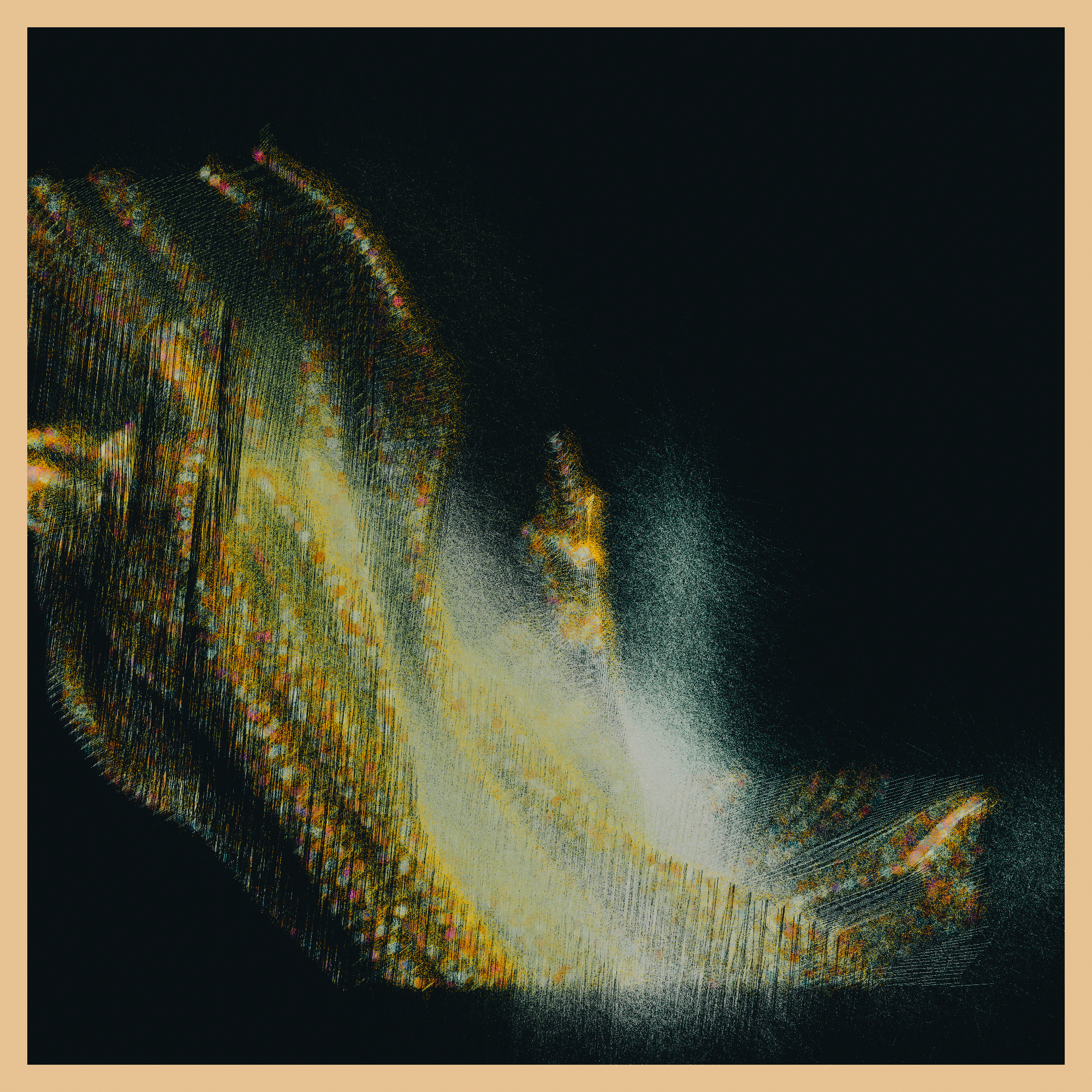
Iskra Velitchkova, CASTAWAY, 2025. Courtesy of thefunnyguys Collection and the artist.
KV: So Web3 shouldn’t reject tradition but shouldn’t replicate it blindly either.
TFG: Exactly. Ethereum will probably host high-value, high-profile sales. Tezos and others will remain experimental, weird, artist-led. That plurality is healthy.
KV: Do you think about legacy?
TFG: Honestly? Not yet.
Right now, I’m more interested in contributing meaningfully now. Legacy might emerge later, as a by-product. But if I start collecting for legacy, I think something essential would be lost.
KV: That’s a bit strange to hear, because as we speak, you seem to be moving very intuitively toward building a legacy - both for your collection and for Le Random (smiles)
TFG: I understand why it looks that way from the outside. And maybe, structurally, that’s true.
But for me, it doesn’t feel like legacy-building. It feels more like responding to what’s missing in front of me. I collect because I care. I build things like Le Random or Raster because I’m frustrated, because something feels incomplete, broken, or unfair to the work itself. What motivates me is being useful in the present moment - contributing to something while it’s still forming, while it’s fragile.
Maybe what looks like legacy from the outside is really just a series of decisions driven by a refusal to accept the current state of things as “good enough.”
seohyo, redraw (Self-Portrait with Bandaged..).date(210714), 2021. Courtesy of thefunnyguys Collection and the artist.
KV: How do you see the digital art market evolving over the next ten years, and what can collectors and platforms contribute to a more resilient infrastructure?
TFG: I think we’re moving toward convergence.
Early on, Web3 value formation was very bottom-up. Communities actively rejected external validation from traditional art institutions. That reaction made sense - especially given how extractive some early entries into the space were.
Over time, though, we’re seeing certain traditional structures re-emerge because they serve real functions: galleries, curators, long-term collectors, contextual frameworks. The challenge is integrating those without losing what made this space different in the first place.
Collectors can contribute by thinking beyond acquisition - by supporting context, preservation, and continuity. Platforms can contribute by prioritising infrastructure over hype: better indexing, better storage practices, better migration paths.
If digital art is going to matter in fifty years, the work needs to remain accessible, legible, and situated within its history. Building that resilience is less visible than market cycles, but far more important.
KV: Last question. Advice for new collectors?
TFG: Start. Don’t over-intellectualise.
Collect something small. Feel what ownership does to your relationship with the work. Spend time with it. Action produces understanding faster than theory ever will.
And protect your curiosity - that’s the most valuable asset you’ll ever have.
KV: How would you describe your collection in three words?
TFG: On-chain generative art.
On X: @thefunnyguysNFT
@thefunnyguysNFT’s collection link: https://opensea.io/thefunnyguys_vault
Vocabulary
[1] Discord - A chat platform widely used by NFT communities for discussion, drops, and artist updates.
[2] ICO period - Refers to the 2017–2018 boom in Initial Coin Offerings (ICOs), when many crypto projects raised funds by selling newly issued fungible tokens (often ERC-20 tokens on Ethereum) directly to early supporters. The era helped popularize wallets, token ownership, and on-chain participation before NFTs became mainstream.
[3] Le Random - A digital generative art institution co-founded by thefunnyguys and Zack Taylor. It collects, contextualizes, and elevates on-chain generative art through a historically spanning, chain-agnostic collection and an editorial platform that situates the medium within art history.
[4] NBA Top Shot - An officially licensed NFT collectibles platform by Dapper Labs (on the Flow blockchain) where users buy, collect, and trade limited-edition NBA highlight “Moments,” and it became a major NFT on-ramp during its breakout in early 2021.
[5] Art Blocks - Platform for on-chain generative art, known for curated and factory drops.
[6] Dmitri Cherniak - Canadian generative artist based in New York. His Ringers series (Art Blocks Curated, 2021) is a landmark generative NFT project of 1,000 unique works.
[7] Qubibi - A project formed in 2006 by Kazumasa Teshigawara. Its name derives from the Japanese 首美, combining kubi (the joints linking head and limbs) and bi (art).
[8] Travess Smalley - An artist who works with computation to build generative image systems across painting software, computer graphics, digital images, books, drawings, and “Pixel Rugs”.
[9] Matt DesLauriers - Canadian artist based in the UK whose practice centers on code, software, and generative processes. He is also an active open-source contributor, building tools and libraries that support creative coding and generative art workflows.
[10] Feral File’s FF1 Art Computer - A small, purpose-built ‘player’ for digital and computational art that can be plugged into any HDMI display to browse and play curated playlists, including real-time generative/interactive works.
[11] 36 Points by Sage Jenson - A generative, agent-based work in which particles (“agents”) sense and alter a shared environment. It produces emergent patterns and unstable flows, echoing Primordium as matter on the verge of becoming.
[12] Metaverse Land - A persistent, shared digital environment where users interact via avatars. In Web3, it is closely tied to NFTs, virtual galleries, and immersive worlds.
[13] Frieder Nake - Early generative artist and computer scientist active since the 1960s.
[14] Peter Beyls - Artist and researcher whose work bridges computer science and the arts through generative systems across visual art, music, and interactive media. His work has been presented internationally, including at SIGGRAPH, ICMC, and ISEA.
[15] Roman Verostko - Pioneering figure in algorithmic and plotter-based art, known for writing custom code to generate pen drawings and prints, often bridging calligraphic sensibilities with computational systems.
[16] Jean-Pierre Hebert - Pioneering digital and algorithmic artist who began making computer drawings in the mid-1970s and later co-founded the Algorists in 1995, coining and defining the term through code.
[17] Hiroshi Kawano - Japanese artist and theorist trained in German philosophy and aesthetics whose early interest in semiotics and Max Bense’s “information aesthetics” led him to pioneering computer art.
[18] Giloth - Pioneering new-media/computer artist whose practice spans digital media, animation/video, virtual environments, mobile art, and installations. She was also involved in early SIGGRAPH-adjacent computer-art exhibition initiatives.
[19] Ćosić - Refers to Vuk Ćosić, a Slovenian net.art pioneer widely known for works using ASCII code (ASCII art).
[20] Raster – A cross-chain platform built to make digital art collecting more legible by bringing everything into one place: unified artist profiles showing complete oeuvres across networks and platforms, aggregated market data, and a single view of a collector’s entire cross-chain collection.
[21] OpenSea - A major NFT marketplace allowing users to buy, sell, and mint digital assets.