
Sasha Stiles: This Place Was Home Before I Lived Here - Poems After Jangar
Sapar Contemporary presents a solo exhibition by Sasha Stiles, on view from September 25 through November 6, 2026. Drawing on Jangar, the centuries-old Kalmyk-Mongolian epic, Stiles explores poetry as a technology of inheritance, connecting ancestral traditions of oral transmission and embodied knowledge with the languages and technologies of the present.
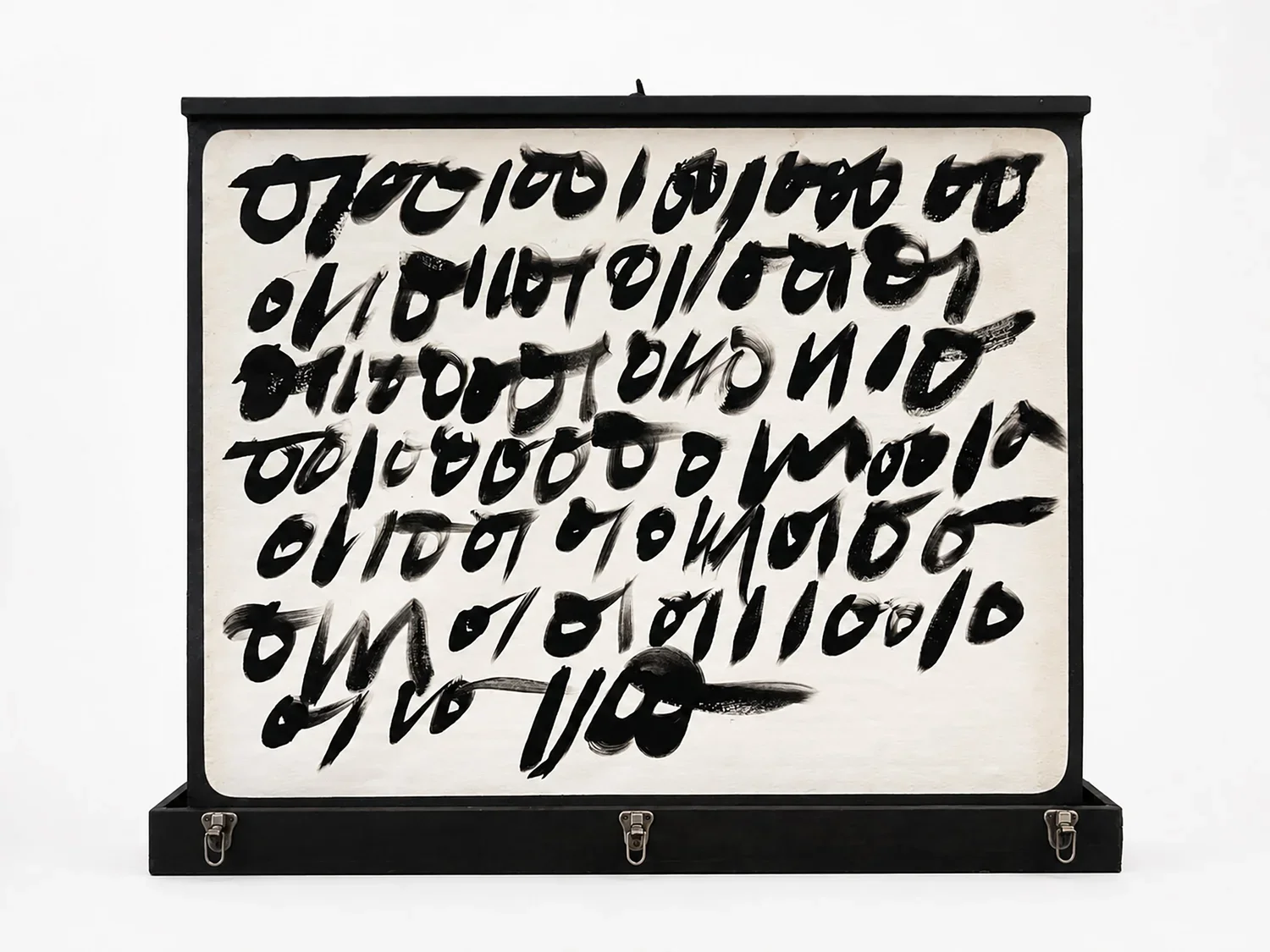
Across poetry, generative systems, 3D-printed objects, cyanotypes, encoded beadwork, spoken word, and hybrid scrolls, the exhibition asks how stories and cultural memory can travel across time, distance, and generations.
Text by Cecilia Alemani
Sapar Contemporary is pleased to present a solo exhibition by Sasha Stiles, a first-generation Kalmyk-American artist and poet. This is the gallery’s first exhibition of works by Stiles, who embarks on a deeply personal exploration of poetry as a technology of inheritance. Drawing on Jangar – a centuries-old Kalmyk-Mongolian epic that has survived migration, persecution, deportation, and diaspora – Stiles returns to a foundational story of her nomadic heritage to consider how language, memory, and culture are carried forward, or fall silent. Working across voice, script, print, code, and generative systems, Stiles continues Jangar's living tradition, using ancient practices of oral transmission, portable memory, and embodied knowledge to offer new ways of understanding our increasingly networked, mobile, and computational world. From original poetry to 3D-printed objects, cyanotypes, encoded beadwork, spoken word, and hybrid scrolls, each translation expands language beyond text, making it something counted, worn, and felt as much as written or read. Underpinning the exhibition is a recurring family of sculptural forms: part personal iconography, part relic, part prototype. Emerging through years of generative imaging and hybrid practice, they have gradually begun to coalesce into a latent alphabet that roams freely across voice, script, print, code, image, and object. Returning language to the realm of the glyph, the symbol, and the talisman as units of meaning, these evolving figures are not illustration but another way of making poetry.
Through her reinterpretations of Jangar, and of poetry, Stiles suggests that today’s technology is not a departure from humanity's oldest creative practices, but the continuation of our long history of encoding, sharing, and renewing knowledge. In turn, the exhibition proposes that humanity's oldest technology – poetic intelligence – may also be among its most relevant today: a portable, highly adaptive system for carrying language, identity, and imagination across time, distance, and generations.