
Perfect and Priceless

Cryptopunk #XXX, 2018
Fine Art Print
Signed and dated in pencil by the artist on front
40 x 40 cm, 1/1
Two of the sealed Ultimate Cryptopunks are for sale! MORE INFO HERE
Price upon request
—-
About the artwork:
The CryptoPunks are 24x24 pixel art images, generated algorithmically. Most are punky-looking guys and girls, but there are a few rarer types mixed in: Apes, Zombies and even the odd Alien. Every punk has their own profile page that shows their attributes as well as their ownership/for-sale status.
John Watkinson, of Larva Labs, has written code that lives on the blockchain that anyone can use to buy and sell Punks with anyone else in the world. An interesting aspect of this system is that they no longer have any control over the code running CryptoPunks! Once it was released onto the blockchain it became permanently embedded there and can no longer be modified by anyone.
For the exhibition Larva Labs created a high-quality signed print of a Cryptopunk. Then he transferred the blockchain ownership of the Cryptopunk to a new Ethereum address and included the private key to that address in a tamper-proof envelope. This way, the buyer gets to acquire the art both physically and digitally.
Provenance:
Both were exhibited for the very first time by Kate Vass Galerie in November 2018 at the historical Blockchain art group show ‘Perfect & Priceless’. Once again, Cryptopunk was exhibited at Cadaf in May 2019 in New York, sold to one of the top collectors and stay in the private ownership since. Now available for sale from its original gallery Kate Vass Galerie, the ownership is confirmed. Shipping costs are beared by the Buyer. We have 2 Punks and both are in great condition. The print and the COA are with their original frames.
Contact us for more info: info@katevassgalerie.com

Event Listeners, 2015
Screensaver for Mac OS x
generative lindenmayer systems iterating over dissociative feels of social inadequacy,
ed. 47/100
Exhibited at “Perfect and Priceless” show, Zürich, Kate Vass Galerie, 2018-2019

C.C. Rashes, 2018
Ultrachrome HD digital print on Hahnemühle paper
Size: 115 x 155 cm
Unique
Exhibited at “Perfect and Priceless” show, Zürich, Kate Vass Galerie, 2018-2019
Description:
These specimen find their form by a process of exchanging information with each other. Two works are taken from a determined population and communicate - gossip if you will - by flipping a node of their nested structure. The direction in this process is geared towards the greatest diversity: each specimen wants to be as different from all the other as possible. As the total amount of information shared among all specimen in the population does not increase over time but is merely recombined towards an optimal diverse distribution, the linear history of state changes (snapshots) can be compared to a blockchain ledger. The chromosomes of the specimen are stored as nested recursive "tree" structures, similar to those used in language analysis or linguistics.

W.D. Sensualist, 2018
Ultrachrome HD digital print on Hahnemühle paper
Size: 115 x 155 cm
Unique
Exhibited at “Perfect and Priceless” show, Zürich, Kate Vass Galerie, 2018-2019
Description:
These specimen find their form by a process of exchanging information with each other. Two works are taken from a determined population and communicate - gossip if you will - by flipping a node of their nested structure. The direction in this process is geared towards the greatest diversity: each specimen wants to be as different from all the other as possible. As the total amount of information shared among all specimen in the population does not increase over time but is merely recombined towards an optimal diverse distribution, the linear history of state changes (snapshots) can be compared to a blockchain ledger. The chromosomes of the specimen are stored as nested recursive "tree" structures, similar to those used in language analysis or linguistics.

Flowertoken n.100, 2018
Dried and arranged Flower Number 100
on a printed sheet including trade and valorisation statistics
Size: 93 x 64 cm
Exhibited at “Perfect and Priceless” show, Zürich, Kate Vass Galerie, 2018-2019
Description:
Flowertokens is an experimental project centered around the tokenization and verification of natural commodities, and a first attempt at creating a combined crypto-collectible physical asset. The physical installation consists of a grow rack, 100 Dahlias and a web interface which provides the current condition of the tokenized flowers. Every plant is represented by and tied to an individual ERC721-standard flowertoken held on the Ethereum mainnet. The setup is monitored 24/7 by a camera system which will provide images for the website, as well as data for a computer vision program which will update the tokens’ states once a day according to their respective flower’s condition.Users can interact with the project via the website. As well as acting as a portal to the physical installation, the website doubles as a marketplace where users and visitors can sell or buy tokenized plants, as well as look at the plants’ ownership status, current value, species, age, size, and health.
Three hours after the start of the project in July, all flowertokens were bought. The Project generated till now around 450 Transactions on the Mainnet with over 100 anonymous individuals buying and selling. For this exhibition, terra0 generated an artefact from the installation: The dried and arranged Flower Number 100 on a printed sheet including trade and valorisation statistics.
Flowertokens further marks the beginning of a series of projects oriented around these themes from terra0 – a group of artists, developers and researchers involved in the planning and creation of hybrid ecosystems.
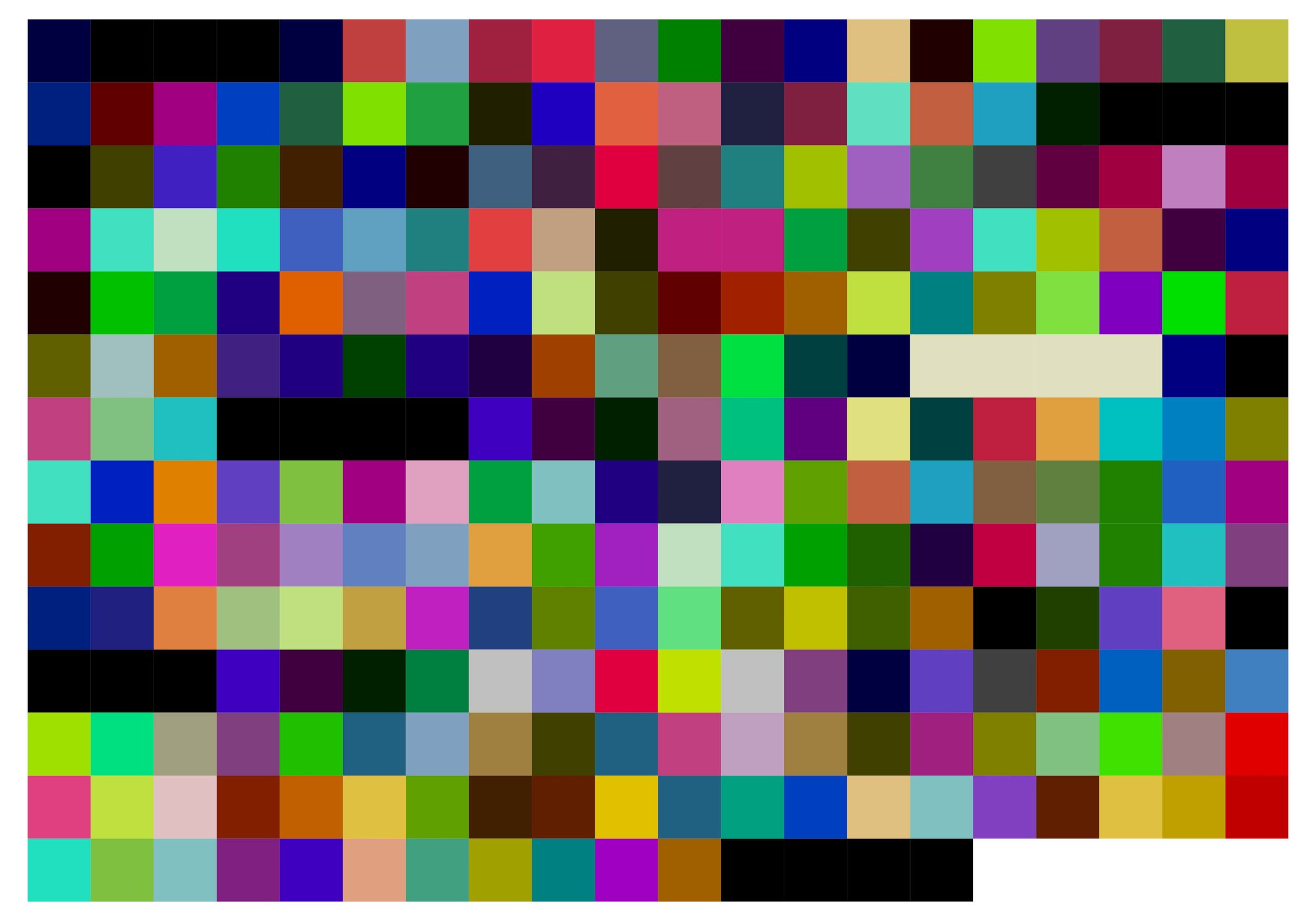
by Rhea Myers
NFT - SOLD OUT
PRINT - SOLD OUT
Signed in pencil on front
Unique Giclee Print
101 x 101 cm
Exhibited at “Perfect and Priceless” show, Zürich, Kate Vass Galerie, 2018-2019
Description:
“Blockchain Aesthetics” transforms the data of the Bitcoin blockchain into the visual language of modernist abstraction and its critical postmodern appropriation. This makes the unseen structure of a technology born of contemporary libertarian utopianism visible using the aesthetics of historical political utopianism. The resulting live images and prints make strange forms of landscape or history painting out of the ongoing activity of the Bitcoin ledger.
The unfamiliar form of Bitcoin transaction hashes - the mix of 64 numbers and letters produced each time a transaction is broadcast to the Bitcoin network - is rendered in familiar forms in rational grids that cannot quite impose order on the resulting flood of shape and colour. This creative mis-reading decrypts encoded flows of value into something more perceptible, making their rhythms, complexity and volume available to contemplation on these matters and others.
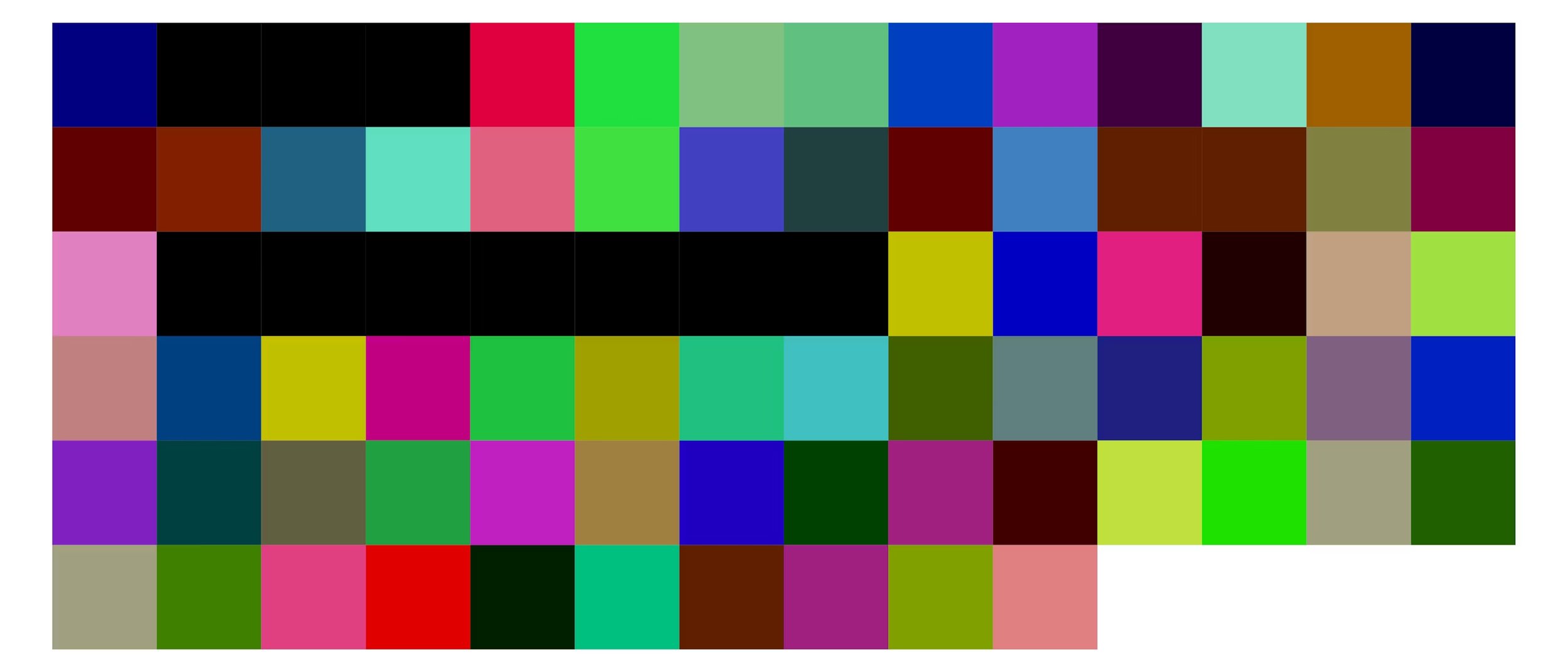
by Rhea Myers
NFT - SOLD OUT
PRINT - PRICE UPON REQUEST (please contact: info@katevassgalerie.com)
Signed in pencil on front
Unique Giclee Print
Size: 101 x 101 cm
Exhibited at “Perfect and Priceless” show, Zürich, Kate Vass Galerie, 2018-2019
Description:
“Blockchain Aesthetics” transforms the data of the Bitcoin blockchain into the visual language of modernist abstraction and its critical postmodern appropriation. This makes the unseen structure of a technology born of contemporary libertarian utopianism visible using the aesthetics of historical political utopianism. The resulting live images and prints make strange forms of landscape or history painting out of the ongoing activity of the Bitcoin ledger.
The unfamiliar form of Bitcoin transaction hashes - the mix of 64 numbers and letters produced each time a transaction is broadcast to the Bitcoin network - is rendered in familiar forms in rational grids that cannot quite impose order on the resulting flood of shape and colour. This creative mis-reading decrypts encoded flows of value into something more perceptible, making their rhythms, complexity and volume available to contemplation on these matters and others.
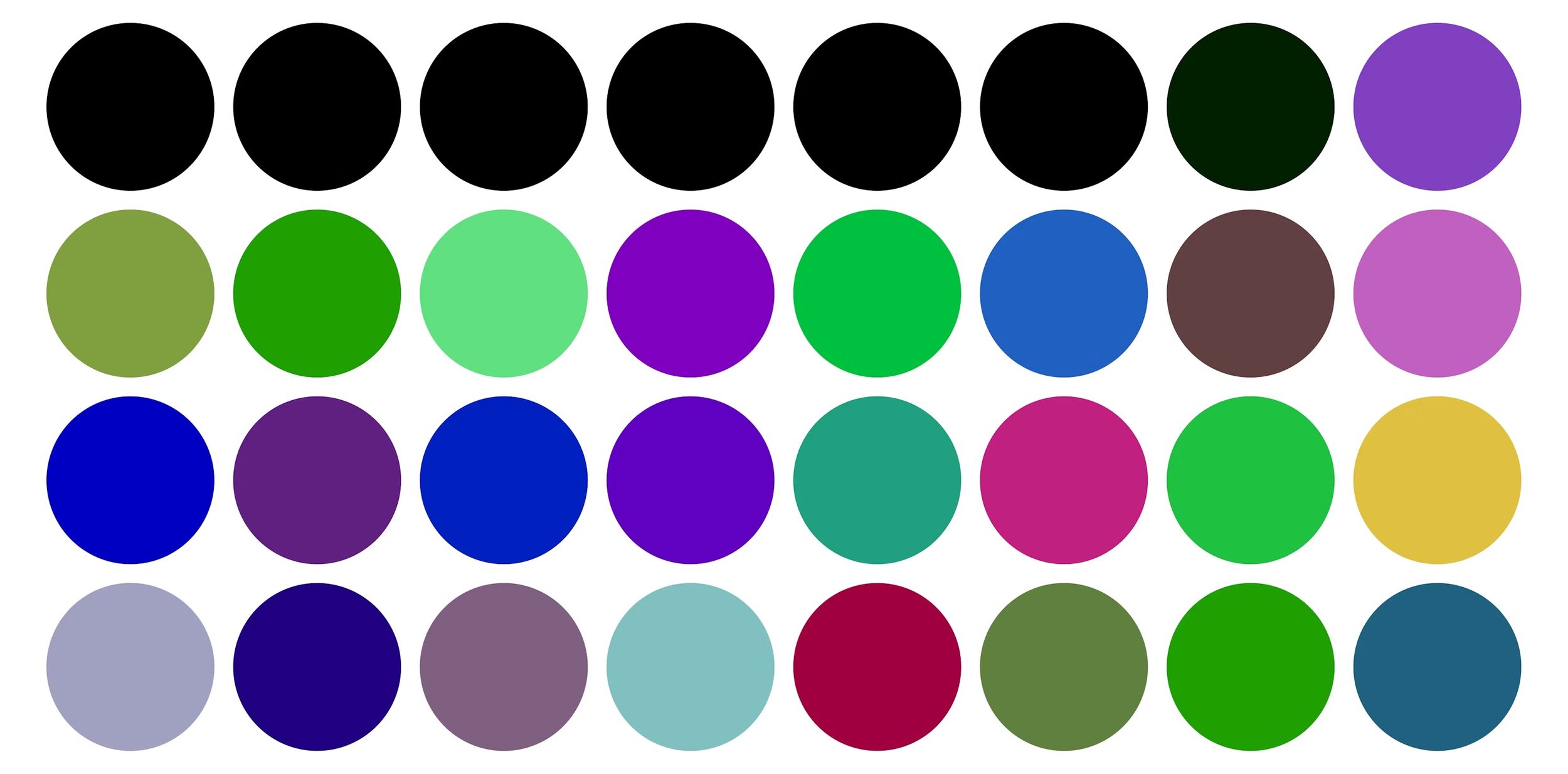
by Rhea Myers
NFT - AVAILABLE and can be purchased separately (please contact: info@katevassgalerie.com): https://foundation.app/@rheaplex/foundation/96671
PRINT - SOLD OUT
Signed in pencil on front
Unique Giclee Print
Size: 40" x 40"
Exhibited at “Perfect and Priceless” show, Zürich, Kate Vass Galerie, 2018-2019
Description:
“Blockchain Aesthetics” transforms the data of the Bitcoin blockchain into the visual language of modernist abstraction and its critical postmodern appropriation. This makes the unseen structure of a technology born of contemporary libertarian utopianism visible using the aesthetics of historical political utopianism. The resulting live images and prints make strange forms of landscape or history painting out of the ongoing activity of the Bitcoin ledger.
The unfamiliar form of Bitcoin transaction hashes - the mix of 64 numbers and letters produced each time a transaction is broadcast to the Bitcoin network - is rendered in familiar forms in rational grids that cannot quite impose order on the resulting flood of shape and colour. This creative mis-reading decrypts encoded flows of value into something more perceptible, making their rhythms, complexity and volume available to contemplation on these matters and others.
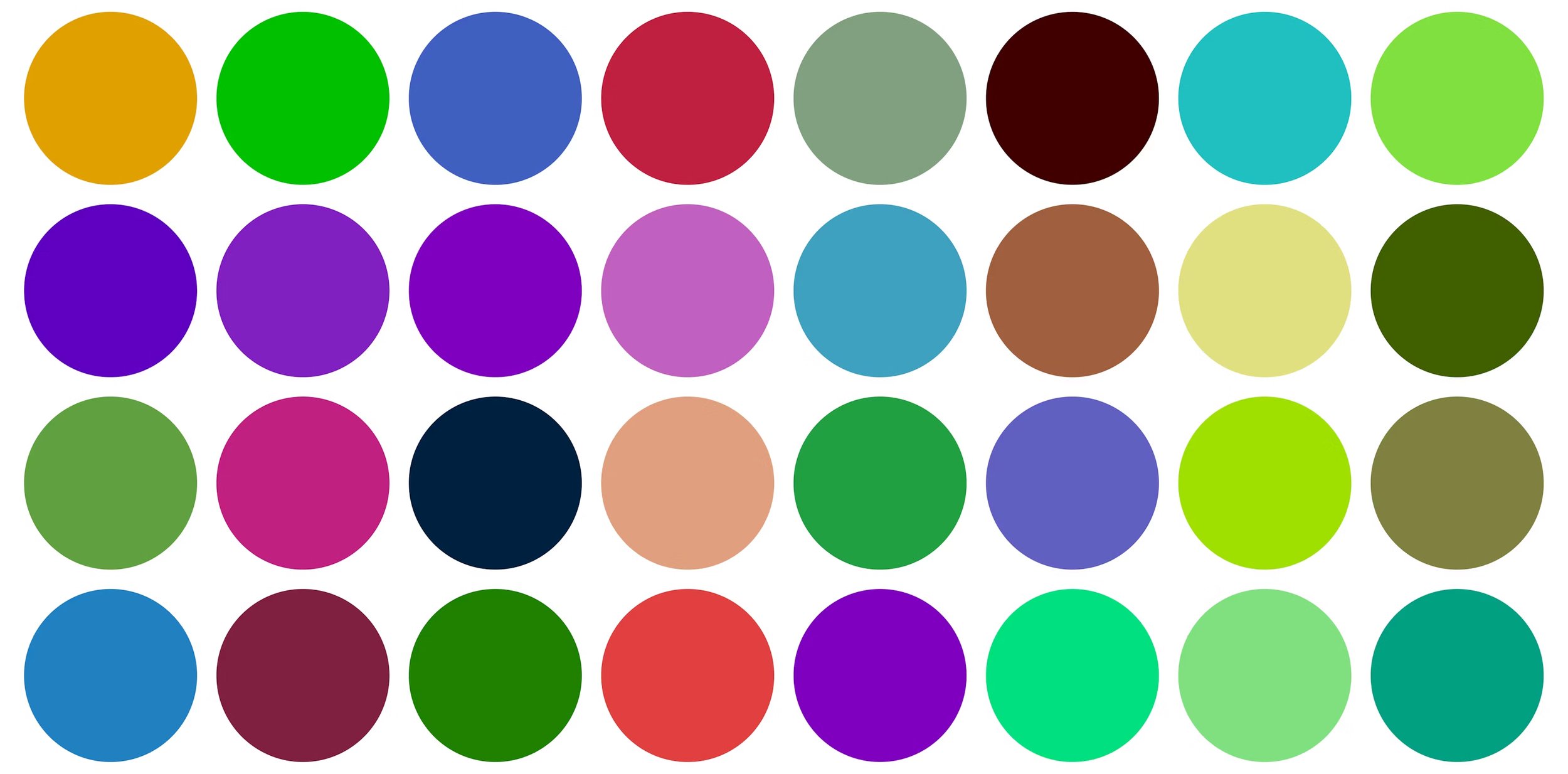
by Rhea Myers
NFT - AVAILABLE and can be purchased separately (please contact: info@katevassgalerie.com): https://foundation.app/@rheaplex/foundation/96680
PRINT - PRICE UPON REQUEST (please contact: info@katevassgalerie.com)
Signed in pencil on front
Unique Giclee Print
Size: 101 x 101 cm
Exhibited at “Perfect and Priceless” show, Zürich, Kate Vass Galerie, 2018-2019
Description:
“Blockchain Aesthetics” transforms the data of the Bitcoin blockchain into the visual language of modernist abstraction and its critical postmodern appropriation. This makes the unseen structure of a technology born of contemporary libertarian utopianism visible using the aesthetics of historical political utopianism. The resulting live images and prints make strange forms of landscape or history painting out of the ongoing activity of the Bitcoin ledger.
The unfamiliar form of Bitcoin transaction hashes - the mix of 64 numbers and letters produced each time a transaction is broadcast to the Bitcoin network - is rendered in familiar forms in rational grids that cannot quite impose order on the resulting flood of shape and colour. This creative mis-reading decrypts encoded flows of value into something more perceptible, making their rhythms, complexity and volume available to contemplation on these matters and others.

Claves Angelicæ, 2018
Ink pen drawing made by plotter machine on Bristol paper
11 unique sigils
Size: 138 x 18 cm
Exhibited at “Perfect and Priceless” show, Zürich, Kate Vass Galerie, 2018-2019
Description:
Claves Angelicæ is a seven-step process to guide one through the process of securely constructing a Word with an ‘Alphabet of Desire.’ This Alphabet of Desire is a mediation with one’s own libidinal framework. Magic has many aspects, but it primarily acts as a dramatized system of psychology. It is the science and art of causing change to occur in conformity with one’s Will. A magical spell is quite literally the spelling out of a Word. Once the Word is constructed within oneself it is set in motion by bringing it forth into grammar and sound. When completed one must seal it and cast it out into the Ethereum network.
The seven-step process is designed to collect and transmute the participants’ input data into an encrypted message. For the participant to cast their Word they must transmit Ether to a preselected set of charities. Once the spell has been cast and verified by the consensus pool, the transaction signature’s hash is returned, parsed, and passed into a sigil generating algorithm. The participant receives an inked paper talisman authored by a mechanical plotter drawing machine as a tokenized sigil of their spell.

by Cesar Escudero Andaluz and Martín Nadal
Repurposed stamp with Wi-Fi microcontroller with sensors
Size: 10 x 10 x 15 cm
Unique
Description:
The Bitcoin was conceived as an electronic decentralised system for capital transactions. Each node (user) had the same opportunities to get a reward when validating a transaction. In the last years, this system has triggered in a competitive struggle in which computing power is the most important variable for earning Bitcoins. This involves the use of large equipment, computers farms spending physical and environmental resources. A dispute that benefits only the owner of the most powerful and efficient technology. Causing A BIG WASTE OF ENERGY!!!! Bitcoins of Things (BoT) transforms this “Crazy” way of producing Bitcoins into a playful Lottery.
HOW!!!!?? The Bitcoin mining process consists of finding a random number called “Nonce”, which added to the Headerblock and through a Hash function returns a number (hash value) that if starts with a sufficient number of zeros (difficulty) can be validated by the Blockchain network. When this number is found a reward of 12.5 Bitcoins (approx 4300€) is earned by the miner.
The BitCoin of Things (BoT) miner combines a Wi-Fi microcontroller and different sensors such as an accelerometer, microphones or buttons, generating a “Nonce” from its reads try to validate all the Blockchain pending transactions. The possibilities are lower, but it decreases the use of energy of the calculation processes making it more sustainable.
Finally, the microcontroller is attached to daily life objects, like keyboards, computer mice or salt-shakers, by using them the object can potentially generate a big number of Bitcoins, playing with the idea of finding the philosopher’s stone.
Exhibited at “Perfect and Priceless” show, Zürich, Kate Vass Galerie, 2018-2019
Exhibited at POSITIONS Berlin Art Fair, Berlin, Kate Vass Galerie Booth A18, September 2024
SOLD OUT
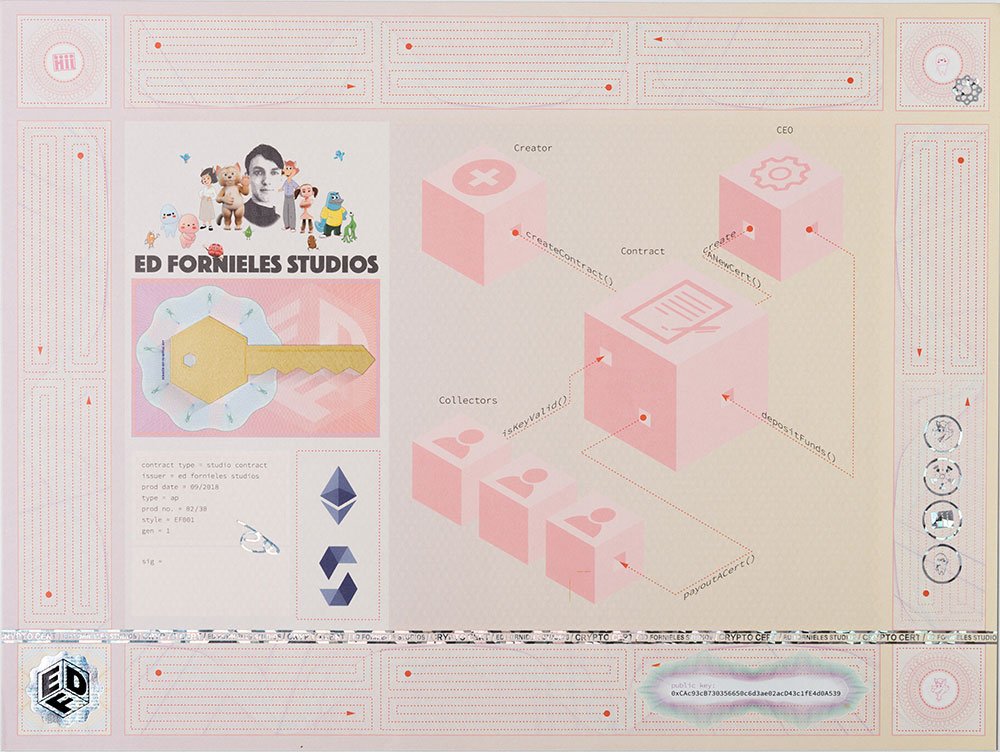
STUDIO CONTRACT, STYLE REF: EF001, 09/2018
Contract type = studio contract
issuer = ed fornieles studios
type = ap
prod. no. = 04/30
style = EF001
gen = 1
Size: 31 x 41 CM
Exhibited at “Perfect and Priceless” show, Zürich, Kate Vass Galerie, 2018-2019
Description:
The Certificate Program has been created as a means to raise funds for the development and production of artwork. As an accessible model with a transparent structure, it allows for open participation in the studio ecosystem, rewarding investment in production with a share of future profits.
While the traditional financial model for artwork production relies on a small, centralized network of highrisk investors, the Certificate Program diffuses risk across a wider, de-centralized network of support. In doing so, it removes the pressure of artists and galleries to raise funds for production costs and allows them to develop artwork independently of market pressures. This leads to greater experimentation on the part of the artist and redirects the flow of capital towards the production, development and growth of future artworks.
The Certificate Program combines financial tools of the art world with the creativity of the financial sector. The Certificate Program employs ethereum blockchain technology to store and distribute value.
Each certificate contains a key embedded under a scratch panel, which entitles the holder to a percentage of an ethereum fund generated through the sale of certificates and artworks. As more sales occur, the ethereum fund grows. To gain access to the key and cash out on an investment, the holder must scratch the panel and damage the certificate.
A combination of an artist print and a financial product, the certificate contains twofold value: that of an art object and that of a crypto fund. The holder must decide between conserving the value of the certificate as an artwork and damaging it to access the funds it contains. The structure of the Certificate Program has been designed to encourage gradual growth and stability. As each new generation is produced, the certificates increase in size and market value. These features reward early supporters with a low buy-in point for a fixed percentage of the studio fund and allow them to benefit from the higher contributions of later investors. At the same time, new investors are attracted by the value of more substantial art objects.

STUDIO CONTRACT, STYLE REF: EF003, 09/2018
PROD NO. = 05/30
TYPE = AP
GEN =1
Size: 31 x 41 CM
Exhibited at “Perfect and Priceless” show, Zürich, Kate Vass Galerie, 2018-2019
Description:
The Certificate Program has been created as a means to raise funds for the development and production of artwork. As an accessible model with a transparent structure, it allows for open participation in the studio ecosystem, rewarding investment in production with a share of future profits.
While the traditional financial model for artwork production relies on a small, centralized network of highrisk investors, the Certificate Program diffuses risk across a wider, de-centralized network of support. In doing so, it removes the pressure of artists and galleries to raise funds for production costs and allows them to develop artwork independently of market pressures. This leads to greater experimentation on the part of the artist and redirects the flow of capital towards the production, development and growth of future artworks.
The Certificate Program combines financial tools of the art world with the creativity of the financial sector. The Certificate Program employs ethereum blockchain technology to store and distribute value.
Each certificate contains a key embedded under a scratch panel, which entitles the holder to a percentage of an ethereum fund generated through the sale of certificates and artworks. As more sales occur, the ethereum fund grows. To gain access to the key and cash out on an investment, the holder must scratch the panel and damage the certificate.
A combination of an artist print and a financial product, the certificate contains twofold value: that of an art object and that of a crypto fund. The holder must decide between conserving the value of the certificate as an artwork and damaging it to access the funds it contains. The structure of the Certificate Program has been designed to encourage gradual growth and stability. As each new generation is produced, the certificates increase in size and market value. These features reward early supporters with a low buy-in point for a fixed percentage of the studio fund and allow them to benefit from the higher contributions of later investors. At the same time, new investors are attracted by the value of more substantial art objects.

STUDIO CONTRACT, STYLE REF: EF002, 09/2018
PROD NO. = 06/30
TYPE = AP
GEN =1
Size: 31 x 41 CM
Exhibited at “Perfect and Priceless” show, Zürich, Kate Vass Galerie, 2018-2019
Description:
The Certificate Program has been created as a means to raise funds for the development and production of artwork. As an accessible model with a transparent structure, it allows for open participation in the studio ecosystem, rewarding investment in production with a share of future profits.
While the traditional financial model for artwork production relies on a small, centralized network of highrisk investors, the Certificate Program diffuses risk across a wider, de-centralized network of support. In doing so, it removes the pressure of artists and galleries to raise funds for production costs and allows them to develop artwork independently of market pressures. This leads to greater experimentation on the part of the artist and redirects the flow of capital towards the production, development and growth of future artworks.
The Certificate Program combines financial tools of the art world with the creativity of the financial sector. The Certificate Program employs ethereum blockchain technology to store and distribute value.
Each certificate contains a key embedded under a scratch panel, which entitles the holder to a percentage of an ethereum fund generated through the sale of certificates and artworks. As more sales occur, the ethereum fund grows. To gain access to the key and cash out on an investment, the holder must scratch the panel and damage the certificate.
A combination of an artist print and a financial product, the certificate contains twofold value: that of an art object and that of a crypto fund. The holder must decide between conserving the value of the certificate as an artwork and damaging it to access the funds it contains. The structure of the Certificate Program has been designed to encourage gradual growth and stability. As each new generation is produced, the certificates increase in size and market value. These features reward early supporters with a low buy-in point for a fixed percentage of the studio fund and allow them to benefit from the higher contributions of later investors. At the same time, new investors are attracted by the value of more substantial art objects.

ATHENS BIENNALE OFFICIAL CERTIFICATES, PROJECT CERTIFICATE
STYLE REF: EF005, 09/2018
PROD NO. = 11/30
TYPE = AP
GEN =1
Size: 31 x 41 CM
Exhibited at “Perfect and Priceless” show, Zürich, Kate Vass Galerie, 2018-2019
Description:
The Certificate Program has been created as a means to raise funds for the development and production of artwork. As an accessible model with a transparent structure, it allows for open participation in the studio ecosystem, rewarding investment in production with a share of future profits.
While the traditional financial model for artwork production relies on a small, centralized network of highrisk investors, the Certificate Program diffuses risk across a wider, de-centralized network of support. In doing so, it removes the pressure of artists and galleries to raise funds for production costs and allows them to develop artwork independently of market pressures. This leads to greater experimentation on the part of the artist and redirects the flow of capital towards the production, development and growth of future artworks.
The Certificate Program combines financial tools of the art world with the creativity of the financial sector. The Certificate Program employs ethereum blockchain technology to store and distribute value.
Each certificate contains a key embedded under a scratch panel, which entitles the holder to a percentage of an ethereum fund generated through the sale of certificates and artworks. As more sales occur, the ethereum fund grows. To gain access to the key and cash out on an investment, the holder must scratch the panel and damage the certificate.
A combination of an artist print and a financial product, the certificate contains twofold value: that of an art object and that of a crypto fund. The holder must decide between conserving the value of the certificate as an artwork and damaging it to access the funds it contains. The structure of the Certificate Program has been designed to encourage gradual growth and stability. As each new generation is produced, the certificates increase in size and market value. These features reward early supporters with a low buy-in point for a fixed percentage of the studio fund and allow them to benefit from the higher contributions of later investors. At the same time, new investors are attracted by the value of more substantial art objects.

by Grayson Earle
Bail Bloc custom printed USB keychain
Exhibited at “Perfect and Priceless” show, Zürich, Kate Vass Galerie, 2018-2019
Description:
Bail Bloc is a distributed software project that utilizes the computing power of volunteer computers to mine a cryptocurrency known as Monero. This Monero is exchanged for US dollars and given to bail funds to release people from pre-trial detention around the United States.
Edition of 20 Bail Bloc custom printed USB keychains. Each Bail Bloc USB has a screenprinted design in black and red, and a functioning USB disk that “flips out” after rotating the top. The USBs have the Bail Bloc software pre-installed.

The Chaos Machine, 2018
Materials: Oak wood, steel, slate and glass
Dimensions & weight: 192 x 52 x 52 cm / 198 pounds
Required floor space: between 8 et 10 m2
Electricity: 220 V
Exhibited at “Perfect and Priceless” show, Zürich, Kate Vass Galerie, 2018-2019
Description:
The Chaos Machine is the second blockchain-based artwork of the Distributed Gallery deepening the links between art and money. One year after the poker-like joke of the Ready-Made Token (appropriated Richard Prince scam), the Distributed Gallery engaged in a more physical artwork.
In one word, the Chaos Machine allows anyone to insert a banknote inside; once inserted, this note falls into the window space and is deposited on a heating resistor. In exchange? The machine will randomly play music and offer the user, via a smart contract, the possibility to integrate a song to the playlist. At the moment, this machine exists in two copies. One is on display at Schinkel Pavillon in Berlin and the other in the Perfect and Priceless exhibition. As soon as a ticket burns on one of these Chaos Machines, music is played on each one. So, if one hears music coming out of the Chaos Machine but no bills are burning, then it means that someone else is burning bills on the other Chaos Machine.
Is it a crypto-jukebox? Or a sophisticated toaster? In the special edition of the Chaos Machine, published on summer 2018 by R.U.S.T editions, Bernard Aspe, a french philosopher call it the Exterminating Angel, maybe because the Chaos Machine shows in a spectacular way, either the passage from a fiducial currency to a cryptographic currency, or even the emptiness inherent in any monetary abstraction.
Unlike the Ready-Made Token, the Chaos Machine is a physical artwork, designed to be reproducible. In order to become a virus-like machine, the Distributed Gallery left the plans and the code available for anyone to build their own Chaos Machine.

SOLD OUT
Predictive Art Bot, 2018
An algorithm that turns the latest media headlines into artistic concepts
Exhibited at “Perfect and Priceless” show, Zürich, Kate Vass Galerie, 2018-2019
Description:
In the age of hyperconnectivity, the perverse implications of media echo chambers are becoming more and more obvious. Groups of similar behaviors are being partitioned in filter bubbles, while the few massively reposted topics tend to monopolize most of the available attention. Such insular echo chambers strongly affect ways of thinking, resulting in increasingly homogeneous imaginaries within groups of like-minded people.
Predictive Art Bot caricatures the predictability of media influenced artistic concepts, by automating and skirting the human creative process. But beyond mere automation, it aims to stimulate unbridled, counterintuitive and even disconcerting associations of ideas. To do so, it continually monitors emerging trends among the most influential news sources in fields as heterogeneous as politics, environment, innovation, culture, activism, or health... On this basis, it identifies and combines keywords to generate concepts of artworks in a fully automated way, ranging from unreasonable to prophetic through absurd. Each prediction becomes a thought experiment waiting to be incubated, misused or appropriated by a human host.

by Cesar Escudero Andaluz and Martín Nadal
Repurposed calculator machine used as bitcoin miner
Size: 40 x 30 x 10 cm
Edition of 10
Description:
Bitttercoin is an old calculator machine hacked to be used as a miner validating the pending bitcoin transactions in the blockchain. It combines Internet of Things (IoT), media archaeology and economics, and works as the most basic computer, increasing the time needed to produce bitcoins to almost an eternity.
The operations are displayed on the calculator screen and printed afterward, the paper accumulates around the machine making visible the amount of calculation required, as well as, the natural resources expended in the process, often covering the whole room and the calculator itself.
Bittercoin talks about the effort, resources and the working time expended that is conditioned by technological devices. In terms of efficiency, the artists paid a lot of effort to develop the slower miner ever; Bittercoin is able to calculate one hash per ten minutes, consumes 80mA, Watts 220V * 0.08A = 17.6W and 10m of paper per hour.
Although highly unlikely, in the case of a successful mining of a block, the nonce would be sent back to the server and the corresponding bitcoins from the reward would be deposited in the artists’ bitcoin wallet.
Exhibited at “Perfect and Priceless” show, Zürich, Kate Vass Galerie, 2018-2019
Exhibited at POSITIONS Berlin Art Fair, Berlin, Kate Vass Galerie Booth A18, September 2024

by Kevin Abosch
Signed in marker on front by the artist
Mylar foil pouch, marker, artist's blood, cotton cloth
Size: 12 x 22 cm
Exhibited at “Perfect and Priceless” show, Zürich, Kate Vass Galerie, 2018-2019
Description:
In the aftermath of the sale of photograph “Potato #345” in 2015 for €1 million conceptual artist Kevin Abosch found the attention migrating from the artistic value of his work to the monetary value. In response to feeling like he was being treated like a commodity, Abosch decided to tokenize himself on the Ethereum blockchain, effectively creating 10 million virtual artworks entitled IAMACOIN. He also made 100 physical works on paper stamped using the artist's own blood, with the IAMACOIN contract address comprised of 42 alphanumerics, corresponding to the creation of the the 10 million virtual works.
The virtual works are standard ERC-20 tokens and token owners are free to share these artworks and even divide them into smaller pieces before sharing. Indeed, they are divisible to 18 decimal places.
Abosch says, “While the virtual work could exist without the creation of the physical work, the physical artworks could not have a meaningful existence were it not for the creation of the virtual artworks. In this sense, the work mirrors the unidirectional mechanism of a cryptographic algorithm — With a private key you can deduce the wallet address, but with the wallet address you cannot deduce the private key.”
In 2018, The State Hermitage Museum, St Petersburg, Russia showed Abosch’s installation “Personal Effects”, five canvas sacs imprinted with blockchain wallet addresses, each containing a quantity of IAMA Coins but because the private keys to these wallets have not been saved, they are virtually dead. Abosch sees these virtual artworks as pieces of himself and therefore exist as relics or personal effects.
In “Perfect & Priceless” Abosch presents a Mylar-foil pouch containing a piece of cotton cloth impregnated with the artist’s own blood. The declaration “I AM A COIN” is written on the front of the pouch along with the blockchain contract address for IAMACOIN.

by Kevin Abosch & AI Weiwei
Signed in pencil by the artists on front
Archival pigment on paper
43 x 127 cm
2 of 3 unique pieces
Exhibited at “Perfect and Priceless” show, Zürich, Kate Vass Galerie, 2018-2019
Description:
Abosch has been using blockchain addresses as proxies to distill emotional value for some time now, and with Weiwei has “tokenized” their priceless shared moments together such as "sharing tea" or "talking about the art market" are the building blocks of human experience. All moments in life are priceless. Each priceless moment is represented by a unique blockchain address which is “inoculated” by a small amount of a virtual artwork (crypto-token) we created called "PRICELESS" (symbol: PRCLS). Only 2 ERC20 tokens were created for the project, but as they are divisible to 18 decimal places, these works of virtual art could potentially be distributed to billions of people. Furthermore, a very limited series of physical prints were made.
The digital works, the PRICELESS token (symbol: PRCLS) is an ERC20 token on the Ethereum Blockchain. Only 2 tokens were created for the project, but as they are divisible to 18 decimal places, these works of virtual art could potentially be distributed to billions of people.
The physical works feature blockchain contract address alphanumerics. Each wallet is filled with a nominal amount of PRCLS token, validating the wallet and symbolically inoculating the moment. An ethereum wallet is used for sending and receiving the Ether currency. Each wallet has a long address, similar to a bank account number. The difference between a contract address and a personal wallet address is that contract addresses can also receive data.

by Kevin Abosch & AI Weiwei
from PRICELESS project by Kevin Abosch & Ai Weiwei
These works feature blockchain wallet-address alphanumerics representing different "priceless moments" shared between the artists. Each wallet is filled with a nominal amount of PRCLS token, validating the wallet and symbolically inoculating the moment.
Edition 3 + 2 AP
by Cesar Escudero Andaluz and Martín Nadal
Repurposed coffee grinder with Wi-Fi microcontroller with sensors
Unique
Description:
The Bitcoin was conceived as an electronic decentralised system for capital transactions. Each node (user) had the same opportunities to get a reward when validating a transaction. In the last years, this system has triggered in a competitive struggle in which computing power is the most important variable for earning Bitcoins. This involves the use of large equipment, computers farms spending physical and environmental resources. A dispute that benefits only the owner of the most powerful and efficient technology. Causing A BIG WASTE OF ENERGY!!!! Bitcoins of Things (BoT) transforms this “Crazy” way of producing Bitcoins into a playful Lottery.
HOW!!!!?? The Bitcoin mining process consists of finding a random number called “Nonce”, which added to the Headerblock and through a Hash function returns a number (hash value) that if starts with a sufficient number of zeros (difficulty) can be validated by the Blockchain network. When this number is found a reward of 12.5 Bitcoins (approx 4300€) is earned by the miner.
The BitCoin of Things (BoT) miner combines a Wi-Fi microcontroller and different sensors such as an accelerometer, microphones or buttons, generating a “Nonce” from its reads try to validate all the Blockchain pending transactions. The possibilities are lower, but it decreases the use of energy of the calculation processes making it more sustainable.
Finally, the microcontroller is attached to daily life objects, like keyboards, computer mice or salt-shakers, by using them the object can potentially generate a big number of Bitcoins, playing with the idea of finding the philosopher’s stone.
Exhibited at POSITIONS Berlin Art Fair, Berlin, Kate Vass Galerie Booth A18, September 2024